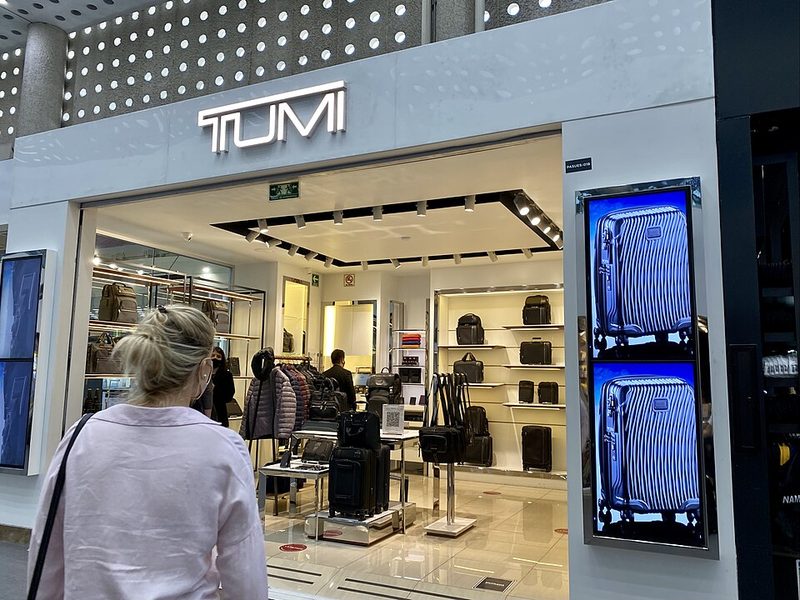
Mexico City has two airports. One of them is where you want to arrive. The other is where some budget airlines will try to send you, and you should know what you’re getting into before you book that suspiciously cheap ticket.
AICM: Benito Juarez International Airport

The main airport. Officially Aeropuerto Internacional de la Ciudad de Mexico Benito Juarez, universally known as AICM, and identified by the airport code MEX. This is where the vast majority of international and domestic flights arrive and depart. It’s located about 10 km east of the Historic Center, practically inside the city — you’ll see neighborhoods pressing right up against the runways as you land.
AICM handles about 50 million passengers per year, making it the busiest airport in Latin America. It has two terminals connected by a free monorail (Aerotrains) that takes about 5 minutes.
Terminal 1
The older and larger terminal. Most international airlines operate from Terminal 1, including Aeromexico (the main hub carrier), American Airlines, Delta, Air France, Lufthansa, KLM, Iberia, and most long-haul international carriers. Terminal 1 has been renovated multiple times and is functional if not glamorous. The main check-in hall is large and can be chaotic during peak hours.
Facilities include food courts (overpriced but serviceable), currency exchange counters (poor rates — use ATMs instead), ATMs, duty-free shops, several airline lounges, and car rental counters.
Terminal 2
The newer terminal, opened in 2007. Aeromexico’s domestic operations are based here, along with several domestic carriers and some international flights. Terminal 2 is generally less crowded and slightly more modern-feeling than Terminal 1.
Same facilities as Terminal 1 — food, ATMs, shops, lounges. The terminal has a small hotel (NH Hotel) attached to it, useful for very early departures or overnight layovers.
Important: Check Your Terminal
The two terminals are connected by the Aerotrains monorail (free, runs every few minutes, airside) and by a shuttle bus (landside). The monorail only works if you’ve already cleared security, so if you need to switch terminals for a connection, budget at least 30-45 minutes. If you’re being picked up or taking a taxi, make absolutely sure your driver knows which terminal you’re at.
Getting from AICM to the City
Metro (Cheapest)
Terminal 1 is connected to the Terminal Aerea Metro station on Line 5. Follow signs from the arrivals level through a pedestrian overpass to the station. A Metro ticket costs 5 MXN (about $0.30 USD). From Terminal Aerea, you can transfer to other lines and reach most central neighborhoods.
We need to be honest: the Metro is an adventure with luggage. Stations are crowded, turnstiles are narrow, there are no elevators in most stations, and rush hour (roughly 7:30-9:30 AM and 5:30-8:00 PM) is genuinely punishing with bags. If you’re traveling light with a single backpack, the Metro is fine. If you have full-sized suitcases, consider other options.
Terminal 2 doesn’t have a direct Metro connection. You’d need to take the inter-terminal shuttle to Terminal 1 first, which makes this option less practical from T2.
Metrobus (Good Value)
Metrobus Line 4 connects both airport terminals to the Historic Center. The route runs from the airport to Buenavista station in the north, passing through the Historic Center. Stops include San Lazaro, Circunvalacion, and several Historic Center stations. The ride costs 30 MXN (about $1.75 USD) and takes 45-60 minutes depending on traffic.
You’ll need a rechargeable Metrobus card (tarjeta de movilidad integrada), available from machines at the airport Metrobus station. The machines accept cash and cards. Load enough for your trip to the city plus any Metrobus rides you’ll take during your stay.
The Metrobus is a dedicated bus lane, so it avoids the worst traffic. It’s more comfortable with luggage than the Metro — the buses have space for bags — but it only serves the eastern/central corridor. It won’t get you directly to Condesa, Roma, or Polanco.
Authorized Taxi (Reliable)
Both terminals have authorized taxi counters in the arrivals areas. You buy a prepaid ticket at the counter, specifying your destination, and then present the ticket to a driver in the authorized taxi queue outside. Fares are fixed by zone:
- Historic Center: ~250-350 MXN
- Roma/Condesa: ~300-400 MXN
- Polanco: ~350-450 MXN
- Coyoacan: ~400-500 MXN
These prices are significantly higher than a regular taxi or Uber would cost, but you’re paying for the guaranteed service, fixed price, and security. The authorized taxis are registered with the airport, and the drivers are vetted. This is the method we’d recommend for first-time visitors arriving late at night.
Uber / DiDi (Best Value for Cars)
Both ride-sharing apps work at the airport, and fares are typically 30-50% cheaper than authorized airport taxis. The pickup process has been formalized: follow signs to the designated ride-share pickup areas (usually on a specific level of the parking structure at each terminal).
Typical Uber fares from the airport:
- Historic Center: ~120-200 MXN
- Roma/Condesa: ~150-250 MXN
- Polanco: ~200-300 MXN
Surge pricing applies during peak hours. Late-night arrivals may face longer wait times for drivers.
One important note: you’ll need a working Mexican phone number or data connection to use Uber. If your phone doesn’t have an international plan or a local SIM, get connected first. SIM cards are available at the airport from Telcel and AT&T Mexico kiosks in the arrivals area.
What NOT to Do
Do not accept rides from random people approaching you in the arrivals hall offering “taxi” service. This is a well-known scam vector in Mexico City. Some are legitimate freelance drivers, but some are not, and you have no way to tell. Use only the authorized taxi counter, Uber/DiDi, Metrobus, or Metro.
AIFA: Felipe Angeles International Airport
Mexico City’s second airport opened in March 2022. Officially the Aeropuerto Internacional Felipe Angeles, airport code NLU. It was built on the site of the Santa Lucia military air base in Zumpango, about 45 km north of central Mexico City.
AIFA was President Andres Manuel Lopez Obrador’s marquee infrastructure project, intended to relieve pressure on the overcrowded AICM. The airport itself is a large, modern facility with capacity for 20+ million passengers per year. The terminal building was designed by military engineers and is functional and clean.
The Distance Problem
Here’s the issue: AIFA is far from everything. It’s 45 km from the Historic Center, 50+ km from Condesa or Roma, and the road connections between AIFA and central CDMX are not great. In normal traffic, the drive takes 60-90 minutes. In bad traffic, two hours or more. There’s no Metro connection and no dedicated highway.
A government bus service (Mexicana de Autotransportes) runs between AIFA and several points in the city, including the AICM airport, the Buenavista train station, and some Metro stations. The service is inexpensive but schedules can be infrequent. Uber and taxis from AIFA to central CDMX will cost significantly more than from AICM — expect 600-1,000 MXN or more depending on traffic and surge pricing.
Who Flies from AIFA?
As of recent schedules, several budget and mid-range airlines have moved operations to AIFA, including VivaAerobus and some Volaris flights. International connections are limited. The airline roster changes periodically as carriers evaluate whether the airport’s lower fees justify the distance disadvantage.
Should You Book a Flight to AIFA?
Generally, no — not unless the price difference is substantial enough to justify the extra 2-4 hours of ground transportation (round trip). A flight that saves you $40 but costs you an extra $30-50 in ground transport and 3 hours of travel time is a bad deal.
If you do end up at AIFA, plan your ground transportation in advance. Don’t arrive at midnight expecting to find an easy ride to Condesa. Book a transfer service, arrange an Uber in advance, or take the government bus to a Metro-connected point in the city.
Arriving: General Tips
- Immigration lines: At AICM, immigration can take 30-90 minutes depending on time of day and staffing. Flights arriving in the early afternoon tend to face the worst queues. Fill out your immigration form completely and have your passport and return ticket information accessible.
- Currency: Don’t exchange money at airport currency counters — the rates are terrible. Use ATMs in the arrivals area instead, which give you pesos at the bank exchange rate. Notify your bank of your travel dates before departure so your card isn’t blocked.
- SIM cards: Telcel is the carrier with the best coverage in Mexico. Buy a prepaid SIM at the airport kiosk if your phone is unlocked. Plans with 5-10 GB of data cost 200-400 MXN and last 30 days.
- First night accommodation: If your flight arrives late (after 10 PM), consider staying near the airport or booking an authorized taxi rather than trying to navigate public transit with luggage at midnight.
Departing: What to Know
- Arrive early: AICM’s security and immigration lines for departing flights can be long, especially for morning flights. Budget 3 hours before an international departure, 2 hours for domestic.
- TUA tax: An airport departure tax (Tarifa de Uso de Aeropuerto) is included in your ticket price. You don’t need to pay anything extra at the airport.
- Duty free: Prices at AICM duty-free shops are not particularly competitive. Tequila and mezcal are sometimes cheaper in city shops than at the airport. Comparison shop before your departure day.
- Getting to the airport: Allow extra time for traffic. The stretch between central CDMX and the airport passes through heavy-traffic corridors. During rush hour, what should be a 30-minute trip can take 90 minutes. The Metrobus (Line 4) is the most predictable option time-wise, since it uses dedicated lanes.