
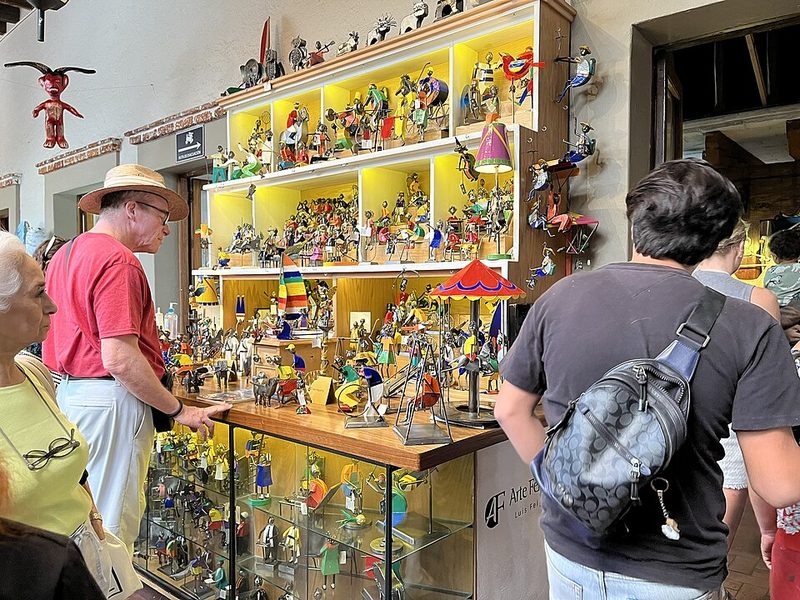
Every Saturday morning, a 17th-century colonial mansion in San Angel transforms into one of Mexico City’s best artisan markets. Bazar Sabado has been running since 1960, and it’s maintained a level of quality that most craft markets in the city can’t match. The vendors here aren’t selling mass-produced souvenirs trucked in from a warehouse. These are working artisans — jewelers, ceramicists, weavers, woodworkers, painters — selling pieces they made themselves, often using techniques passed down through generations.
Inside the Mansion

The market occupies a beautiful colonial building on Plaza San Jacinto, and the setting is half the appeal. The mansion dates to the 1600s, with thick stone walls, arched doorways, courtyards, and the kind of architectural details that make you want to photograph every corner. Vendors set up in rooms throughout the building, each space functioning as a small gallery for their work.
The quality of goods inside the mansion is notably higher than what you’ll find outside on the plaza (more on that in a moment). Inside, you’ll find hand-crafted silver jewelry, lacquerware from Michoacan, blown glass from Jalisco, hand-embroidered textiles from Oaxaca, painted ceramics, carved wooden figures, and paper-mache pieces. Prices reflect the quality — this isn’t a bargain market. But you’re paying for genuine artisan work, and most of it is fairly priced for what it is.
The mansion also has a restaurant on the upper level that serves traditional Mexican food in a courtyard setting. It’s not cheap, and the food is more reliable than spectacular, but eating lunch overlooking the market while surrounded by colonial architecture is a pleasant experience. Arrive early if you want a table — by noon it fills up.
The Plaza Market
Outside the mansion, the surrounding streets and Plaza San Jacinto fill with additional vendors every Saturday. This outdoor market is larger than the indoor one, and the goods range from excellent to mediocre. You’ll find paintings, crafts, clothing, and various souvenirs. Some vendors here sell work that’s comparable to what’s inside the mansion. Others sell things you could find at any tourist market in the country.
The trick is to browse with patience. The outdoor market rewards those who take time to distinguish between mass-produced items and genuine handmade work. Look for vendors who can explain their process, who have a limited number of unique pieces rather than 50 identical ones, and whose work shows the slight irregularities that mark genuine handcraft.
What to Buy
The market’s strongest categories are silver jewelry, textiles, and ceramics. Mexican silver work is world-class, and several vendors here produce pieces that would cost considerably more in a gallery setting. The textile vendors, particularly those selling embroidered blouses and woven goods from Oaxaca and Chiapas, offer the kind of work that takes weeks or months to produce by hand.
Ceramics range from Talavera-style pieces to more contemporary designs. The painted wooden alebrijes (fantastical animal figures from Oaxaca) are popular and make excellent gifts — look for the ones carved from copal wood, which are the traditional material.
We’d suggest bringing cash. Some vendors accept cards, but many prefer cash, and you’ll occasionally get a small discount for paying that way. There’s no entrance fee to the market itself.
When to Go
The market runs every Saturday, generally from around 10 AM to 5 or 6 PM. The best time to arrive is between 10 and 11 AM, when all the vendors are set up but the crowds haven’t peaked. By early afternoon, the mansion gets crowded enough that browsing becomes less enjoyable, particularly in the smaller rooms.
The market operates year-round, rain or shine, though rainy season Saturdays (June through September) can thin the outdoor vendors somewhat. The indoor market in the mansion continues regardless of weather.
Getting There
Bazar Sabado is on Plaza San Jacinto in San Angel. The easiest approach from central Mexico City is a taxi or rideshare, which takes 30 to 45 minutes depending on traffic. The Metrobus on Insurgentes can get you to the La Bombilla stop, from which it’s a 10-minute walk.
San Angel is a beautiful neighborhood worth exploring beyond the market. Colonial streets, excellent restaurants, the ex-convent of El Carmen, and the Diego Rivera and Frida Kahlo studio museums are all nearby. A Saturday combining Bazar Sabado with a few hours wandering San Angel’s cobblestone streets is one of the better ways to spend a morning in the city.