Chapultepec Park is one of the largest urban parks in the Western Hemisphere — over 680 hectares of forest, lakes, museums, a zoo, a castle, and enough space to absorb millions of visitors per week without feeling completely overwhelmed. The Aztecs used this hill as a retreat. Maximilian and Carlota built their imperial palace here. Today it’s where Mexico City goes to breathe.
The park is divided into three sections, each with a different character. Most visitors only see the First Section, which contains Chapultepec Castle, the National Anthropology Museum, and the main lakes. But the Second and Third Sections — less visited and wilder — have their own appeal if you want actual forest rather than manicured paths.
First Section: The Museum Mile
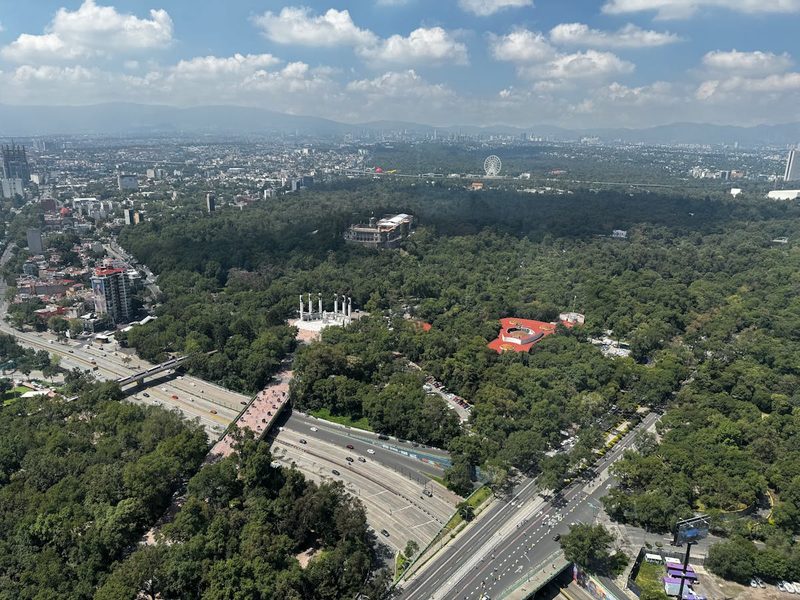
The First Section is the oldest and most developed part of the park, accessible from Paseo de la Reforma through the Puerta de los Leones (Gate of the Lions). This is where the major attractions are concentrated.
Chapultepec Castle sits on top of Chapultepec Hill (about a 15-minute uphill walk from the base), housing the National History Museum. The only royal castle in the Americas, with views that explain why every ruler from the Aztecs to the presidents wanted to live here.
National Anthropology Museum is on the park’s Reforma edge — the single best museum in Mexico and one of the best in the world. The Aztec Sun Stone and the Maya jade mask of Pakal are here.
Museo de Arte Moderno (Modern Art Museum) — a collection focused on 20th-century Mexican art, including works by Frida Kahlo, Diego Rivera, Remedios Varo, and Leonora Carrington. Smaller and less overwhelming than the Anthropology Museum, good for a focused hour.
Museo Tamayo — International contemporary art in a building designed by Teodoro Gonzalez de Leon and Abraham Zabludovsky. The permanent collection includes works by Picasso, Warhol, and Rothko alongside Mexican contemporary artists. Strong rotating exhibitions.
Chapultepec Zoo — Free admission, home to pandas (Mexico City has had them since 1975), and large enough to absorb families for a half-day. It’s not the world’s most modern zoo, but the price is right and the grounds are pleasant.
Lago de Chapultepec — The main lake where you can rent rowboats. Crowded on weekends, quieter on weekday afternoons. The experience is more about the social scene than the scenery, but it’s a genuine Mexico City tradition.
Second Section: Families and Fun
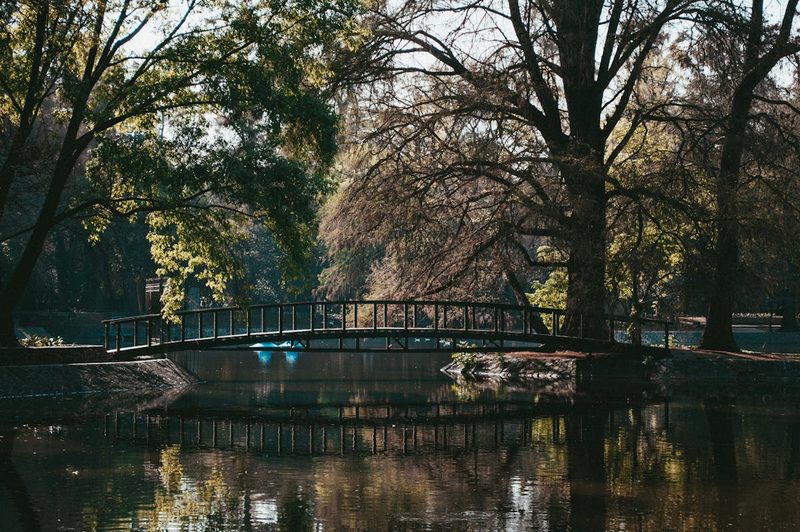
Accessible from Constituyentes Avenue (south side) or through the First Section, the Second Section is more recreational than cultural.
Papalote Museo del Nino — A children’s science museum. If you’re traveling with kids, this is one of the best family activities in the city. Interactive exhibits, an IMAX theater, and enough stimulation to keep children occupied for hours.
La Feria — An amusement park with roller coasters and rides. It’s not Disneyland, but it’s genuine fun and the prices are reasonable by any standard.
Lakes and green space: The Second Section has several lakes and broader stretches of grass that are less crowded than the First Section’s equivalent areas. Better for picnics and actual relaxation.
Third Section: The Wild Part
The Third Section is the least visited and most natural part of Chapultepec. No major museums, no amusement parks — just trails through oak and ahuehuete forest, a nature reserve, and the kind of quiet that seems impossible for a park surrounded by one of the world’s largest cities.
Accessible from San Miguel Chapultepec via Constituyentes Avenue or from the Second Section. If you want to jog, hike, or just sit under a tree without crowds, this is where to go.
History
“Chapultepec” comes from Nahuatl — chapolin (grasshopper) + tepetl (hill). The hill has been significant since at least the 13th century, when it served as a water source and retreat for Aztec rulers. The springs at Chapultepec supplied drinking water to Tenochtitlan through an aqueduct.
After the conquest, the Spanish used the hill for various purposes before Viceroy Bernardo de Galvez built the castle in the 1780s. The hill’s most dramatic moment came in 1847, during the Mexican-American War, when young military cadets — the Ninos Heroes (Boy Heroes) — defended the castle against invading US forces. The battle is commemorated by a monument at the base of the hill and remains one of Mexico’s most emotionally charged historical memories.
The park as a public space dates to the late 19th century, when President Porfirio Diaz opened it to the public and invested in its infrastructure. The major museums were added in the 1960s as part of the modernization of Mexico City’s cultural infrastructure.
Practical Information
Hours: The park itself is open daily from 5 AM to roughly 8 PM (gates close at different times by section). Individual museums have their own hours — most open 9 AM to 5 PM or 7 PM, closed Mondays.
Cost: Park entry is free. Individual museums charge admission (typically $75-95 MXN). Sundays are free for Mexican nationals at most museums, which means they’re very crowded.
Best day to visit: Tuesday through Friday for the museums. Saturday for a mix of culture and people-watching. Avoid Sundays unless you enjoy crowds.
How long: The First Section alone can fill an entire day (castle + Anthropology Museum + Modern Art Museum + lake). If you’re picking two attractions, the castle and the Anthropology Museum are the clear winners.
Getting There
Metro: Chapultepec (Line 1) is the main entrance to the First Section. Auditorio (Line 7) accesses the park from the north, near Polanco. Constituyentes (Line 7) accesses the Second Section.
Walking from Reforma: The Puerta de los Leones entrance is directly on Reforma. From the Diana Fountain, it’s about a 10-minute walk west.
From Condesa: Walk north across Avenida Chapultepec — the park’s southern edge is right there.
From Polanco: Walk south across Reforma. The Anthropology Museum is immediately inside the park on this side.
Tips
Start early: The park opens at 5 AM, and the early morning hours — before 8 AM — are when joggers and dog walkers have it mostly to themselves. The light through the trees is beautiful.
Wear comfortable shoes: The park is big. Walking from the Anthropology Museum to the castle and back, with museum time, covers several kilometers.
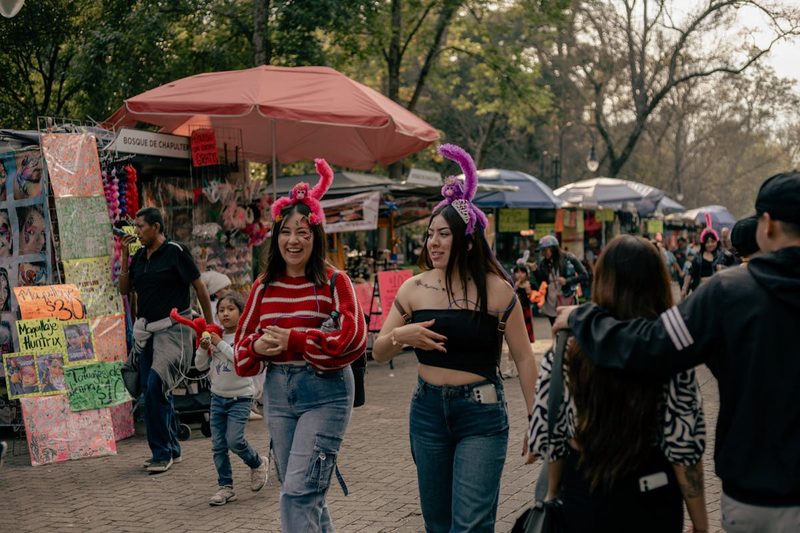
Bring water: Vendors inside the park sell water and snacks, but the markup is higher than outside. The museums have water fountains and cafeterias.
Monday is closed: Almost all museums in Chapultepec close on Mondays. The park itself is open, but if you’re coming for the museums, avoid Monday entirely.
Chapultepec is the kind of park that cities dream of having. It’s big enough to contain world-class museums and wild enough (in the Third Section) to feel like actual countryside. It connects to practically every major neighborhood in western CDMX — Polanco, Condesa, Colonia Juarez, San Miguel Chapultepec — and it’s been serving the city for seven centuries. Give it at least a day. It deserves more.