
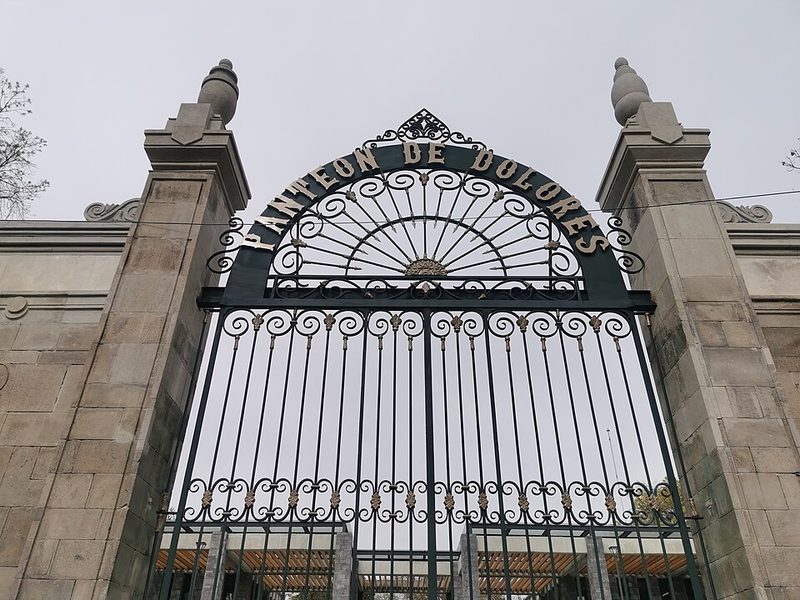
The Panteon de Dolores is the largest cemetery in Mexico City, and one of the largest in the world. It sprawls across a hillside on the western edge of Chapultepec Park, covering roughly 240 acres of graves, mausoleums, and monuments dating from the late 19th century to the present. If the idea of spending an afternoon wandering a vast cemetery sounds appealing rather than morbid, Dolores delivers an experience unlike anything else in the city.
The Cemetery’s Scale

Dolores was founded in 1875 as part of a push to move Mexico City’s burial grounds away from churches and into dedicated, hygienic cemeteries — a public health reform that was sweeping through cities worldwide at the time. The site chosen was a hillside west of Chapultepec, and over the following century and a half, it grew into an enormous necropolis that now holds an estimated 700,000 graves.
The scale is difficult to appreciate until you’re actually walking through it. The cemetery climbs a hill, with sections spreading out in different directions, connected by roads and pathways that range from paved to barely maintained. You could spend hours here and still not see all of it. Most visitors stick to the main sections near the entrance, which contain the most notable tombs and monuments.
Famous Residents
Dolores is where Mexico buries its famous. The Rotonda de las Personas Ilustres — a circular monument near the entrance — contains the remains of dozens of Mexico’s most important historical figures: artists, writers, politicians, scientists, and military leaders. Diego Rivera is here. Jose Clemente Orozco. David Alfaro Siqueiros. The muralist trifecta, all in the same cemetery. Musicians, generals, presidents, and poets fill out the roster.
The Rotonda is the cemetery’s main attraction and the part that most visitors see. The individual monuments range from simple headstones to elaborate sculptural pieces, and the circular layout gives the area a sense of civic grandeur. There’s an honor guard, and the space is well-maintained — it’s treated as a national memorial, not just a cemetery section.
Beyond the Rotonda, the cemetery’s older sections contain ornate 19th and early 20th-century mausoleums that reflect the wealth and aspirations of Mexico City’s elite during the Porfiriato. Some are miniature Gothic chapels; others borrow from neoclassical or Art Nouveau styles. The craftsmanship on the best of these is remarkable.
Walking the Cemetery
The newer sections of Dolores are less architecturally interesting — rows of simpler graves reflecting more democratic burial practices and less disposable income. But the sheer size of the place, the way it climbs the hillside with views back toward the city, and the occasional surprising monument or piece of folk art decorating a modest grave make wandering rewarding even in the less prestigious sections.
During Dia de Muertos (late October and early November), the cemetery comes alive — if that’s not too ironic a phrase. Families visit to clean graves, leave offerings, and spend time with their deceased. The atmosphere is festive rather than somber, with food, music, and marigolds everywhere. If you’re in Mexico City during this period, visiting Dolores gives you a far more authentic Day of the Dead experience than the tourist-oriented events in the Historic Center.
Practical Information
Dolores is on the western edge of Chapultepec Park, on Avenida Constituyentes. The entrance is accessible by car or taxi — from central areas, expect a 20 to 30-minute ride. There’s no convenient metro station nearby, making this one of the few Mexico City attractions where a taxi or rideshare is essentially mandatory.
The cemetery is open during daylight hours, and there’s no admission fee. It’s safe to visit during the day, though the more remote sections can feel isolated. Stick to the main roads and the areas near the entrance if you’re visiting alone. The Rotonda is right near the main entrance and is the part most worth seeing.
Wear comfortable shoes — the terrain is hilly, some paths are unpaved, and you’ll walk more than you expect. Bring water, especially in the dry season. There are no facilities or vendors inside the cemetery itself, so arrive prepared.
Why Visit
Cemeteries tell you things about a culture that museums can’t. Dolores is a 150-year record of how Mexico honors its dead, from the grandest national heroes to ordinary families marking their losses with whatever they could afford. It’s peaceful, visually interesting, historically rich, and completely unlike the rest of Mexico City. Not everyone will want to spend time here, but those who do tend to find it one of the more memorable parts of their trip.