
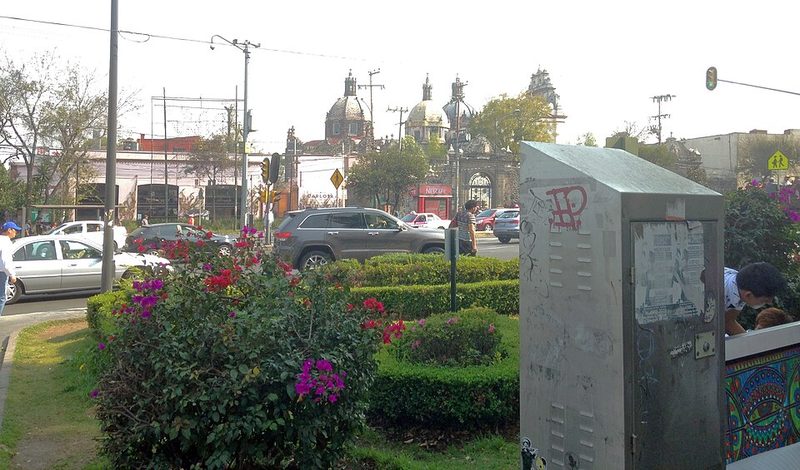
The Ex-Convento del Carmen in San Angel is a 17th century Carmelite monastery with beautiful gardens, colonial-era religious art, and a dozen naturally mummified bodies in the basement. That last detail tends to get people’s attention.
The mummies are genuine, they’re well-preserved, and they’re displayed in glass cases in the monastery’s crypt. If you can handle that, the rest of the museum is a genuinely lovely colonial space that ranks among the most atmospheric historic buildings in Mexico City. If you can’t handle that, the gardens alone are worth the visit, and you can skip the basement entirely.
History of the Monastery

The Carmelite order arrived in New Spain in 1585 and quickly established themselves as one of the most influential religious communities in colonial Mexico. The Order of Discalced Carmelites (they went barefoot, hence the name) was a reform movement within the Catholic Church, emphasizing contemplation, simplicity, and withdrawal from worldly concerns.
Construction of the San Angel monastery began in 1615 and was completed around 1626. The site chosen was in the village of Tenanitla (later renamed San Angel), surrounded by orchards and farm fields well south of Mexico City proper. The Carmelites wanted isolation, and in the early 17th century, this area delivered it.
The complex included the monastery proper, the Church of El Carmen (still an active parish church today), extensive gardens and orchards, workshops, kitchens, a refectory, individual cells for the monks, and the crypt that would later become the museum’s most famous feature. The monks cultivated fruit orchards, maintained gardens, and produced income through the sale of produce and religious goods.
The Carmelites operated the monastery for over two centuries until the Reform Laws of the 1850s-60s, when President Benito Juarez nationalized Church properties throughout Mexico. The monastery was seized, and the monks were expelled. The buildings served various secular purposes over the following decades, including a period as military barracks during the Mexican Revolution.
In 1939, the Mexican government declared the building a colonial monument, and it became the Museo de El Carmen, operated by INAH (the National Institute of Anthropology and History). It’s been a museum ever since.
The Museum
Colonial Art Collection
The upper floors of the museum house a substantial collection of colonial-era religious art, primarily from the 17th and 18th centuries. Oil paintings depicting saints, martyrs, and scenes from the life of Christ line the former monks’ cells and corridors. The collection includes work by Cristobal de Villalpando, one of the most important painters of New Spain, and several pieces by anonymous indigenous and mestizo artists whose styles blend European and native traditions.
The paintings are displayed in the rooms where the monks lived and worked, which gives them a context that a conventional gallery can’t match. The scale is intimate — you’re looking at devotional art in devotional spaces, exactly as it was intended to be experienced.
The Building Itself
The architecture is classic Mexican colonial — thick stone walls, arched corridors, carved wooden doors, tiled floors, and vaulted ceilings. The monastery was built for durability and spiritual atmosphere, and four centuries later it still has both.
Notable architectural features include:
- The tiled domes: The church and several monastery buildings feature colorful Talavera tile domes visible from the street. They’re among the most photographed architectural details in San Angel.
- The main cloister: A two-story arcade surrounding a central garden, with stone columns and arched walkways that create beautiful patterns of light and shadow.
- The refectory: The monks’ dining hall retains its original proportions and some period furnishings.
- The oratory: A private chapel with particularly fine carved woodwork and colonial-era gilding.
The Mummies
The basement crypt contains approximately twelve naturally mummified bodies, discovered in the 19th century when the monastery was converted from religious to secular use. The mummies were not intentionally preserved — they’re the result of the extremely dry, mineral-rich conditions in the crypt, which desiccated the bodies before decomposition could progress.
The mummies are believed to be monks and possibly some wealthy lay patrons who were buried in the crypt between the 17th and 19th centuries. Several are remarkably well preserved, with hair, skin, and clothing still intact. They’re displayed in glass cases with minimal commentary, which honestly makes them more affecting than any amount of explanatory text would.
The crypt is small and can feel claustrophobic, especially if a school group arrives at the same time you do. The mummies are a genuine attraction — not a gimmick. They’re treated with appropriate seriousness by the museum, and they provide a visceral connection to the people who lived in this building centuries ago.
If mummies bother you, the crypt is entirely optional. You won’t accidentally stumble into it — there are clear signs, and you have to deliberately descend the stairs.
The Gardens
The monastery’s gardens have been restored and maintained beautifully. What remains today is smaller than the original Carmelite orchards, but it’s still one of the most pleasant green spaces in the San Angel area. Stone pathways wind between mature trees, flowering plants, and the remains of the monastery’s old walls and outbuildings. On weekday mornings, the gardens are practically empty, and the only sound is birdsong and the distant rumble of the city.
The garden is also a good spot to sit and decompress after the crypt, if you need a moment.
Practical Information
Getting There
The museum is at Avenida Revolucion 4, corner of Monasterio, in San Angel. It’s about a 10-minute walk from the San Angel Metrobus station (Line 1) or a 15-minute walk from the Miguel Angel de Quevedo Metro station (Line 3).
If you’re coming on a Saturday, combine it with the Bazar Sabado, which is held in Plaza San Jacinto just a few blocks away. The Diego Rivera Studio-Museum is also nearby, making for an excellent half-day itinerary focused on San Angel.
Hours and Admission
Open Tuesday through Sunday, 10:00 AM to 5:00 PM. Closed Mondays. Admission is approximately 85 MXN for adults. Free on Sundays for Mexican nationals and residents.
How Long to Spend
One to two hours covers the art collection, the crypt, the architecture, and the gardens without rushing. If you’re combining with the Bazar Sabado and the Rivera Studio, plan for a full morning or afternoon in San Angel.
Tips
- Photography is generally permitted in the museum and gardens, though flash may be restricted in some rooms. The mummy crypt has specific photography rules that vary — ask the staff.
- The museum doesn’t have a cafe, but San Angel has excellent restaurants and cafes within a few minutes’ walk.
- The Church of El Carmen, attached to the monastery, is a separate active parish church. You can enter it for free, and the interior is worth seeing, especially the side altars.
Why Visit
The Ex-Convento del Carmen sits in a sweet spot that few museums occupy: it’s historically significant, architecturally beautiful, small enough to visit without exhaustion, and has a genuinely memorable feature (the mummies) that gives it an edge over comparable colonial sites. It’s also in one of Mexico City’s most pleasant neighborhoods, which means the trip to get there is as enjoyable as the museum itself.
Most visitors to San Angel come for the Saturday market or the Rivera studio. The monastery is right there, it’s inexpensive, and it’s one of the best-preserved examples of colonial monastic architecture in the city. We’d put it on your list.