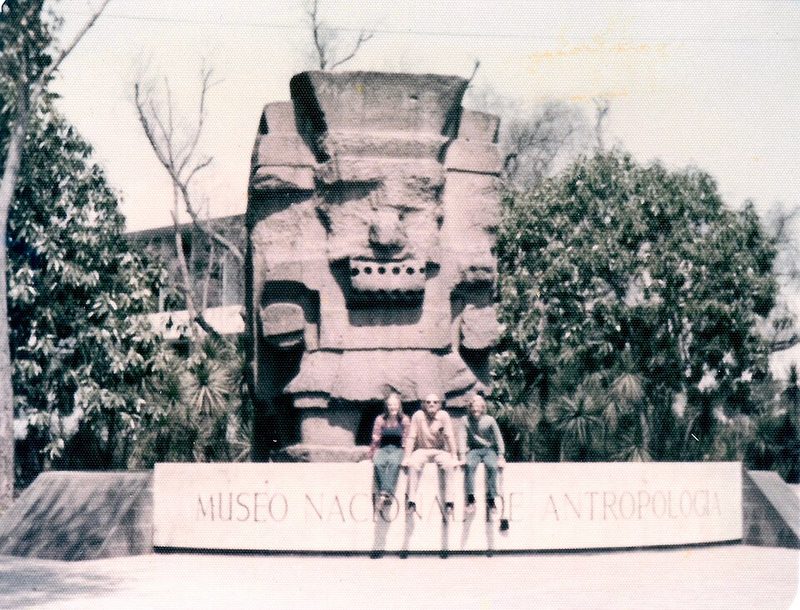
The Museo Nacional de Antropologia is the single best museum in Mexico. Not one of the best — the best. It houses the world’s largest collection of pre-Columbian art and artifacts, spread across 23 exhibition halls in a building designed by Pedro Ramirez Vazquez that is itself considered a masterpiece of mid-century architecture. The Aztec Sun Stone is here. The Olmec colossal heads are here. The Maya jade death mask of Pakal is here. If you visit one museum in Mexico City, or in Mexico, this is it.
The museum sits in the first section of Chapultepec Park, just off Paseo de la Reforma. It opened in 1964 and immediately became both a national symbol and a serious academic institution — a combination that few museums anywhere manage to pull off.
The Building
Ramirez Vazquez designed the museum around a central courtyard with a massive stone umbrella fountain — a single column supporting a broad canopy from which water cascades on all sides. It’s one of the most photographed architectural elements in Mexico and sets the tone for everything inside: monumental, confident, and rooted in the landscape.
The exhibition halls are arranged in a horseshoe around this courtyard. Ground floor halls cover archaeological cultures arranged roughly geographically and chronologically. Upper floor halls cover the ethnographic present — living indigenous cultures of Mexico. The ground floor is where most visitors spend their time, and honestly, it’s where the highlights are.
The Must-See Halls
You cannot see everything in one visit. The museum is enormous — trying to cover all 23 halls in a day will leave you exhausted and remembering nothing. Pick 4-6 halls based on what interests you. Here are the ones we’d prioritize:
Mexica (Aztec) Hall
The largest and most visited hall, and the home of the Aztec Sun Stone (Piedra del Sol) — the circular basalt disc that’s become the symbol of Mexico itself. It weighs 24 tons and was carved sometime around 1500 CE. It was found buried near the Metropolitan Cathedral in 1790 during drainage works.
The hall covers the Mexica civilization from its founding of Tenochtitlan in 1325 to the Spanish conquest in 1521. Highlights include a model of the Templo Mayor, the massive statue of Coatlicue (the earth goddess, terrifying and beautiful), and warrior costumes including the famous eagle and jaguar knight outfits.
Maya Hall
The Maya collection is extraordinary. The centerpiece is the jade funeral mask of K’inich Janaab Pakal, the great king of Palenque who ruled for 68 years in the 7th century. The mask was found inside his tomb deep within the Temple of Inscriptions at Palenque — one of the most dramatic archaeological discoveries in the Americas.
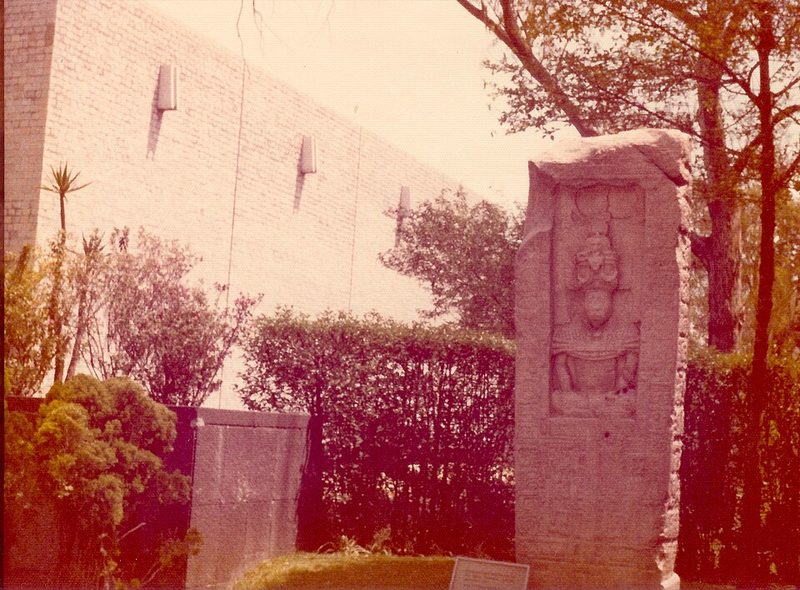
The hall also includes stelae, carved lintels, ceramics, and a reproduction of the painted murals from Bonampak. The Maya section alone justifies the visit.
Teotihuacan Hall
Teotihuacan — the enormous city northeast of Mexico City whose pyramids you can visit as a day trip — is well represented here. Scale models show the city at its peak (roughly 100-550 CE), when it was one of the largest cities in the world. Murals, masks, obsidian tools, and the distinctive Teotihuacan architectural style are all on display.
Oaxaca Hall (Zapotec and Mixtec)
The cultures of Oaxaca — Monte Alban, Mitla, and the Mixtec codices — get their own hall. The Mixtec goldwork and the artifacts from Tomb 7 at Monte Alban are remarkable. If you’re planning a trip to Oaxaca, this hall provides essential context.
Gulf Coast Hall (Olmec)
The Olmec colossal heads — those massive basalt portraits with broad features and helmet-like headgear, dating to roughly 1500-400 BCE — are among the oldest monumental sculptures in the Americas. The museum has several, and seeing them up close is genuinely awe-inspiring. The Olmec are considered the “mother culture” of Mesoamerica, and these heads are their most recognizable legacy.
Toltec Hall
Smaller but worth a stop for the Atlantean warrior figures from Tula — massive stone columns carved as warriors that originally supported a temple roof.
The Upper Floor
The ethnographic halls on the upper floor cover Mexico’s living indigenous cultures — Huichol, Purepecha, Maya, Mixtec, and others. These halls show traditional clothing, crafts, religious practices, and daily life. They’re less visited than the archaeology halls downstairs but offer something the ground floor can’t: connection to cultures that are alive and continuing, not just historical.
If you have time for only one upper-floor hall, visit the Huichol (Wixarika) section. Their beadwork and yarn art is extraordinary, and the exhibition contextualizes these crafts within a living spiritual tradition.
Practical Information
Hours: Tuesday through Sunday, 9 AM to 7 PM. Closed Mondays. Last entry at 6 PM.
Cost: $95 MXN for adults. Free for Mexican citizens on Sundays (which means it’s packed — avoid Sundays if possible).
How long: Minimum 3 hours if you’re selective. Half a day if you want to be thorough. A full day if you’re genuinely trying to see everything (not recommended — museum fatigue is real).
Best strategy: Arrive at opening (9 AM), start with the hall you most want to see while you’re fresh, then work outward. The Mexica and Maya halls are the most crowded — hitting them first avoids the worst of the tour groups that arrive mid-morning.
Audio guide: Available and worth it if you want context beyond the (sometimes sparse) signage. Available in multiple languages.
Cafeteria: There’s a restaurant and cafe inside. The food is acceptable and saves you from having to leave and re-enter.
Photography: Allowed without flash. No tripods. The interior lighting is designed for viewing, not photography, so expect to use higher ISO settings.
Getting There
Metro: Chapultepec (Line 1) or Auditorio (Line 7). From Chapultepec station, enter the park and walk about 10 minutes northeast. From Auditorio, walk south through Polanco and enter the park from the north side.
Walking from Reforma: The museum entrance is on Paseo de la Reforma inside Chapultepec Park, about a 15-minute walk west from the Diana Fountain.
Uber/taxi: Drop-off is on Reforma outside the park entrance. Tell the driver “Museo de Antropologia.”
Context
The Museo Nacional de Antropologia was part of a broader mid-century project to define Mexican national identity through its pre-Columbian heritage. The government invested heavily in archaeology and museums as a way of saying: Mexico’s culture didn’t begin with the Spanish. It began thousands of years earlier, and here’s the proof.
That political agenda doesn’t diminish the quality of the collection. If anything, it explains why Mexico has one of the world’s great museums while comparable collections in other Latin American countries are scattered across smaller institutions. The Mexican state decided this museum mattered, funded it accordingly, and the result speaks for itself.
Visit it. Give it at least half a day. And if you only have time for one hall, make it the Mexica. The Sun Stone alone is worth the Metro fare to Chapultepec.