
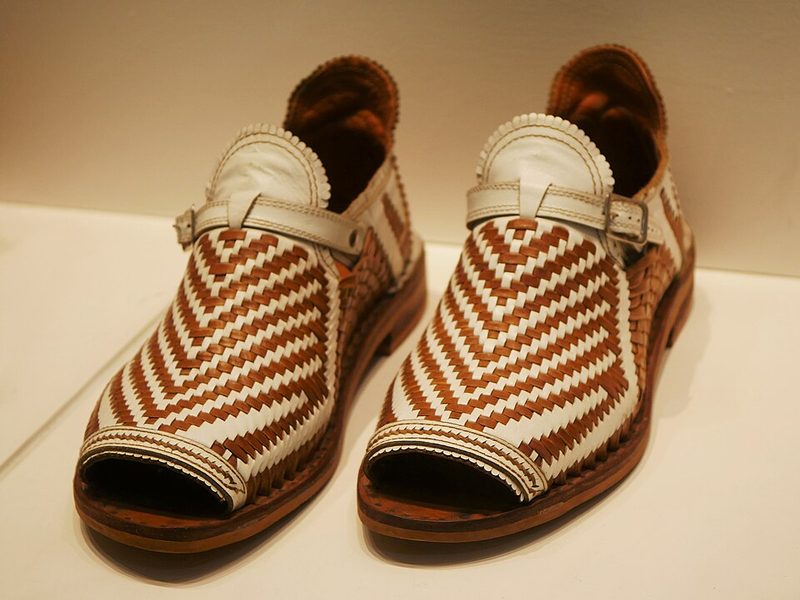
The Museo de Arte Popular — MAP to regulars — is one of Mexico City’s most enjoyable museums, a celebration of Mexican folk art housed in a beautiful Art Deco building near the Alameda Central. Inside, you’ll find alebrijes, textiles, ceramics, lacquerware, basketry, and every other form of traditional Mexican craft, displayed with a care and intelligence that elevates these objects from “souvenir shop stuff” to the serious art they’ve always been.
The Building

The museum occupies a former fire station built in the 1920s in the Art Deco style. The building itself is worth seeing — the exterior has the geometric lines and decorative details typical of the period, and the interior has been beautifully adapted for museum use. High ceilings, good natural light, and spacious galleries give the collections room to breathe.
The main staircase and atrium are particularly impressive, and the building’s industrial bones — it was a fire station, after all — give the spaces a solidity and character that purpose-built museum galleries sometimes lack. It’s one of those adaptive reuse projects that works so well you wonder why the building was ever used for anything else.
The Collections
MAP’s permanent collection covers the full spectrum of Mexican folk art traditions, organized by material and technique. The major sections include:
Alebrijes: The fantastical painted wooden creatures from Oaxaca are the museum’s signature pieces, and some of the examples here are extraordinary — complex, vividly colored, and carved with a skill that takes years to develop. The museum hosts the annual Alebrije Parade, where giant versions of these creatures are paraded through the city center. If you’ve seen photos of that event and wondered what alebrijes are about, this museum explains it.
Textiles: Mexican textile traditions are among the richest in the Americas, and MAP has a strong collection of embroidered garments, woven fabrics, and textile art from various regions. The diversity of techniques and designs across Mexico’s different indigenous communities is staggering when you see it presented in one place.
Ceramics: From Talavera pottery to black clay from Oaxaca to the tree-of-life candelabras from Metepec, the ceramics collection shows the range of Mexican ceramic traditions. The tree-of-life pieces, in particular, are spectacular — elaborate, densely decorated sculptural candleholders that can reach several feet in height.
Other crafts: Lacquerware, basketry, papel picado (perforated paper decorations), tin work, and numerous other traditions are also represented. The museum does a good job of providing context for each tradition — where it comes from, how it’s made, what it means in its community of origin.
Why It Matters
Mexican folk art has a complicated relationship with the country’s art establishment. For much of the 20th century, it was treated as craft rather than art — beautiful, culturally significant, but not worthy of the same institutional attention as painting or sculpture. MAP pushes back against that hierarchy, presenting folk art with the same curatorial seriousness that a fine art museum would give to a painting collection.
The result is a museum that makes you see these objects differently. A hand-embroidered blouse that you might walk past in a market stall becomes something more when you learn that the patterns encode information about the weaver’s community, that the technique takes months to master, and that the tradition connects to pre-Columbian practices stretching back centuries. MAP provides that context without being heavy-handed about it.
The Gift Shop
We don’t usually mention gift shops, but MAP’s is exceptional. It sells high-quality folk art from artisan communities across Mexico, often from the same traditions represented in the museum. If you want to buy Mexican crafts and are willing to pay fair prices for genuine artisan work, this is one of the best places in the city to do it. The quality is curated, the provenance is reliable, and your money supports working artisans.
Practical Information
MAP is on Revillagigedo 11, near the Alameda Central and the Torre Latinoamericana. Metro Juarez (Line 3) or Hidalgo (Lines 2 and 3) are the closest stations, each about a five-minute walk. The museum is closed on Mondays. Admission is very affordable, and there are discounts for students and seniors.
Plan about an hour to 90 minutes for a visit, more if you’re genuinely interested in folk art traditions. The museum is small enough to cover thoroughly without exhaustion, which is a virtue in a city full of museums that demand half-day commitments.
Combine with a visit to the Alameda, the Palacio de Bellas Artes, or the Torre Latinoamericana — all within easy walking distance. MAP is a perfect complement to the fine art museums of the area, offering a different perspective on Mexican creativity that’s every bit as impressive.