
The Panteon de San Fernando is a small, walled cemetery in the Historic Center of Mexico City, a few blocks from the Alameda Central. It’s tiny compared to the city’s major cemeteries, but what it lacks in size it makes up for in historical weight. Benito Juarez, Mexico’s most revered president, is buried here, along with other key figures from the 19th century. For a place that takes 20 minutes to walk through, it packs a remarkable amount of national history into a very small space.
History
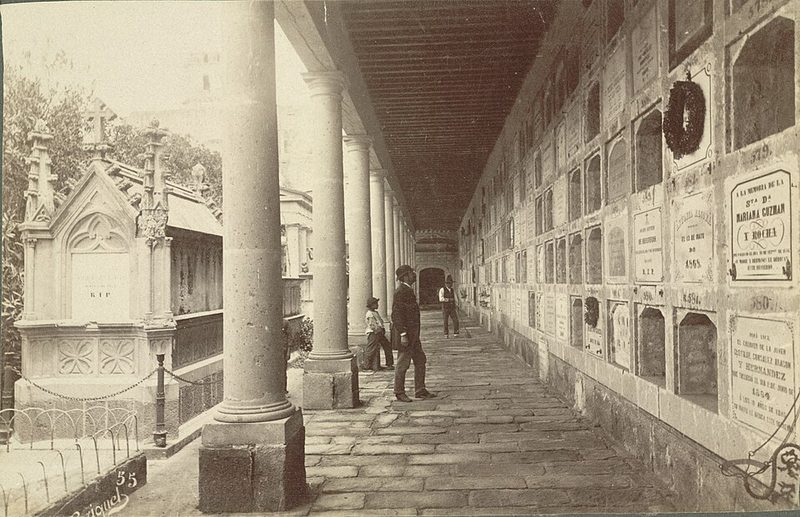
The cemetery was established in the 18th century as the burial ground for the adjacent Temple of San Fernando, a Franciscan church. Initially reserved for the religious community, it later opened to the public and became one of the most prestigious burial sites in Mexico City during the 19th century. Being buried at San Fernando was a mark of social standing, and the cemetery’s residents read like a roster of Mexico’s 19th-century elite.
The cemetery was officially closed to new burials in 1871, as part of the Reform Laws that secularized cemeteries and restricted church control over burial practices. Since then, it has been preserved as a historical site, its gates closed to the general traffic of urban death and its monuments frozen in time from the 19th century.
Who’s Buried Here
The headline name is Benito Juarez, president of Mexico from 1858 to 1872 and the figure most associated with the Reform War, the French Intervention, and the establishment of secular, democratic governance in Mexico. Juarez’s tomb is the most prominent monument in the cemetery, a neoclassical mausoleum that reflects his status as a national hero.
Juarez’s significance in Mexican history is difficult to overstate. He was an indigenous Zapotec from Oaxaca who rose to the presidency, defended the republic against French invasion and the imposed emperor Maximilian, and enacted the Reform Laws that separated church and state. His tomb at San Fernando is effectively a national shrine.
Other notable burials include Ignacio Comonfort (president during the Reform War), Miguel Miramon (a conservative general who opposed Juarez), and various other political and military figures from one of the most turbulent periods in Mexican history. The irony of some of these people resting near each other — political enemies in life, neighbors in death — adds a layer of dark humor to the cemetery’s arrangement.
The Cemetery Today
San Fernando is small enough to cover in a single, slow pass. The monuments are a mix of neoclassical and Romantic styles, with marble tombs, sculptural elements, and inscriptions that reward careful reading. The craftsmanship on the better monuments is excellent, reflecting the wealth and taste of Mexico City’s 19th-century upper class.
The cemetery is enclosed by walls that block the noise of the surrounding streets, creating a pocket of quiet that feels disconnected from the city. The vegetation is maintained, with trees providing shade and a few ornamental plantings adding color. The overall atmosphere is solemn but not depressing — it’s a memorial space, not a place of active grief.
There’s a small museum space associated with the cemetery that provides context about the people buried here and the historical period they represent. The information is in Spanish, but even without reading comprehension, the visual displays help orient your visit.
Visiting
The Panteon de San Fernando is on Calle Guerrero, near the intersection with Puente de Alvarado, in the Historic Center. It’s about a 10-minute walk from the Alameda Central and easily reachable from Metro Hidalgo (Lines 2 and 3) or Metro Revolucion (Line 2).
The cemetery has limited opening hours and is sometimes closed for restoration or events, so verify the schedule before making a special trip. There’s a small admission fee. Photography is generally permitted.
The adjacent Temple of San Fernando is worth combining with your cemetery visit — it’s a Baroque church with its own historical significance. Together, the church and cemetery take about 30 to 45 minutes to see, making them a manageable addition to a morning or afternoon exploring the western part of the Historic Center.
Why Go
San Fernando is for visitors who are interested in Mexican history beyond the pre-Columbian and colonial periods. The 19th century — with its wars, revolutions, foreign interventions, and the hard-fought establishment of the modern Mexican state — is one of the most dramatic periods in the country’s history, and the people buried here lived through the thick of it. Standing at Juarez’s tomb, in a small cemetery that’s somehow survived 250 years in the middle of one of the world’s largest cities, gives you a direct connection to that history that no museum can replicate.