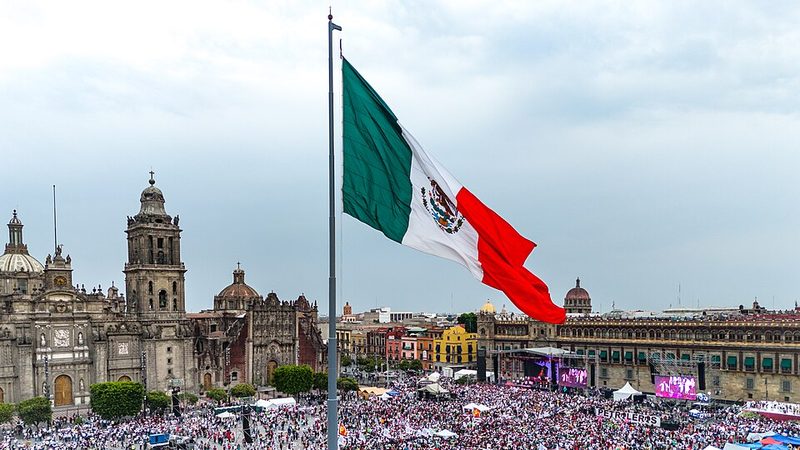
Every city has a main square. Mexico City’s happens to be one of the largest in the world — 57,600 square meters of open space where the Aztec empire held court, Spanish viceroys were sworn in, independence was celebrated, and 250,000 people once showed up to watch Paul McCartney play for free. The Zocalo isn’t just a plaza. It’s where Mexico goes to be Mexico, loudly and in public.
Formally called the Plaza de la Constitucion, absolutely nobody calls it that. The name “Zocalo” comes from a pedestal — more on that story below — and it’s been the center of this city for nearly 700 years, since the Aztecs built their capital Tenochtitlan with this open space at its heart. Today, it’s bordered by the Metropolitan Cathedral to the north, the National Palace to the east, and government buildings to the south. At the center stands a single enormous flagpole carrying the Mexican flag, which is ceremonially raised and lowered every day.
The square can hold over 100,000 people. On a good day, it tries to.
Seven Hundred Years of History in One Square
The Aztec Capital
Before there was a Zocalo, there was the ceremonial heart of Tenochtitlan. The open space that became the modern plaza sat adjacent to the sacred precinct — a walled compound containing the Templo Mayor, which the Aztecs considered the literal center of the universe. The temple ruins are still here, just northeast of the Zocalo, exposed by a chance construction discovery in 1978.
Moctezuma II’s “New Houses” (his palace) stood on the east side — exactly where the National Palace sits today. The “Old Houses” of the earlier ruler Axayacatl bordered the west. Two major roads crossed here: one running north to Tepeyac (now the Basilica de Guadalupe), the other west to Tlacopan. These roads divided the city into four neighborhoods, a layout that the Spanish conquerors largely kept when they rebuilt.
Colonial Reimagining
After the Spanish conquest in 1521, Hernan Cortes razed Tenochtitlan and his surveyor Alonso Garcia Bravo laid out a new plaza on the same site. The Spanish kept the four-neighborhood structure but built a church where they converged — the first version of what would become the Metropolitan Cathedral.
The west side filled with the Portales de Mercaderes (Merchants’ Portals), creating a commercial strip that persisted for centuries. The southern edge got the Casa del Ayuntamiento (city hall). A catastrophic flood in 1629 left the plaza under two meters of water, ruining merchants and requiring extensive rebuilding.
By the 1700s, the southwest corner hosted the Parian Market — a complex of shops selling luxury goods from Asia, shipped via the Manila galleons, and later European imports. It was the “emporium of commerce,” the richest market in the Americas. The rent from those shops alone funded a substantial chunk of colonial government operations.
In 1789, during repaving works, laborers unearthed the Aztec Sun Stone (the famous Calendar Stone) and a statue of the goddess Coatlicue. The Sun Stone was displayed against the Cathedral’s west wall for about a century before being moved to the National Anthropology Museum, where it remains the single most viewed artifact in Mexico.
Where the Name Comes From
In 1813, authorities swore allegiance to the Spanish Constitution of Cadiz here, and the plaza was renamed “Plaza de la Constitucion.” After independence, President Santa Anna demolished the colonial Parian Market in 1843 and announced plans for a grand monument to Independence in its place. Construction began — but only the base (the zocalo, or pedestal) was ever completed. That unfinished base sat in the middle of the plaza for decades. People started calling the whole square “the Zocalo.” The name stuck. The monument never came.
Santa Anna’s independence monument eventually got built — 67 years later, as the Angel of Independence on Paseo de la Reforma. So the Zocalo is named after the foundation of a monument that was built somewhere else entirely. Mexico City’s sense of irony starts early.
The 20th Century
The plaza survived the Decena Tragica in 1913 (when the National Palace was bombarded during the coup against Madero), served as a gathering point for May Day protests throughout the mid-century, and became internationally known during the 1968 Summer Olympics, when students protested against President Diaz Ordaz here before the government’s brutal crackdown at Tlatelolco.
In the 1970s, the plaza hit rock bottom — deteriorating to little more than light poles and a flagpole surrounded by car parking. It was eventually cleared, squared off, cemented over, and paved with the pink cobblestones you walk on today. A $300 million renovation in the late 1990s under Mayor Cuauhtemoc Cardenas tried to pull the Historic Center back from decades of neglect.
What’s Around the Zocalo
The Metropolitan Cathedral (North Side)
The Metropolitan Cathedral dominates the north edge — 250 years of construction produced something that’s part Renaissance, part Baroque, part Neoclassical, and visibly tilting because the whole area is sinking into the old lake bed. It’s one of the most important churches in the Americas and deserves its own visit.
National Palace (East Side)
The entire eastern side of the Zocalo is the National Palace, which serves as the seat of government and houses Diego Rivera’s famous murals depicting Mexican history from the Aztec era through the Revolution. Entrance to the murals is free (bring an ID). The central balcony is where the president performs the Grito de Dolores every September 15th — the symbolic re-enactment of Father Hidalgo’s cry for independence in 1810. The Grito is followed by massive celebrations that fill the Zocalo to capacity and beyond.
Templo Mayor (Northeast Corner)
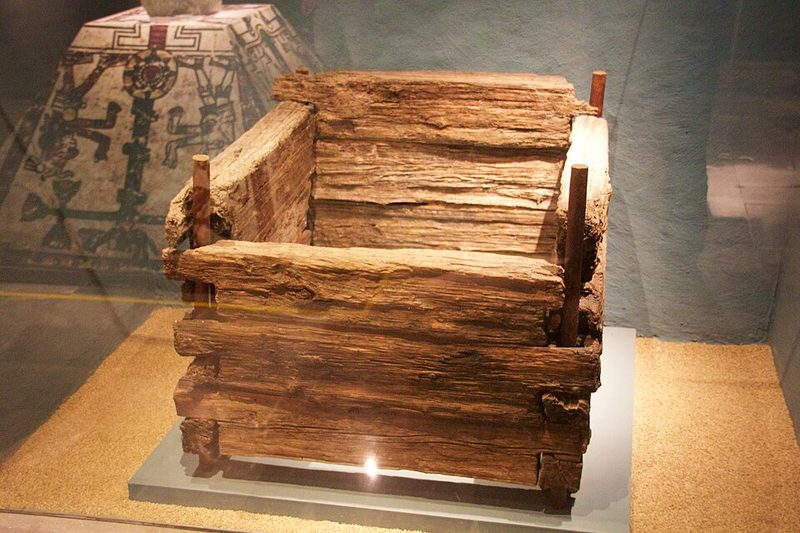
Just behind the Cathedral, the ruins of the Aztec Templo Mayor are partially excavated and open to visitors. The adjoining museum displays artifacts including the massive Coyolxauhqui stone disc discovered in 1978. This is where the Aztec world centered itself — it’s strange and powerful to stand here and realize that the modern government sits literally on top of the civilization it replaced.
Nacional Monte de Piedad (Northwest Corner)
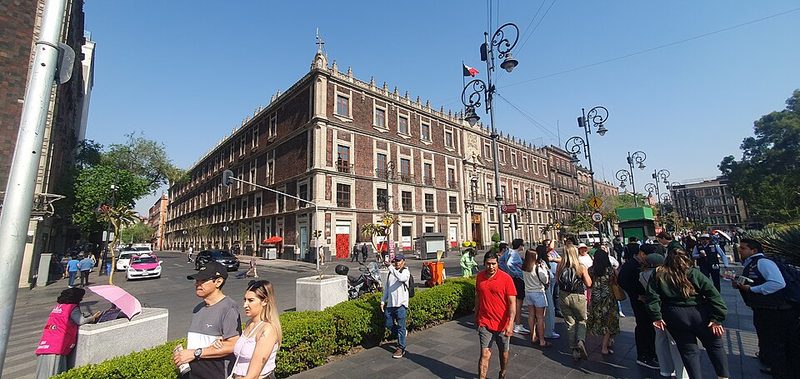
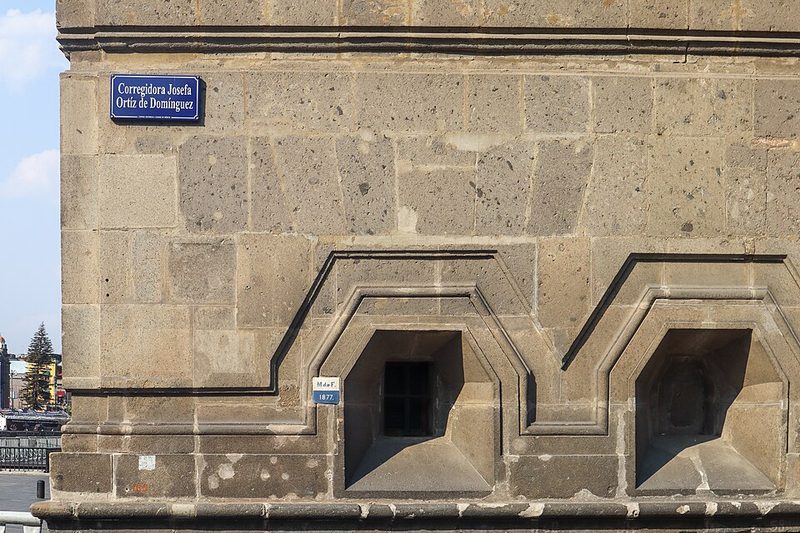
The Nacional Monte de Piedad (National Pawn Shop) occupies the northwest corner, on the site of Axayacatl’s old palace. Founded in 1775, it’s the oldest pawn shop in the Americas and still operates. You can actually buy discounted jewelry, electronics, and miscellany inside. The building itself is worth a look — colonial architecture with a courtyard.
Events and Celebrations
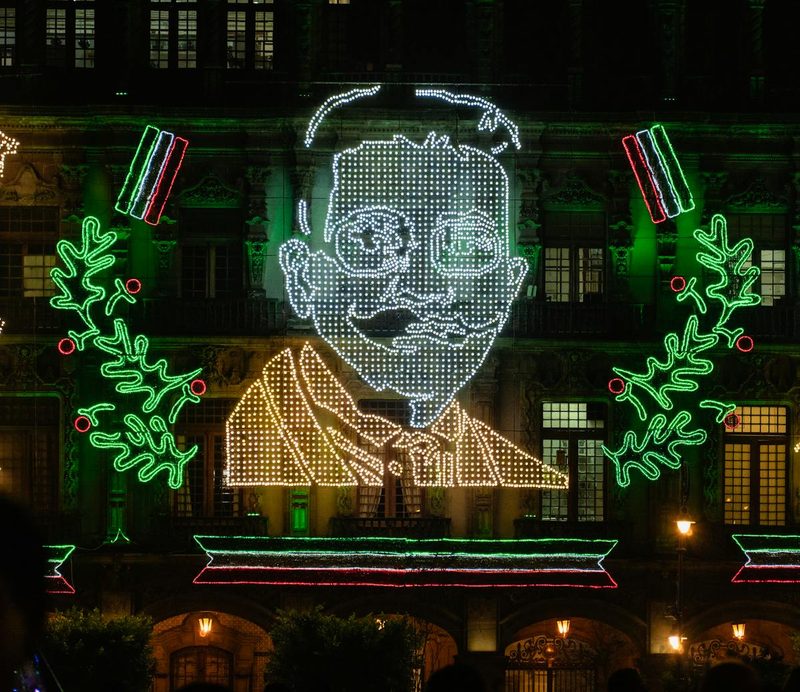
The Zocalo’s size makes it Mexico City’s default venue for anything that requires a lot of people in one place.
Grito de Dolores (September 15): The single biggest annual event. The president appears on the National Palace balcony around 11 PM to ring Hidalgo’s bell and shout “Viva Mexico!” The crowd responds. Fireworks follow. It’s loud, emotional, and packed beyond belief. Arrive by 8 PM if you want to see anything.
Day of the Dead (late October/early November): Since 2016, a major Day of the Dead parade inspired by the James Bond film Spectre (which filmed a fictional version here) has become a genuine tradition. The Zocalo fills with massive altars, marigolds, and face-painted crowds.
Winter ice rink: Since 2007, a roughly 3,200-square-meter ice rink has been installed during December and January. Skating in the shadow of the Cathedral with the National Palace lit up behind you is one of CDMX’s better seasonal experiences.
Aztec dancers: On any given day, you’ll find groups of dancers in feathered headdresses performing to drum music near the Cathedral end of the plaza. The performances are partly cultural preservation, partly tourist entertainment, and partly something in between that defies easy categorization.
Concerts: The Zocalo has hosted some staggering crowds — Shakira drew an estimated 210,000 people, Paul McCartney played for 250,000 (free), and Roger Waters brought 170,000 for a free concert in 2016. If there’s a major free concert while you’re in town, go. Even if you end up 200 meters from the stage, the atmosphere is worth it.
Protests: The Zocalo’s political role is as important as its cultural one. In 1988, massive crowds protested disputed election results. In 2006, AMLO staged extended protests here. In 2014, rallies over the Iguala mass kidnapping filled the square. Spring equinox celebrations draw crowds reasserting indigenous identity. The Zapatista movement has marched here multiple times. If Mexico is angry about something, the Zocalo is where you’ll see it.
How to Get There
Metro: The Zocalo/Tenochtitlan station (Line 2) exits directly onto the northeast corner of the plaza. The entrance is at ground level but easy to miss — there’s no prominent sign above ground. Look for the metro symbol. This is the most practical way to arrive.
Walking from other attractions: The Zocalo is the anchor of the Historic Center, so most major downtown attractions are within walking distance. The Postal Palace and Palace of Fine Arts are about 800 meters west along Calle Madero (the pedestrian street). Alameda Central is a 15-minute walk continuing past Fine Arts.
From Reforma: Walking from Paseo de la Reforma and Colonia Juarez takes 25-35 minutes depending on where you start. The route east along Juarez Avenue, past Alameda Central, is straightforward and passes through interesting territory.
Uber/taxi: Possible but often slower than walking due to traffic restrictions in the Historic Center. Many surrounding streets are pedestrian-only or heavily controlled. Get dropped off on the periphery and walk in.
Practical Tips
Best time to visit: Early morning (before 9 AM) for photos without crowds. The flag-lowering ceremony in the late afternoon draws a smaller but respectful crowd and is worth timing your visit around. Avoid midday in dry season — there is zero shade in the plaza and the sun reflecting off the stone is intense.
Safety: The Zocalo itself is one of the most policed areas in Mexico City and is generally very safe during daylight. Pickpockets work the crowds during major events — keep valuables in front pockets and be aware during the Grito and concerts. The surrounding blocks of the Historic Center are fine for walking during the day but some side streets get quiet and dark after sunset.
What to combine it with: The Zocalo is best visited as part of a walking tour of the Historic Center. A natural route: start at the Zocalo, visit the Cathedral and Templo Mayor, walk west along Madero (pedestrian street) to the Postal Palace and Palace of Fine Arts, then continue to Alameda Central. That’s a solid half-day.
The flag ceremony: The enormous Mexican flag at the center of the Zocalo is raised each morning and lowered each evening in a military ceremony. Soldiers carry the flag into the National Palace each night. It’s brief but solemn and draws a respectful crowd.
Underground: Excavations for the metro and various construction projects have repeatedly revealed Aztec ruins beneath the Zocalo and surrounding blocks. The Templo Mayor museum is the most accessible of these, but archaeologists estimate vast amounts of Tenochtitlan remain buried beneath the modern city. Every major construction project in the Historic Center turns into an archaeological dig. It’s one of the reasons the metro took so long to build here.
The Zocalo at Night
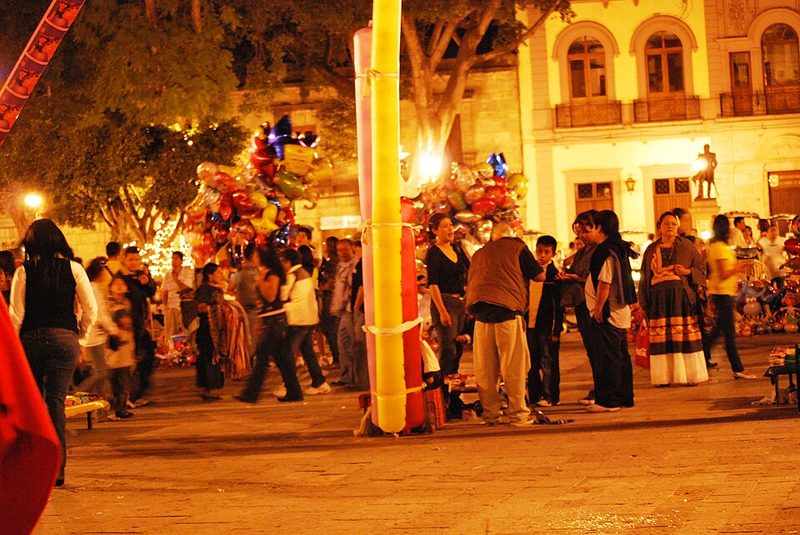
The plaza transforms after dark. The Cathedral is floodlit, the National Palace illuminated, and the enormous flag catches the light against the night sky. The crowds thin but don’t disappear — couples walk, food vendors set up along the edges, and the Aztec dancers sometimes perform into the evening.
During December, the combination of the winter ice rink, Christmas lights, and the lit Cathedral makes the Zocalo one of the more atmospheric spots in the city. It’s not exactly romantic (too many people for that) but it’s undeniably impressive.
If you’re there for the Grito on September 15, the nighttime spectacle of 100,000+ people packed into the square, fireworks overhead, the presidential cry from the balcony — it’s one of those moments where a city reveals what it actually cares about. Worth the crush.
More Than a Square
The Zocalo has been continuously occupied and fought over for almost seven centuries. Aztec emperors held court here. Spanish viceroys were sworn in here. The first shots of multiple revolutions echoed off these walls. Presidents shout from the balcony. Protestors fill the square. Pop stars play to a quarter million people. And every morning, without fail, someone raises a very large flag.
Most plazas are places where things used to happen. The Zocalo is a place where things keep happening. If you spend any time in Mexico City at all, you’ll end up here. It’s the kind of place that pulls you in whether you planned on it or not.