Cycling in a city of 22 million people, 6 million cars, and drivers whose relationship with lane markings is best described as “philosophical” might sound like a death wish. It’s not. Mexico City has invested heavily in cycling infrastructure over the past 15 years, and while it’s no Amsterdam, it’s become one of the most bikeable major cities in Latin America — especially on Sunday mornings, when something remarkable happens.
Sunday Ciclovia: Muevete en Bici
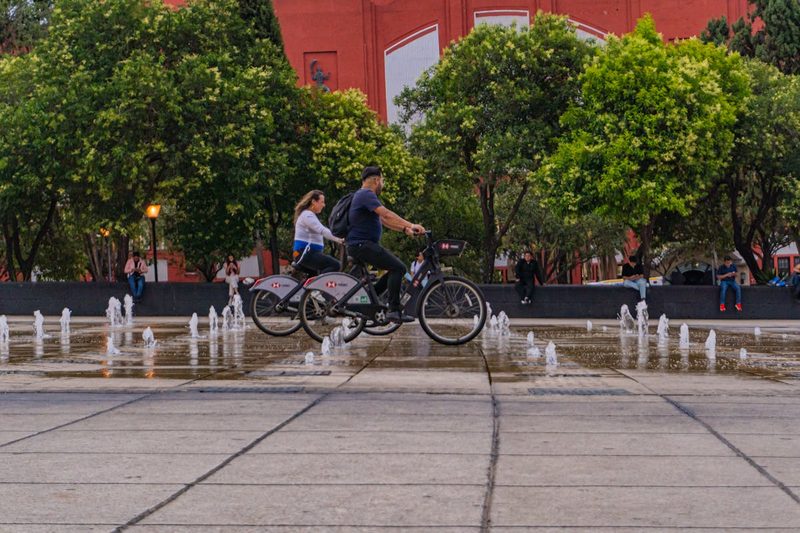
Every Sunday from 8:00 AM to 2:00 PM, the city closes major avenues to car traffic and opens them exclusively to cyclists, runners, skaters, and pedestrians. The program is called Muevete en Bici (“Move by Bike”), and the main route runs along Paseo de la Reforma from Chapultepec to the Historic Center, with additional closed streets extending the rideable area to roughly 55 km of car-free roads.
The atmosphere on Sunday mornings is exceptional. Reforma — normally a six-lane river of traffic — becomes a peaceful boulevard where families, fitness riders, casual tourists, and serious cyclists all share the pavement. Street vendors set up along the route selling fruit, agua fresca, and snacks. Temporary bike repair stations pop up at regular intervals. Music plays from speakers at rest points. The vibe is communal and relaxed, and it’s genuinely one of the best things you can do in Mexico City on a Sunday.
You don’t need your own bike. Free bike loans are available at multiple points along the Muevete en Bici route — just show an ID and they’ll lend you a bike for the duration of the event. The bikes are basic but functional. EcoBici stations (see below) are another option.
EcoBici: The Bike Share System
EcoBici is Mexico City’s public bike share system, operated by the city government since 2010. With over 480 stations and 6,800 bikes concentrated in central neighborhoods, it’s one of the largest bike share networks in Latin America.
Coverage
EcoBici stations are densely distributed in Condesa, Roma, Polanco, Juarez, Cuauhtemoc, the Historic Center, and surrounding colonias. The network doesn’t extend to southern neighborhoods like Coyoacan, San Angel, or Xochimilco, nor to most of the northern or eastern city. Within the coverage zone, stations are typically 300-400 meters apart — you’re never far from one.
How to Use It
Short-term passes are available for visitors:
- 1-day pass: Allows unlimited 45-minute trips for 24 hours.
- 3-day pass: Same structure, 72 hours.
- 7-day pass: Good for a week.
Register through the EcoBici app or website. You’ll need a credit or debit card and a phone with the app installed. The system gives you a temporary code to unlock bikes at any station. Each trip is free for the first 45 minutes; after that, overage charges apply. To avoid charges, simply dock your bike at any station before 45 minutes and immediately take out another if you need more time. The clock resets with each new checkout.
Prices are very reasonable — a 1-day pass costs around 130 MXN (roughly $7-8 USD), a 3-day about 260 MXN, and a 7-day about 420 MXN.
Bike Quality
EcoBici bikes are heavy, upright city bikes with three speeds, a basket, fenders, and integrated lights. They’re designed for durability, not speed. Don’t expect to set any records. They’re perfect for flat routes at a casual pace, which is exactly how most of central CDMX rides.
Cycling Infrastructure
Mexico City has been building dedicated bike lanes (ciclovias) since the mid-2000s. The network now covers roughly 200 km, with the most important routes being:
- Reforma: A protected bike lane runs the length of Paseo de la Reforma, separated from car traffic by a physical barrier. This is the city’s premier cycling corridor and connects Chapultepec to the Historic Center.
- Insurgentes: A bike lane runs along portions of Avenida de los Insurgentes, though it’s less consistently protected than Reforma’s.
- Condesa/Roma loop: Bike lanes on Avenida Amsterdam (the oval park in Condesa), Nuevo Leon, and connecting streets make the Condesa-Roma area the most bike-friendly zone in the city.
- Chapultepec: Internal paths within Chapultepec Park are popular for cycling, though technically some sections restrict bikes. The paths around the main lake and along the park’s perimeter are generally accessible.
Quality of Infrastructure
The protected lanes on Reforma and in Condesa are genuinely good — physically separated from traffic, well-maintained, and clearly marked. Other bike lanes range from decent to nominal (painted lines on the pavement that cars regularly ignore). The city is expanding the network, but coverage outside the central western neighborhoods is still sparse.
Best Cycling Routes
The Reforma Corridor
Start at Chapultepec Park, ride east along Reforma’s protected bike lane past the Angel of Independence, the Diana Fountain, and the major glorietas (traffic circles) to the Alameda Central and the Historic Center. About 7 km one way, flat, well-paved. This is the quintessential CDMX cycling experience and the best way to see Reforma’s monuments without fighting traffic.
The Condesa Loop
Circle Avenida Amsterdam in Condesa — the oval park that defines the neighborhood. It’s only about 1.5 km around, but it’s tree-lined, pleasant, and connects to bike lanes heading into Roma Norte or west toward Chapultepec. Good for a warm-up or a casual ride through one of the city’s most attractive neighborhoods.
Chapultepec Park
The internal roads and paths of Chapultepec’s first and second sections offer several kilometers of relatively traffic-free riding through forests, past lakes, and between museums. On weekday mornings, the park is quiet enough to ride comfortably. On Sundays, it’s part of the Muevete en Bici route.
Coyoacan via Insurgentes
For a longer ride (about 12-15 km one way from Roma), follow Insurgentes south through Colonia del Valle toward Coyoacan. The bike infrastructure is less complete on this route — portions have bike lanes, portions don’t — but the avenue is wide and the riding is manageable during off-peak hours. Not recommended during rush hour.
Safety
We won’t sugarcoat this. Cycling in Mexico City outside of protected lanes and the Sunday ciclovia requires vigilance. Drivers don’t always see cyclists. Buses and peseros (minibuses) are particularly unpredictable — they pull over without signaling and swing wide around turns. Potholes, uneven pavement, and metal utility covers are constant hazards.
That said, cycling here has gotten dramatically safer over the past decade. Protected infrastructure, growing driver awareness, and a critical mass of riders have all helped. Follow these guidelines:
- Stick to protected lanes whenever possible. Reforma and the Condesa/Roma network are your safest bets.
- Avoid riding at night. Bike lanes aren’t always lit, and driver visibility drops.
- Wear a helmet. EcoBici doesn’t provide them. Bring your own or buy one locally.
- Be defensive. Assume drivers don’t see you. Make eye contact at intersections. Signal your turns clearly.
- Avoid rush hours. 7:30-9:30 AM and 5:30-8:00 PM are the worst times for cycling on streets that mix with car traffic.
- Don’t ride on major avenues without bike lanes. Insurgentes, Tlalpan, and Circuito Interior without bike infrastructure are not cycling territory.
- Lock up carefully. Bike theft is common. Use the EcoBici system (you dock it and it’s their problem) or bring a serious lock.
Practical Tips
- Altitude matters. Mexico City is at 2,240 meters. If you’ve just arrived, even flat cycling will feel harder than expected. Give yourself a day or two to acclimatize before any ambitious rides.
- Air quality: On bad air days (usually in dry season, March-May), cycling means inhaling more pollution than you would in a vehicle. Check the air quality index before long rides.
- Flat city, mostly: The central neighborhoods where most cycling happens are essentially flat. Hills only become a factor heading west toward Santa Fe or south toward the UNAM campus.
- EcoBici app: Shows real-time station availability, so you can check whether your destination station has open docks before you ride there. This matters during peak Sunday usage.
- Bike shops: Several good bike shops in Roma and Condesa rent higher-quality bikes for full-day or multi-day periods if you want something better than EcoBici. Ask your hotel for recommendations.
The Big Picture
Mexico City’s commitment to cycling is genuine and growing. The transportation network has expanded to include cycling as a legitimate option, not just a weekend novelty. For visitors, the Sunday Muevete en Bici alone is worth rearranging your schedule around. Riding down a car-free Reforma on a clear Sunday morning, with Chapultepec’s trees on one side and the city skyline on the other, is one of the best free experiences in Mexico City.
And if you’re here for more than a few days, an EcoBici pass transforms how you get around. The system covers exactly the neighborhoods most tourists spend time in, trips are short and flat, and there’s no faster way to hop between a cafe in Roma, a museum on Reforma, and lunch in Condesa. At $7 a day, it’s the best deal in the city.