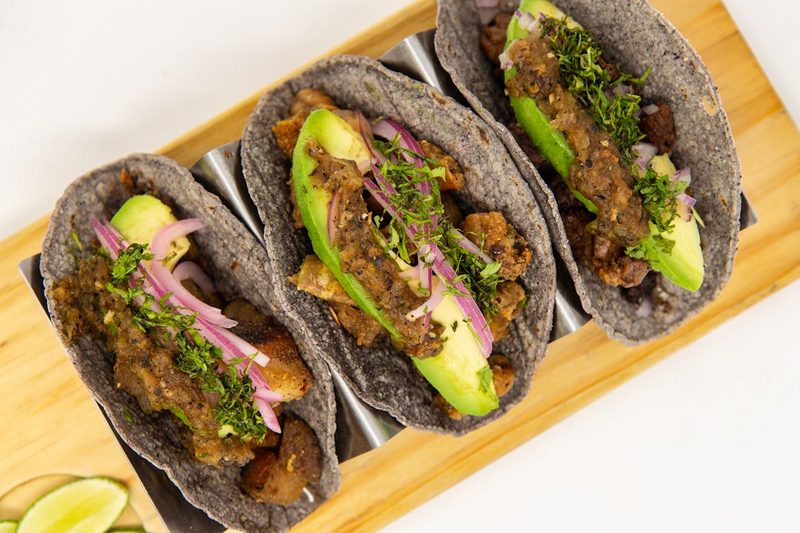
Every cuisine in Mexico City is worth exploring, but let’s be honest — you’re here for the Mexican food. And the city delivers on a scale that’s hard to overstate. This isn’t just the capital of Mexico; it’s the capital of Mexican cooking, a place where regional traditions from 32 states converge in markets, street stalls, fondas, and restaurants that range from $1 taco stands to $200 tasting menus. We’ve eaten our way through most of it, and we’re still finding things that surprise us.
The sheer variety is the first thing that hits you. Mexico City isn’t one cuisine — it’s dozens, pulled from every corner of the country and reassembled here. Oaxacan mole vendors set up next to Sinaloan mariscos carts. Yucatecan cochinita pibil shows up in the same market hall as Pueblan cemitas. The city absorbs it all and makes it its own.
The Essential Dishes

Tacos al Pastor
The undisputed king. Marinated pork stacked on a vertical spit (borrowed from Lebanese shawarma immigrants in the 1930s), shaved to order, topped with pineapple, onion, and cilantro. The best ones come from trompos that have been spinning for hours — the exterior caramelized, the interior juicy. El Huequito in the Historic Center claims to have invented them. Taqueria Los Cocuyos on Bolivar street does a version at midnight that’s become legendary. El Vilsito in Narvarte operates out of a mechanic’s shop after dark and consistently ranks among the city’s best.
Expect to pay 15-25 pesos per taco at street level. If you’re paying more than 40 at a sit-down place, you’re in tourist markup territory.
Mole
Mexico City is where you can taste mole from every region without leaving the city limits. The big ones: mole negro and mole coloradito from Oaxaca, mole poblano from Puebla (the one with chocolate), mole verde, and pipian. Mercado de San Juan has vendors selling fresh mole paste by the kilo. For sit-down mole experiences, Azul Historico inside the Downtown Mexico hotel serves an excellent rotating mole menu, and Limosneros in the Historic Center does a refined version that’s worth the splurge.
Pozole
This hominy-and-meat stew comes in three colors — rojo (red chile), verde (green tomatillo), and blanco (plain broth). It’s traditionally a weekend dish, and many of the best spots only serve it Thursday through Sunday. La Casa de Tono is a chain that locals swear by — cheap, no-frills, and the pozole rojo is exactly what you want at 2 AM after too many mezcals.
Chiles en Nogada
Available mainly from July through September (tied to walnut season and Independence Day on September 15th), this is a poblano pepper stuffed with picadillo, covered in walnut cream sauce, and sprinkled with pomegranate seeds — green, white, and red like the Mexican flag. It’s theatrical, seasonal, and genuinely delicious. El Cardenal and Cafe de Tacuba in the Historic Center both do excellent versions.
Tlacoyos
Thick, oval masa cakes stuffed with beans, requesón, or chicharrón, then griddled and topped with nopales, salsa, and crumbled cheese. These are pre-Hispanic street food at its most elemental. You’ll find them at virtually every market in the city. The ones outside Metro Coyoacan are a good starting point.
Where to Eat: By Neighborhood
Centro Historico — The Traditional Core
The Historic Center is where you go for the old-school experience. Cafe de Tacuba has been open since 1912 and serves dishes that haven’t changed much since. El Cardenal is the power-breakfast spot — politicians, businesspeople, and tourists all competing for tables before 9 AM. Los Cocuyos runs a street taco operation on Bolivar that pulls crowds well past midnight.
For market eating, Mercado de San Juan is famous for exotic meats and imported cheeses, while Mercado Merced (the city’s largest) is overwhelming but rewarding if you know what you’re looking for.
Roma — Modern Mexican
Roma is where chefs take traditional recipes and push them. Contramar (technically Colonia Roma, practically its own institution) does a tuna tostada and a grilled-and-sauced whole fish that people fly to Mexico City specifically to eat. Maximo Bistrot on Tonala street works with market-fresh ingredients and changes the menu daily. Rosetta, in a gorgeous Art Nouveau mansion, blends Italian and Mexican techniques into something genuinely original.
The Roma street food scene is strong too — Taqueria Orinoco (originally from Monterrey) does machaca and carne asada breakfast tacos that’ll ruin you for lesser versions.
Markets Everywhere
If you eat at only one market, make it Mercado Roma — though purists will argue it’s more of a food hall than a real market. For the authentic experience, Mercado Medellin in Roma Sur specializes in Caribbean and South American ingredients. Mercado Coyoacan has sit-down tostada stalls that are worth the trip south.
Price Ranges
Street tacos: 12-30 pesos each. Market fondas: 80-150 pesos for a comida corrida (set lunch). Mid-range restaurants: 200-500 pesos per person. The high end (Pujol, Quintonil) starts at 2,500+ pesos for tasting menus.
The best value in Mexico City is almost always the comida corrida — a multi-course set lunch served at fondas and small restaurants between 1 PM and 4 PM. Soup, rice, a main course, dessert, and agua fresca for under 100 pesos. It’s how the city actually eats.
Tips for Eating Well
Follow the crowds. If a taco stand has a line at 10 PM, get in it. If a fonda is empty at 2 PM, keep walking. Mexicans eat late — lunch starts at 2, dinner at 9 — and the best food appears on the schedule the locals keep.
Don’t fear the street food. The turnover is high, the ingredients are fresh, and the salsas are made daily. The biggest mistake visitors make is sticking to restaurants when the best tacos in the city are being served on a folding table under a tarp.
For a complete overview of the city’s dining landscape, including international options, check our main food and restaurant guide.