Mexico City is a landlocked city that eats seafood like it’s on the coast. That’s not a contradiction — it’s a testament to supply chains, cultural obsession, and the fact that both the Pacific Ocean and the Gulf of Mexico are close enough that fresh fish arrives daily. The seafood here is serious. From the ceviche stands in neighborhood markets to the white-tablecloth restaurants where a whole grilled fish costs what a car payment should, Mexico City’s relationship with seafood is one of the things that separates it from other inland capitals.
The variety is staggering. Mexico has over 11,000 kilometers of coastline, and the species that come from it — huachinango (red snapper), robalo (snook), camarones (shrimp), pulpo (octopus), marlins, tuna, oysters, clams — show up in Mexico City restaurants and markets with a freshness that challenges assumptions about how far from the sea you can be and still eat great fish.
Contramar: The Restaurant That Started a Movement

We have to start with Contramar because everyone does, and because it genuinely deserves the attention. Gabriela Camara’s restaurant in Roma is one of the most celebrated dining rooms in Mexico, and it did more than any other single restaurant to convince the world that Mexico City could be a great seafood city.
The signature dish is the tuna tostadas — raw tuna with chipotle mayo on a crispy tortilla — and the half-red, half-green grilled whole fish (pescado a la talla). Both are now widely copied across the city, which is the sincerest form of flattery. But what makes Contramar special isn’t any single dish. It’s the philosophy: source the best fish possible, treat it simply, and serve it in a room that feels like a permanent lunch party.
Getting a table at Contramar requires either a reservation made well in advance or a willingness to show up when the doors open and wait. Lunch is the main event — this is not primarily a dinner restaurant — and the crowd is a mix of politicians, artists, food industry people, and tourists who did their homework. The prices are high by Mexico City standards but moderate by international ones. You’ll spend 500-800 pesos per person for a memorable meal, which is about what a mediocre lunch costs in Manhattan.
Market Seafood: The People’s Fish
For every person eating at Contramar, there are ten thousand eating seafood at a market stall or a neighborhood cocteleria, and much of that food is just as good. The market mariscos tradition in Mexico City is one of the great underappreciated food cultures in the world.
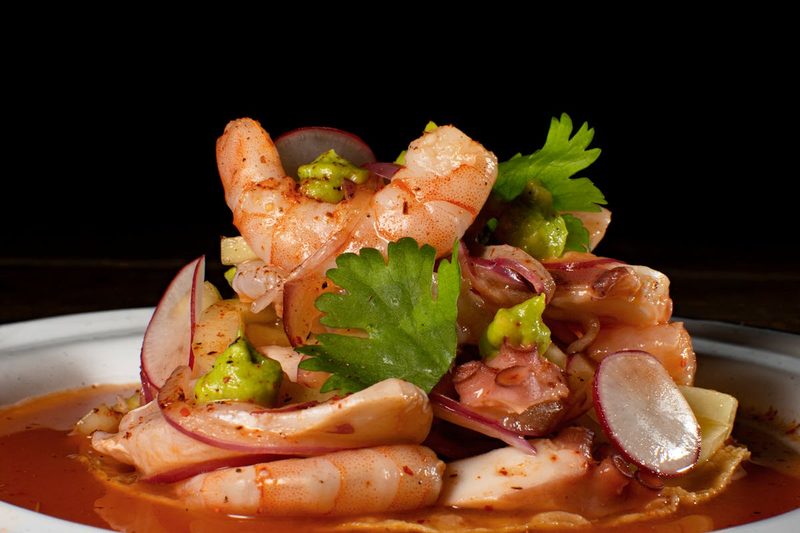
At places like Mercado de la Merced, Mercado de Jamaica, and Mercado de San Juan, seafood stalls serve ceviche, aguachile, shrimp cocktails (coctel de camaron), fried whole fish, and seafood soups at prices that make restaurant dining feel like a scam. The cocktail de camaron — a tall glass filled with shrimp in a tomato-based sauce with avocado, cilantro, onion, and lime — is one of the most satisfying things you can eat in this city, and it rarely costs more than 80-120 pesos.
Aguachile deserves special mention. Originally from Sinaloa, this dish of raw shrimp “cooked” in a fiercely spicy green chile and lime sauce has become a Mexico City obsession. The heat level ranges from “bracing” to “punishing,” and finding the right spot that balances freshness, spice, and technique is one of those quests that can happily occupy several lunch hours. The market versions tend to be spicier and more straightforward than the restaurant ones.
Coctelerias and Seafood Counters
Coctelerias are the seafood equivalent of taqueriias — small, casual spots dedicated to one category of food, done well, at fair prices. A typical cocteleria has a counter, maybe a few tables, a display case of fish on ice, and a menu that runs through the greatest hits: ceviche, tostadas de ceviche, coctel de camaron, campechana (mixed seafood cocktail), ostiones (oysters), and various preparations of shrimp.
The best coctelerias are neighborhood institutions, known by reputation, busy at lunch, and empty by dinner because they sold everything. They buy their fish fresh each morning, prepare it throughout the day, and close when it’s gone. This model guarantees freshness in a way that restaurants with evening service and larger inventories sometimes can’t match.
Restaurant Seafood Beyond Contramar
Contramar gets the press, but Condesa and Roma have a dozen other excellent seafood restaurants. La Docena, originally from Guadalajara, has brought its oyster bar and seafood small plates concept to the city with great success. The oysters are excellent and the casual vibe — think crowded bar, cold beer, platters of raw and grilled shellfish — makes it one of the most fun places to eat in the neighborhood.
For a different experience, the marisquerias in less trendy neighborhoods often serve the most authentic Sinaloan, Veracruzano, or Nayarit-style seafood. These are restaurants that cater to communities from those coastal states, and the food reflects traditions that haven’t been adapted for international palates. The fish tacos at a Baja-style spot or the ceviche at a Nayarit marisqueria might not photograph as well as Contramar’s tuna tostadas, but they can be equally delicious.
What to Order
For your first seafood meal, start with tostadas de ceviche or tuna tostadas — they’re everywhere and they’re an excellent barometer of quality. If the tostada is good, explore the rest of the menu. If it’s not, move on. Coctel de camaron if you want something substantial. Aguachile if you want heat. Whole grilled fish (pescado zarandeado or pescado a la talla) if you’re at a sit-down restaurant and want a showpiece. Tacos de camaron or tacos de pescado if you’re at a casual spot.
Raw preparations are safe at reputable places — the turnover is high enough that freshness isn’t usually an issue. If a place looks busy and the fish looks and smells clean, trust it.
Practical Notes
Seafood in Mexico City is best at lunch. Most marisquerias and coctelerias are daytime operations, and even restaurants like Contramar emphasize their lunch service. The fish is freshest, the atmosphere is liveliest, and the tradition of a long seafood lunch with cold beer is one of the great rituals of eating in this city.
Fridays are the busiest day for seafood, following the Catholic tradition of not eating meat on Friday. Lent amplifies this dramatically — in the weeks before Easter, every seafood spot in the city is packed. Plan accordingly if you’re visiting during that period.