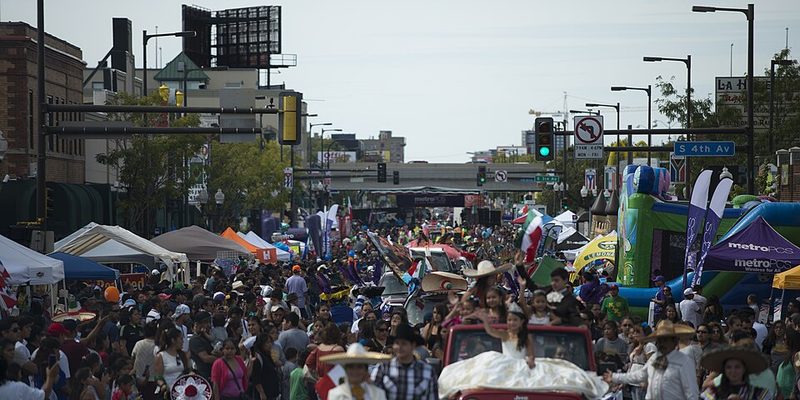
At 11 PM on September 15, every year, the president of Mexico steps onto the central balcony of the National Palace overlooking the Zocalo, rings a bell, and shouts the names of the heroes of Mexican independence. Hundreds of thousands of people packed into the plaza shout back. Fireworks explode. The crowd goes wild. The next day, September 16, is the official holiday — but the night before is the party.
This is the Grito de Independencia, and it’s the most important civic ritual in Mexico. Understanding it — and the eleven-year war that produced it — gives you a framework for making sense of the monuments, street names, and celebrations that you’ll encounter throughout Mexico City.
The Colony Before the War

By 1810, New Spain had been a Spanish colony for nearly three centuries. Mexico City was the colonial capital and one of the largest cities in the Western Hemisphere, with a rigid social hierarchy based largely on race and birthplace. At the top were the peninsulares — Spaniards born in Spain who held the highest government and church positions. Below them were the criollos — people of Spanish descent born in the Americas, who were often wealthy but systematically excluded from political power. Below them, the mestizo, indigenous, and African-descended populations occupied increasingly marginalized positions.
The criollos resented the peninsulares. The indigenous and mestizo populations resented everyone above them. Napoleon’s 1808 invasion of Spain — which removed the Spanish king and created a power vacuum — gave all these resentments a political opening.
The Grito: September 16, 1810
The conspiracy that launched the independence movement was organized by criollo intellectuals and military officers in the Bajio region, northwest of Mexico City. When the plot was discovered in September 1810, one of the conspirators — Father Miguel Hidalgo y Costilla, parish priest of the town of Dolores — decided to act immediately rather than wait.
In the early hours of September 16, 1810, Hidalgo rang the church bell to summon his parishioners and delivered an impassioned speech calling for rebellion against the Spanish authorities. The exact words are disputed — different accounts give different versions — but the essence was a call to arms for Mexican self-governance. This is the “Grito” that Mexico commemorates every September 15.
The bell Hidalgo rang now hangs above the central balcony of the National Palace in Mexico City. Every president rings it during the Grito ceremony. If you’re in the Zocalo on September 15, you’re seeing that same bell, and the connection across two centuries is direct.
The War: 1810-1821
What followed the Grito was not a clean, decisive revolution. It was an eleven-year civil war that was messy, bloody, and full of reversals. The key figures and events, in rough order:
Miguel Hidalgo (1810-1811)
Hidalgo’s initial revolt attracted tens of thousands of followers — mostly indigenous and mestizo people who had their own grievances against the colonial system. His forces captured several major cities but committed atrocities along the way, including a massacre of Spanish civilians in Guanajuato. Hidalgo never captured Mexico City. He was captured, tried, and executed by firing squad in July 1811. His head was displayed on the Alhondiga de Granaditas in Guanajuato as a warning.
Jose Maria Morelos (1811-1815)
After Hidalgo’s death, the movement’s leadership passed to another priest, Jose Maria Morelos, who proved to be a far more capable military strategist. Morelos organized the insurgent forces into an effective army, convened a congress that drafted Mexico’s first constitution (at Apatzingan in 1814), and articulated a vision of an independent, republican Mexico with racial equality and land reform.
Morelos controlled significant territory in southern Mexico for several years before being captured and executed in 1815. His political vision — more radical than what eventually emerged — remains influential in Mexican political thought.
Vicente Guerrero and the Final Phase (1815-1821)
After Morelos’s death, the insurgency fragmented into guerrilla bands, the most important led by Vicente Guerrero in the mountains of southern Mexico. The war dragged on without either side able to win decisively.
The end came not through military victory but through political realignment. In 1820, a liberal revolution in Spain threatened the privileges of Mexico’s conservative criollo elite and the Catholic Church. Suddenly, independence appealed not just to insurgents but to the very people who had been fighting against them. Agustin de Iturbide, a royalist military officer, switched sides, met with Guerrero, and together they negotiated the Plan de Iguala — a conservative independence agreement that guaranteed Catholic supremacy, racial equality (in theory), and a constitutional monarchy.
Mexico achieved independence in September 1821, when Iturbide’s forces entered Mexico City. The independence that was won looked very different from what Hidalgo and Morelos had fought for — it was led by conservatives rather than radicals, and the social revolution that the early insurgents envisioned didn’t materialize.
Independence in Mexico City’s Landscape
The war for independence is written into Mexico City’s geography. You can’t walk through the city without encountering it:
The Angel of Independence on Paseo de la Reforma is the most prominent monument. The golden angel atop a 36-meter column was built in 1910 to commemorate the centennial of the Grito. The base contains the remains of Hidalgo, Morelos, Guerrero, and other independence heroes.
The Zocalo and National Palace are where the annual Grito ceremony takes place. The palace itself houses Diego Rivera’s murals depicting Mexican history, including scenes from the independence war.
Street names throughout the city honor independence figures: Hidalgo, Morelos, Guerrero, Allende, Aldama, Josefa Ortiz de Dominguez (the woman who warned the conspirators that their plot had been discovered, enabling Hidalgo to act). An entire major avenue — Paseo de la Reforma — was built by Emperor Maximilian and later renamed and repurposed as a gallery of independence and reform-era monuments.
September 15: Experiencing the Grito
If you’re in Mexico City on September 15, the Grito ceremony in the Zocalo is a must-see experience. Here’s what to expect:
The plaza fills up starting in the early evening. By 10 PM, it’s packed — we’re talking hundreds of thousands of people. At 11 PM, the president appears on the balcony, rings Hidalgo’s bell, and shouts the names of independence heroes. The crowd responds to each name with a roar. The ceremony ends with “Viva Mexico!” repeated three times, followed by the national anthem and fireworks.
The atmosphere is electric — patriotic, emotional, festive, and loud. Mexican flags are everywhere. Green, white, and red decorations cover the buildings. Street vendors sell flags, horns, and sombreros in the national colors. People bring their families, their friends, and enough food to feed both.
Practical notes: arrive early if you want to be close to the palace. The surrounding streets close to traffic. Metro is the best way in and out. Keep your belongings secure in the crowd. And don’t plan anything for September 16 that requires being functional before noon — the party goes late.
Understanding the Legacy
Mexican independence is celebrated as a triumphant national origin story, and in many ways it is. But the history is more complicated than the celebration suggests. The independence that was achieved in 1821 was conservative, not revolutionary. The social transformation that Hidalgo and Morelos fought for — land reform, racial equality, an end to colonial exploitation — took another century of civil wars, foreign interventions, and revolutions to even partially realize.
The fact that Mexico commemorates September 16, 1810 (the Grito) rather than September 27, 1821 (the actual date of independence) is itself revealing. Mexico chose to celebrate the beginning of the struggle rather than its messy, compromised conclusion. The revolution matters more than the result. That sensibility runs deep in Mexican political culture, and understanding it helps you make sense of a country that celebrates its fighters more than its settlements.
For more on the historical layers of Mexico City, and to see the Zocalo where the Grito takes place, see our dedicated guides.