
Mexico has one of the richest design traditions in the Americas — a lineage that runs from pre-Columbian textiles and ceramics through colonial decorative arts to the mid-century modernism of Luis Barragan and the vibrant folk art that fills markets across the country. Mexico City has several museums dedicated to preserving and exhibiting this tradition, and the best of them are worth seeking out even if “design museum” doesn’t normally make your must-visit list.
Here are the three design-focused museums we recommend, plus a few bonus picks.
Franz Mayer Museum

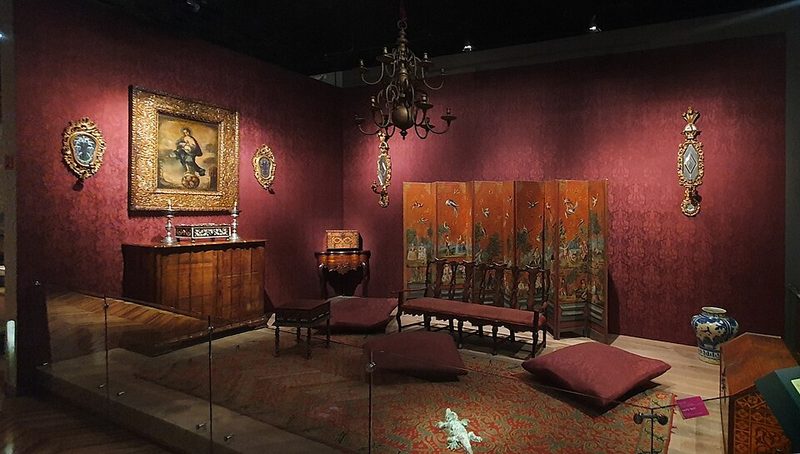
The Franz Mayer is Mexico City’s premier decorative arts museum and one of the most rewarding small museums in the city. It occupies the beautifully restored Hospital de San Juan de Dios, a 16th-century building on the north side of the Alameda Central park, and houses the extraordinary personal collection of German-born Mexican businessman Franz Mayer (1882-1975).
Mayer spent decades collecting Mexican and European decorative arts: colonial-era furniture, Talavera pottery, silver, textiles, clocks, religious art, rare books, and ceramics spanning four centuries. The collection is displayed in intimate galleries around a central courtyard garden with a fountain and lush vegetation that’s one of the most peaceful spots in the Historic Center.
The permanent collection alone would justify the visit, but the Franz Mayer also hosts excellent temporary exhibitions focused on contemporary design — graphic design, industrial design, typography, and architecture. These rotating shows are consistently well-curated and bring in international names alongside Mexican designers.
The museum library, housed in the former church, contains over 14,000 rare books and is one of the most beautiful rooms in Mexico City. The on-site cafe, run by a good local restaurant group, makes for a pleasant stop.
Open Tuesday through Sunday. Admission is around 70 pesos. Free on Tuesdays.
Museo de Arte Popular (MAP)
If you want to understand Mexican folk art as a design tradition rather than just souvenir shopping, MAP is the place. The Museum of Popular Art occupies an Art Deco building near the Alameda that was formerly a fire station, and its collection covers the full range of Mexican folk art: alebrijes (the carved and painted fantastical creatures from Oaxaca), Talavera ceramics, lacquerware from Michoacan, papier-mache judas figures, textiles from dozens of indigenous communities, toys, masks, metalwork, and glass.
The key thing about MAP is that it presents folk art with the seriousness it deserves. These objects aren’t treated as quaint curiosities or rustic craft — they’re presented as sophisticated design with deep cultural roots, technical mastery, and aesthetic ambition. A master weaver from Oaxaca working on a backstrap loom is doing something as technically demanding and culturally rich as anything coming out of a Milan design studio. MAP makes that case convincingly.
The museum hosts a famous annual alebrije parade each October, when enormous papier-mache fantastical creatures are paraded through the streets from the Zocalo to the Angel of Independence. It’s one of Mexico City’s most photogenic events.
The ground floor gift shop is one of the best places in the city to buy high-quality Mexican folk art. Prices are higher than at markets, but the quality is curated and everything is authentic.
Closed on Mondays. Admission around 60 pesos. Free on Sundays.
MODO (Museo del Objeto del Objeto)
MODO — the Museum of the Object of the Object, yes the name is deliberately redundant — is dedicated to design and communication through everyday objects. It occupies a restored Art Nouveau house in Colonia Roma and focuses on how design shapes daily life through packaging, advertising, typography, and the material culture of Mexico’s 20th century.
The permanent collection includes over 100,000 objects: vintage product packaging, advertisements, posters, magazines, political propaganda, and commercial design from the 1900s to the present. Temporary exhibitions rotate regularly and tend to focus on specific themes — Mexican advertising history, political poster design, the evolution of brand identities.
MODO is a niche museum and we won’t pretend otherwise. If you’re a graphic designer, an advertising professional, or someone who finds old packaging genuinely interesting, you’ll love it. If you’re looking for the broad appeal of the Anthropology Museum, this isn’t it. But for the right visitor, it’s a small treasure — a museum that takes seriously the idea that the designed objects we interact with every day are worth studying and preserving.
The building itself is handsome, and the Roma neighborhood location means you can pair a visit with lunch at one of the many excellent restaurants nearby.
Open Monday through Sunday. Admission around 50 pesos.
Other Design-Adjacent Spots
Archivo Diseno y Arquitectura — A small archive and exhibition space in Colonia Doctores dedicated to Mexican design and architecture. The exhibitions rotate and tend to be thoughtful, exploring specific designers, movements, or typologies. Free.
Luis Barragan House and Studio — Not a design museum per se, but the UNESCO World Heritage-listed home and studio of Mexico’s most famous architect is a pilgrimage site for anyone interested in design. Visits are by appointment only and should be booked well in advance.
Museo Numismatico (Casa de Moneda) — The national mint museum in the Historic Center covers the history of Mexican currency from cacao beans to modern coins. The design of coins and banknotes is a fascinating niche of graphic design, and the building is beautiful. Free.
Why Design Museums Matter Here
Mexico’s design heritage is distinct from the European and American traditions that dominate most international design discourse. The integration of indigenous craft traditions with colonial Spanish techniques, and later with modernist and contemporary approaches, produced something that doesn’t fit neatly into categories. A Talavera tile pattern from Puebla shares DNA with Islamic geometric art, Spanish majolica, and indigenous Mexican ceramics all at once.
The Franz Mayer, MAP, and MODO each illuminate a different facet of this story. The Franz Mayer covers the colonial and decorative arts tradition. MAP celebrates the living folk art tradition. MODO focuses on the commercial and graphic design of modern Mexico. Together they give you a picture of Mexican design that’s richer and more complex than any single museum could provide.
For the full range of Mexico City’s museum offerings, from pre-Hispanic artifacts to contemporary art, check our complete guide.