
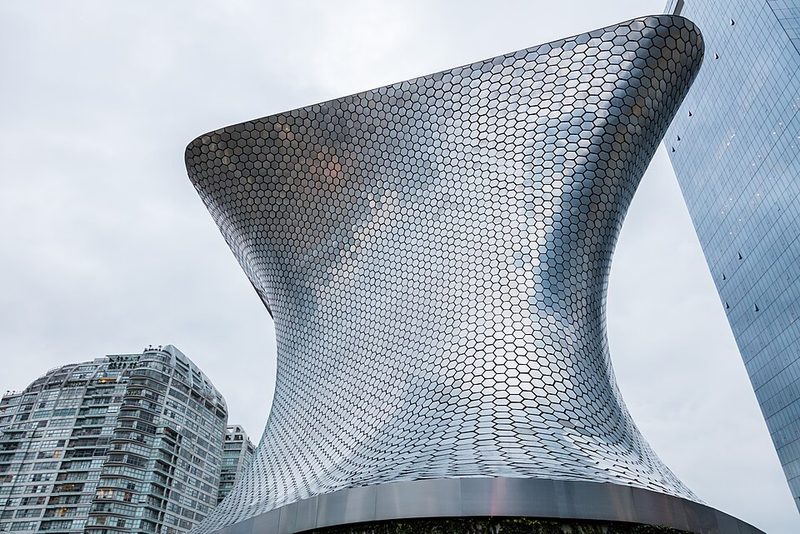
Mexico City has more museums than any city in the Western Hemisphere. Over 150 at last count, which is a number that sounds made up but isn’t. The good news is that you don’t need to visit all of them. The bad news is that the top tier is so strong that narrowing it down to five still means you’ll need several days to do them justice.
We’ve spent years visiting and revisiting the city’s museums, and what follows is our honest take on the five that every visitor should prioritize. These aren’t obscure picks or contrarian choices — they’re the consensus greats, and the consensus is correct. Each one offers something you genuinely can’t experience anywhere else on earth.
National Museum of Anthropology

The National Museum of Anthropology isn’t just Mexico’s best museum — it’s one of the best museums in the world, period. The collection of pre-Columbian artifacts here is the largest and most important anywhere, covering Aztec, Maya, Olmec, Zapotec, and dozens of other Mesoamerican civilizations across 23 exhibition halls.
The building itself is a mid-century masterpiece designed by Pedro Ramirez Vazquez, anchored by a massive stone umbrella fountain in the central courtyard that’s become one of the most photographed architectural details in Latin America. The ground floor covers archaeology, the upper floor covers living indigenous cultures, and you could spend two full days here without seeing everything.
The Mexica (Aztec) hall is the crown jewel. The Sun Stone sits at its center, drawing crowds the way the Mona Lisa does at the Louvre — except the Sun Stone actually lives up to the hype. But don’t blow past the Maya hall with its jade death masks from Palenque, or the Oaxaca gallery where Tomb 7 treasures from Monte Alban are displayed in dim light that makes the gold glow.
Give this place at least three hours. Four is better. Mornings on weekdays are your best bet for manageable crowds.
Palace of Fine Arts
The Palace of Fine Arts is the kind of building that stops traffic. A confection of Art Nouveau and Art Deco built with Italian Carrara marble, it’s been slowly sinking into Mexico City’s soft lakebed since construction started in 1904. The exterior is pure spectacle, but the interior is what earns it a spot on this list.
The upper floors house murals by Mexico’s four greatest painters: Diego Rivera, David Alfaro Siqueiros, Jose Clemente Orozco, and Rufino Tamayo. Rivera’s “Man at the Crossroads” — the mural originally commissioned for Rockefeller Center and destroyed because it included Lenin — was recreated here by Rivera himself. It’s enormous, politically charged, and impossible to look away from.
The building also functions as a performing arts venue. The Ballet Folklorico de Mexico performs here regularly, and catching a show in this building, with its Tiffany-style glass curtain depicting the Valley of Mexico volcanoes, is one of those experiences that justifies the trip on its own.
Frida Kahlo Museum (Casa Azul)
The Blue House in Coyoacan is where Frida Kahlo was born in 1907 and where she died in 1954. It’s the most visited museum in Mexico City, and the lines reflect that — weekend waits can stretch past an hour. Buy tickets online with a timed entry slot, or resign yourself to standing in the sun.
The collection of Kahlo’s actual paintings here is smaller than you’d expect. Her major works are scattered across international museums and private collections. What makes the Blue House special is context. This is her kitchen, her garden, her studio, her wheelchair, her corsets. The intimacy is the point. You’re not looking at art in a gallery — you’re standing in the place where the art was made, and where the pain that produced it was lived.
Pair this with the nearby Diego Rivera Studio Museum and you’ve got a full art day in Coyoacan. The neighborhood’s plazas and markets round out one of the best single-day itineraries in the city.
Chapultepec Castle
Chapultepec Castle sits on top of a hill in Chapultepec Park, overlooking the city and Paseo de la Reforma. It’s the only royal castle in the Americas, which is a fact that surprises people who assume all of Latin America’s colonial architecture is churches and convents.
Built in the 1780s as a viceregal retreat, the castle served as a military academy, an imperial residence for Emperor Maximilian and Empress Carlota, and finally the presidential palace before becoming the National History Museum. The museum covers Mexican history from the conquest through the Revolution, but the real draw is the building itself — the ornate imperial chambers, the murals, and the terrace views that on clear days reach the snow-capped volcanoes Popocatepetl and Iztaccihuatl.
The fifteen-minute walk up the hill gets steep near the top, but it’s manageable for anyone in reasonable shape. Go early for the best light and the thinnest crowds.
Templo Mayor Museum
In 1978, electrical workers digging near the Zocalo struck a massive stone disc depicting the dismembered goddess Coyolxauhqui. That discovery triggered one of the most important archaeological excavations in Mexican history, unearthing the foundations of the Aztec empire’s main temple — the spiritual heart of Tenochtitlan, buried beneath the colonial city for over four centuries.
The Templo Mayor Museum sits on and around those ruins, right next to the Metropolitan Cathedral. The outdoor section lets you walk among the excavated foundations. The indoor galleries house thousands of objects found on site — sacrificial knives, stone skulls, offerings to Tlaloc and Huitzilopochtli, and the Coyolxauhqui disc itself.
What makes this museum different from the Anthropology Museum is immediacy. These objects weren’t collected from around the country and brought here. They were found right here, beneath your feet. You’re standing on the exact spot where Aztec priests performed ceremonies that shaped an empire. That kind of direct connection to history is rare anywhere in the world.
Planning Your Museum Days
All five of these museums are closed on Mondays, which is standard in Mexico. Sundays offer free admission for Mexican residents at national museums, which means bigger crowds but a more lively atmosphere.
The Anthropology Museum and Chapultepec Castle are both in Chapultepec Park, so you can combine them in a single (long) day. The Templo Mayor is in the Historic Center, a short walk from Fine Arts. The Frida Kahlo Museum is in Coyoacan, which is a separate trip south.
For a deeper dive into Mexico City’s museum landscape — including the contemporary art spaces, science museums, and the smaller gems most tourists miss — check our full museums guide. But start with these five. They’re famous for a reason, and the reason is that they’re extraordinary.