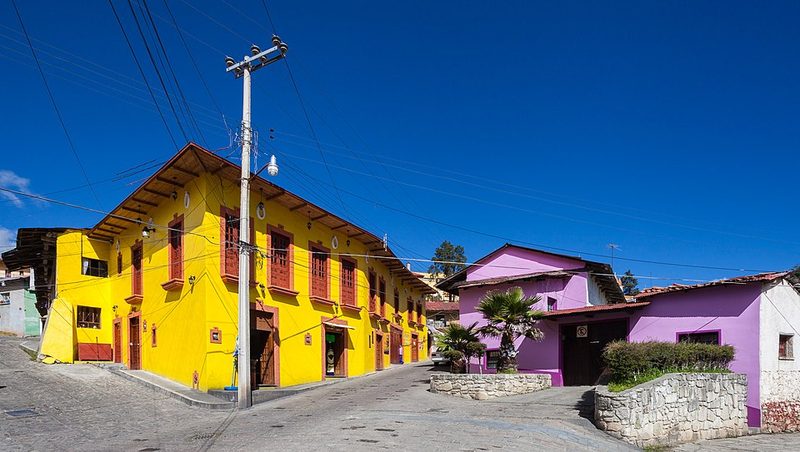
Mineral del Monte (also called Real del Monte) is a former silver mining town about two hours northeast of Mexico City, sitting at 2,700 meters in the mountains of Hidalgo state. It’s best known for two things: the Cornish miners who arrived in the 1820s and left a permanent mark on the town (including, improbably, introducing the pasty — which became the paste, one of Mexico’s most popular street foods), and the colonial-era mining infrastructure that made this one of the richest silver deposits in the Americas.
The Cornish Connection

In the early 19th century, after Mexican independence disrupted the Spanish-run mines, British mining companies brought Cornish miners to Mineral del Monte to revive the silver operations. The Cornish brought their mining expertise, their Methodist faith, football (the first football match in Mexico was played here in 1824 — long before the sport became Mexico’s national obsession), and their meat pastries.
The Cornish pasty — a folded pastry filled with meat and vegetables — was adapted into the Mexican paste (pronounced “PAH-steh”), which is now sold throughout Hidalgo state and beyond. Mineral del Monte claims to be the paste capital of Mexico, and the local versions — filled with everything from the traditional meat-and-potato to mole, beans, and even sweet fillings — are excellent.
The town has a small Paste Museum documenting this culinary crossover. The British Cemetery on the outskirts contains graves of the Cornish miners and their families, complete with English inscriptions and Anglican crosses in the middle of the Mexican highlands. It’s one of the more unexpected historical sites in the country.
The Town
Mineral del Monte is a classic Mexican mountain pueblo magico — steep cobblestone streets, colorful colonial buildings climbing hillsides, churches with ornate facades, and air that’s noticeably thinner and colder than Mexico City. The main plaza and the streets around the Parroquia de la Asuncion are the center of activity.
The town is small enough to walk in a few hours. The surrounding landscape — pine forests, rocky hills, mountain views — makes the drive from CDMX as scenic as the destination.
Getting There
By car: About 2-2.5 hours from Mexico City via the Mexico-Pachuca highway (Highway 85D). The road is well-maintained. From the Historic Center, head northeast toward Pachuca, then take the turnoff to Mineral del Monte.
By bus: Buses to Pachuca leave frequently from the Terminal Norte in Mexico City (~1.5 hours). From Pachuca’s central bus station, colectivos (shared minivans) run to Mineral del Monte (~30 minutes).
Day trip timing: Leave Mexico City by 8-9 AM, arrive by 11 AM, explore the town and eat pastes for lunch, drive back in the afternoon. It’s a comfortable day trip.
What to Do
Eat pastes: Multiple shops on the main streets. Try the traditional meat filling and at least one sweet version.
Mine tours: The Mina de Acosta offers underground tours of a restored colonial mine shaft. Helmets provided. Not for the claustrophobic.
Paste Museum: Small but charming. Documents the Cornish-Mexican culinary exchange.
British Cemetery: A 10-minute walk from the center. Haunting and historically fascinating.
Walk the streets: The town itself is the attraction. The steep streets, the colored facades, the mountain air, the quiet.
Tips
Bring warm clothes: At 2,700 meters, Mineral del Monte is cooler than Mexico City. Winter mornings can be genuinely cold (near freezing). Layers are essential.
Weekdays are better: Like most pueblos magicos, weekends bring crowds from Mexico City and Pachuca. Tuesday through Friday gives you the town at its quietest.
Combine with Pachuca: The state capital has its own attractions — the Reloj Monumental (a clock tower that’s basically a small-scale Big Ben), decent museums, and more paste shops.
Mineral del Monte is the kind of day trip that rewards curiosity. A Cornish mining town in the Mexican highlands, where football arrived before the telephone and meat pies became a national street food — it’s the kind of history that doesn’t fit neatly into categories. That’s what makes it worth the drive.