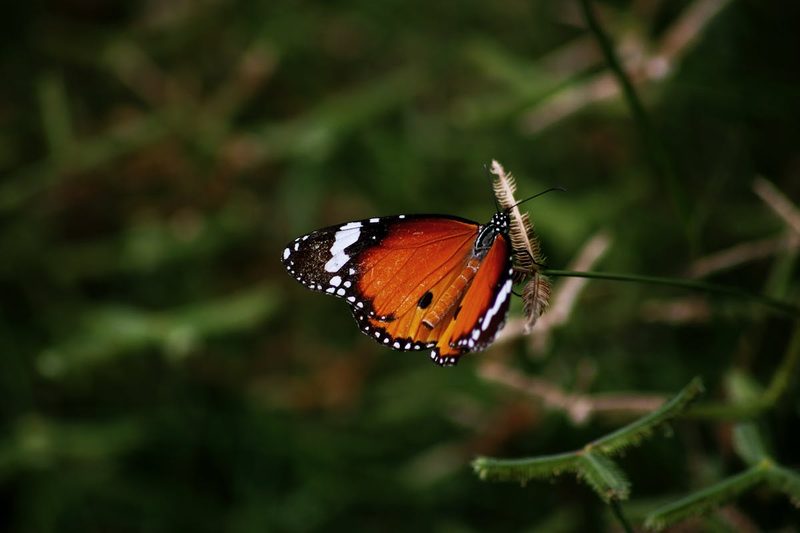
Every autumn, somewhere around 300 million monarch butterflies leave southeastern Canada and the northeastern United States and fly south. They cover up to 4,500 kilometers over two months, navigating by the angle of the sun and the Earth’s magnetic field, crossing borders and entire climate zones, to reach a handful of mountain valleys in central Mexico where they’ve never been before. No individual monarch makes the round trip — it takes four to five generations to complete the full cycle. The butterflies that arrive in Mexico in November have never seen these mountains, yet they find the same trees their great-great-grandparents used the previous year.
Nobody fully understands how they do it. What we do know is that the result — millions of monarchs covering the branches of Oyamel fir trees until the trees themselves appear to be made of butterflies — is one of the great natural spectacles on the planet. It’s been compared to the wildebeest migration in the Serengeti and the hatching of sea turtles on Pacific beaches. Having seen it, we’d argue it surpasses both in sheer visual impact.
The sanctuaries are 3 to 4 hours from Mexico City, making this a long but absolutely worthwhile day trip during the season (November through March). It’s the kind of experience that stays with you for years.
Understanding the Migration

The monarch butterfly migration is one of the most complex and least understood phenomena in the natural world. The butterflies that hatch east of the Rocky Mountains in late summer are biologically different from the generations that come before them. Called the “super generation,” these monarchs live eight to nine months instead of the typical two to five weeks, and they don’t reproduce until spring. Their sole purpose is to make the journey south, survive the winter, and begin the return trip north.
The journey itself is staggering. Individual butterflies travel 80 to 160 kilometers per day, riding thermals and wind currents to conserve energy. They can’t fly in cold or wet conditions, so their progress depends on weather. Most travel during the day and cluster together at night in trees along established “flyways” — the same routes used year after year, though no single butterfly has ever traveled them before.
When they reach the mountains of Michoacan and the State of Mexico, they settle in forests of Oyamel fir (Abies religiosa) at elevations between 2,400 and 3,600 meters. The microclimate in these forests is precisely what the monarchs need: cool enough to slow their metabolism and conserve energy through the winter, but not so cold that they freeze. The Oyamel firs act as thermal blankets, trapping warmth and moisture. If the trees are removed, the monarchs die. If the altitude changes significantly due to climate change, the habitable zone shifts — and the butterflies may not be able to follow.
In February and March, as temperatures rise, the monarchs become active again. They mate, begin the northward journey, and die along the way. Their offspring continue north, breeding and dying through successive generations until the super generation hatches again in late summer, and the cycle repeats.
The migration was designated a UNESCO World Heritage site in 2008 as the Monarch Butterfly Biosphere Reserve. It covers 56,259 hectares across the border of Michoacan and the State of Mexico, with core zones where human activity is restricted and buffer zones where sustainable forestry and farming are permitted.
The Sanctuaries

El Rosario
El Rosario is the largest and most visited sanctuary, and for good reason — the concentration of butterflies here is consistently among the highest of any site. It’s located near the town of Ocampo in Michoacan, about 3.5 to 4 hours from Mexico City by car.
The experience involves hiking uphill from the entrance to the forest area where the butterflies congregate. The trail is well-maintained but steep in places, climbing about 300-400 meters over roughly 1.5 kilometers. At 3,000-plus meters elevation, the thin air makes the climb more challenging than the distance suggests. Take it slow. Horses are available for hire near the entrance if you can’t or don’t want to hike — they’ll take you most of the way up for about 200-300 pesos.
When you reach the butterfly area, the effect is genuinely otherworldly. The trees are covered in dense clusters of monarchs — branches sagging under their weight, trunks wrapped in a living layer of orange and black wings. When the sun hits the clusters, the butterflies warm up and begin to fly, filling the air around you with a fluttering, swirling cloud. On the warmest days, the sky above the forest canopy turns orange with millions of wings. You can hear them — a soft, papery rustling that sounds like distant rain.
El Rosario charges an entrance fee of about 80-100 pesos per person. Local guides are available (and we’d recommend one, as they know where the densest clusters are on any given day). The sanctuary is open from roughly November to late March, with peak activity in January and February.
Sierra Chincua
Sierra Chincua is the second-most popular sanctuary, located near the town of Angangueo, also in Michoacan. It tends to be less crowded than El Rosario while offering a similar experience. The hike here is a bit longer (about 3 kilometers each way) but slightly less steep, winding through beautiful forest the entire way.
The butterfly concentration at Sierra Chincua varies year to year — some seasons it rivals El Rosario, other years the colonies are smaller. Local guides at the entrance can tell you what conditions are like on any given day and whether it’s worth the hike (it almost always is).
Entrance fee is similar to El Rosario, about 80-100 pesos. The infrastructure is slightly less developed — fewer food vendors, simpler facilities — which contributes to a more wilderness-oriented experience.
Which One to Choose
If you’re making one trip, El Rosario is the safer bet for the most dramatic butterfly concentration. If you’ve been before or prefer a quieter experience, Sierra Chincua is excellent. Some visitors do both in a single day, which is possible but exhausting given the altitude and hiking involved. We’d recommend picking one and giving yourself plenty of time there rather than rushing between two.
When to Go
The butterflies are present from roughly November through March, but timing within that window matters significantly.
November to December: The monarchs are arriving and settling in. Colonies are forming but may not yet be at peak density. The weather is cooler, which means the butterflies tend to stay clustered in trees rather than flying — impressive to see but less dynamic than peak season.
January to February: Peak season. The colonies are fully established and at maximum density. Warmer midday temperatures cause the butterflies to become active, creating the most dramatic aerial displays. This is when you’ll see the clouds of butterflies filling the sky that feature in every photograph and documentary. If you can only go once, aim for late January or February.
March: The monarchs are becoming active, mating, and beginning to disperse northward. The colonies thin out as the month progresses. Early March can still be excellent; by late March, most butterflies have left. The sanctuary closing dates vary by year depending on when the colonies depart.
Within any given day, the butterflies are most active between 11 AM and 2 PM, when the sun warms the forest. Morning visits may find the colonies still in their cool-weather clusters — beautiful but static. Afternoon visits risk afternoon clouds and cooling temperatures that send the butterflies back to their roosts.
Getting There
By Car
The most flexible option. From Mexico City, drive west on the Toluca highway (Highway 15D) to Toluca, then northwest on Highway 15 toward Zitacuaro, then follow signs to El Rosario or Angangueo/Sierra Chincua. Total driving time is 3.5 to 4 hours each way. The last section of road to the sanctuaries is winding mountain road — well-paved but slow. Leave Mexico City by 6 AM if you want to be at the sanctuary by mid-morning.
By Organized Tour
Given the distance and logistics, this is one day trip where a tour genuinely makes sense. Several operators in Mexico City run day trips to the sanctuaries during the season, typically departing very early (5-6 AM) and returning in the evening. Prices range from 1,200 to 3,000 pesos per person, usually including transport, entrance fees, and a guide. Some include lunch. The main advantage is not having to navigate mountain roads in an unfamiliar area. The main disadvantage is the very early start and very long day.
By Bus
Technically possible but not recommended for a day trip. You can take a bus from Mexico City to Zitacuaro (about 3 hours), then a local bus or taxi to the sanctuaries (another hour or more). The logistics of getting back the same day make this stressful. If you’re on a budget, an overnight stay in Angangueo or Zitacuaro is a better option.
What to Bring
Warm layers. The sanctuaries sit at 3,000 meters or above, and mornings are cold — temperatures in the single digits Celsius are common. By midday it warms up, so dress in layers you can shed. A light waterproof jacket is smart during any month, as mountain weather is unpredictable.
Sturdy shoes with good grip. The trails can be muddy and uneven, especially during or after rain. Hiking boots are ideal; running shoes are adequate. Sandals are a terrible idea.
Water and snacks. While vendors near the sanctuary entrances sell food and drinks, selection is limited and prices are marked up. Bring at least a liter of water per person for the hike.
A camera, obviously. But be aware that flash photography is prohibited near the butterfly clusters, and selfie sticks and drones are banned. The butterflies shouldn’t be disturbed — they’re in a state of near-hibernation during the cooler hours, and stress can be lethal when their energy reserves are at their lowest.
Conservation and Threats
The monarch migration is in trouble. The overwintering population in Mexico has declined by roughly 80% since the mid-1990s, from an estimated peak of nearly one billion butterflies to around 200-300 million in recent years. The causes are multiple and interconnected: habitat loss (both in Mexico’s Oyamel forests and along the migration route in the U.S. and Canada), pesticide use that kills milkweed — the only plant monarch caterpillars eat — climate change that disrupts weather patterns and shifts habitable zones, and illegal logging in the biosphere reserve.
Mexican authorities have made significant efforts to protect the sanctuaries. Illegal logging has been reduced dramatically since the early 2000s, and community-based conservation programs pay local residents to protect the forest rather than cut it. The ejido communities that own much of the land around the sanctuaries have become stakeholders in conservation through ecotourism revenue — your entrance fee directly supports this model.
But the threats from the north are harder to address from Mexico. The loss of milkweed habitat across the American Midwest — driven by herbicide-resistant GMO crops and the corresponding increase in herbicide use — has removed vast areas of monarch breeding ground. Climate change is shifting the timing of seasons, creating mismatches between when milkweed is available and when monarchs need it. Severe weather events during migration can wipe out significant portions of the population in a single storm.
Visiting the sanctuaries is a form of support. Tourism revenue funds conservation, employs local communities as guides and guardians of the forest, and creates economic incentives to protect the habitat. When you pay your entrance fee and hire a local guide, you’re directly contributing to the survival of one of nature’s most remarkable phenomena.
Before You Go
For context on Mexico’s biodiversity and the cultural significance of the natural world in Mexican history, the National Anthropology Museum in Chapultepec Park has excellent exhibits on how pre-Hispanic cultures understood and incorporated the natural world into their cosmology. Butterflies appear frequently in Aztec and other Mesoamerican art and mythology — the Aztecs believed the monarchs carried the souls of dead warriors. Seeing those representations before witnessing the migration in person adds a layer of meaning that transforms the experience from “impressive nature display” to something deeper.
The monarch butterfly migration is seasonal, it’s fragile, and its future is uncertain. We can’t guarantee it’ll exist in its current form in 50 years. If you’re in Mexico City between November and March and you have a day to spare, go see it. It’s one of those things you’ll tell people about for the rest of your life, and they won’t quite believe you until they see it themselves.