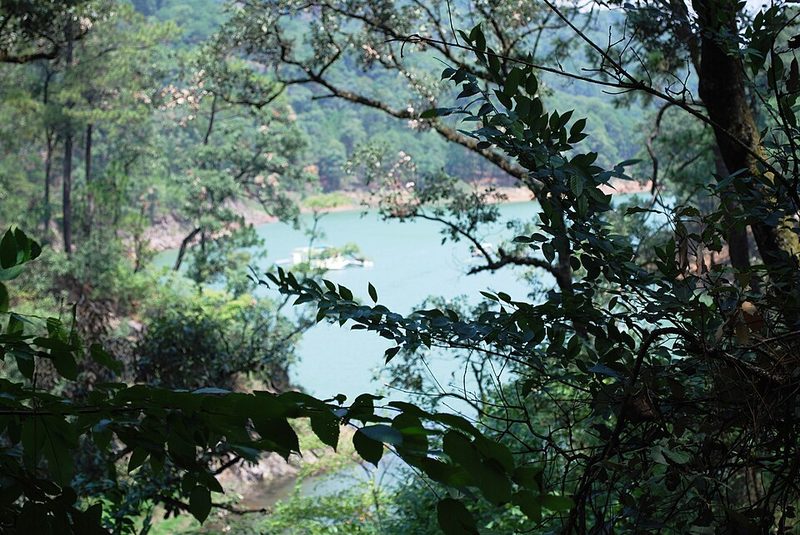
If you want to understand how wealthy Mexico City residents spend their weekends, drive 2.5 hours west to Valle de Bravo. The town sits on the shore of Lake Avandaro, surrounded by pine-forested mountains, and it’s been the capital’s premier weekend escape for decades. The streets are cobblestone. The houses have terracotta roofs and bougainvillea cascading over white walls. People paraglide off the mountains, sail on the lake, and eat at restaurants that would fit comfortably in Polanco. It’s the Mexican equivalent of the Hamptons, except with better weather and significantly more paragliders.
We’ll be upfront: Valle de Bravo isn’t a budget destination. It caters to a crowd that arrives in Range Rovers and owns second homes with lake views. But you don’t need that kind of money to enjoy it. The town itself is beautiful, the natural setting is spectacular, and some of the best experiences — hiking, wandering the town center, watching paragliders land on the lakeshore — don’t cost a thing.
The Lake

Lake Avandaro is actually a reservoir, created in 1947 when a dam was built on the Rio Tilostoc to generate hydroelectric power. Nature has had nearly 80 years to make it look like it’s always been there, and it’s done a convincing job. The lake covers about 21 square kilometers and sits at roughly 1,830 meters elevation, surrounded by mountains that rise another 500-800 meters above the waterline.
The lakeshore along the town is a pleasant walkway with views, food vendors, and spots to sit and watch the activity on the water. Boat tours are available — lanchas (small motorboats) will take you around the lake for about 200-400 pesos per boat. Kayak and paddleboard rentals are available from several operators along the shore, typically 150-250 pesos per hour.
Sailing is the traditional sport here. Valle de Bravo has hosted international sailing competitions, and on weekends, the lake fills with sailboats, particularly small Sunfish and Laser-class boats. If you’ve got sailing experience, some of the yacht clubs offer day rentals. If you don’t, just watching the boats from shore with a cold drink is perfectly satisfying.
Swimming in the lake is possible but not universally recommended. Water quality varies by season and location, and the water is cooler than you might expect at this elevation. Most visitors stick to boating.
Paragliding
This is Valle de Bravo’s signature activity, and it’s world-class. The thermals generated by the lake and surrounding mountains create ideal conditions for paragliding, and the area has hosted multiple Paragliding World Cup events. On any given day, you’ll see dozens of colorful canopies floating above the lake and mountains — it’s part of the town’s visual identity.
Tandem flights are available for beginners. You don’t need any experience — a certified pilot handles everything while you hang on and try to remember to breathe. Flights typically launch from Pena del Diablo or Monte Alto, ridges above the town, and land on the lakeshore. The flight lasts 15-30 minutes depending on conditions, and the views are extraordinary. Expect to pay 1,500-2,500 pesos per person for a tandem flight.
The best conditions are generally in the morning and early afternoon, when thermals are strongest. Wind and weather can cancel flights with little notice — it’s an outdoor sport and conditions have to be right. If paragliding is a priority, give yourself flexibility in your schedule.
The Town Center
Valle de Bravo’s town center is a compact grid of cobblestone streets lined with colonial and colonial-inspired buildings — whitewashed walls, wooden balconies, wrought-iron details, and terracotta roof tiles as far as you can see. The main plaza, Jardin Central, is anchored by the Parroquia de San Francisco de Asis, a 16th-century church that’s been rebuilt and modified several times over the centuries.
The streets around the plaza are filled with boutiques, galleries, restaurants, and cafes. The shopping skews upscale — artisanal pottery, leather goods, designer clothing, high-end Mexican crafts — and prices reflect the clientele. But window-shopping is free, and the architecture and atmosphere make walking around pleasant regardless of whether you buy anything.
The Mercado Municipal is worth a visit for a more grounded experience. It’s where locals buy produce, meat, and household goods, and the prepared food stalls serve solid, inexpensive meals. Barbacoa on weekends is a local tradition — slow-cooked lamb wrapped in maguey leaves, served with consomme, salsa, and fresh tortillas.
Cascada Velo de Novia
The Velo de Novia (“Bridal Veil”) waterfall is a 35-meter cascade about 10-15 minutes outside town by car. It’s named for the way the water spreads into a thin, veil-like curtain as it falls — at least when there’s enough water flow. During the rainy season (June to October), it’s at its most impressive. In the dry season, the flow can diminish to a trickle that makes the “bridal veil” name feel generous.
The area around the waterfall has been developed into a small eco-park with a zip-line, suspension bridge, and hiking trails. Access costs about 50-80 pesos. It’s a nice addition to a day trip but not a destination on its own — think of it as a 30-45 minute detour on your way in or out of town.
Where to Eat
Valle de Bravo’s restaurant scene punches well above its weight for a town of roughly 60,000 people. The weekend influx of wealthy Mexico City residents has created demand for high-quality dining, and the town delivers.
For something upscale, several restaurants near the lake and around the main plaza serve contemporary Mexican cuisine using local ingredients. These places tend to have lakeside terraces, extensive wine lists, and prices that match. A main course at one of the nicer spots runs 250-450 pesos.
For something more affordable, the market food stalls and small fondas (family restaurants) in the streets behind the main plaza serve traditional food at local prices. Trucha (trout) from the region is a common and excellent choice — it’s served grilled, fried, or al mojo de ajo (in garlic sauce) at many places in town.
Coffee is taken seriously here. Several cafes in the town center serve beans from Veracruz and Chiapas, properly prepared. If you’re coming from Mexico City’s cafe scene in Condesa, you won’t feel a downgrade.
Getting There
By Car
This is the most practical option and the one most visitors choose. The drive from Mexico City takes about 2.5 hours via the Toluca highway (Highway 15D) and then the Toluca-Valle de Bravo road. Tolls from Mexico City to Toluca run about 130 pesos, and the road from Toluca to Valle de Bravo is free but winding — it descends through pine forest and gets curvy in the final stretch. The scenery on this last section is beautiful, so enjoy it rather than fighting it.
Weekend traffic can be significant, especially on Friday evenings (Mexico City to Valle) and Sunday evenings (Valle to Mexico City). Leaving before 8 AM on Saturday or returning before 3 PM on Sunday avoids the worst of it.
By Bus
Zinacantepec and other bus lines run services from Mexico City’s Terminal Poniente (Metro Observatorio) to Valle de Bravo, with a transfer in Toluca. The total journey takes 3-4 hours including the transfer. Direct buses from Toluca to Valle de Bravo run every hour or so and take about 2 hours. It’s doable but significantly less convenient than driving — once you’re in Valle, having a car makes getting to the waterfall and other outlying attractions much easier.
When to Go
Valle de Bravo works year-round, but each season offers something different.
The dry season (November to April) has the clearest skies, the best paragliding conditions, and the most comfortable temperatures. December and January weekends are packed with Mexico City residents escaping the city for the holidays.
The rainy season (May to October) brings lush, green landscapes and the waterfall at its best, but afternoon storms are reliable and can interfere with outdoor plans. Mornings are usually clear.
If you’re going on a weekend, Saturday is better than Sunday — you get the full day, the restaurants and shops are all open, and you can leave before Sunday’s return traffic. Weekdays are significantly quieter and cheaper, with some restaurants and shops closed but the town’s beauty fully intact.
Is It Worth the Trip?
That depends on what you’re after. If you want archaeological ruins, colonial churches, or museum-heavy cultural experiences, other day trips from Mexico City deliver more on those fronts. Valle de Bravo’s appeal is different — it’s about the setting, the atmosphere, the lake, and a slower pace. It’s the kind of place where the point is to sit at a lakeside restaurant, watch the paragliders drift overhead, eat well, and not do much of anything.
For a first-time visitor to Mexico City with limited days, we’d rank it behind Teotihuacan, Cholula, and Tepoztlan in terms of priority. But if you’ve done those trips, or if you need a break from the intensity of the capital, Valle de Bravo is exactly the kind of escape you didn’t know you needed.