If you drew a triangle between Paseo de la Reforma, Avenida Chapultepec, and Avenida Bucareli, you’d have Colonia Juarez — roughly 99 blocks of Mexico City that have been wealthy, wrecked, rebuilt, and reinvented more times than anyone can count. It’s the neighborhood that sits between everything: the Historic Center to the east, Chapultepec to the west, Roma and Condesa to the south. More than 440,000 people pass through here every day. Fewer than 10,000 actually live here.
That ratio tells you something. Colonia Juarez is a place people use more than inhabit — a neighborhood of offices, restaurants, hotels, nightclubs, embassies, and the constant hum of commerce. But underneath all that traffic, there are French mansions, Korean barbecue joints, a dedicated gayborhood, and enough history to fill a semester-long course. It’s been up and coming for about fifteen years now. We’d say it’s arrived.
A Quick History of a Neighborhood That Won’t Sit Still
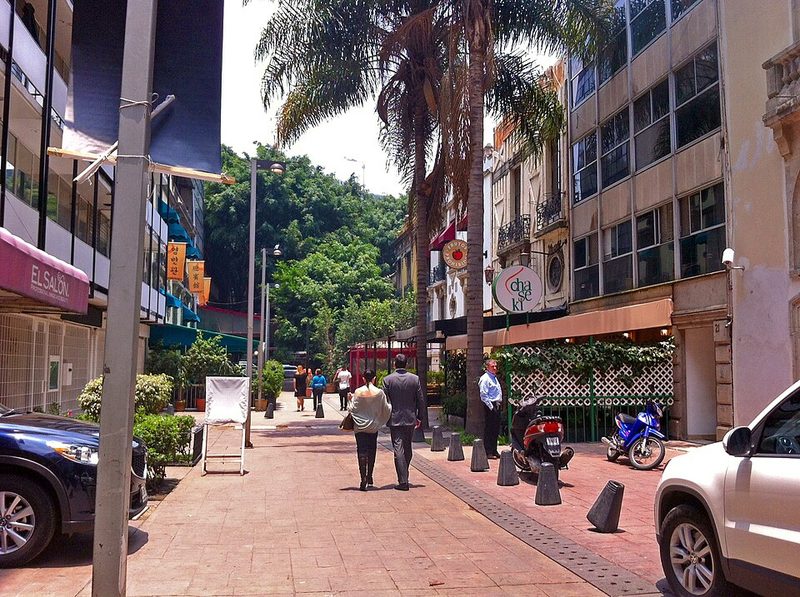
In the 1860s, this was a shallow lake drying into swampland. Almost nobody lived here. Then Empress Carlota commissioned a road connecting the Castle of Chapultepec to downtown — designed by an Austrian engineer named Allois Bollan Kuhmackl in 1865, originally for the emperor’s exclusive use. That road eventually became Paseo de la Reforma, and everything changed.
By the 1880s, as the Historic Center grew crowded and unpleasant, Mexico City’s elite began migrating west along this new boulevard. Streets were laid out and named after European capitals — Hamburgo, Londres, Berlin, Dinamarca, Varsovia — by an ex-consulate named Ricardo Garcia Granado, whose children had been born in those cities. The neighborhood was initially four separate colonias (Los Arquitectos, Bucareli, Del Paseo, Nueva del Paseo) that merged officially in 1906 as Colonia Benito Juarez Garcia.
The Gilded Age
For about three decades, this was the most exclusive address in Mexico City. Wealthy families built French-style mansions with mansard roofs, tezontle facades, and gilded interiors. The neighborhood earned the nickname “Colonia Limantour” after Jose Ives Limantour, the Minister of Taxation who embodied the neighborhood’s Francophile pretensions. Land values jumped from 50 centavos per square meter in 1872 to $25 by 1903.
Colonia Juarez was one of the first residential areas in the city with electricity, which kicked off its reputation as a nightlife district — a reputation it has never shaken. Hotels, restaurants, and cafes multiplied along Reforma. The Hotel Reforma’s bar “Ciro’s” became legendary in the 1940s and ’50s: Pedro Infante launched his career there, Maria Felix was a regular, and Agustin Lara gave concerts. The hotel has since been demolished. The stories haven’t.
Revolution and Decline
The Mexican Revolution ended the party. Mansions were abandoned or burned — Francisco I. Madero’s own house at Liverpool 25 (corner of Berlin) was torched by Victoriano Huerta’s forces in 1913. A plaque now marks the spot. After the war, the government appropriated many surviving mansions for offices. The Secretary of Health moved into one. IMSS took another.
By mid-century, the original wealthy families had decamped to Polanco and Lomas de Chapultepec. The old houses were carved up into businesses, tenements, and nightclubs. The character shifted from residential prestige to commercial hustle.
Then came the 1985 earthquake, which devastated large sections of the colonia. Plaza Washington was badly damaged. Buildings that weren’t demolished simply stayed broken — some still are, with earthquake damage visible on streets like Praga and Londres forty years later. The economic crisis that followed pushed out more residents and brought in street vendors, squatters, and neglect. Infrastructure deteriorated. Crime rose. For about twenty years, Colonia Juarez was the kind of place people warned you about.
The Comeback
The turnaround started in the 2000s. Parking meter revenue funded sidewalk reconstruction, particularly along Havre Street and through the Zona Rosa pedestrian areas. New development arrived along Reforma — tall glass office towers and apartment buildings that made the skyline unrecognizable from what it was in 2000. The interior streets followed, with boutique hotels, cocktail bars, coworking spaces, and restaurants moving into renovated buildings.
Today Colonia Juarez exists in that particular Mexico City state of being many things at once: French mansions next to Korean BBQ joints, the Four Seasons Hotel sharing a postal code with tenement buildings, art galleries a block from adult entertainment venues. It’s not gentrified in the scrubbed, uniform way that word usually implies. It’s more like everything just piled up.
Zona Rosa
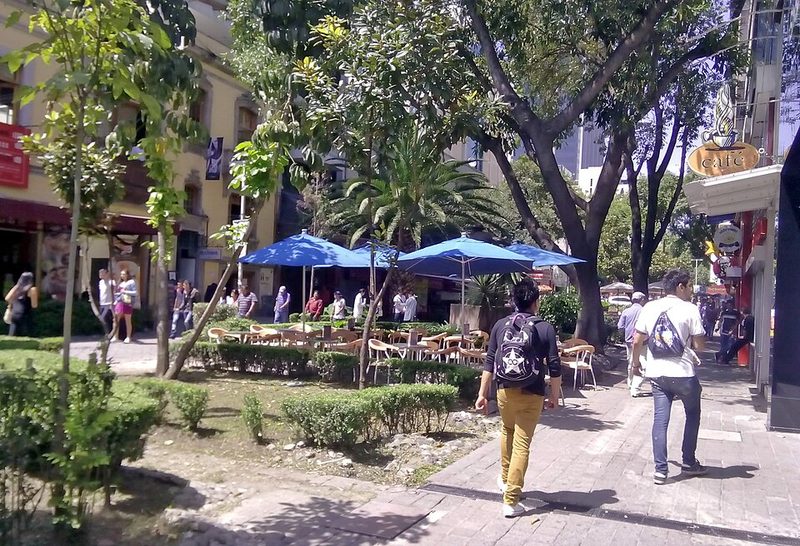
The Zona Rosa takes up about 24 of Colonia Juarez’s 99 blocks, centered on the pedestrian streets around Genova and Amberes. The name comes from artist Jose Luis Cuevas, who in the 1960s called the area “too red to be white and too white to be red” — a reference to its uneasy position between bohemian rebellion and bourgeois comfort.
In the ’60s and ’70s, this was Mexico City’s intellectual and artistic hub. Writers from the La Ruptura movement — Jose Luis Cuevas, Carlos Monsivais, Carlos Fuentes, Jose Agustin — worked and drank here. The neighborhood filled with bookstores, galleries, and the kind of cafes where arguments about muralism versus abstraction lasted until 2 AM.
That era is long gone. The galleries gave way to chain restaurants, the bookstores to souvenir shops. But Zona Rosa reinvented itself again, this time as a nightlife district and, importantly, as the center of Mexico City’s LGBTQ+ community. Amberes Street is the gayborhood — you’ll see rainbow crosswalks, bars and clubs that don’t pretend to be anything else, and a generally relaxed atmosphere that makes the rest of the city’s machismo feel far away. Pride fills the streets here before the main parade heads up Reforma to El Angel.
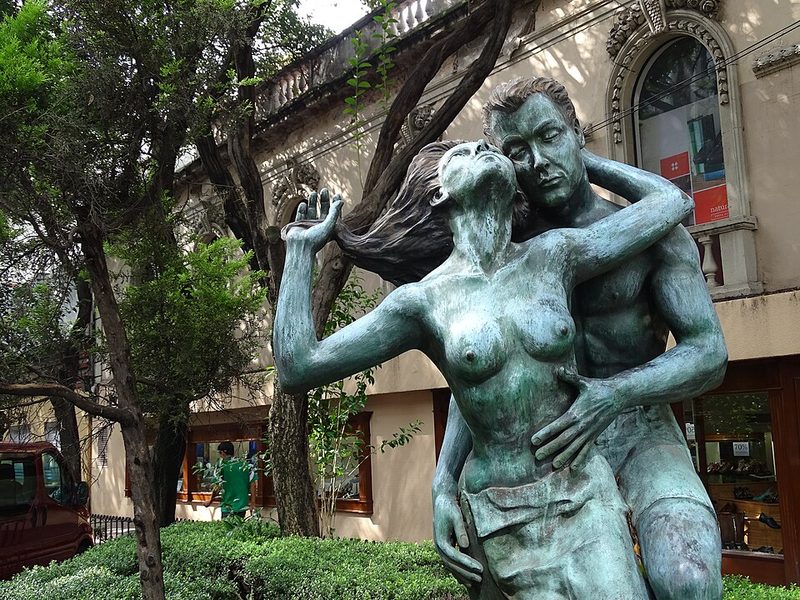
Genova, the main pedestrian corridor, has outdoor dining along its length and hosts the Corredor de Arte Jose Luis Cuevas on weekends, where around 40 artists set up along the street. About 40 sculptures by young UNAM artists are scattered through the pedestrian zone, partially sponsored by the Rotary Club.
Worth noting: Zona Rosa is more pleasant during the day than its reputation suggests. It’s the nighttime strip clubs and men’s clubs on the periphery that drag down perceptions. The core pedestrian streets are perfectly fine for families during daylight hours, and there’s a permanent tourist police presence on the less-traveled streets.
Koreatown (Pequeno Seoul)
One of the most surprising pockets of Colonia Juarez is its Korean quarter. About 9,000 Korean nationals live in Mexico City, most having arrived in the 1990s and 2000s following trade agreements and companies like Daewoo. Of those, roughly 3,000 are concentrated in Colonia Juarez, primarily along Hamburgo, Praga, Berna, and Biarritz streets.
Biarritz Street is about 90% Korean-owned businesses. Some restaurants have menus only in Korean and signage that makes you briefly forget what country you’re in. The Korean BBQ here is genuinely excellent — the kind where you cook the meat yourself over tabletop grills, order too many banchan (side dishes), and wonder why you planned a Mexico City food trip without accounting for this.
Don’t skip it just because it seems incongruous. The Korean community here is established, the food is real, and the prices are considerably lower than what you’d pay in Condesa or Roma for a comparable meal. Several spots are open late, making this a solid post-bar option when you need something more substantial than street tacos.
The French Quarter
Along Insurgentes Avenue toward the Historic Center, the French influence that defined Colonia Juarez’s original character is still visible. Havre Street is the heart of the so-called French Quarter, with cafes and restaurants maintaining a Parisian-adjacent atmosphere.
The French community in Mexico City has deep roots here. They started in the Historic Center, living above French department stores like El Palacio de Hierro and Liverpool (both still operating as major chains), then migrated to Colonia Juarez along with everyone else during the westward expansion. The Second Empire mansions they built — mansard roofs, ornate facades, wrought iron balconies — give stretches of Versalles and Berlin streets a distinctly European character that photographs well, even where the buildings are crumbling.
What to See
Architecture Walking Route
The best-preserved mansions are concentrated on Berlin and Versalles streets. Walk slowly — the details reward attention. Look for mascarons (decorative faces above doorways), floral stone carvings, and facades of tezontle (the volcanic red stone that defines so much of Mexico City’s older buildings) mixed with gray sandstone and marble.
On Londres Street, two unusual museums sit side by side: the Wax Museum (inside a mansion designed by Antonio Rivas Mercado, the same architect who designed the Angel of Independence) and Ripley’s Believe It or Not (in a medieval-castle-shaped building at Londres #4). Neither is world-class, but the buildings themselves are worth a look from outside.
Plaza Giordano Bruno
A small plaza anchored by the Sagrado Corazon de Jesus Church, built by the Hungarian immigrant community. It’s one of the few quiet spots in the neighborhood and a good place to sit with a coffee and appreciate that you’re in a colonia where a Hungarian church sits next to French mansions around the corner from Korean restaurants. Mexico City doesn’t explain itself.
Madero’s House
At Liverpool 25, corner of Berlin, a plaque marks the site of Francisco I. Madero’s house — burned by forces loyal to Victoriano Huerta during the Decena Tragica of 1913. Madero was Mexico’s democratically elected president who was overthrown and murdered in a coup. The house is gone, but the story is important. If you’re interested in the Revolution period, this connects directly to the history you’ll find at Chapultepec Castle, which houses the National History Museum.
Paseo de la Reforma Monuments
The northern edge of Colonia Juarez runs along Paseo de la Reforma, giving you easy access to the boulevard’s major monuments. Walking east to west: the Cuauhtemoc monument, the Angel of Independence (directly north of the colonia), and the Diana the Huntress Fountain. All are within a 20-minute stroll along one of the most pleasant stretches of city walking in CDMX.
Where to Eat
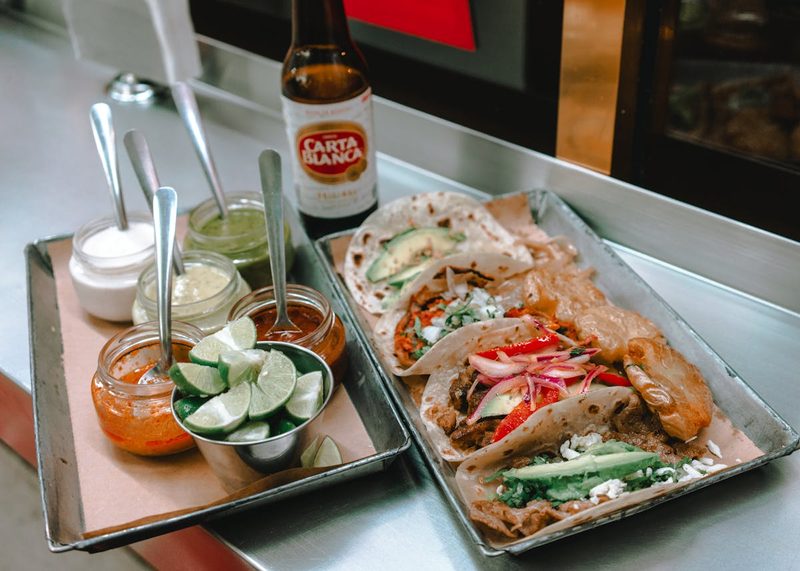
Colonia Juarez has over 137 restaurants in the Zona Rosa alone, plus dozens more scattered through the rest of the neighborhood. The range is extreme — from the Four Seasons’ dining room to $30 MXN street tacos.
Champs Elysees — Over 40 years on Paseo de la Reforma between Estocolmo and Amberes. French cuisine (foie gras, duck confit) in a formal setting. This is where families of Mexican presidents have eaten. Not cheap, but not outrageous either. Go for lunch.
Focolare — Operating since 1953, making it one of the oldest restaurants in the colonia. Italian food with the kind of steady competence that only comes from seven decades of practice.
La Gondola — Open since 1958. Another Italian institution. These old-school restaurants are the antithesis of trendy and better for it.
Korean BBQ on Biarritz — Multiple options. Walk down the street and pick whichever place is fullest of Korean patrons — that’s your best indicator. Expect to spend $150-250 MXN per person for a proper meal with banchan, grilled meats, and soju.
Genova Street outdoor dining — The pedestrian street has about 13 restaurants with outdoor seating. Quality is variable. It’s better for people-watching than for serious food, but there’s nothing wrong with a beer and some botanas in the sun.
The colonia also has every fast food chain imaginable — McDonald’s, Burger King, Dunkin’ Donuts, Little Caesar’s — if you’re in that kind of mood. We won’t judge. Much.
Nightlife
Colonia Juarez has had nightlife since the 1880s, and it shows no signs of slowing down. The neighborhood offers everything from refined cocktail bars to sweaty dance floors to places your guidebook won’t mention.
The LGBTQ+ nightlife scene on and around Amberes Street is the most established in Mexico City — bars like Tom’s Leather, Lollipop, and Kinky Bar have loyal followings. During Pride week (usually late June), the entire Zona Rosa turns into one extended party that starts at noon and goes until sunrise.
Newer cocktail bars and speakeasy-type places have opened in the streets between Zona Rosa and Reforma, catering to the office crowd that floods the neighborhood during the week. Thursday and Friday nights are busiest. Saturday evenings tend to be quieter in the bars but louder in the clubs.
A word about safety at night: The main pedestrian streets and Amberes corridor are well-lit and have regular police presence. The side streets (Praga, Toledo, parts of Hamburgo south of Zona Rosa) are dimmer and emptier after midnight. Use Uber for anything more than a block or two after dark, especially if you’ve been drinking. This isn’t paranoia — it’s the same advice a local would give.
Getting There and Around
Metro: Three stations serve Colonia Juarez — Sevilla (Line 1), Cuauhtemoc (Line 1), and Insurgentes (Line 1). Insurgentes is the busiest and most central, dropping you at the Glorieta de los Insurgentes, which is basically the front door of Zona Rosa.
Metrobus: Line 1 stops at Hamburgo and Glorieta Insurgentes, both on Avenida de los Insurgentes. Fast and cheap, $7 MXN per ride.
EcoBici: The bike-share system has stations throughout the colonia. The streets are flat and relatively bike-friendly, especially on Sundays when traffic drops. A one-day pass costs $131 MXN.
Uber/taxi: Traffic through Colonia Juarez during rush hour is genuinely terrible — Reforma and Insurgentes become parking lots between 7-10 AM and 5-8 PM. Walk or take the Metro during those hours.
On foot: This is a very walkable neighborhood. From Insurgentes Metro, you can reach any point in the colonia in 15 minutes. The pedestrian streets in Zona Rosa make for pleasant strolling, and the architecture on streets like Berlin, Versalles, and Havre rewards aimless wandering.
Where Colonia Juarez Connects
One of the best things about staying in or visiting Colonia Juarez is its centrality. You’re within walking distance of almost everything:
North: Paseo de la Reforma and its monuments — the Angel of Independence is a 5-minute walk from the northern edge of the colonia.
East: The Historic Center, including the Zocalo, Metropolitan Cathedral, Postal Palace, and the Palace of Fine Arts — all reachable in 20-30 minutes on foot or one Metro stop.
South: Roma Norte and Condesa begin just across Avenida Chapultepec. These are Mexico City’s trendiest food and bar neighborhoods, and they’re a 10-minute walk from the southern edge of Juarez.
West: Chapultepec Park, Chapultepec Castle, and the National Anthropology Museum — about 25 minutes on foot along Reforma, or one Metro stop from Sevilla to Chapultepec.
Should You Stay Here?
Colonia Juarez has hotels at every price point, from the Four Seasons (the most expensive in the neighborhood, right on Reforma) to budget options in the $500-800 MXN range. The location is hard to beat for access to the rest of the city.
The tradeoffs: it’s noisier and more commercial than staying in Roma or Condesa, and the nightlife-district character means some streets get rowdy after dark. If you want tree-lined residential streets and brunch culture, Condesa is better. If you want to be in the middle of things with easy transit connections and don’t mind some grit, Juarez works well.
The neighborhood is also the most practical base for business travelers — the Reforma office corridor is right here, and getting to meetings anywhere in the central city is straightforward by Metro.
Safety
We’ll be straight about this because the Wikipedia article and travel forums both flag it: Colonia Juarez has real petty crime, particularly phone snatching and pickpocketing in crowded areas. The blocks around the adult entertainment venues (scattered through the southern and western parts of the colonia) are seedier at night.
That said, the core of Zona Rosa and the streets along Reforma are well-policed and feel no more dangerous than any major city’s commercial district. Tourist police patrol the less-travelled streets. The pedestrian zones are busy and well-lit until late.
Practical rules: don’t walk around staring at your phone, keep valuables in front pockets, use Uber after midnight rather than walking through poorly lit side streets, and stick to the main corridors (Reforma, Insurgentes, Genova, Amberes, Havre) if you’re unsure. Follow these and you’ll be fine.
A Neighborhood That Keeps Reinventing Itself
Colonia Juarez has been Mexico City’s most fashionable address, its most neglected disaster zone, and now something in between that changes block by block. It has Korean saunas around the corner from Art Nouveau mansions. It has Pride flags a street away from government offices that once belonged to Porfirio Diaz’s elite. It has earthquake damage that’s older than most of its current restaurants.
It’s not the prettiest neighborhood in Mexico City — Condesa and Roma take that easily. But it might be the most interesting one. And it connects to practically everything else worth seeing. That counts for a lot.