Why Coyoacan Belongs on Every Mexico City Itinerary
Coyoacan is the neighborhood that makes people rethink their entire trip. They come for Frida Kahlo’s house, stay for the tostadas, and leave wondering if they should’ve booked their hotel down here instead of in Condesa or the Historic Center.
We get it. Cobblestone streets, colonial plazas shaded by century-old trees, sidewalk cafes where nobody’s in a hurry. Coyoacan has that small-town-inside-a-megacity quality that most neighborhoods in Mexico City lost decades ago. It’s genuinely one of the best-preserved colonial areas in the entire country, and it earns every bit of the attention it gets.
But we’ll be straight with you: visit on a Saturday or Sunday and you’ll share it with roughly 70,000 other people. We’re not exaggerating. That’s the borough’s own estimate. Come on a Tuesday or Wednesday morning and it’s a completely different place, quieter, more atmospheric, and you’ll actually be able to sit down at the cafe of your choice without waiting.
Coyoacan sits about 10 kilometers south of the Zocalo, connected by Metro Line 3 to Coyoacan station or Viveros station. It’s an easy half-day trip from anywhere in the city, though once you’re here you’ll probably want the full day.
A Quick History: Coyotes, Conquistadors, and Artists
The name Coyoacan comes from Nahuatl and most likely means “place of coyotes.” Before the Spanish showed up, this was a Tepanec settlement on the southern shore of Lake Texcoco that had an uneasy relationship with the Aztec Empire. When Hernan Cortes arrived, the locals saw an opportunity and allied with the Spanish, which is why Coyoacan became the headquarters for the conquest of Tenochtitlan.
Here’s a detail most visitors don’t know: Coyoacan was the first capital of New Spain. After the fall of Tenochtitlan in 1521, Cortes lived here for two years while the destroyed Aztec capital was being rebuilt into what would become Mexico City. He set up shop on lands belonging to the indigenous leader Juan de Guzman Iztolinque, near where the La Conchita Church stands today.
The area stayed independent from Mexico City through the entire colonial period and well into the 19th century. It wasn’t until 1857 that Coyoacan got absorbed into the Federal District, and the modern borough wasn’t created until 1928. Mexico City’s urban sprawl finally reached here in the mid-20th century, swallowing farms and lakebeds, but the old village core survived remarkably intact. The narrow streets, the plazas, the colonial mansions, they’re all still here, which is why the Project for Public Spaces ranked it among the best urban spaces in North America back in 2005.
The city designated Coyoacan’s center as a “Barrio Magico” in 2011, an official recognition of its cultural and historical significance. In the 20th century, the neighborhood became the address of choice for artists, intellectuals, and political exiles. Frida Kahlo was born and died here. Diego Rivera lived here. Leon Trotsky hid here (and died here, too, but we’ll get to that). That bohemian reputation stuck, and it’s a big part of what draws visitors today.
The Colonial Center: Jardin Centenario and Plaza Hidalgo
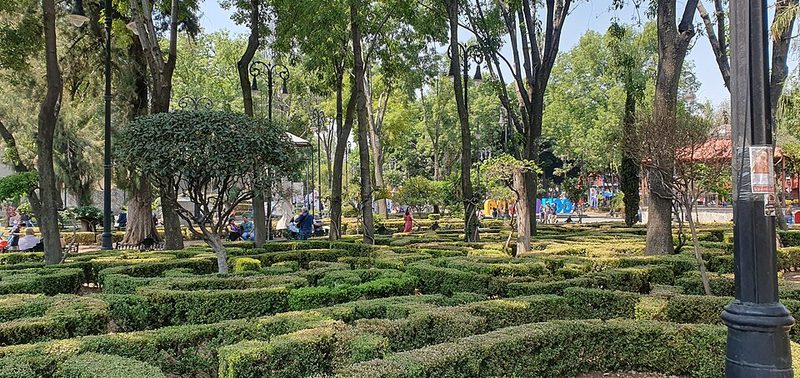
The heart of Coyoacan is a pair of connected plazas, the Jardin del Centenario and Plaza Hidalgo, covering about 24,000 square meters of Indian laurel-shaded space. They function as one big public living room, and they’re the reason Coyoacan feels different from every other neighborhood in the city.
Plaza Hidalgo is the main square, bordered by the Casa Municipal on the north side and the Parish of San Juan Bautista on the south. In its center sits an early 20th-century kiosk with a stained glass cupola, donated by Porfirio Diaz for the centennial of Mexican independence in 1910. There’s a bronze eagle on top and a statue of Miguel Hidalgo nearby. On weekends, the plaza fills with street performers, mimes, musicians, folk dancers, and storytellers all competing for attention.
Just west across Calle Carrillo Puerto, Jardin del Centenario is slightly smaller and anchored by a fountain with bronze coyote sculptures, a nod to the neighborhood’s name. The south side is lined with cafes and restaurants. Cafe El Parnaso is the famous one, a bookstore-cafe combination that’s been a Coyoacan institution for years. Grab a table under the trees if you can, it’s one of the best people-watching spots in the city.
The plazas were renovated in 2008 at a cost of 88 million pesos, which included repaving everything in red and black volcanic stone and clearing out hundreds of street vendors who’d set up permanent shop. The vendors fought the removal in court and won a partial victory, so you’ll still find some selling in the plazas, but it’s much more controlled than it used to be.
Both plazas were redesigned beautifully and they’re well-maintained. During the week, you can actually sit on a bench and read. On weekends, good luck finding a bench at all.
The Casa de Cortes (Casa Municipal)
On the north side of Plaza Hidalgo, you’ll notice a handsome 18th-century building with sandstone and wood columns. This is the Casa Municipal, though everyone calls it the Casa de Cortes. There’s even a plaque on the building claiming Cortes lived here.
He didn’t. The plaque is wrong. Cortes did live in Coyoacan, but not at this site. His actual residence was near the La Conchita plaza. What Cortes built here were administrative offices for managing the enormous land grant he received as Marquis of the Valley of Oaxaca. The current structure was built by his descendants in the mid-1700s to replace the original buildings, which had fallen apart.
It’s been the seat of local government since the 1850s and was declared a Colonial Monument by INAH in 1932. Inside, there are murals worth seeing: one by Aurora Reyes Flores depicting pre-Hispanic Coyoacan, and another by Diego Rosales from 1961 showing the early history of Mexico with Cuauhtemoc, Cortes, La Malinche, and Pedro de Alvarado.
Parish of San Juan Bautista
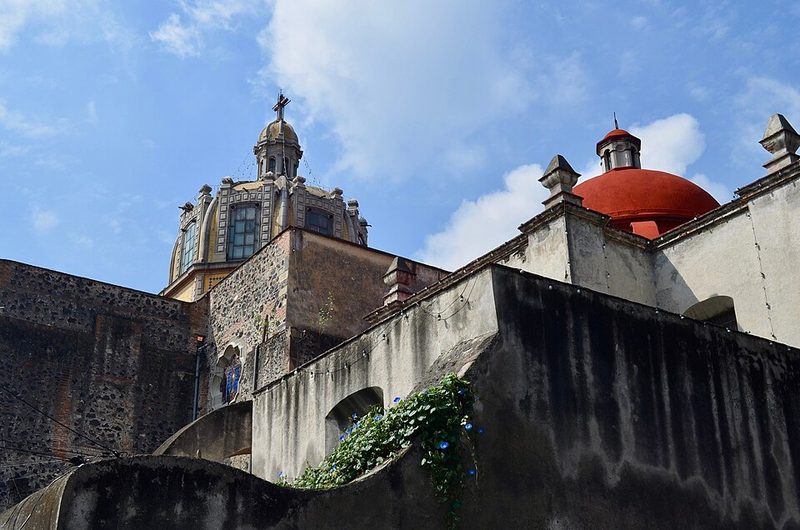
One of the three oldest parish churches in Mexico City sits right here in Coyoacan. The Parish of San Juan Bautista was built between 1520 and 1552, making it a contemporary of the churches in Tlalpan and Amaquemecan. Originally constructed as a Dominican monastery, it later transferred to the Franciscans.
The entrance to Jardin del Centenario passes through the old atrial arches that once belonged to the church’s massive courtyard. These 16th-century stone arches show a mix of European and indigenous decorative influences, and they’re one of the most photographed spots in the neighborhood. You’ll see them on every Coyoacan postcard.
The church itself is worth stepping inside. It’s a solid, thick-walled colonial structure that’s been in continuous use for five hundred years. The atmosphere inside is noticeably cooler and quieter than the plaza outside, which on a crowded weekend can feel like a genuine relief.
Casa Azul: The Frida Kahlo Museum
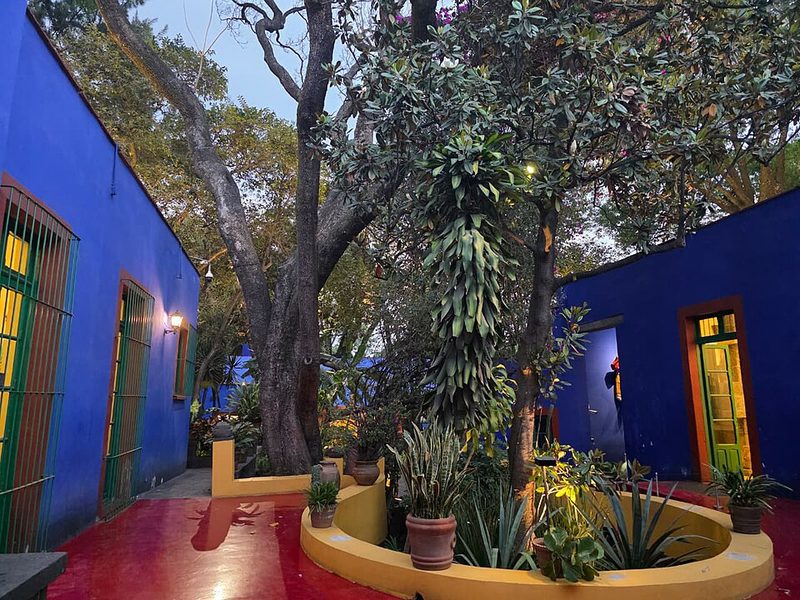
Let’s be honest. This is why most people come to Coyoacan. The Museo Frida Kahlo, universally known as Casa Azul for its vivid cobalt blue walls, is the house where Frida Kahlo was born in 1907, where she lived with Diego Rivera, and where she died in 1954. It’s one of the most visited museums in Mexico City and, frankly, in all of Latin America.
The house-turned-museum preserves their living spaces, artwork, personal belongings, and the medical corsets Kahlo had to wear due to injuries from a bus accident that shaped her entire life and artistic career. The kitchen, painted bright yellow, still has their names spelled out in tiny ceramic letters on the wall. The garden contains pre-Columbian artifacts and sculptures that Rivera obsessively collected. It’s intimate, personal, and genuinely moving even if you’re not particularly into art.
Now, the practical reality. You need to buy tickets in advance. Not “it’s recommended,” you actually cannot get in without a reservation, and they sell out days ahead, especially for weekends. Book through the official museum website as soon as you know your dates. The museum is small, so they limit how many people can be inside at any time. Even with timed entry, it gets packed.
Ticket prices are higher for foreign visitors than for Mexican nationals, which is standard for museums here. Photography inside is an additional charge. The museum is closed on Mondays.
The walk from the main plazas to Casa Azul takes about ten minutes along Londres street. It’s a pleasant walk through residential Coyoacan, but follow the signs because the side streets can be confusing if you’re not paying attention.
The Leon Trotsky Museum
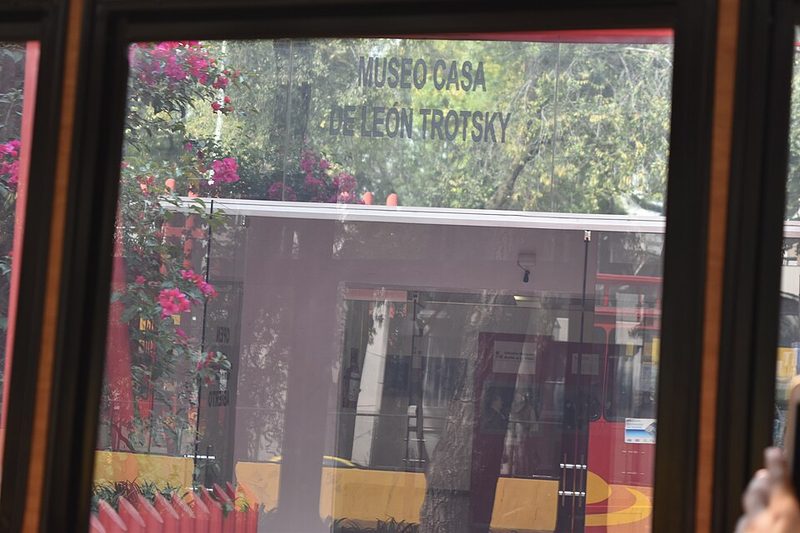
A few blocks from Casa Azul, you’ll find one of the stranger museums in Mexico City. The Leon Trotsky Museum is the house where the exiled Russian revolutionary lived from 1939 until August 20, 1940, when one of Stalin’s agents drove an ice axe into his skull.
The story of how Trotsky ended up in Coyoacan is worth knowing. After being expelled from the Soviet Union, he bounced between countries until Diego Rivera, then a committed communist, persuaded the Mexican government to grant him asylum. Trotsky initially lived at Casa Azul with Kahlo and Rivera (and had an affair with Frida, which ended the friendship with Diego). He eventually moved to this nearby house on Viena street.
The house is preserved much as it was. You can see the bullet holes in the bedroom walls from a failed assassination attempt by the painter David Alfaro Siqueiros in May 1940, when a squad of gunmen sprayed the house with bullets while Trotsky and his wife hid under the bed. After that attack, Trotsky had the walls raised and guard towers added. They weren’t enough. Three months later, Ramon Mercader, posing as a friend, killed him in his study.
Trotsky’s ashes are buried in the garden under a monument with the hammer and sickle. His desk, his books, his reading glasses are still where they were. It’s a quieter, more contemplative museum than Casa Azul, and rarely crowded. We think it’s actually the more powerful experience of the two, though we know that’s a minority opinion.
Coyoacan Market and the Food Scene
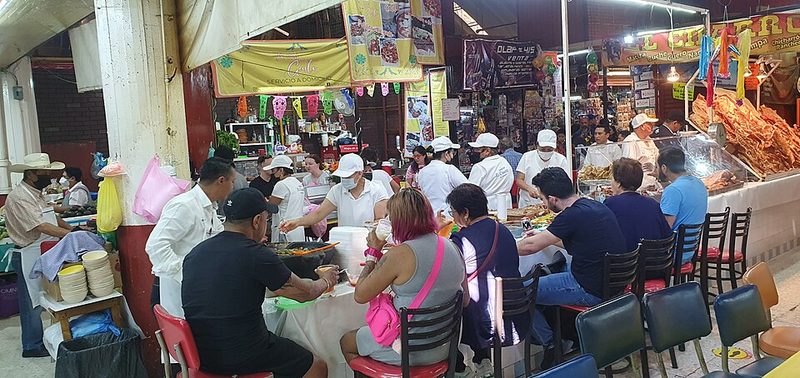
The Mercado de Coyoacan, located a few blocks east of the main plazas on Ignacio Allende street, is one of our favorite markets in the city for eating rather than shopping. It’s smaller and more focused than the enormous markets in the Historic Center, which makes it less overwhelming for first-timers.
The signature dish here is tostadas. Multiple stalls compete for the title of best tostadas in the market, but the ones topped with tinga (shredded chicken in chipotle sauce), ceviche, or pata (pig’s feet, if you’re feeling adventurous) are all excellent. Grab a few, pile on the salsa, and eat them standing at the counter like everyone else.
Beyond the market, the streets around the plazas have an absurd concentration of restaurants, cafes, and cantinas. The historic center alone has over 860 retail businesses, most of them food-related, and about 200 opened in just the last five years. That rapid growth is changing the neighborhood’s character, locals aren’t thrilled about it, but for visitors it means you won’t have trouble finding somewhere good to eat.
Street food vendors set up around the plazas especially in the evenings and on weekends. Esquites (corn kernels in a cup with mayo, lime, and chili), elotes (corn on the cob with the same toppings), ice cream, and aguas frescas are the daytime staples. After dark, the stalls shift to quesadillas, sopes, and pozole.
For a sit-down meal, the cafes along the south side of Jardin del Centenario are touristy but pleasant. For something with more local character, wander a block or two off the main plazas. The prices drop and the food gets more honest.
Viveros de Coyoacan
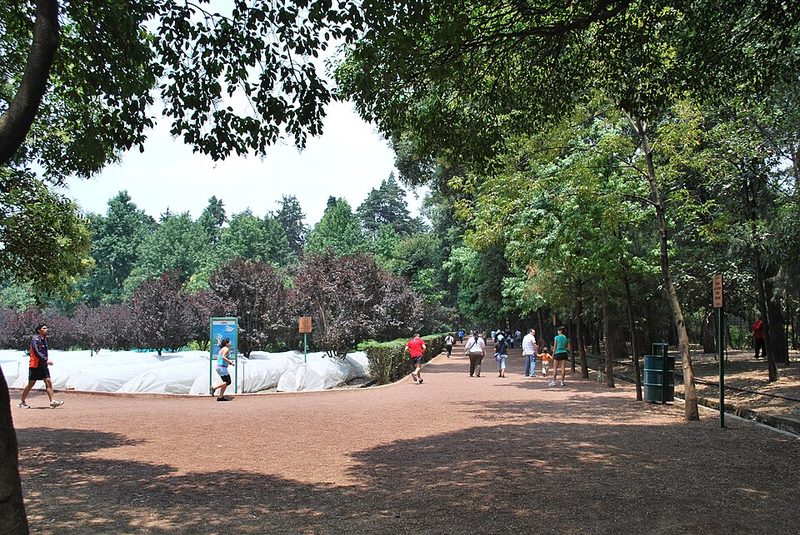
If the weekend crowds in the plazas are testing your patience, Viveros de Coyoacan is the antidote. This large tree nursery and park, accessible from Viveros Metro station, is where Coyoacan’s residents come to run, walk, read, and breathe. It’s essentially a managed forest inside the city, and it’s one of the most peaceful green spaces in all of Mexico City.
The Viveros was established as a government tree nursery in 1901 and still functions as one. The trees grown here get planted throughout the city. The nursery is open to the public as a park, and it’s become the go-to jogging spot for the south side of the city. Runners circle the perimeter paths, dog walkers amble through the interior trails, and people sit on benches doing absolutely nothing, which in Mexico City is a legitimate luxury.
There’s no admission fee. The park opens early in the morning and closes at sundown. No food vendors or commercial activity inside, which is part of its appeal, it’s one of the few public spaces in Mexico City that’s genuinely quiet. We’d recommend combining it with a visit to the Coyoacan center: start at Viveros for a morning walk, then head south to the plazas for lunch and museum visits.
From Viveros, you can also walk south through pleasant residential streets to reach the center of Coyoacan in about fifteen minutes. It’s a much nicer approach than arriving by taxi or bus directly into the crowded plaza area.
Nearby Neighborhoods Worth Exploring
One of the best things about visiting Coyoacan is that several other excellent neighborhoods are close by. San Angel is just to the west and has its own colonial center, the famous Saturday Bazaar, and the Diego Rivera Studio Museum. You could combine San Angel and Coyoacan into one long day if you start early.
Chimalistac sits between San Angel and Coyoacan and is one of the most charming, under-visited neighborhoods in the city. It’s quiet, old, and walkable, a perfect bridge between the two better-known areas.
Tlalpan lies further south and has its own colonial center with one of the city’s oldest churches. It’s less touristy than Coyoacan and gives you a sense of what Coyoacan might’ve felt like twenty years ago, before the weekend crowds discovered it.
To the north, Chapultepec Castle and its surrounding park are reachable by Metro from Viveros station. You could spend a morning in Coyoacan and an afternoon in Chapultepec without any difficulty.
The Weekend Crowds: An Honest Warning
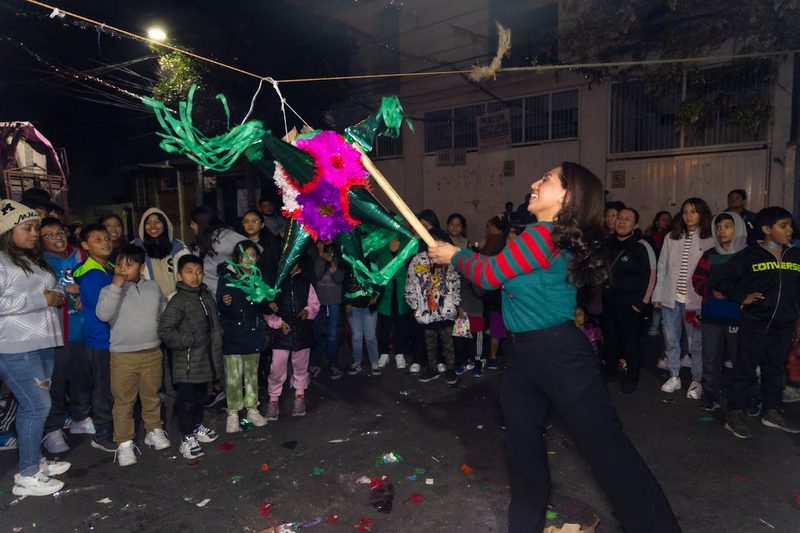
We’ve mentioned this already, but it deserves its own section because it genuinely affects your experience. Coyoacan on a Saturday or Sunday afternoon is packed. Not “pleasantly busy.” Packed. The plazas are shoulder-to-shoulder. The streets around the center become gridlocked with cars. Restaurants have long waits. The line for Casa Azul stretches down the block even with timed tickets.
The borough estimates 70,000 visitors on a typical weekend, and it feels like every one of them is in the same square kilometer at the same time. The narrow colonial streets weren’t built for this kind of traffic, and the parking situation is genuinely awful. You’ll see franeleros, informal parking attendants who claim sections of public street and charge drivers for the privilege of parking there.
None of this means you shouldn’t go on a weekend. The energy is incredible, the street performers are out in force, and the atmosphere is festive and fun. But if you want to actually appreciate the architecture, take photos without strangers in every frame, or eat lunch without a forty-minute wait, go on a weekday. Tuesday through Thursday are best. The difference is dramatic.
If you do go on a weekend, arrive early. Before 11 AM, the plazas are still manageable. By 1 PM, you’ll be fighting for space.
Practical Information
Getting There
Metro Line 3 has two useful stations. Viveros drops you at the north end near the park, and Coyoacan puts you a short walk east of the center. From either station, it’s a ten to fifteen minute walk to the plazas.
From the Historic Center or Zocalo, the easiest route is Metro Line 2 south to Taxquena, then transfer to Line 3 north one stop to Coyoacan. From Condesa or Roma, take Line 1 to Balderas, transfer to Line 3 south.
Taxis and Uber work fine, but on weekends expect traffic delays near the center. We’d recommend getting dropped at Viveros and walking in.
How Much Time to Spend
Half a day is the minimum if you’re doing Casa Azul plus the plazas. A full day is better, especially if you want to add the Trotsky Museum, the market, and Viveros. If you’re combining with San Angel, plan for a long day starting early.
What to Budget
The plazas, Viveros, and walking around the colonial center are all free. Casa Azul charges admission (higher for foreigners, extra for photography). The Trotsky Museum is inexpensive. Food in the market is cheap. Restaurants around the plazas charge tourist prices, though nothing outrageous by international standards. Budget more if you’re eating and drinking your way through the neighborhood, which you should.
Safety
Coyoacan is one of the safest boroughs in Mexico City, especially around the tourist center. Normal city precautions apply: watch your belongings in crowds, don’t flash expensive electronics, be aware of your surroundings. The biggest actual risk on weekends is probably getting your toes stepped on.
Best Time to Visit
Weekday mornings, specifically Tuesday through Thursday, for the most pleasant experience. Weekends if you want the full festive atmosphere and don’t mind crowds. Avoid holidays unless you genuinely enjoy being in a sea of people. The rainy season (June through September) brings afternoon downpours, so plan museum visits for the afternoon and outdoor exploring for the morning.
Final Thoughts
Coyoacan is one of those neighborhoods that’s popular for all the right reasons. The colonial architecture is real and well-preserved, the cultural attractions are world-class, the food scene is excellent, and the atmosphere, at least on weekdays, is about as charming as Mexico City gets.
Yes, it’s touristy. Yes, the weekend crowds are intense. But Coyoacan has been drawing visitors for five hundred years, ever since Cortes set up the first Spanish capital here in 1521. It can handle you. Just do yourself a favor and visit on a weekday first. You’ll understand why people don’t just visit this neighborhood. They move here.