Tlalpan is where Mexico City starts to feel less like a city and more like something the city grew around. In the far south of CDMX, this borough contains some of the oldest continuously inhabited land in the Valley of Mexico — including a circular pyramid that predates the Aztecs by well over a thousand years — alongside volcanic lava fields, forested mountains, and a colonial-era town center that operates at a fundamentally different pace than anything north of Coyoacan.
Most visitors to Mexico City never make it this far south. That’s understandable — the central attractions around Reforma, the Historic Center, and Condesa can fill a week easily. But if you’re spending more than four or five days in CDMX, or if you’re interested in pre-Aztec archaeology, hiking, or seeing a side of the city that functions independently of tourism, Tlalpan is worth the trip.
An Older History Than You’d Expect
Tlalpan’s history doesn’t start with the Aztecs or the Spanish. It starts with Cuicuilco, an archaeological site in the northern part of the borough that contains one of the earliest known settlements in the Valley of Mexico. The main structure is a large circular pyramid — about 18 meters tall and 120 meters in diameter — built somewhere between 800 and 600 BCE. That makes it roughly contemporary with the founding of Rome.
Cuicuilco was a major population center — possibly housing 20,000 people — before being destroyed by the eruption of the Xitle volcano around 400 CE. The lava flow buried most of the city and created the Pedregal, the vast lava field that covers much of southern Mexico City today. The pyramid survived because it was large enough to poke above the lava.
The archaeological site is open to visitors (free, Tuesday through Sunday). It’s not as dramatic as Teotihuacan — no climbing allowed, and much of the original city remains buried — but standing next to a 2,500-year-old pyramid surrounded by lava rock while CDMX traffic rushes past on the Periferico highway is a uniquely Mexican juxtaposition of the ancient and the modern.
The Pedregal
The Xitle eruption didn’t just destroy Cuicuilco — it created an entirely new landscape. The Pedregal de San Angel is a volcanic lava field that extends across much of southern CDMX, characterized by dark, porous basalt rock and a distinctive ecosystem of xerophytic plants and wildlife that exists nowhere else.
UNAM (the National Autonomous University of Mexico) built its main campus on the Pedregal in the 1950s, incorporating the volcanic rock into the architecture and preserving sections of the lava field as ecological reserves. The campus itself is a UNESCO World Heritage Site, largely for this integration of modern architecture with volcanic landscape. If you’re visiting Tlalpan, UNAM is on the way and worth a stop — especially the Central Library with its famous mosaic-covered walls by Juan O’Gorman (the same architect who designed the Diego Rivera Studio in San Angel).
Tlalpan’s Colonial Center
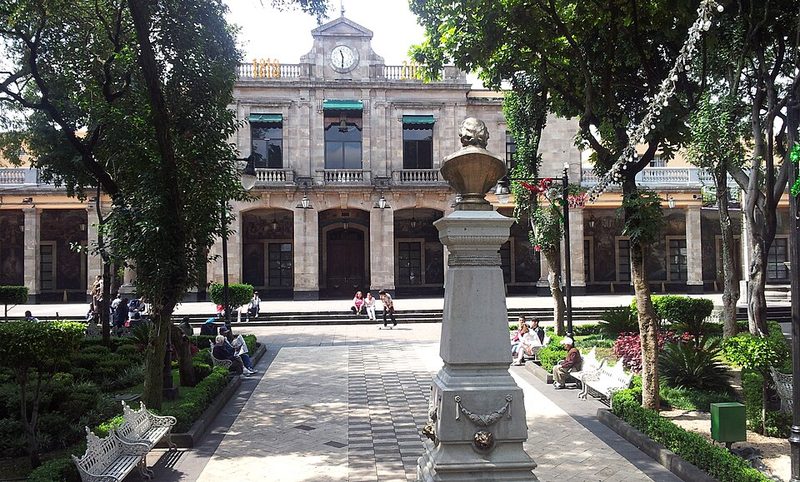
The historic center of Tlalpan is a small, walkable grid of cobblestone streets centered on the Plaza de la Constitucion (not to be confused with the Zocalo downtown — Mexico has a lot of Plazas de la Constitucion). It was one of the four original municipalities of the Federal District before being absorbed into greater Mexico City, and it retains an independence of character that comes from having been a self-governing town for centuries.
The plaza is anchored by the Parroquia de San Agustin de las Cuevas, a 17th-century church with a relatively plain facade that doesn’t hint at the more ornate interior. Around the plaza and along streets like Insurgentes Sur, Madero, and Congreso, you’ll find colonial-era buildings housing restaurants, cafes, bookshops, and galleries.
The vibe is closer to a Mexican provincial town than to central CDMX. People sit in the plaza on Saturday afternoons. Restaurants have proper tablecloths and menus that don’t change every season. Nobody is trying to be the next Instagram-famous brunch spot. It’s a relief, frankly, after the relentless trendiness of Condesa and Roma.
Weekend Dining
Tlalpan’s center is a weekend dining destination for Mexico City residents — the kind of place families drive to for a long Saturday or Sunday lunch. The restaurants here tend toward traditional Mexican cuisine with a focus on quality rather than novelty.
Mercado de Tlalpan — The local market has food stalls serving comida corrida, tacos, quesadillas, and seasonal specialties. It’s cheaper and often better than the sit-down restaurants around the plaza.
The plaza restaurants — Several spots around the main plaza offer outdoor seating with views of the church and the foot traffic. Mexican cuisine dominates — think mole, barbacoa, chiles en nogada in season (August-September). Prices are lower than equivalent quality in central neighborhoods.
Cafe culture — A handful of small cafes have opened in the historic center, serving decent coffee in colonial-era spaces. They’re not competing with specialty coffee shops in Roma — they’re just comfortable places to sit and read.
The Mountains: Ajusco and the Forests
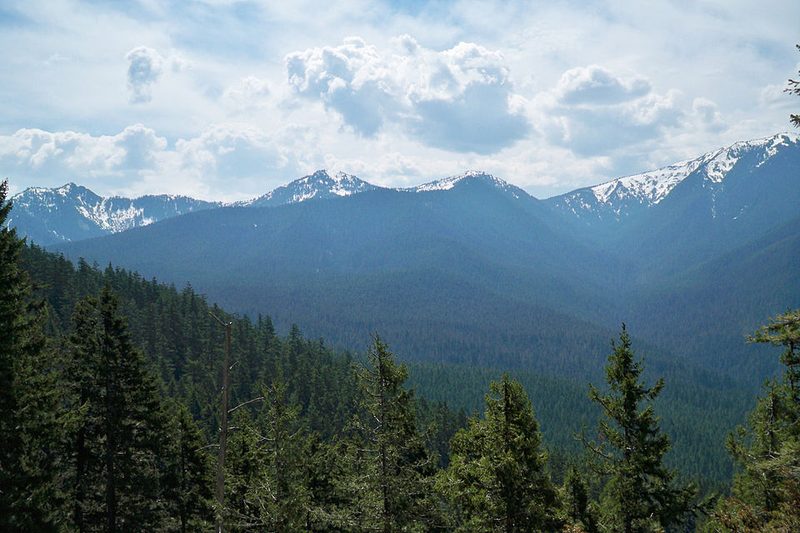
Tlalpan extends south into the mountains, and this is where the borough gets genuinely wild. The Ajusco range forms the southern wall of the Valley of Mexico, and its peaks — some reaching over 3,900 meters (12,800 feet) — are visible from much of the city on clear days.
Bosque de Tlalpan
The Bosque de Tlalpan (Tlalpan Forest) is a 252-hectare urban park on the slopes of the Ajusco. It’s the kind of place where you can be hiking through pine and oak forest fifteen minutes after parking your car, and the sound of traffic disappears entirely. Running trails, picnic areas, and a general atmosphere of locals exercising rather than tourists photographing.
The park is free and open daily. Weekend mornings are popular with runners and dog walkers. It’s a solid option if you want nature without leaving the city limits, and it’s considerably less crowded than Chapultepec Park.
Parque Nacional Cumbres del Ajusco
Further up, the Ajusco National Park offers more serious hiking on the volcanic peaks. The main summit — Pico del Aguila (Eagle Peak) at 3,937 meters — is a challenging but non-technical hike that rewards with views across the entire Valley of Mexico. On clear days, you can see Popocatepetl and Iztaccihuatl volcanoes.
Be aware of the altitude. Starting from Tlalpan’s center (already at 2,300 meters), you’re gaining another 1,600 meters to the summit. If you haven’t acclimatized to Mexico City’s base elevation, this hike will be brutally difficult. Give yourself at least 3-4 days in the city before attempting it.
Fuentes Brotantes
The Fuentes Brotantes park, in the northeastern part of Tlalpan, takes its name from natural springs that once fed the area. It’s a smaller, more intimate park — good for a morning walk rather than a full-day excursion. The springs have mostly dried up due to over-extraction of groundwater (the same problem that’s causing buildings across the city to sink), but the park retains mature trees and a peaceful atmosphere.
How to Get There
Tlalpan is in the south of the city — getting there from central CDMX takes some effort, but it’s straightforward.
Metro + light rail: Metro Line 2 runs to Tasquena, where you can transfer to the Tren Ligero (light rail) southbound. The Estadio Azteca and Xochimilco lines pass through the Tlalpan area. The journey from Zocalo is about 45 minutes total.
Metrobus: Line 1 runs the full length of Insurgentes Avenue, which passes directly through Tlalpan. Get off at the Tlalpan stop. The ride from central CDMX takes 40-60 minutes depending on traffic.
Uber/taxi: From Condesa or Roma, Tlalpan’s center is about 30-45 minutes by car depending on traffic. Weekend mornings are faster.
Driving: If you’re heading to the Ajusco forests or Fuentes Brotantes, having a car is genuinely helpful — these areas aren’t well-served by public transit. Parking in the historic center is manageable on weekdays, tighter on weekends.
What to Combine It With
Tlalpan works as a half-day or full-day excursion from central CDMX. Natural combinations:
Tlalpan + Coyoacan: The two southern boroughs are adjacent and complement each other — Coyoacan for Frida Kahlo’s house and the colonial plaza, Tlalpan for archaeology and nature. Together they make a full day.
Tlalpan + UNAM: The university campus is on the way from central CDMX to Tlalpan. Stop for the architecture and the ecological reserve, then continue south.
Tlalpan + Cuicuilco: The archaeological site is in northern Tlalpan, near the Periferico highway. Visit the pyramid first, then continue south to the historic center for lunch.
Ajusco hike: If you’re going to the mountains, make it the main event. Start early (by 8 AM), hike, then descend to Tlalpan’s center for a late lunch. This is a full day.
Tips
Go on a weekend: The historic center’s dining scene is best on Saturdays and Sundays, when families from across the city come down for lunch. Weekdays are quieter — pleasant for walking but some restaurants may be closed.
Altitude matters: Tlalpan’s center is at roughly the same elevation as the rest of CDMX (2,300m), but the Ajusco mountains go much higher. Don’t attempt the summit hike on your first day in the city.
Bring layers for the mountains: Even when central CDMX is warm, the Ajusco forests can be cool and damp, especially in the morning and during the rainy season. A light rain jacket is useful year-round.
Skip it if: You only have 2-3 days in Mexico City. The central attractions — Chapultepec Castle, the Historic Center, Roma, Condesa — should take priority. Tlalpan is for deeper exploration.
Tlalpan is the kind of place that makes you reconsider what Mexico City actually is. From the Zocalo, it’s all colonial architecture and urban density. From Tlalpan, it’s volcanic mountains, 2,500-year-old pyramids, and pine forests where the city dissolves into something older and quieter. Both are Mexico City. The distance between them is only about 20 kilometers, but it feels like considerably more.