
Mexico City’s science museums don’t get mentioned in most tourist guides, which is understandable given the competition from the Anthropology Museum and Frida Kahlo’s house. But if you’re traveling with kids, or if you’re the kind of adult who still gets excited about dinosaur fossils and planetarium shows, the city has several science institutions that are genuinely excellent — not just “good for Mexico City” but good by any international standard.
Here’s our guide to the science museums worth visiting, from the best university science center in Latin America to a geology museum that most residents don’t even know exists.
Universum (UNAM)

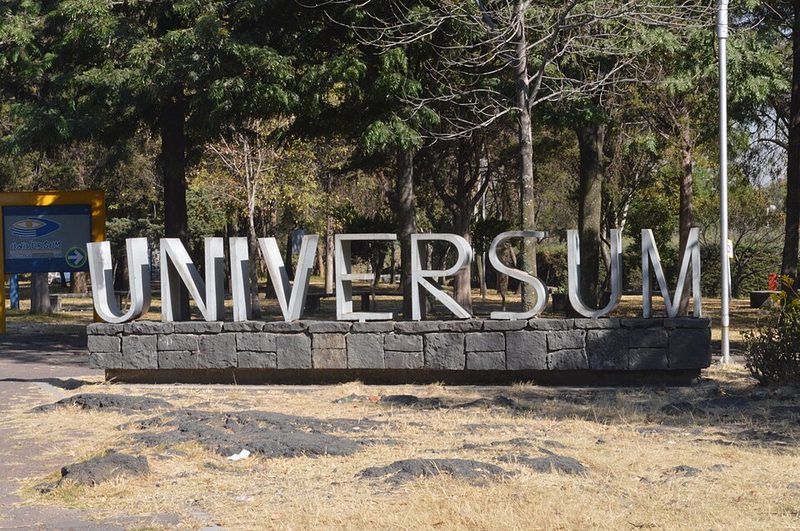
Universum is Mexico’s national science museum, operated by the National Autonomous University of Mexico (UNAM) on its sprawling southern campus. It opened in 1992 and has been expanded several times since, and it’s now the largest and most comprehensive science museum in Latin America.
The museum covers an impressive range: the human body, evolution, biodiversity, mathematics, energy, the universe, water, chemistry, and the brain, each with its own dedicated hall. The exhibits are heavily interactive — you push buttons, turn cranks, walk through models, and watch demonstrations. The math section manages to make geometry engaging, which is no small achievement. The biodiversity hall, with its live butterfly garden, is a highlight for kids and adults alike.
The planetarium (Planetario Jose de la Herran) is one of the best in Mexico and runs multiple shows daily, including some in English. The dome is large, the projection system is modern, and the shows range from kid-friendly tours of the solar system to more advanced programs on astrophysics.
Universum sits within the UNAM campus, which is itself a UNESCO World Heritage Site. If you’re making the trip south to visit the university — and you should, for the murals and the central library building alone — Universum is an easy add. Budget two to three hours.
Closed on Mondays. Admission is around 90 pesos for adults, less for children.
Papalote Museo del Nino
Papalote is Mexico City’s dedicated children’s museum, located in Chapultepec Park near the second section. It reopened in 2020 after a major renovation and the new version is a substantial improvement over the original, which had gotten tired.
The museum is designed for kids aged 2 to 12, though we’d say the sweet spot is 4 to 10. Everything is hands-on. Kids can build structures, experiment with water flow, create digital art, explore a mock supermarket, and play in an enormous climbing structure. The IMAX-style dome theater (the Megapantalla) shows immersive films that younger children find mind-blowing and older ones find pretty cool.
For parents: the museum is well-designed, clean, and organized in a way that prevents the chaos you get at lesser children’s museums. There are quiet areas when kids (or you) need a break. The cafe is mediocre — eat before or after rather than relying on it.
The renovation added new sections on sustainability, communication, and the human body. The whole place feels contemporary and well-funded, which it should — Papalote is one of Mexico’s most successful museum brands and charges accordingly. Tickets are around 200 pesos per person and should be booked online, especially on weekends and holidays when the queues are painful.
Museo de Geologia (Geology Museum)
This is our sleeper pick. The Geology Museum sits in a gorgeous Beaux-Arts building near the Alameda in the Santa Maria la Ribera neighborhood, and it might be the most undervisited quality museum in Mexico City. The building dates from 1906 and was designed specifically to house geological collections, with ornate ironwork, stained glass, and a grand staircase that would be a tourist attraction in any other city.
The collection covers Mexican geology, mineralogy, and paleontology. There are meteorites, geodes, fossils, mineral specimens from Mexican mines, and a room full of dinosaur and megafauna skeletons that includes a mammoth and several marine reptiles. A section on Mexican volcanoes is particularly relevant given that the city sits between two active ones.
The museum is operated by UNAM and feels charmingly old-fashioned — wooden display cases, handwritten labels, the kind of presentation that museums had before everything became interactive touchscreens. We find that refreshing. Kids who like rocks, fossils, and dinosaurs will be transfixed. Adults who appreciate beautiful buildings and natural history will find it well worth the detour.
Admission is cheap (around 30 pesos) and crowds are virtually nonexistent. Closed on Mondays.
Planetario Luis Enrique Erro
Located at the National Polytechnic Institute (IPN) campus in the Zacatenco area of northern Mexico City, the Planetario Luis Enrique Erro is the city’s oldest operating planetarium. It’s not as polished as the Universum planetarium, but it has been updated with a modern digital projection system and offers shows that are more technically focused — aimed at an audience that wants real astronomy, not just pretty visuals.
The surrounding campus isn’t much of a draw for tourists, so this is really one for astronomy enthusiasts or families who’ve already done the main science museums and want more. The planetarium runs shows on weekends and during school holidays, typically in Spanish.
Worth the trip if you’re passionate about space. Skip it if you’re not.
Other Science-Adjacent Spots
Museo de Historia Natural — The Natural History Museum in the second section of Chapultepec Park reopened after a renovation. It covers evolution, ecosystems, and Mexican biodiversity. The new diorama halls are well done, and the dinosaur section keeps kids happy. Free on Sundays.
Museo de Medicina — Inside the old Palace of the Inquisition in the Historic Center, this medical history museum is equal parts fascinating and disturbing. Colonial surgical instruments, wax anatomical models, pharmaceutical history, and exhibits on traditional indigenous medicine. Free admission, and almost always empty.
Museo Tecnologico de la CFE (MUTEC) — A technology museum in Chapultepec funded by Mexico’s federal electricity commission. Focuses on energy and technology with interactive exhibits. Good for kids, though it hasn’t been updated in a while. Free.
Planning Science Museum Visits
If you’re traveling with children, Papalote in Chapultepec is the obvious first choice — it’s designed for kids and delivers. Universum at UNAM works for older kids (8+) and adults who enjoy science. The Geology Museum is a hidden treasure for anyone with curiosity and an hour to spare.
Most science museums are closed on Mondays. Weekday mornings are best for avoiding school groups, which can descend on these places in impressive numbers.
For the full museum landscape, including art, history, and pre-Hispanic collections, see our complete museums guide.