
Reviewed · FRIDA KAHLO & COYOACAN TOURS
Xochimilco & Colonial Coyoacan Trip
Xochimilco’s canals give you a side of Mexico City that buses and museums cannot: a slow ride on a painted trajinera, with music, food sellers, and other boats gliding past. This five-hour outing also links the canals with UNAM, San Angel, and colonial Coyoacan, making it a useful first look at the city’s southern districts.
In This Article
- Key points to know before booking
- Why Xochimilco makes this five-hour tour worthwhile
- The long southern drive through Mexico City
- UNAM, Olympic Stadium, and the Pedregal lava fields
- The colorful boats of Xochimilco
- Coyoacan’s colonial streets and San Juan Bautista Church
- Cortes, Frida Kahlo, and what you actually see
- Is $42 a fair price?
- What to bring and who should book
- Should you book the Xochimilco and Colonial Coyoacan Trip?
- FAQ
- How long does the Xochimilco and Colonial Coyoacan Trip last?
- What days does the tour operate?
- Where does pickup take place?
- Is hotel pickup included?
- Is the guide bilingual?
- Is food included?
- Do I enter Frida Kahlo’s Blue House?
- Will I visit the UNAM library and its Juan O’Gorman murals?
- Is the tour suitable for wheelchair users?
I like the easy combination of major sights and the relaxed boat ride. I also like that the tour handles the long trip to Xochimilco for you, while guides such as Eduardo, Gabriella, Umberto, Sergio, and Aaron have earned strong praise for clear explanations and friendly service.
The main tradeoff is time. Traffic can eat into the schedule, and the Coyoacan stop may feel short. The guide speaks both English and Spanish, but the balance can depend on the group, so an English-speaking visitor may hear less detail when most of the passengers speak Spanish.
Key points to know before booking
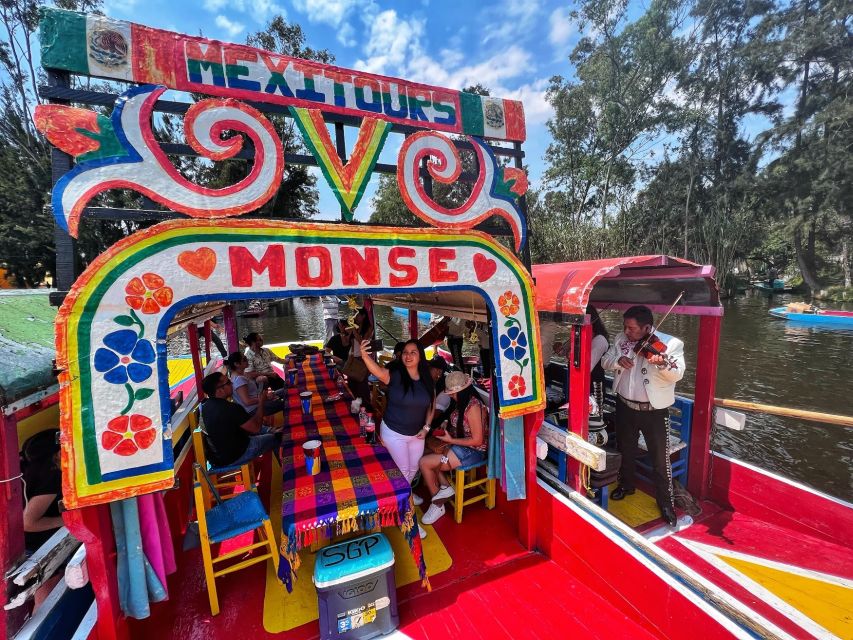
- The trajinera ride is the centerpiece: Expect a colorful, gently moving boat trip rather than a fast sightseeing cruise.
- The van route is part of the tour: You pass the Poliforum, Plaza de Toros Mexico, Teatro de los Insurgentes, Olympic Stadium, UNAM, San Angel, and Pedregal.
- UNAM is mainly a panoramic visit: The university campus and its murals are viewed during the drive, and access to the library murals is not clearly guaranteed.
- Coyoacan gives you time on foot: See San Juan Bautista Church, colonial houses, the main square, markets, and the outside of Frida Kahlo’s blue house.
- Food and drinks cost extra: You can buy refreshments on or near the boat, but they are not part of the $42 price.
- Sunday and Wednesday feel different: Sunday morning can be lively on the canals, while Wednesday’s 2 p.m. departure may offer a quieter ride.
Why Xochimilco makes this five-hour tour worthwhile
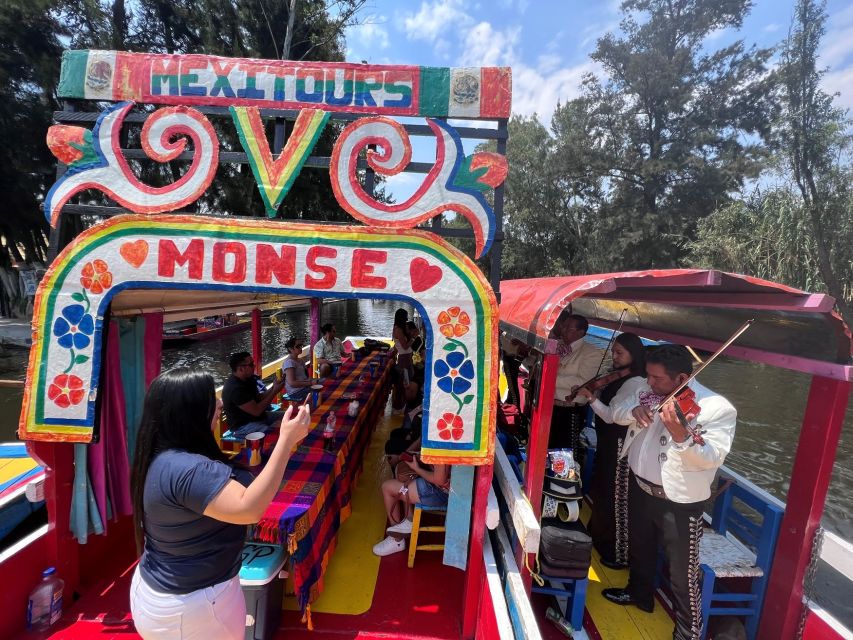
Xochimilco is not simply a boat ride added to a city tour. Its canals are remnants of the old lake system around Mexico City, and the traditional boats give you a chance to see how leisure, food, music, and local commerce meet on the water.
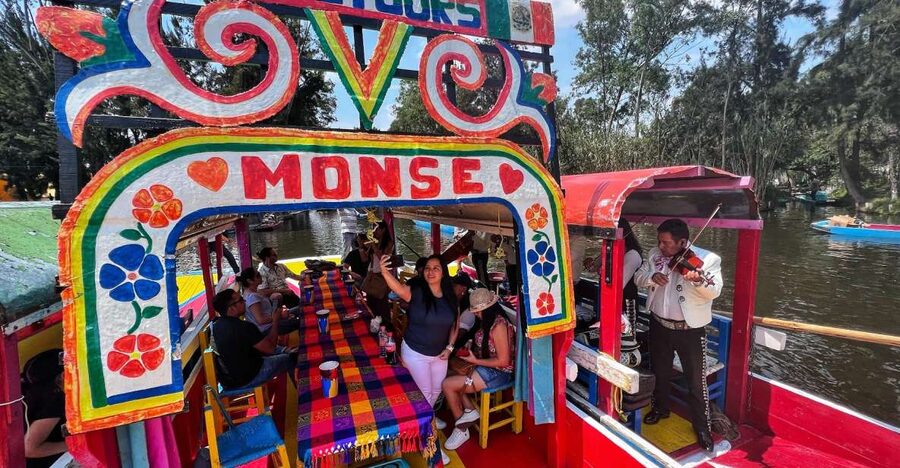
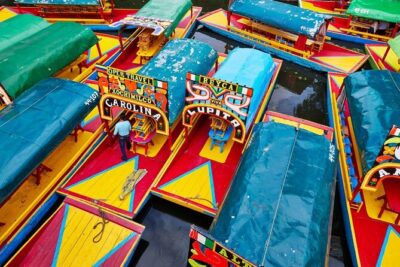
Your boat is called a trajinera. It is broad, flat, and brightly painted, with room to sit as a boatman steers at an unhurried pace. The ride lasts about an hour according to the schedule described by the operator, giving you time to watch decorated boats pass and listen to the sounds of the canals.
You may see sellers offering food, drinks, jewelry, and small souvenirs from passing boats. This adds local color, but it can also feel persistent if you want a quiet ride. Bring cash if you plan to eat or shop, since an ATM is not available at the trajinera area.
Food and beverages are not included in the tour price. Buying something on the boat can be part of the fun, but you should treat it as an optional expense rather than part of the package.
The mood changes with the day. Sunday morning can be busy, with many boats, music, and families out on the water. Wednesday’s afternoon departure may be quieter. If you want the liveliest version of Xochimilco, Sunday is likely the better choice. If you prefer fewer boats and less commotion, Wednesday may suit you.
The long southern drive through Mexico City
The tour begins at one of four meeting points: the InterContinental Presidente Mexico City, Royal Reforma, Zocalo Central Hotel, or Avenida de la Republica 154 in Tabacalera. Pickup starts about an hour before the main tour, with the stated times at 8:15 a.m. for the first three locations and 8:45 a.m. for Avenida de la Republica. Wednesday service begins at 2 p.m.
From there, you ride in a shared van toward the southern part of the city. The drive to the Xochimilco area is listed at about one hour, though traffic can make it longer. That sounds like a drawback, but the route also gives you a useful city overview before the main stops begin.
The guide points out the Poliforum Cultural Siqueiros, home to David Alfaro Siqueiros’s The March of Humanity. The mural is described as the largest in the world, and the building is one of the most striking art stops on the route, even though you view it from the vehicle rather than making a dedicated interior visit.
You also pass Plaza de Toros Mexico, described as the world’s largest bullring, with room for 50,000 people. The Teatro de los Insurgentes is another notable sight. Its enormous Diego Rivera mural covers the facade, with the comedian Cantinflas included in the design.
These stops are best understood as an introduction rather than full visits. You will not have time to study each mural or enter every building. Still, the drive helps connect Mexico City’s public art, sports venues, university buildings, and older neighborhoods into one story.
UNAM, Olympic Stadium, and the Pedregal lava fields
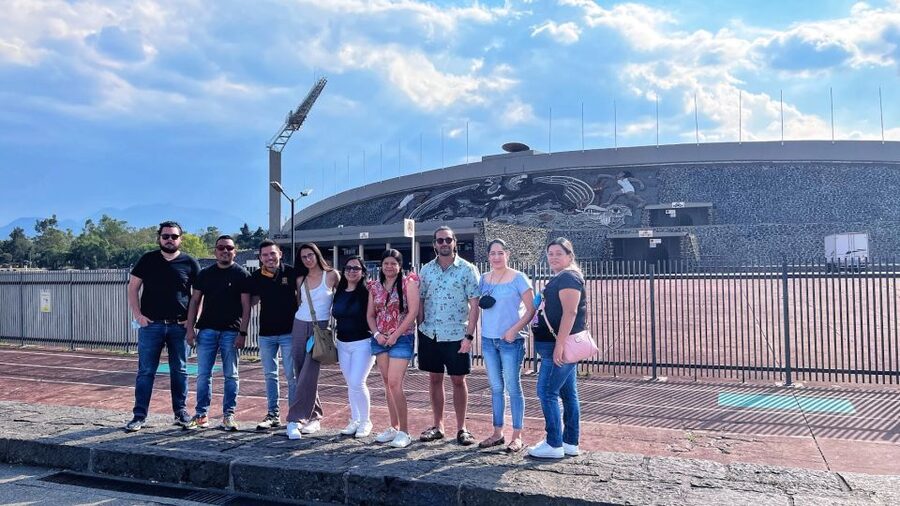
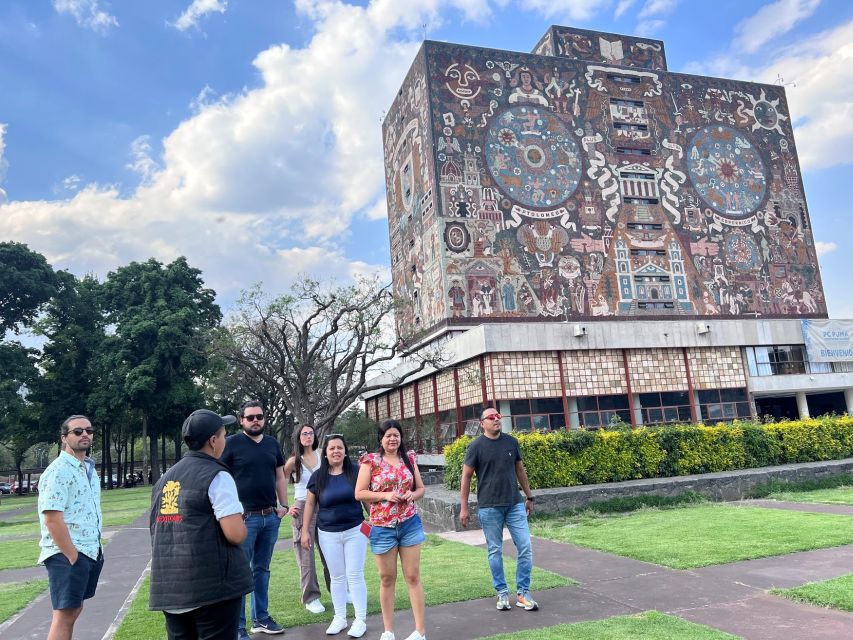
The van continues past Olympic Stadium and Ciudad Universitaria, the main campus of the National Autonomous University of Mexico. UNAM is a UNESCO World Heritage site because of its modern architecture and large murals by leading Mexican artists.
The university library, with its mosaic murals by Juan O’Gorman, is one of the tour’s advertised highlights. In practice, the campus portion is described as a scenic drive, and one account specifically noted that the murals were not seen. I would not book this outing solely to study the library facade. Treat the university as a panoramic stop, with the possibility of seeing important architecture and murals from the vehicle.
The route also passes the lava gardens of Pedregal de San Angel. These fields formed from volcanic rock and give the southern city a very different look from the central historic districts. Again, this is a view from the van, not a walk through the lava gardens.
That distinction matters. This tour covers a lot of ground, but many sights are seen through the windows. You gain orientation and context, not long visits at each landmark.
The colorful boats of Xochimilco
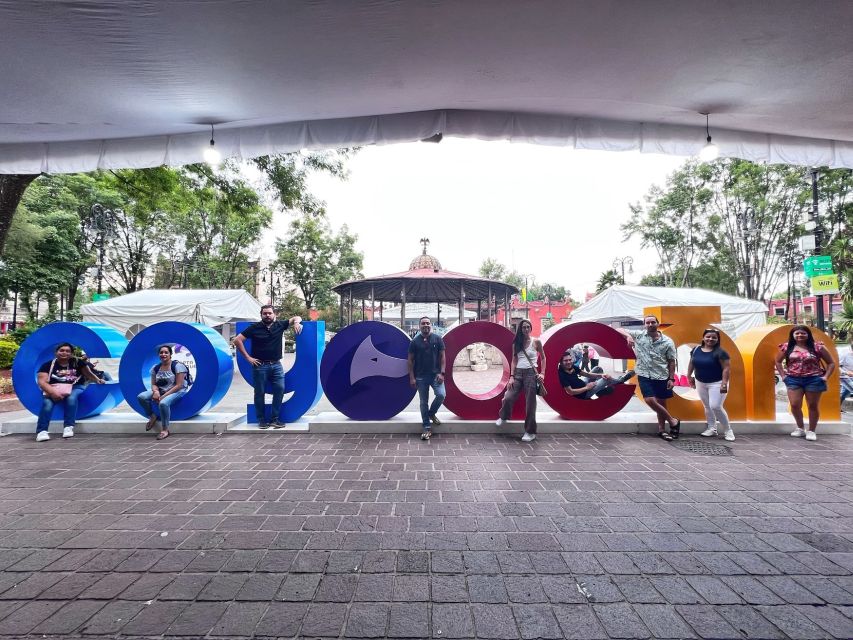
After roughly 25 minutes of additional travel from the earlier route, you reach Xochimilco for the boat portion. The operator arranges the boat, so you do not need to handle the dock process yourself.
The trajineras are one of the most photogenic parts of the day. Their painted names and bright colors contrast with the green edges of the canals, while other boats move past carrying groups, musicians, food sellers, and vendors.
The ride itself is simple. You sit while the boatman steers, and the scenery changes slowly. That is exactly the appeal. After a morning or afternoon of city traffic, the quiet motion gives you a break.
Do not expect a private boat unless the group happens to be very small. The service is shared, and group size can vary. One small group had only three people, while another vehicle carried about twelve passengers. Your experience will depend partly on how many people book that departure.
The bilingual format also deserves attention. Guides switch between English and Spanish, but not always in equal amounts. If the group is mostly Spanish-speaking, English explanations may be shorter. The guide may be excellent, but the structure of a shared bilingual tour can limit how much detail you hear.
Coyoacan’s colonial streets and San Juan Bautista Church
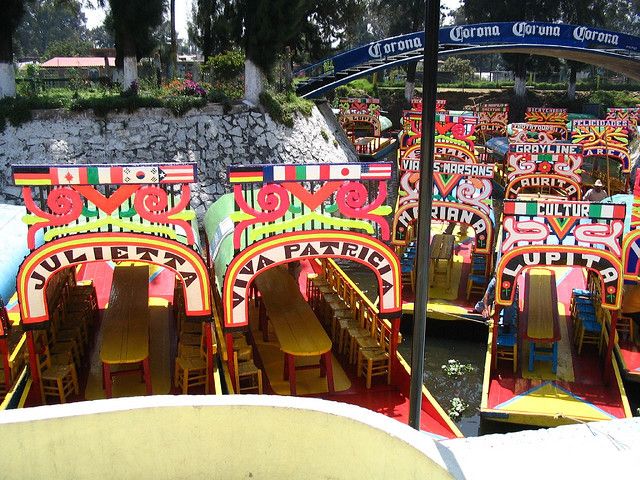
After Xochimilco, the van takes about 40 minutes toward Coyoacan. Traffic is a real factor here, and a late arrival can push the neighborhood visit into the evening.
Coyoacan is the part of the tour where you get out and walk. Its colonial district has rambling 16th-century houses, shaded streets, small squares, restaurants, and market areas. You receive an introduction from the guide, then get free time to explore around the main square.
I would use this time for a slow walk rather than trying to cover every corner. The neighborhood rewards simple wandering. You can pause for churros, look through market stalls, and take in the old facades without the pressure of a major museum schedule.
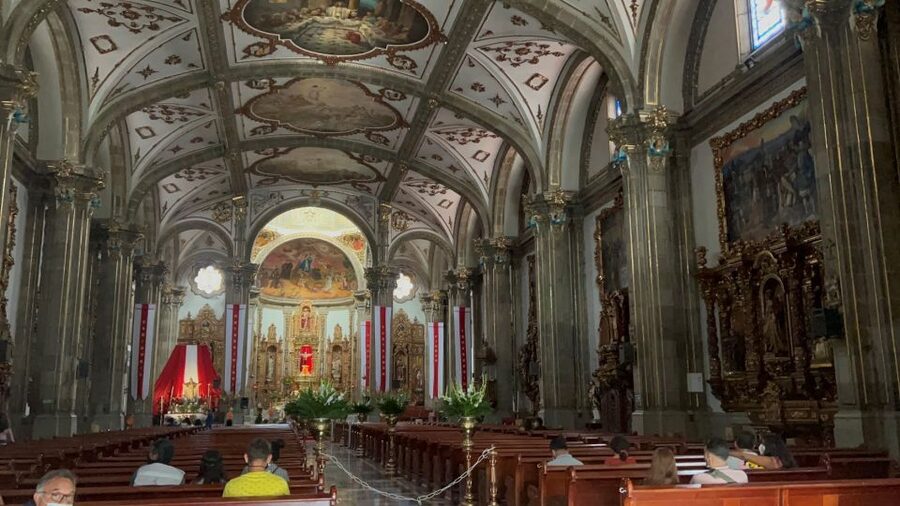
San Juan Bautista Church is one of the key stops. Its interior includes a vaulted ceiling with paintings by Juan Fabregat, made in 1944. The church adds a quieter, more intimate art experience after the huge public murals seen earlier in the day.
The schedule is strict, so keep an eye on the meeting time. One person missed the group at the end after losing track of the departure time. Coyoacan is easy to enjoy, but it is also the place where you may wish for another hour.
Cortes, Frida Kahlo, and what you actually see
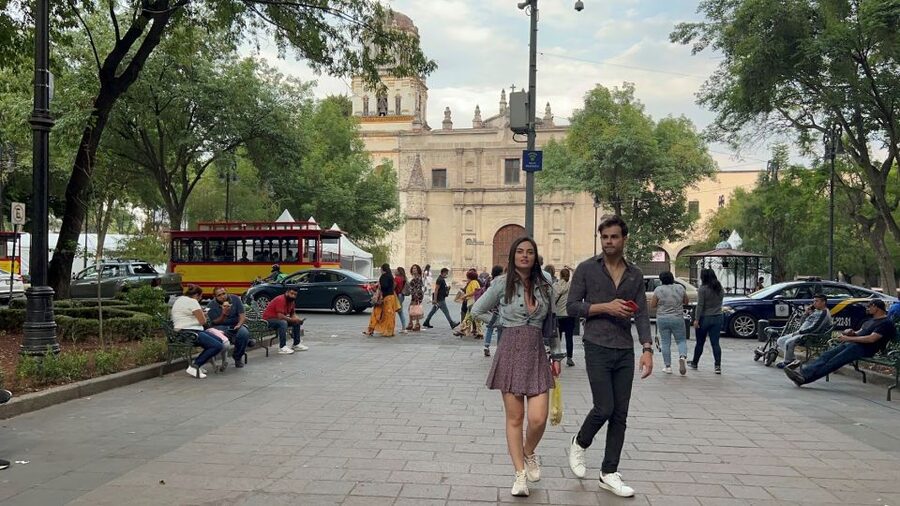
The tour includes a panoramic look at mansions linked to Spanish conquistadors, including the impressive home associated with Hernan Cortes. This is a viewing stop, not a full house tour.
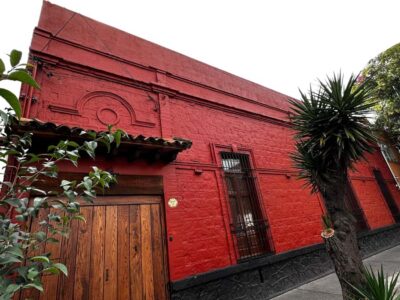
You also pass Frida Kahlo’s blue house, known as Casa Azul. The tour does not include admission to the Frida Kahlo Museum. You see the exterior, and the time available may not be enough to enter even if you wish to do so.
That limitation is important for fans of Kahlo. If Casa Azul is a top priority, book a separate timed admission and plan your visit carefully. The tour works better if you want to see the building as part of a wider Coyoacan visit.
The same rule applies to several other attractions on the route: the experience is about breadth. You see famous places in context, with a guide explaining how they fit into Mexico City, rather than spending half a day inside one site.
Is $42 a fair price?
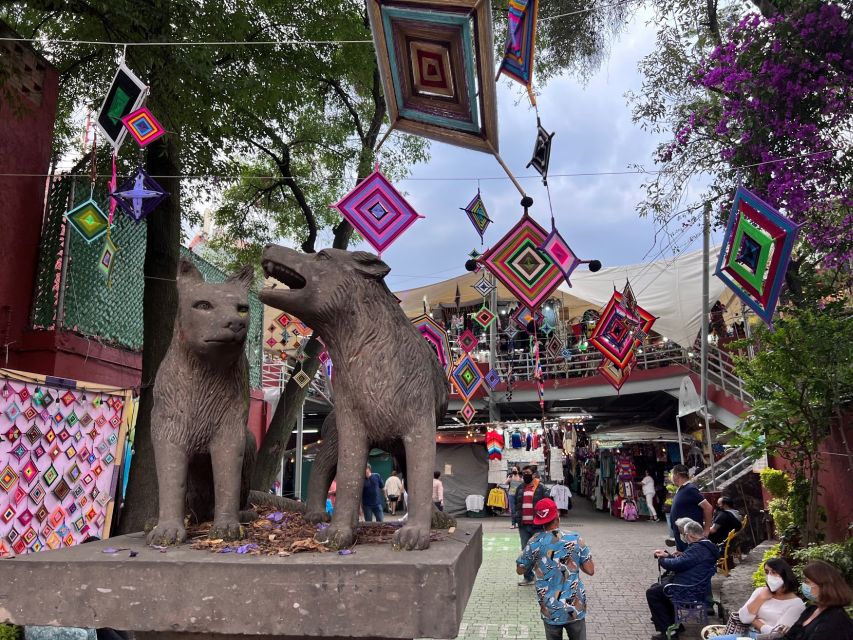
At $42 per person, the tour offers solid value if you want transportation, admission fees, a guide, and a prearranged trajinera ride in one package. Xochimilco is far from many central hotels, and arranging the boat and transport independently takes extra planning.
The price is less attractive if you want long visits at the university, Frida Kahlo’s house, or Coyoacan. You are paying for a broad route and convenience, not a slow specialist tour of one district.
The shared van keeps the cost down, but it also creates some uncertainty. Pickup can take time, and traffic may delay the itinerary. There was even a reported van breakdown, though the passengers were close enough to their hotel to walk the remaining distance. That appears to be an exception, but it is a reminder that city transport is not always predictable.
Guides have been a major strength on many departures. Eduardo was praised for being prompt and thoughtful. Gabriella received strong comments for explaining everything while moving naturally between English and Spanish. Umberto, Sergio, Mr. Martinez, David, Ricardo, and Aaron were also singled out for friendly service, clear history, or good handling of the group.
No guide is guaranteed by the booking, and the language split can affect the experience. Contact the local partner at least 24 hours before departure to confirm your meeting point and pickup time.
What to bring and who should book
Wear comfortable shoes. You will sit on the boat, but you also walk around Coyoacan and may spend time standing during stops. Sunglasses, a hat, and sunscreen are sensible because much of the day is outdoors or viewed through open surroundings.
Bring your passport or another ID card. Leave large bags and oversize luggage behind. Pets are not permitted, and the tour is not suitable for wheelchair users or people with mobility impairments.
I would recommend this tour to a first-time visitor who wants a broad introduction to southern Mexico City. It also suits you if Xochimilco is high on your list but you do not want to work out the transport and boat arrangements yourself.
It is less suitable if you dislike fixed schedules, need a fully English-only guide, or want a deep visit to Casa Azul and UNAM. In those cases, separate visits give you more control.
Should you book the Xochimilco and Colonial Coyoacan Trip?
Book it if you want one affordable half-day outing that combines canals, murals, university architecture, colonial streets, and a famous artist’s former home. The trajinera ride is the most distinctive part, while Coyoacan is the neighborhood you may wish you had more time to explore.
Choose Sunday morning for a livelier canal scene, or Wednesday afternoon for a potentially quieter outing. Confirm the pickup details, carry cash for food and vendors, and keep your expectations focused on seeing many highlights rather than entering every attraction.
For $42, the tour is a practical way to get your bearings in southern Mexico City. Its best qualities are convenience, strong guides on many departures, and the chance to fit Xochimilco and Coyoacan into one well-planned day.
FAQ
How long does the Xochimilco and Colonial Coyoacan Trip last?
The tour lasts five hours. Traffic can affect the exact timing, especially on the drive to Xochimilco and the return to Coyoacan.
What days does the tour operate?
The tour operates on Wednesday and Sunday. Wednesday departures begin at 2 p.m., while Sunday service is in the morning.
Where does pickup take place?
Pickup is available at the InterContinental Presidente Mexico City, Royal Reforma Hotel, Zocalo Central Hotel, and Avenida de la Republica 154 in Tabacalera.
Is hotel pickup included?
Pickup is available from a select list of Mexico City hotels and meeting points. Hotel pickup from other locations is not included.
Is the guide bilingual?
Yes. The live guide service is offered in English and Spanish. The guide may spend more time speaking one language depending on the number of participants in each language.
Is food included?
No. Food and drinks are not included. You can purchase them separately during the Xochimilco visit.
Do I enter Frida Kahlo’s Blue House?
No. The tour provides a panoramic view of the exterior of Frida Kahlo’s blue house. Museum admission is not listed as included.
Will I visit the UNAM library and its Juan O’Gorman murals?
The tour includes a panoramic visit to Ciudad Universitaria and highlights the university library murals. The campus portion is mainly viewed during the scenic drive, so entry and a close look at the murals are not guaranteed.
Is the tour suitable for wheelchair users?
No. The experience is not suitable for wheelchair users or people with mobility impairments.
Frida Kahlo & Coyoacan Tours, compared.
 ★ 4.5Xochimilco, Coyoacan and Frida Kahlo with Optional LunchFrom $349 hours (approx.)
 ★ 4.4CDMX: Xochimilco, Coyoacan, Frida Kahlo Museum & Murals TourFrom $89
 ★ 5.0Frida Kahlo VIP [Museum Tickets Included] Bike, Markets & ChurrosFrom $834 hours (approx.)
 ★ 5.0Frida Kahlo VIP [Museum Tickets Included] Walk, Markets & ChurrosFrom $833 to 4 hours (approx.)
 ★ 5.0EXCLUSIVE TOUR Frida Kahlo Museum – SMALL GROUPSFrom $862 hours (approx.)
 ★ 4.5Mexico City: Frida Kahlo Museum Entry Ticket w/Digital GuideFrom $34
 ★ 5.0Private City Tour in Frida Kahlo, Coyoacan, and XochimilcoFrom $1954 to 6 hours (approx.)
 ★ 5.0PREMIUM Frida Kahlo Museum and Xochimilco (Small Groups)From $806 to 7 hours (approx.)
The lists this tour appears in