
Reviewed · FRIDA KAHLO & COYOACAN TOURS
La Catrina & Muralism: Diego Rivera’s Legacy & Frida Kahlo
Mexico City’s murals are not just decoration. They are arguments painted on walls, filled with revolution, class struggle, Indigenous identity, religion, and the uneasy business of building a nation. This 2.5-hour walking tour links several major sites to explain how Diego Rivera, Frida Kahlo, José Clemente Orozco, and David Alfaro Siqueiros changed Mexican art.
In This Article
- Key points at a glance
- Why Mexican muralism matters before you start
- San Ildefonso: where Rivera and Kahlo enter the story
- Museo Vivo del Muralismo and the scale of public art
- Diego Rivera Museum and the world of La Catrina
- Bellas Artes and Rivera’s controversial final chapter
- The best part: murals you would not find alone
- Guides make or break the experience
- Price, pace, and practical value
- Who should book this mural walk?
- Booking details worth knowing
- Should you book La Catrina and Muralism?
- FAQ
- How long is the tour?
- What time does the tour begin?
- Where does the tour start?
- Where does the tour end?
- Is the tour offered in English?
- Are museum tickets included?
- Is public transportation included?
- Can I cancel for a full refund?
I like the route for two clear reasons: museum admission is included, and the small group limit of 12 keeps the experience personal. I also like the way guides such as Sofia, Ulysses, Addy, and Warryor connect famous works with lesser-known murals in markets and public buildings. The main caution is timing: the advertised length is about two and a half hours, but some outings have run much longer, with little chance to stop for water or food.
Key points at a glance
- Begin where Rivera and Kahlo met: San Ildefonso adds a personal story before the art history begins.
- See murals in ordinary public places: Market murals and lesser-known works are difficult to find without a guide.
- Follow the political story: The art reflects the Mexican Revolution and the country’s struggle over identity and justice.
- Finish with La Catrina and Bellas Artes: Rivera’s famous skeleton figure and a controversial mural provide a strong final chapter.
- Small-group format: The experience accepts no more than 12 people and is offered in English.
- Bring water and allow extra time: The walk involves standing, museums, and public transport, with no scheduled food or drink stop listed.
Why Mexican muralism matters before you start
Mexican muralism grew into one of the major art movements of the 20th century, particularly after the Mexican Revolution. Its artists took art out of private galleries and placed it in schools, government buildings, museums, and other public settings.
That choice mattered. A mural could speak to people who never entered an art museum. It could show workers, farmers, Indigenous communities, soldiers, politicians, and historical figures in the same scene. It could also challenge the official version of Mexico’s past.
You do not need an art degree for this tour. A good guide gives you a way to read the pictures. Look for repeated symbols, clashes between social classes, references to colonial rule, and the way each painter presents ordinary people. The best guides, including Ulysses, Sofia, and Warryor, are praised for making complicated ideas easy to follow.
The single-language English format helps here. You are not moving between languages or receiving a rushed explanation. You can ask questions and follow the thread from one building to the next.
A few more Mexico City tours and experiences worth a look

San Ildefonso: where Rivera and Kahlo enter the story
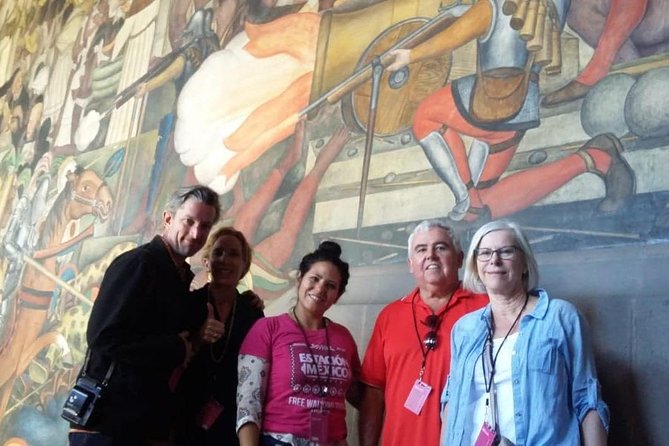
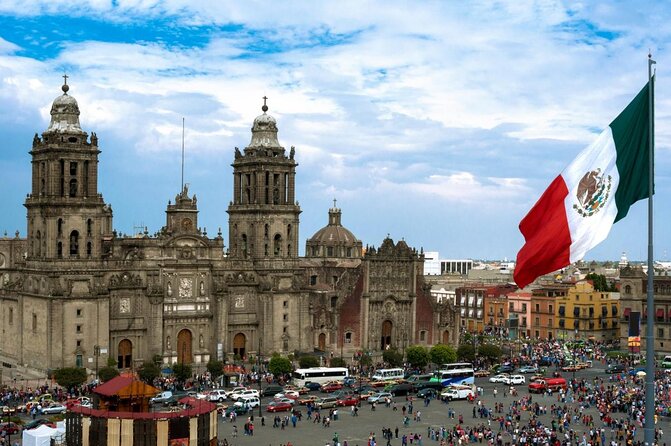
The tour begins at the Antiguo Colegio de San Ildefonso, at Justo Sierra 16 in the Centro Histórico. This former college is not simply a meeting point. It provides the opening chapter for Diego Rivera and Frida Kahlo, whose relationship began here.
The introduction lasts about 35 minutes, and admission is included. Expect the guide to set out Rivera’s career, artistic aims, and connection to the young Kahlo. Their relationship is often treated as celebrity gossip, but on this walk it serves a better purpose: it places two central figures of Mexican art inside the same political and artistic moment.
San Ildefonso also helps you understand why Mexico City’s public buildings became such important spaces for mural painting. The site links education, state power, and art, three subjects that keep returning throughout the walk.
Give yourself time to look above eye level. Mural buildings reward slow attention, and the guide’s explanation should help you notice how a work fits its setting. This is a useful beginning for anyone who might otherwise see the murals as large, colorful pictures without knowing what they are trying to say.
Museo Vivo del Muralismo and the scale of public art
The second stop is Museo Vivo del Muralismo, a site arranged around two courtyards and three levels. The visit takes about 35 minutes, with entry covered in the price.
This stop is valuable because it shows that muralism is not limited to one famous painter. The movement involved different artists, styles, and political positions. As you move through the building, you get a broader sense of how public art became a tool for telling Mexican history.
The courtyards and multiple levels also change how you see the murals. You are not viewing a single canvas at a fixed distance. You are moving through a building where painted scenes interact with architecture, doorways, open spaces, and changing viewpoints.
A guide can point out details you might pass without noticing. The tour’s strongest theme is not simply who painted each work, but why it was commissioned, who appears in it, and whose version of history it presents. Some murals are openly political. Others use historical scenes and symbols in ways that require more explanation.
Expect to stand for much of this part. The tour does not list an official water or restroom break, so you should plan ahead before meeting at 11 a.m.
Diego Rivera Museum and the world of La Catrina
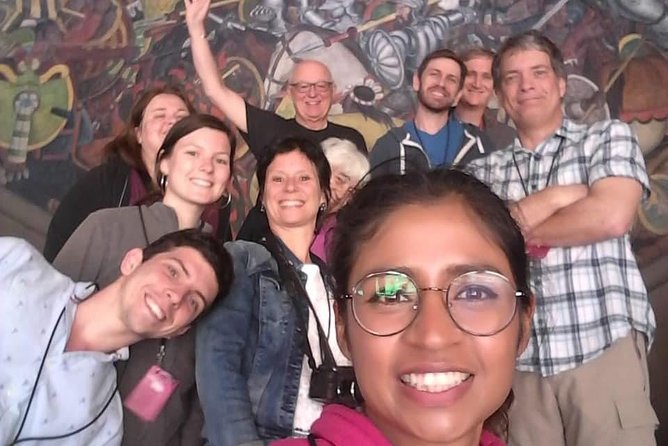
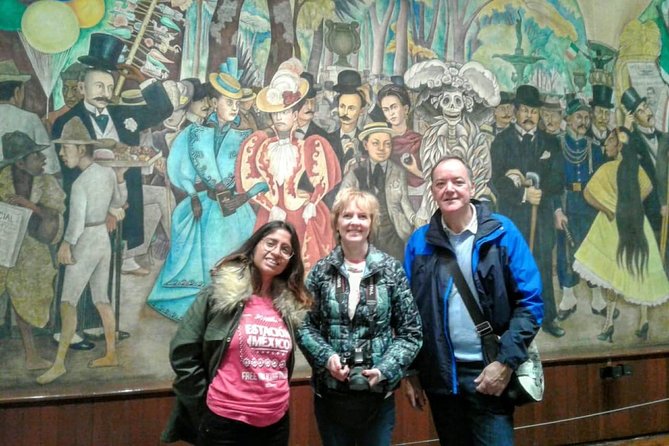
The third stop, Museo Mural Diego Rivera, is devoted to one of the most recognizable works in Mexican muralism. The centerpiece brings together Día de Muertos imagery and La Catrina, the elegant skeleton figure now closely associated with Mexican culture.
The visit lasts about 30 minutes, with admission included. The mural is famous, but fame can make a work easy to skim. Your guide’s role is to slow you down and explain the figures, historical references, and visual relationships packed into the scene.
La Catrina is especially useful as a symbol because she makes death look social and public rather than private and solemn. Her presence connects the mural to Mexican traditions while also supporting a larger critique of power, status, and hypocrisy.
This is one of the tour’s most rewarding stops for first-time visitors to Mexico City. You receive the visual impact of a major work, then gain the context to understand why the image has lasted. If you have already seen reproductions of La Catrina, the original setting still gives the work a different force.
Bellas Artes and Rivera’s controversial final chapter
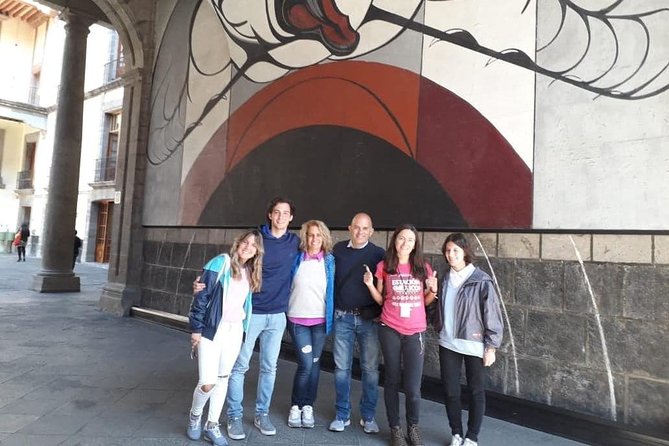
The tour ends at the Palacio de Bellas Artes, Mexico’s most important cultural venue, on Avenida Juárez. The final visit takes about 30 minutes and includes admission.
Bellas Artes is a fitting finish because it brings Rivera’s art into a larger argument about politics and public ownership. The tour focuses on his controversial mural created in the United States and later preserved here for people to see.
That story gives you a useful reminder: murals are tied to their locations. Moving a work, recreating it, or preserving it in another country can change how it is understood. Rivera’s political ideas were not always comfortable for the people who commissioned his work, and that tension is part of what makes the final stop meaningful.
The building itself also gives the tour a strong ending. You finish near one of Mexico City’s major cultural landmarks rather than in an out-of-the-way location. Your guide will share suggestions for things to do nearby and places to eat, which makes the stop practical for planning the rest of your day.
If Bellas Artes is especially important to you, confirm the day’s route with your guide. One outing included a requested change to visit the palace, and the description notes that museums may change based on availability.

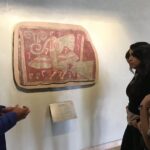
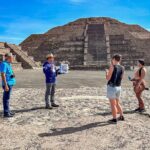


The best part: murals you would not find alone
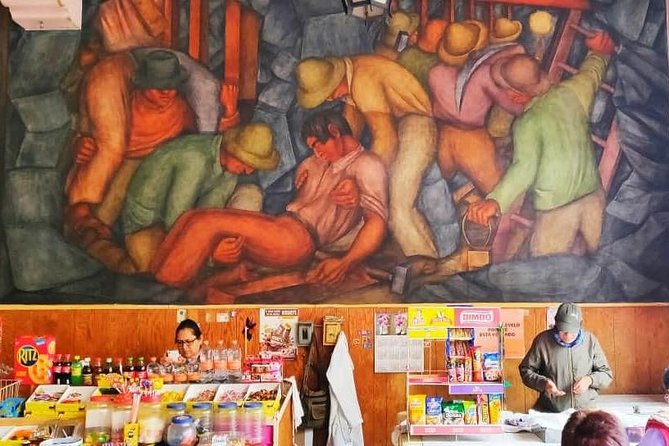
The official route names four main stops, but the actual experience can include additional public art along the way. Guides have taken people through markets and public buildings where murals are easy to miss if you are walking independently.
This is where the tour earns much of its value. You might locate the major museums with a map, but you would have a harder time identifying works inside everyday places or understanding why they matter. Guides such as Warryor and Ulysses are praised for showing art in markets and for pointing out areas of buildings that are easy to overlook.
The term insider access should not mean secret entry or anything exclusive. Here it means knowing where to look. A market mural can be more revealing than a polished museum display because it shows how public art continues to exist in daily life.
The route may also introduce you to Orozco and Siqueiros, not just Rivera. That wider view matters. Mexican muralism was never the story of one man, and the different artists often had different ideas about revolution, government, religion, and social change.
Guides make or break the experience
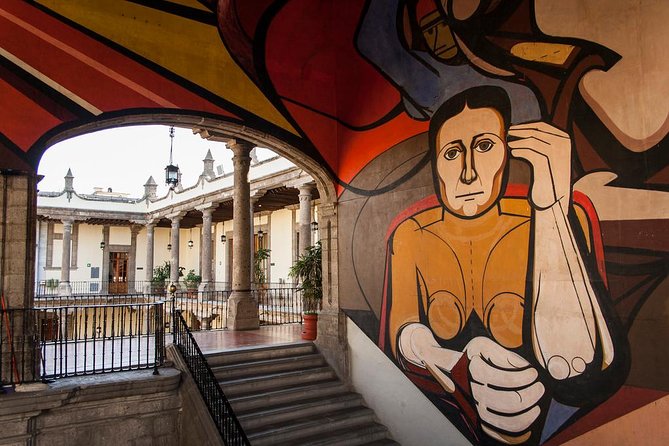
The provider is Estación México, and the tour is built around a host with a strong connection to art and history. The guide names that appear in the experience include Addy, Sofia, Ulysses, Warryor, Diana, David, Erin, and Guerrero, also called Warrior.
The repeated praise for these guides centers on passion, clear explanations, and a willingness to answer questions. That matters more on a mural tour than a polished script does. You need someone who can explain symbols, identify artists, and connect a painted figure to Mexican history without turning the walk into a lecture.
Some guides also adapt to the group. One guide continued explaining the art after the planned time when the group ran out of time for a final mural. Another adjusted the route to include Bellas Artes. These examples suggest that the experience can feel personal when the group is small, though you should not count on every requested change.
The group maximum is 12 people. That is large enough for a social outing but small enough to hear the guide and ask questions. If you are hoping for a private tour, this is not advertised as one, though smaller departures can happen.
Price, pace, and practical value
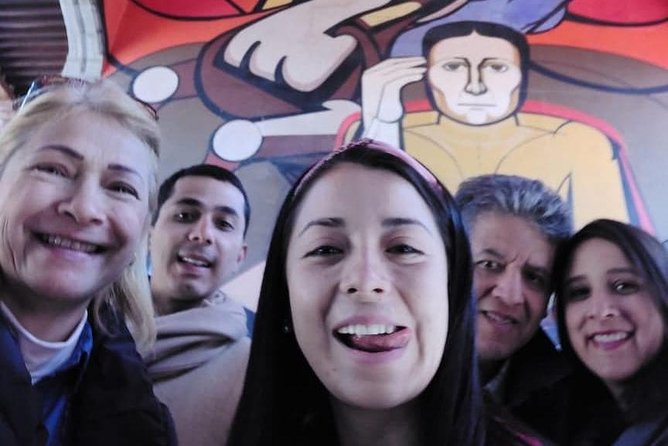
At $66.14 per person, this is not the cheapest way to see central Mexico City. It is also not simply a museum ticket. The price covers entry to the museums, an English-language guide, and public transportation between parts of the route.
I see the value in the interpretation. You can visit some of these places alone for less, but the main benefit here is learning how to connect the works. If your interest is limited to taking photographs, the price may feel high. If you want the political and cultural meaning behind the images, the cost is easier to justify.
The 11 a.m. start gives you a manageable morning beginning, but plan your day with flexibility. The stated duration is approximately two hours and 30 minutes. Some outings have lasted three and a half to more than four hours because the guide spent extra time with the art or added more murals.
That extra time can be a gift, but it can also disrupt lunch plans. Bring water and a snack. The walk includes standing and some movement through museums and city streets, and no formal break is listed.
Public transportation is included, which keeps the route affordable and helps you move between central sites without arranging separate taxis. Most people can participate, but you should be comfortable walking and standing for extended periods.
Who should book this mural walk?
I would choose this tour if you want Mexico City history explained through art rather than delivered as a standard sightseeing loop. It suits solo visitors, couples, families with older children, and friends who enjoy museums but want more context than a label can provide.
It is also a good match for anyone who has already visited Mexico City’s main sights and wants to notice more of the city’s public art. Several stops are easy to miss without local direction, especially murals inside markets and less obvious sections of public buildings.
Families should consider the pace. A 14-year-old joined one outing and enjoyed it, but younger children may find the standing and political discussion demanding. Art students and mural painters should find plenty to think about, especially in the treatment of public space and social messages.
I would hesitate to book it if you need a tightly timed two-and-a-half-hour activity, want frequent seated breaks, or have little interest in history. The tour’s strength is explanation, and that takes time.
Booking details worth knowing
The meeting point is the former College of San Ildefonso, Justo Sierra 16, in the Centro Histórico. The end point is Palacio de Bellas Artes, Av. Juárez, near the center of Mexico City.
Confirmation is provided at booking, and the meeting area is near public transportation. The tour is offered in English and uses a one-language format. Museum locations can change based on availability, so keep some flexibility in mind.
Free cancellation is available if you cancel at least 24 hours before the local start time. Cancellations within 24 hours, and changes made during that period, are not accepted for a refund.
Should you book La Catrina and Muralism?
Book it if you want the story behind Mexico City’s murals, not only a quick look at famous paintings. The strongest reasons are the included museum tickets, small group size, public transportation, and guides who bring real energy to Rivera, Kahlo, Orozco, Siqueiros, and the artists who followed them.
Go prepared for standing, walking, and a possible extension beyond the advertised time. Carry water and a snack, and avoid scheduling lunch immediately afterward. For an art-focused introduction to Mexico City’s political past and public culture, this is a thoughtful use of half a day.
FAQ
How long is the tour?
The stated duration is approximately two hours and 30 minutes. The timing can vary, and some outings have lasted three and a half to more than four hours.
What time does the tour begin?
The tour begins at 11:00 a.m.
Where does the tour start?
It starts at the former College of San Ildefonso, Justo Sierra 16, Centro Histórico de la Ciudad de México.
Where does the tour end?
It ends at or near Palacio de Bellas Artes on Avenida Juárez. The guide also provides suggestions for nearby activities and places to eat.
Is the tour offered in English?
Yes. The experience is offered in English and uses a one-language format.
Are museum tickets included?
Yes. Admission tickets for the listed museums are included.
Is public transportation included?
Yes. Public transportation is included as part of the experience.
Can I cancel for a full refund?
Yes, if you cancel at least 24 hours before the local start time. Cancellations or changes made less than 24 hours before the start are not eligible for a refund.
More Frida Kahlo & Coyoacan Tours in Mexico City


More tours in Mexico City we've reviewed


Frida Kahlo & Coyoacan Tours, compared.
 ★ 4.5Xochimilco, Coyoacan and Frida Kahlo with Optional LunchFrom $349 hours (approx.)
 ★ 4.4CDMX: Xochimilco, Coyoacan, Frida Kahlo Museum & Murals TourFrom $89
 ★ 5.0Frida Kahlo VIP [Museum Tickets Included] Bike, Markets & ChurrosFrom $834 hours (approx.)
 ★ 5.0Frida Kahlo VIP [Museum Tickets Included] Walk, Markets & ChurrosFrom $833 to 4 hours (approx.)
 ★ 5.0EXCLUSIVE TOUR Frida Kahlo Museum – SMALL GROUPSFrom $862 hours (approx.)
 ★ 4.5Mexico City: Frida Kahlo Museum Entry Ticket w/Digital GuideFrom $34
 ★ 5.0Private City Tour in Frida Kahlo, Coyoacan, and XochimilcoFrom $1954 to 6 hours (approx.)
 ★ 5.0PREMIUM Frida Kahlo Museum and Xochimilco (Small Groups)From $806 to 7 hours (approx.)
The lists this tour appears in