
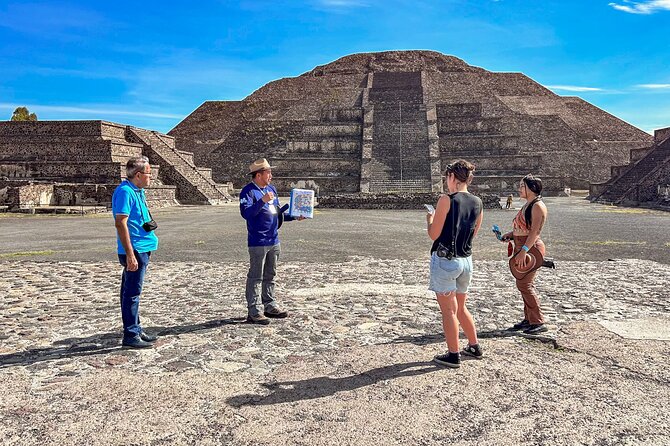
Reviewed · TEOTIHUACAN TOURS
Teotihuacan Early Access Guided Tour with optional Lunch
Teotihuacan is at its best before the tour buses arrive. This early start gets you into the City of Gods near opening time, when the plazas feel quiet, the air is cooler, and the long Avenue of the Dead is easier to photograph. Guides such as Alan, Antonio, Alex, Lily, and Ligia have been especially praised for bringing the temples and murals to life.
In This Article
- Key points to know before you book
- Why the 6:20 a.m. departure matters
- Three hours among Teotihuacan’s great avenues and pyramids
- The Avenue of the Dead and the pyramid views
- The obsidian workshop: interesting stop or sales detour
- The restaurant stop and the optional-lunch problem
- Shared bus, private tour, and the real value of $39
- What to pack for the exposed site
- Who will get the most from this tour
- Should you book the Teotihuacan early-access tour?
- FAQ
- Where does the shared tour begin?
- What time does the tour start?
- Is hotel pickup included?
- Is admission to Teotihuacan included?
- How long is the archaeological-site visit?
- Is lunch included?
- How large is the group?
- Can I cancel for a full refund?
I like the simple transport from central Mexico City, and I like that admission to the archaeological site is included. The guide can add useful detail about Teotihuacan’s murals, architecture, theories, and recent discoveries instead of leaving you to decode the ruins alone.
The main catch is the time after the pyramids. The obsidian workshop and long restaurant stop are part of the day, even though lunch may be presented as optional. If you want a straight archaeological visit with no shopping or meal stop, this may feel padded.
Key points to know before you book
- Arrive early for cooler weather and fewer people: The 6:20 a.m. start is the strongest reason to choose this outing.
- Expect a full eight-hour day: The early departure can run until roughly 2:30 or 3:30 p.m., depending on the group and traffic.
- Your guide shapes the experience: Alan, Antonio, Alex, Lily, Ligia, Gerson, Alicia, and Hector have all been praised for clear explanations and good energy, though guide quality can vary.
- The site visit lasts about three hours: You’ll see major plazas, temples, murals, the Avenue of the Dead, and the pyramids.
- Lunch and shopping take up meaningful time: The obsidian stop lasts about 45 minutes, followed by roughly 1 hour and 40 minutes at the restaurant.
- Pack for sun and steep walking: Shade is limited, and the stone steps and terraces can be tiring in the heat.
Why the 6:20 a.m. departure matters
Teotihuacan sits outside Mexico City, so this is not a lazy morning outing. You meet at Hostal Amigo at Isabel La Católica 61-A in the Centro Histórico at 6:20 a.m. The group then travels by shared transport to the archaeological zone.
That early hour pays off. Teotihuacan has huge open plazas with very little shade. By late morning, sunlight can be fierce, and the main paths fill with tour groups. Starting near opening time gives you a cooler first look and a better chance at uncluttered photographs.
There is one practical warning: pickup timing can be confusing when several meeting points or tour options are operating. Some departures may wait for late arrivals, and one scheduled 6:20 meeting has reportedly left closer to 7:15. I would arrive early, look for a clearly identified guide, and keep your phone available in case the operator needs to locate the group.
Hotel pickup is not standard. It is available only with the private tour option, and you must provide your hotel name when arranging it. The regular shared tour ends back at the central meeting point.
A few more Mexico City tours and experiences worth a look
Three hours among Teotihuacan’s great avenues and pyramids
The archaeological site is the heart of the day. Teotihuacan was once a major city with a population estimated at around 100,000. It was neither Maya nor Aztec, and its original builders and exact reasons for its decline remain subjects of archaeological study.
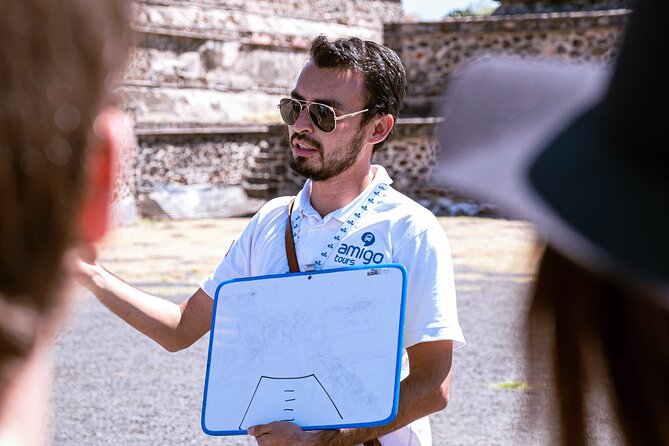
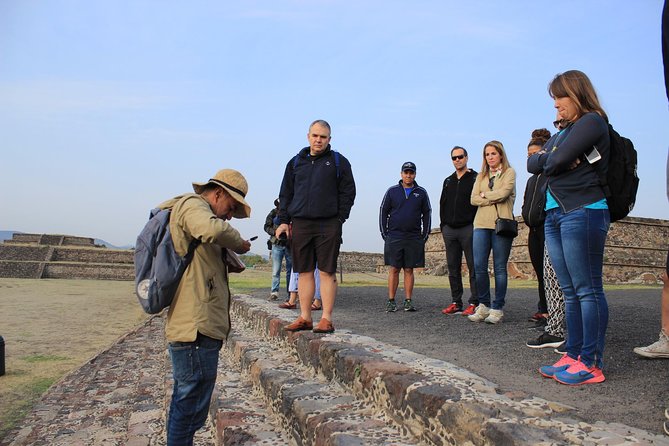
A guide helps turn a giant collection of stones into a city with purpose. You walk through broad plazas, examine the layout of the Avenue of the Dead, and hear how ceremonial buildings, temples, and painted walls fit together. The better guides explain what is established, what is still debated, and how archaeologists reach their conclusions.
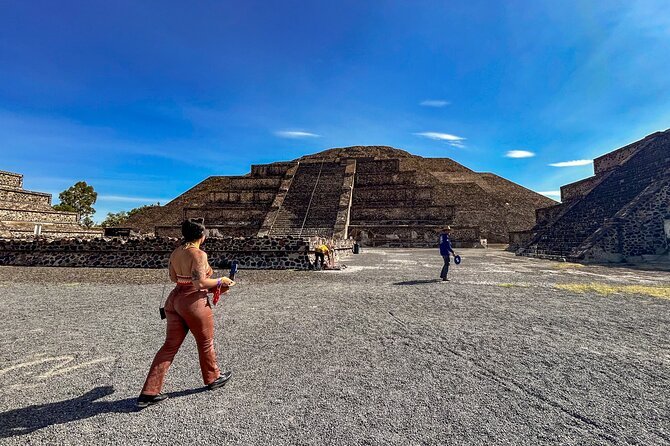
The Temple of Quetzalcoatl, also called the Temple of the Feathered Serpent, is one of the most detailed structures on the route. Its carved forms and repeated serpent imagery offer a change from the massive, plain-sided pyramids. The Palace of Quetzalpapalotl adds another layer, with architectural decoration and connections to the ceremonial life of the city.
Murals are especially important here. Teotihuacan’s painted designs give clues about symbols, animals, rituals, and daily life that bare stone cannot provide. Ask your guide to point out the details that are easy to miss. Guides who use visual material, such as Lily, who has shown artistic reconstructions of the ancient city, can make the ruins easier to picture.
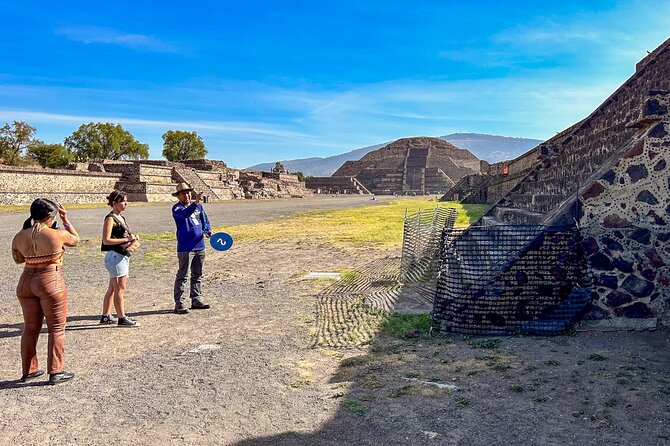
The group size can reach 25 people. That is large enough to keep the price down, but it can make explanations harder to hear, especially if the guide speaks quickly or alternates between English and Spanish. The strongest English-language guides, including Alan, Antonio, and Alex in particular, have been praised for clear, lively presentations. Still, the quality is not completely predictable.
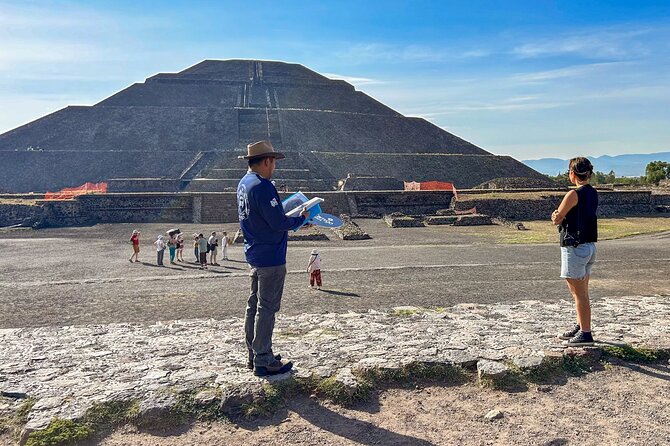
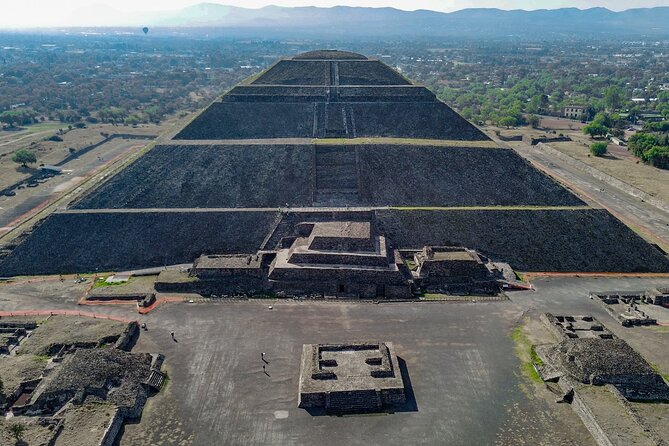
You should expect plenty of walking on uneven ground, grassy terraces, and steps. Some participants have climbed the Pyramid of the Moon for a high view of the Avenue of the Dead, though access to structures can change. The stairs are steep, and the exposed setting offers little shade. Wear solid walking shoes, bring sunscreen, and carry a hat and water.
The Avenue of the Dead and the pyramid views
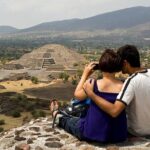
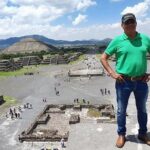
The Avenue of the Dead is Teotihuacan’s central spine. From higher ground, you can see how the avenue links plazas and monumental buildings across the site. That broad view is one of the clearest ways to understand the city’s careful planning.
The route’s order matters. The group may reach the Pyramid of the Moon later in the visit, around the hottest and busiest part of the morning. I would have preferred to tackle that area first, while the site is cool and quiet, then walk back toward the main entrance. Ask your guide at the beginning how much time you will have at each pyramid and if climbing is permitted that day.
The early-access promise is strongest during the first part of the archaeological visit. You may begin with an unusually calm setting, then notice crowds building as the morning goes on. That contrast explains why the early option is worth considering even if it requires getting out of bed before sunrise.
Photography is easy in the open plazas, but remember that the sun moves quickly across this exposed site. If you want the best chance of softer light, use the first hour for wide views and save close details for later.
The obsidian workshop: interesting stop or sales detour
After Teotihuacan, the group visits El Quetzal Artesanias, an obsidian workshop. Obsidian is volcanic glass, and the stop explains how this dark stone has been shaped and used for centuries.
This can be a worthwhile cultural addition if you want to understand a material associated with Mesoamerican craft. The demonstration and tequila tasting give the day a local, hands-on quality that a purely academic visit would not provide. Some people enjoy the chance to browse handcrafted pieces and take home a small souvenir.
The other side is clear: this is also a shopping stop. You may be encouraged to look at obsidian, agave products, tequila, mezcal, and other souvenirs. The sales approach has been described as friendly by some and too forceful by others, with alcohol tastings that not everyone wants.
If you are not interested in buying anything, set your expectations before you arrive. Treat the workshop as a scheduled 45-minute pause, enjoy the explanation, and do not feel obliged to purchase. This stop is one reason the tour takes much longer than a simple ride to the pyramids and back.
The restaurant stop and the optional-lunch problem
The final planned stop is Tlacaelel, where the group spends about 1 hour and 40 minutes. The meal is described as a traditional Mexican lunch, and the food has been praised by some participants. A selected box-lunch option is included in certain bookings, while drinks and tips are not included.
The difficulty is the word optional. Even if you do not add lunch, the shared group may still go to the restaurant after the archaeological visit. That leaves you waiting in an isolated area or paying for your own ride back to Mexico City. A recent update indicates that a no-food option is now available, but you should confirm exactly what that means before booking.
I would also ask what restaurant arrangement applies to your selected package. Some people have found the setting touristy, the prices high, or the meal stop too long. Others have enjoyed the food, performances, tastings, and social atmosphere. This is not a quick local lunch in the city. It is a structured group stop tied to the tour’s return journey.
If you want a relaxed meal and enjoy trying dishes as part of an organized day, select the food option and budget for drinks and gratuity. If you would rather return directly after Teotihuacan, choose the no-food option if available, or consider a private arrangement that gives you more control.
Other guided tours in Mexico City

Shared bus, private tour, and the real value of $39
At $39 per person, the shared tour is priced for convenience rather than complete flexibility. You get round-trip transportation from the meeting point, a professional bilingual guide, and admission to Teotihuacan. That removes several chores: arranging a long-distance taxi, buying site tickets, and working out the return trip.
The price is particularly fair if you value commentary. A strong guide can explain the Temple of Quetzalcoatl, identify mural details, discuss competing ideas about the city’s origins, and give you time to explore between talks. Antonio, Alan, Lily, Hector, and Ligia have been singled out for making the day informative and enjoyable.
But $39 does not buy a fully private experience. You may share the vehicle and the site visit with as many as 25 people. Transport comfort can vary, and one account described warm conditions inside the shuttle. The schedule is also shaped by the whole group, including the workshop and meal.
The private upgrade is the better fit if you want door-to-door hotel service, a smaller party, and more say over the pace. It costs more, but the added control can matter if you are traveling with family, have limited time, or do not want to spend nearly two hours at lunch.
What to pack for the exposed site
You do not need complicated equipment, but a few items make a large difference:
- Comfortable walking shoes for terraces, uneven paths, and steep pyramid steps
- Sunscreen and a hat, since shade is limited
- Water for the hot portions of the visit
- A light layer for the chilly early morning
- A phone or camera for the Avenue of the Dead and pyramid views
- Extra money for drinks, tips, or purchases at the workshop
The early morning can feel cool, while the same site becomes hot by late morning. Dress in layers rather than assuming Mexico City’s morning temperature will match Teotihuacan’s midday conditions.
Who will get the most from this tour
I recommend this experience to first-time visitors who want the practical ease of transport and a guide’s explanation without paying private-tour prices. It also suits solo visitors who like meeting a group and families who prefer a planned day outside the city.
The tour works best for people who can tolerate a fixed schedule. You will not simply visit the ruins and leave when you are ready. The craft workshop and restaurant stop are built into the day, and the shared vehicle must follow the group timetable.
Independent visitors who want to study every mural, avoid shopping, or choose their own lunch may be happier arranging their own transport and entrance. The same is true if you need a guide who speaks slow, polished English. The experience is offered in English, but individual delivery can vary, especially on bilingual departures.
The site itself is worthwhile regardless. The question is how much structure you want around it.
Should you book the Teotihuacan early-access tour?
Book it if you want an affordable, organized visit that gets you to Teotihuacan early and includes transportation and admission. The early start is the strongest feature, and a good guide can add far more than a quick internet search.
Before paying, check three details: the exact meeting time, the guide language, and the lunch arrangement. If possible, select the no-food option when you want to skip the restaurant, or choose the private tour for hotel pickup and more control.
My verdict is favorable, with reservations. The pyramids, murals, Avenue of the Dead, and cool early arrival justify the trip. The day is less appealing if you dislike sales stops, long group meals, or uneven guide quality. Go for the archaeological site and the early access, not for a perfectly streamlined schedule.
FAQ
Where does the shared tour begin?
The shared tour begins at Hostal Amigo, Isabel La Católica 61-A, in Mexico City’s Centro Histórico.
What time does the tour start?
The listed start time is 6:20 a.m. Meeting and departure timing can vary by option, so check your booking details carefully.
Is hotel pickup included?
Hotel pickup is available only when you select the private tour option. You must provide your hotel name to arrange it.
Is admission to Teotihuacan included?
Yes. Entrance to the Teotihuacan Archaeological Site is included.
How long is the archaeological-site visit?
The scheduled visit to Teotihuacan lasts about three hours.
Is lunch included?
Lunch is included only if you select the applicable food or box-lunch option. Drinks and tips are not included.
How large is the group?
The activity can include a maximum of 25 people.
Can I cancel for a full refund?
You can cancel at least 24 hours before the experience start time for a full refund. Changes or cancellations made less than 24 hours before the start time are not accepted for a refund.
More Lunch Experiences in Mexico City


More Guided Tours in Mexico City
More Teotihuacan Tours in Mexico City


More tours in Mexico City we've reviewed





Teotihuacan Tours, compared.
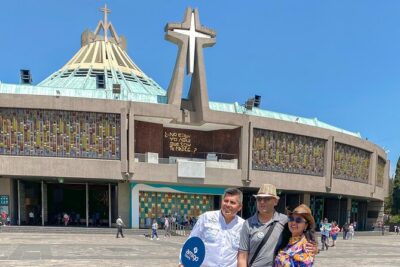 ★ 5.0Teotihuacan, Guadalupe Shrine & Tlatelolco Day Tour with LunchFrom $399 hours (approx.)
 ★ 5.0Balloon flight + Breakfast in cave + Pyramids + Pick up CDMX.From $1722 to 8 hours (approx.)
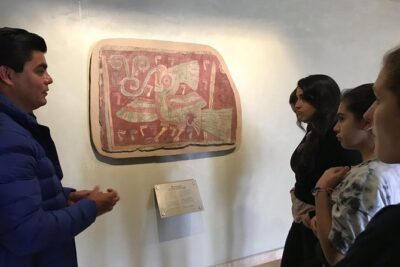 ★ 5.0Teotihuacan pyramids morning or afternoon without tourist trapsFrom $645 hours 30 minutes (approx.)
 ★ 5.0Balloon flight + pick up in CDMX + Breakfast in Cave + PyramidsFrom $1694 to 7 hours (approx.)
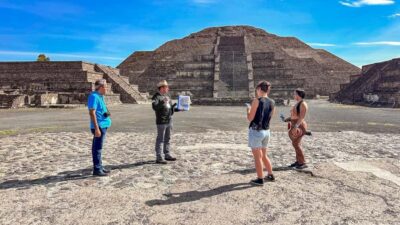 ★ 4.6Mexico City: Teotihuacan, Tlatelolco & Guadalupe Shrine TourFrom $49
 ★ 5.0Teotihuacan Hot Air Balloon Flight from Mexico City / VolareFrom $1553 to 9 hours (approx.)
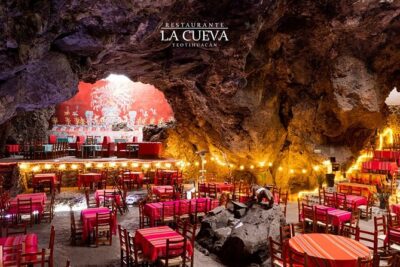 ★ 5.0Hot Air Balloon Flight with Breakfast Cave and Pyramids TourFrom $1408 hours (approx.)
 ★ 5.0Balloon flight + pick up in CDMX + Breakfast in Cave + TeotihuacanFrom $1606 hours (approx.)
The lists this tour appears in