
Reviewed · TEQUILA & MEZCAL TASTINGS
Unique cablecar experience, pulque tasting &unbeatable views
Mexico City’s Cablebús carries you far beyond the historic center, over steep neighborhoods where brightly painted homes climb the hills and old Volkswagen taxis thread narrow streets. The ride ends near Cuautepec, where a short hike, a local pulquería, and wide views toward Mexico City and the State of Mexico turn a simple cable-car trip into a full morning out.
In This Article
- Key points at a glance
- Why this Cablebús trip feels different
- Indios Verdes to Cuautepec by cable car
- Cuautepec, steep streets and a long local story
- The old VW taxi climb to Tlalnepantla
- The short hike that needs proper shoes
- Pulque at a local pulquería
- Food, markets and the extra local touches
- What $35 buys you
- Who should book this outing
- Practical tips for a smoother morning
- Should you book this Cablebús and pulque tour?
- FAQ
- Where does the tour begin?
- Where does the tour end?
- How long does the experience last?
- What is included in the route?
- Is the tour offered in English?
- How large is the group?
- Is the hike difficult?
- Can I cancel the booking?
I like two things especially: the local transportation gives you a real look at how residents commute, and guide Erick adds the history and human context that you would miss on your own. I also like the small group, capped at nine people, which makes it easier to ask questions and adjust the pace.
The main consideration is the steep, rocky walk near the end. The tour also uses older cars for the climb toward the mountain, and one poor experience raised concerns about vehicle condition and drink hygiene. This is an adventurous outing, not a polished city sightseeing circuit.
Key points at a glance
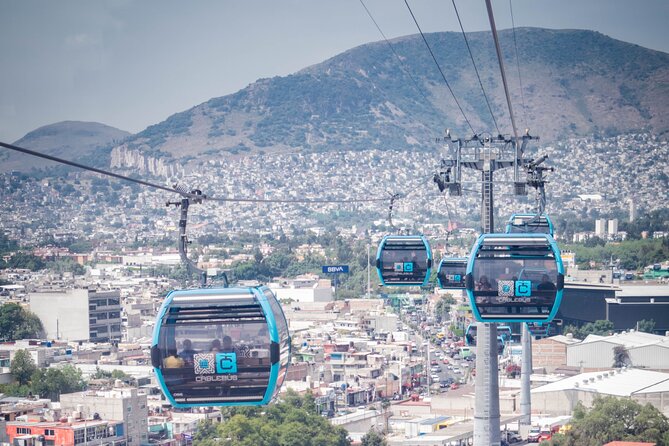
- Ride two Cablebús sections from Indios Verdes over Mexico City’s northern hills and densely built neighborhoods.
- See Cuautepec from above, including steep streets, colorful homes, street art, and daily life outside the central tourist zone.
- Climb toward a 2,800-meter viewpoint in Tlalnepantla, with a short but steep walk over uneven ground.
- Taste pulque near its source, with time to meet local people at a small pulquería.
- Travel in old Volkswagen Beetle taxis, an unusual part of the route that adds local character and some rough edges.
- Pay $35 per person for an experience lasting about two to three hours, though getting to and from the meeting point can make your total outing longer.
Why this Cablebús trip feels different
Most Mexico City sightseeing stays close to the Zócalo, museums, grand avenues, and well-worn visitor routes. This outing points north, beginning at the Cablebús station at Indios Verdes in Gustavo A. Madero and heading into the hills toward Cuautepec.
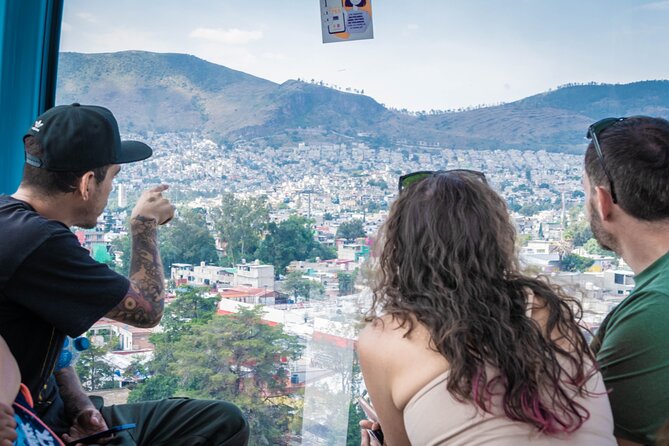
The point is not simply to ride above the city. The cable car shows you how public transport connects hilly communities with the Metro system and the rest of Mexico City. From your cabin, you can see roads that twist up steep slopes, houses built in tight layers, busy streets, painted walls, and the familiar shape of Volkswagen Beetles used as taxis.
That view tells a useful story. The Cablebús is both a scenic ride for you and a daily commute for local residents. You get to see the system as part of ordinary city life rather than as a ride designed only for sightseeing.
The tour is offered in English and normally takes two to three hours. The group limit is nine, although one booking had ten people split between two guides. Erick is the name most often associated with the experience, while Alex and Marcos have also led outings. Their role matters here because the route has few conventional sightseeing signs. The guide explains the neighborhoods, the transport lines, the development of the hills, and the older history tied to the area.
A few more Mexico City tours and experiences worth a look



Indios Verdes to Cuautepec by cable car
You meet at the Cablebús Indios Verdes station at Residencial Zacatenco. The starting point is near public transportation, and one booking reached it by Line 1 bus. Another description refers to Indios Verdes and Metro Line 3, so confirm the best route from your lodging before setting out.
Once aboard, expect about 45 minutes of cable-car travel for the first part of the outing. The cabins glide over the city, giving you a high view that changes quickly from major roads and transport hubs to close-packed homes and steep mountain streets.
This is the strongest part of the tour for people who want to see how Mexico City works outside the center. You are not looking at a carefully preserved old quarter. You are watching a living residential area, with people heading to work, children and families moving through the streets, and homes fitted onto difficult slopes.
Bring your camera, but also look down without trying to record every second. The best details can be small: a brightly painted wall, a soccer field squeezed between buildings, a road that appears to run straight up the hill, or rows of old Beetles waiting for passengers.
The route involves a transfer after several stops before continuing toward Cuautepec. The ride itself is smooth according to the available descriptions, and the cable-car system is larger than many first-time riders expect. For some people, this will be the highlight. For others, it is the doorway to the more unusual parts of the outing.
Cuautepec, steep streets and a long local story
Cuautepec is described as a barrio with roots reaching back to around 2000 B.C. Chichimeca and Toltec communities established settlements in the area, and small artifacts were found there in the early 1900s.
The history is not presented as a formal archaeological visit. You are seeing a modern neighborhood whose older story sits beneath the present-day streets. That contrast is part of the appeal. The tour connects pre-Hispanic traces with present-day housing, transportation, markets, and hill communities.
Your guide may point out how the neighborhood developed and how the Cablebús has made commuting easier. The view from above helps you understand the physical challenge of the area. Roads rise sharply, homes fill the slopes, and the city spreads in every direction.
You should keep your expectations realistic. This is not a quiet village walk or an arranged cultural show. Cuautepec is a working barrio, and the streets can feel energetic and rough around the edges. That is precisely why the visit offers a different view of Mexico City, but it also means you need to stay attentive and follow your guide.
The old VW taxi climb to Tlalnepantla
After the Cablebús ride, the route continues by car toward the higher part of the hills. The transport described in the experience includes older Volkswagen Beetles, a memorable local detail and one of the reasons this tour feels more like an adventure than a standard excursion.
You should expect a bumpy climb on steep streets. One account praised the fun of riding in the old cars, while another raised concerns about their condition and described the vehicles as unsafe. That criticism cannot be ignored. Vehicle quality may vary, and you should tell the guide if you feel uncomfortable during the drive.
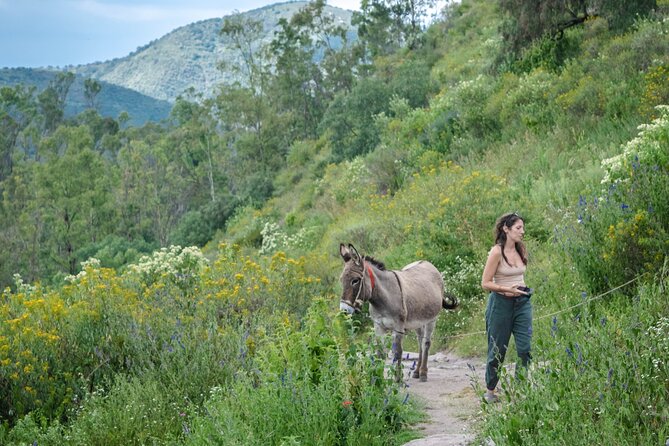
The ride takes you toward a natural reserve known locally as Mexico City’s last lung. From the upper slopes, the view brings together trees, open countryside, dense city blocks, and the distant State of Mexico. On a clear day, this mix of green space and urban sprawl is the visual reward for coming so far north.
The high point is given as roughly 2,800 meters. That altitude is not a reason to panic, but the climb can feel harder if you have spent your morning walking in the city or are not used to uphill activity. Take your time and carry water.
The short hike that needs proper shoes
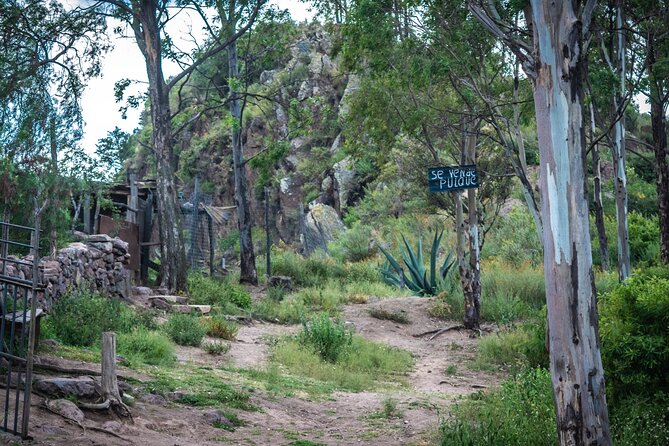
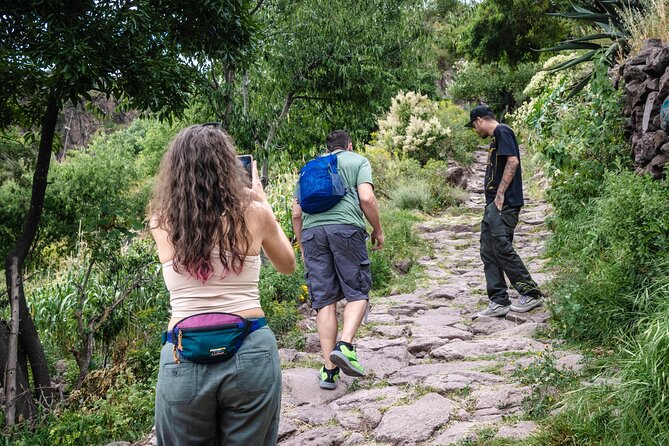
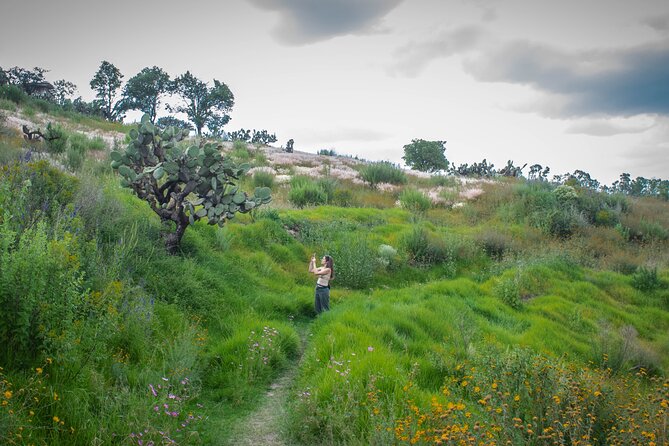
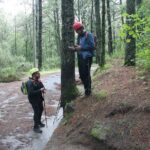
The walk to the viewpoint and pulquería is short, but short does not mean effortless. The ground is rocky and uneven, and several descriptions call the slope steep. Comfortable shoes with a firm sole are a must. Sandals, smooth city sneakers, and flimsy footwear will make this section less pleasant.
The path is an important part of the experience. You are leaving the cable car and roads behind for a closer look at the hills. The reward is a broad view over the city and surrounding state, with nature at the top and dense neighborhoods below.
This portion also sets the tour’s physical limit. Most participants can take part, but the outing is not ideal if you have trouble with steep or uneven ground. One family member chose not to hike and the guide changed the plan, visiting a town center, church, and market instead. That shows some flexibility, but you should not book this expecting a fully accessible route to the top.
Use sunscreen, wear comfortable clothes, and bring water. The sun can feel strong at altitude, even when the morning begins cool. If the weather is cloudy, the view may be less impressive, but the Cablebús and neighborhood sights still give the outing plenty of purpose.



Pulque at a local pulquería
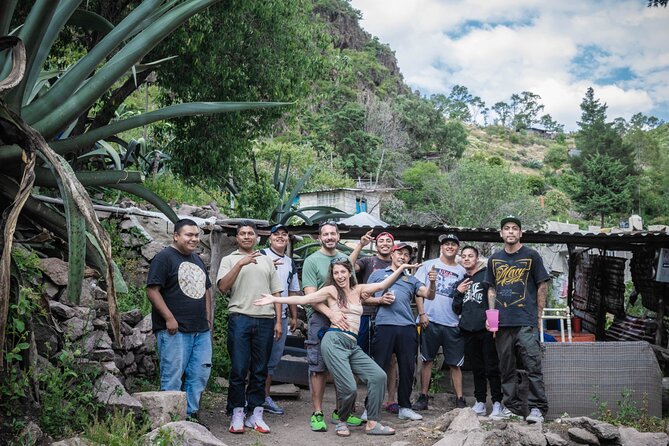
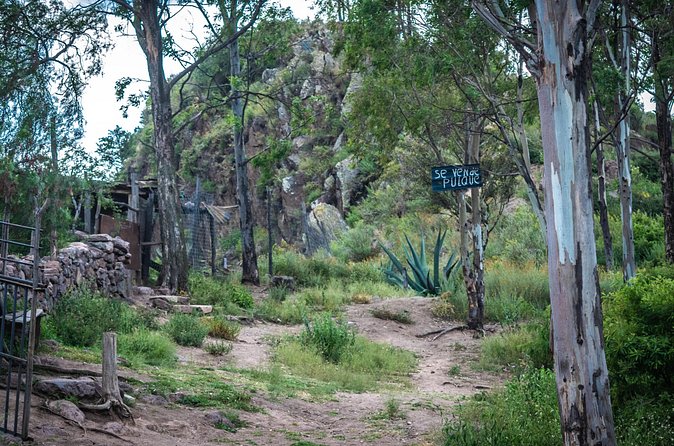
The drink tasting is the tour’s most distinctive stop. Pulque is a traditional fermented drink made from agave sap, and this outing takes you to a local pulquería near the hills. Some descriptions indicate that the drink is made locally from nearby agave plants.
The setting matters as much as the tasting. You may sit in a small, informal place where local people are having a drink and chatting. This is not a formal museum presentation or a restaurant built around foreign visitors. Your guide helps you understand what you are tasting and introduces the social side of pulque.
For many people, the pulque is the most memorable part of the day. It gives the outing a direct connection to local food and drink traditions, and it creates a chance to interact with people from the neighborhood.
Still, pulque is fermented alcohol, and it may not agree with everyone. One person reported feeling ill a few hours later and could not confirm the cause. If you are sensitive to unfamiliar drinks, you can skip the tasting or sample only a small amount. The one serious complaint about the experience also described a dirty, unhygienic drinking place after the intended venue was closed. Conditions can change, so use your judgment when you arrive. If the place looks unclean, you are right to decline.
Food, markets and the extra local touches
The advertised core route focuses on the Cablebús, Cuautepec, Tlalnepantla, the viewpoint, and pulque. Actual outings can include additional local stops when time allows.
Several descriptions include a simple meal at a small family-run restaurant, along with tacos, churros, or food from a local market. These extras are not guaranteed parts of the published schedule, so do not book the tour solely for lunch. But they show how the guide may turn the outing into a more social introduction to the area.
If the hike is not suitable for you, a market and town-center visit can provide a useful alternative. You may see a church, browse local sweets, or buy something to eat. The pace can be adjusted in a small group, though the exact substitute will depend on the day and the people in your party.
This flexibility is valuable because the route is not a rigid sequence of major attractions. The guide is managing public transportation, hill roads, weather, the hiking pace, and local businesses. That also means the experience may not unfold in exactly the same order every time.
What $35 buys you
At $35 per person, this is reasonably priced for a two to three-hour guided outing that combines public transport, local interpretation, a mountain transfer, a hike, and a pulque tasting. The value is not in expensive admissions. It comes from having someone who can make sense of a complicated route and help you move through a part of Mexico City that would be difficult to plan alone.
You are paying for access to context. Without a guide, you could ride the Cablebús, but you would miss much of the explanation about the hills, the neighborhoods, the transport network, and the local history. You might also have trouble arranging the transfer toward the viewpoint or finding the pulquería.
Hotel pickup is not included in the stated meeting point, though pickup has been offered for an additional reasonable fee. If you stay in the city center, allow extra time for reaching Indios Verdes and returning afterward. One family calculated about four hours from lodging in the center and back, even though the activity itself is listed at two to three hours.
The outing is generally booked about 12 days in advance. It includes a mobile ticket and free cancellation up to 24 hours before the start time. Within 24 hours, the payment is not refunded, and changes are not accepted. Confirmation is normally immediate, except for bookings made within one day of departure.
Who should book this outing
I would choose this for an adventurous first-time visitor who wants to see a less familiar side of Mexico City. It suits you if you enjoy public transportation, neighborhood observation, local food and drink, and conversations with a guide more than polished attractions.
It is also a strong choice early in your stay. The guide can give you a wider sense of the city and explain how people commute between the hills and the central areas. You will not get the same information from a museum visit or a bus loop.
Families can enjoy it, especially if children like cable cars. A 10-year-old reportedly loved the ride. But parents should be ready for the steep walk and should not assume every child will enjoy rough ground at altitude.
I would hesitate if you want a fully predictable schedule, modern private transport, or a gentle stroll. I would also think twice if you have mobility limits, dislike uneven trails, or prefer carefully controlled food and drink settings. Service animals are allowed, and most people can participate, but the hiking section remains the key physical issue.
Practical tips for a smoother morning
- Wear sturdy walking shoes. The trail can be rocky, uneven, and steep.
- Use sunscreen and bring water, especially for the climb toward the 2,800-meter viewpoint.
- Keep your phone charged for the mobile ticket and photos from the Cablebús.
- Allow extra time if you are staying in central Mexico City. The meeting point is at Indios Verdes, not in the historic center.
- Ask about the day’s vehicle and pulquería arrangements if either raises concern.
- Try the pulque only if you are comfortable with fermented alcohol. A small taste is enough to understand it.
- Follow the guide closely in unfamiliar neighborhoods and during transfers.
- If you cannot manage the hike, tell the guide early. A town center and market visit may be possible instead.
Should you book this Cablebús and pulque tour?
Book it if you want a real look at northern Mexico City, enjoy unusual transport, and are happy trading comfort for access and local detail. The Cablebús views, old VW taxi ride, mountain walk, and pulque stop create a combination you will not find on a standard city tour.
The strongest reason to go is the guide-led context. Erick, Alex, and Marcos are described as warm, communicative hosts who explain the area in clear English and keep the small group together. The strongest reason to hesitate is the lack of polish in parts of the route, especially the older cars, the rough trail, and the possibility that the pulquería may not meet your preferred standard.
At $35, I think the experience offers good value for the right person. Choose it for curiosity, local transport, mountain views, and a story to take home. Skip it if you want a comfortable, highly controlled excursion with no steep walking or uncertain edges.
FAQ
Where does the tour begin?
It begins at Cablebús Indios Verdes, at Residencial Zacatenco in Gustavo A. Madero, Mexico City.
Where does the tour end?
The activity ends back at the Cablebús Indios Verdes meeting point.
How long does the experience last?
The stated duration is approximately two to three hours. Travel time from your lodging to Indios Verdes and back is not included, so your total outing may be longer.
What is included in the route?
The experience includes the Cablebús ride, the visit to Cuautepec, the trip toward the Tlalnepantla hills, and a pulque tasting. The Cablebús admission is included, while no admission fee is listed for the Cuautepec or Tlalnepantla stops.
Is the tour offered in English?
Yes. The experience is offered in English.
How large is the group?
The maximum group size is nine people. One departure had ten people divided between two guides.
Is the hike difficult?
The walk is short but steep, with rocky and uneven ground. Comfortable shoes are recommended, and the hike may not suit people who do not walk easily on rough terrain.
Can I cancel the booking?
You can cancel up to 24 hours before the start time for a full refund. Cancellations or changes made within 24 hours are not accepted for a refund.
More Tequila & Mezcal Tastings in Mexico City



More tours in Mexico City we've reviewed





Tequila & Mezcal Tastings, compared.
 ★ 5.0Lucha Libre Tickets & Tacos & Beer & Mezcal – BEST NIGHT EVER!From $84
 ★ 5.0Lucha Libre Tour and Mezcal Tasting in Mexico CityFrom $1344 hours (approx.)
 ★ 4.8Mexico City: Tequila and Mezcal Museum Tour with TastingFrom $401.5 hours
 ★ 5.0A Night of Tacos and Mezcal in Mexico CityFrom $1353 hours 30 minutes (approx.)
 ★ 4.9Xochimilco: Tequila tasting (unlimited) and cultural party on a boatFrom $422 hours
 ★ 5.0Narvarte At Night: Tacos, Chelas & MezcalFrom $1433 hours 30 minutes (approx.)
 ★ 5.03-Hour Night Tacos and Mezcal Crawl in Mexico with GuideFrom $953 hours (approx.)
 ★ 5.0Xochimilco All Inclusive Experience Tequila and Mezcal with CultureFrom $472 hours (approx.)
The lists this tour appears in