
Reviewed · MEXICO CITY
Baking Delicious Traditional Mexican Bread
Mexico City’s San Rafael neighborhood gives this cooking class a useful sense of place. You begin at San Cosme Market, visit the only Michelin-starred taqueria in Mexico, and walk past cultural landmarks before heading to Verónica’s home to bake conchas or pan de muerto.
In This Article
- Key points to know before booking
- San Rafael begins with a market walk
- A Michelin-starred taqueria in the middle of the walk
- San Rafael’s cultural stops add more than scenery
- Arriving at Verónica’s home kitchen
- Oaxacan chocolate with fresh bread
- What makes the teaching style work
- Is $70 a fair price?
- Practical details for planning your afternoon
- Who will enjoy this bread class most
- Should you book Baking Delicious Traditional Mexican Bread?
- FAQ
- Where does the experience begin?
- Where does the activity end?
- How long does the experience last?
- What language is the experience offered in?
- How many people can join the tour?
- What kinds of bread can I learn to make?
- Is transportation included?
- What is included in the price?
- Can I cancel for a full refund?
I like the small maximum of six people, which should keep the lesson personal. I also like that you make Oaxacan chocolate from Oaxaca to serve with the bread, then take home the recipes. The main consideration is timing: at about two and a half hours, the neighborhood walk and baking lesson leave little room for a slow market visit.
Key points to know before booking
- San Cosme Market starts the experience: You meet at C. Gabino Barreda 18 and begin with one of San Rafael’s key local markets.
- The neighborhood walk adds context: The route includes a Michelin-starred taqueria, the Opera House, and the colony of architects.
- Verónica leads the baking lesson: You prepare traditional Mexican bread in a home kitchen, with conchas or pan de muerto as the featured options.
- Oaxacan chocolate completes the tasting: Chocolate brought directly from Oaxaca is prepared to pair with the fresh bread.
- The group is capped at six: This suits visitors who want direct instruction rather than a large demonstration.
- The price is $70 per person: Snacks, kitchen equipment, coffee or tea, and a guide are included, but private transportation is not.
San Rafael begins with a market walk
The experience starts at Mercado de San Cosme in Mexico City’s San Rafael colony. The meeting point is C. Gabino Barreda 18, close to public transportation, and the activity ends back there after roughly two hours and 30 minutes.
A market is a smart starting point for a bread class. You get a look at the setting where food is part of daily life before moving into the kitchen. The market visit also gives Verónica a chance to explain local ingredients and the neighborhood as you walk.
Do not expect a long shopping expedition. The full activity combines the market, a neighborhood tour, several cultural stops, and baking. You should think of the market portion as an introduction to San Cosme rather than a stand-alone food tour.
The small group size matters here. With no more than six people, you can stay close to the guide and ask questions without competing with a busload of people. It also makes the transition from public market to private kitchen feel more natural.
If you're still narrowing it down, here are other tours in Mexico City we've reviewed.

A Michelin-starred taqueria in the middle of the walk
One unusual stop is the only taqueria with a Michelin star in all of Mexico. The visit is part of the neighborhood route, not a separate meal or a full taco tasting program.
That distinction is worth noting. The taqueria adds a strong food connection to the walk, but the central activity is still baking. If you are hoping for a full tasting menu or a long sit-down meal, this is not the right format. If you like seeing how a food-focused neighborhood connects everyday market life with high-level cooking, the stop gives the tour extra character.
The taqueria also helps place Mexican bread within a wider food culture. You are not simply shown a recipe in an isolated kitchen. You first see the market and a notable local food business, then work with traditional bread and chocolate yourself.
The supplied details do not name the taqueria, so you should treat the Michelin stop as a brief part of the route rather than plan your day around a specific restaurant reservation.
San Rafael’s cultural stops add more than scenery
The walking portion continues through San Rafael, including the Opera House, described as one of Mexico’s most important cinemas. You also enter what is known as the colony of architects, an area connected with notable artists such as the surrealist painter Remedios Varo.
These stops give the baking class a broader frame. San Rafael is not just a place to pass through on the way to a kitchen. You get a short look at architecture, cinema, and artistic life before focusing on food.
The cultural material is delivered by Verónica during the route. The experience is therefore part walking tour, part cooking class. That combination will suit you if you want a local neighborhood introduction with your hands-on activity. It may feel less satisfying if your main goal is a long, detailed art or architecture tour.
The itinerary also keeps the afternoon moving. You are likely to spend enough time at each point to understand why it matters, but not enough to study every building or browse every market stall at length.
Arriving at Verónica’s home kitchen
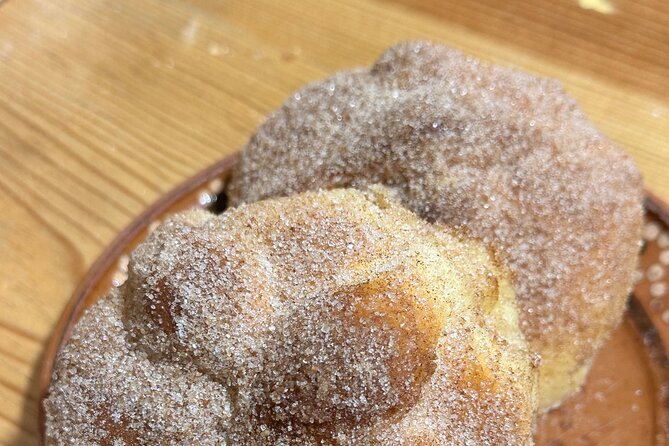
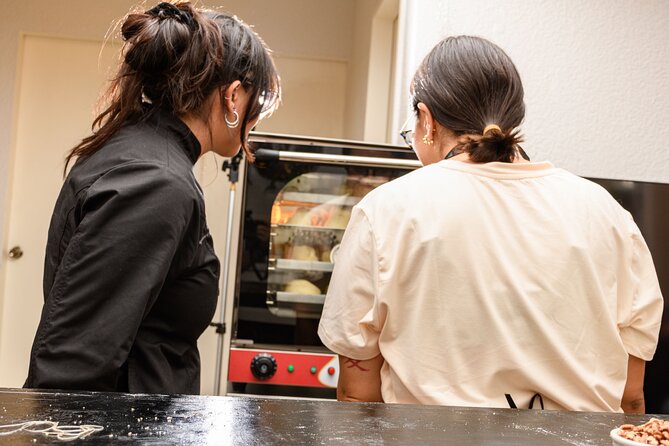
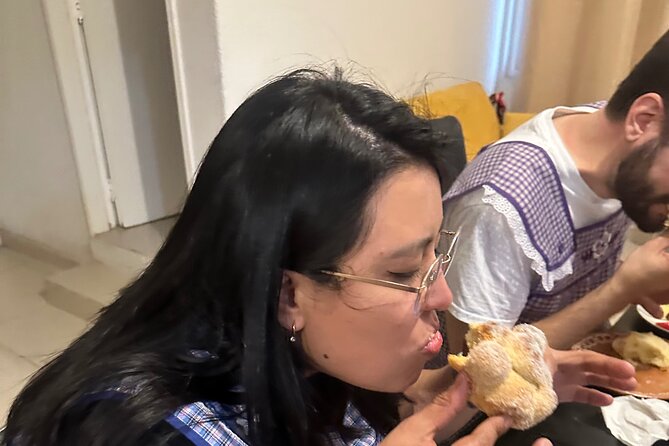
The second half takes place at Verónica’s house, where you learn to make traditional Mexican bread. The featured choices include conchas and pan de muerto.
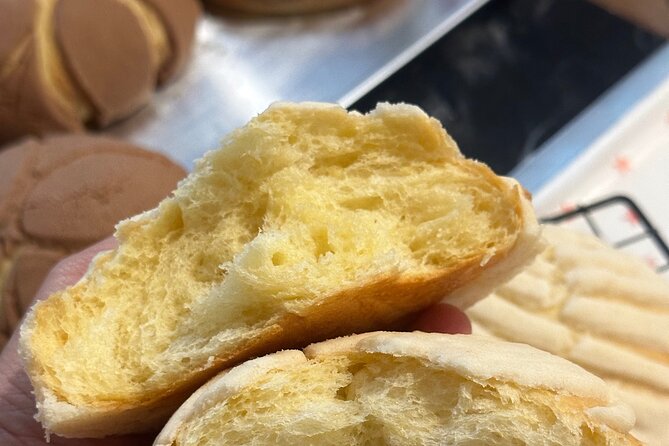
Conchas are among Mexico’s best-known sweet breads, recognized by their shell-like topping. Pan de muerto is associated with Day of the Dead and is especially appealing if you want to learn a bread with a clear cultural connection. One of the reported baking sessions focused on pan de muerto, and the bread was described as soft and easy to prepare during the class.
The recipe choice may depend on the session, so you should confirm the exact bread planned for your date if one particular option matters to you. The information provided names both conchas and pan de muerto, but does not promise that every booking includes both.
I like the home setting because it changes the tone of the lesson. You are not watching a polished stage demonstration from the back of a large room. You are working with a guide in a domestic kitchen, using the equipment provided for the class.
The group limit of six should help here. You can follow the steps, ask for help, and see how the dough is handled. The class is presented as suitable for different experience levels, so you do not need to arrive as a practiced baker.
Still, baking is hands-on and timing matters. You should expect to take part rather than simply sample finished bread. Wear something comfortable for kitchen work, and avoid scheduling an important appointment immediately afterward.
Oaxacan chocolate with fresh bread
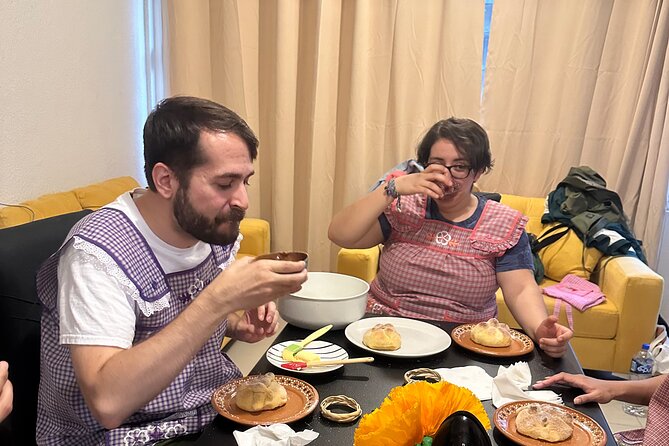
The chocolate portion gives the class its best finishing touch. You prepare an authentic Oaxacan chocolate brought directly from Oaxaca, then pair it with the bread you have made.
This is more than a drink added to the booking. Bread and chocolate are being treated as a matched combination of flavors and textures. The warm chocolate provides a clear reason to sit down and taste what you prepared instead of rushing out as soon as the baking is finished.
Coffee or tea is included as well. The details do not specify which drink you will receive alongside the chocolate, so think of those beverages as part of the hospitality rather than a separate tasting menu.
The activity includes snacks, but it should not replace lunch or dinner planning. The market stop and tasting elements may make the experience filling, yet no full meal is promised. I would schedule it as a food activity between meals, not as your only dining plan for the day.



What makes the teaching style work
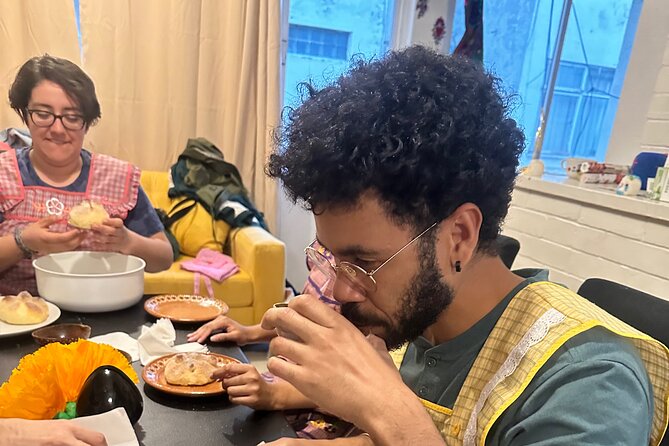
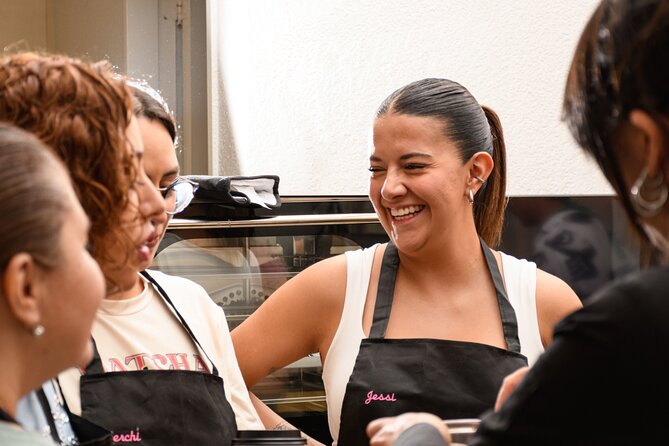
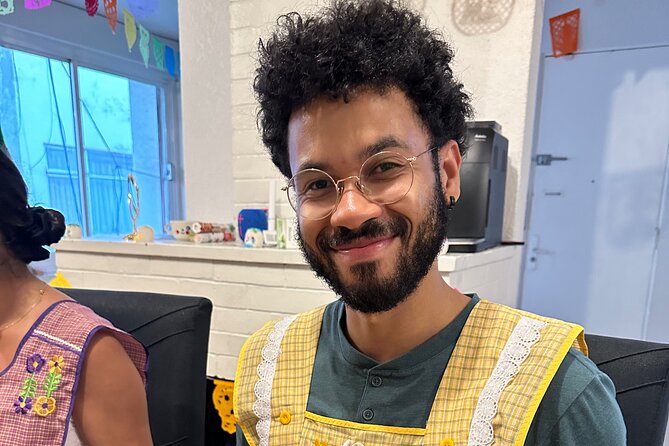
Verónica is described as warm, friendly, and clear in her instruction. The strongest theme is the personal tone: the class feels like baking with someone in her home rather than attending a formal culinary school session.
That style is useful for families and mixed-experience groups. A teenage granddaughter and grandmother enjoyed the activity together, which suggests the pace can work across generations. You can also expect the class to be social, with time spent preparing, tasting, and talking rather than racing through technical steps.
The lesson is offered in English. That makes it practical for English-speaking visitors, though the supplied details do not identify any other languages offered.
The guide also handles the walking section. She shares information about San Rafael, points out the market and cultural sites, and then carries the group into the baking lesson. You get one continuous experience rather than separate guides for the neighborhood and kitchen.
The personal approach has one possible tradeoff. If you prefer a highly formal class with printed measurements, professional workstations, and a detailed culinary lecture, the home-based format may feel simple. For most people choosing this activity, that simplicity is likely part of the appeal.
Is $70 a fair price?
At $70 per person, this is not the cheapest way to eat bread in Mexico City. You are paying for several parts at once: a guided neighborhood walk, a market visit, the Michelin-starred taqueria stop, a private-home baking lesson, ingredients and equipment, drinks, snacks, and the recipes to use later.
The value is strongest if you would otherwise book both a short neighborhood tour and a cooking class. You are also getting a small group, capped at six people, which gives the price more weight than a large public demonstration would.
The recipes matter. You leave with something practical that can be repeated at home, rather than only a photograph or a one-time tasting. That makes the experience especially useful for home bakers and visitors who want to carry a food memory beyond Mexico City.
The price is less compelling if you mainly want a market visit or a meal. Private transportation is not included, and the tour begins and ends at Mercado de San Cosme, so you must make your own way there and back.
Since the activity is often booked about 23 days ahead, I would reserve early if your Mexico City dates are fixed. The six-person limit naturally restricts availability, and the English-language format may attract steady demand.
Practical details for planning your afternoon
The activity lasts approximately two hours and 30 minutes. That includes the market, neighborhood walk, cultural stops, and baking session, so the schedule is active rather than leisurely.
Your meeting point is Mercado De San Cosme, C. Gabino Barreda 18, San Rafael, Cuauhtémoc, 06470 Ciudad de México, CDMX, Mexico. The activity returns to the same meeting point at the end.
Public transportation is nearby. Private transportation is not included, so allow enough time to reach the market and find the exact meeting point. Since the tour starts at a named market address, arriving early is sensible, especially if you are unfamiliar with Mexico City’s streets.
A mobile ticket is accepted, and confirmation is provided when you book. The experience is offered in English.
You can cancel for a full refund if you do so at least 24 hours before the local start time. Cancellations made less than 24 hours before the start are not refunded, and changes inside that period are not accepted.
Who will enjoy this bread class most
I would recommend this experience to you if you want food, neighborhood life, and a modest amount of culture in one compact outing. It is a good fit for:
- First-time visitors who want to see a part of Mexico City beyond the main sights
- English-speaking visitors who prefer a small group
- Families with older children or teenagers
- Couples looking for a hands-on activity
- Home bakers interested in conchas or pan de muerto
- Anyone who likes meeting a local guide in a home setting
It is less suitable if you want a full market tour, a dedicated architecture walk, or a complete meal. It also may not suit you if you dislike group cooking or prefer a highly technical baking course.
The experience works best when you treat it as an afternoon with several connected chapters. The market introduces local food life. San Rafael supplies the streets, buildings, and cultural background. The home kitchen turns those impressions into something you can taste and repeat.
Should you book Baking Delicious Traditional Mexican Bread?
Book it if you want to make bread, not just eat it. The combination of San Cosme Market, a Michelin-starred taqueria stop, San Rafael’s cultural sites, Verónica’s personal instruction, and Oaxacan chocolate gives the activity more substance than a basic cooking class.
I especially like the small group and the recipes to take home. Those details turn a pleasant afternoon into something useful. The main limits are the short duration, the lack of private transportation, and the fact that the taqueria visit is not presented as a full meal.
For $70, this is good value for a visitor who wants an English-language, small-group food experience with a local setting. Reserve ahead if you need a particular date, and confirm whether your session will focus on conchas, pan de muerto, or both.
FAQ
Where does the experience begin?
It begins at Mercado De San Cosme, located at C. Gabino Barreda 18, San Rafael, Cuauhtémoc, 06470 Ciudad de México, CDMX, Mexico.
Where does the activity end?
The activity ends back at the Mercado de San Cosme meeting point.
How long does the experience last?
The activity lasts approximately two hours and 30 minutes.
What language is the experience offered in?
The experience is offered in English.
How many people can join the tour?
The maximum group size is six travelers.
What kinds of bread can I learn to make?
The activity includes traditional Mexican bread such as conchas or pan de muerto. The provided information does not confirm that both are prepared in every session.
Is transportation included?
Private transportation is not included. The meeting point is near public transportation.
What is included in the price?
The price includes snacks, kitchen equipment, coffee or tea, and a guide. You also take the recipes home after the experience.
Can I cancel for a full refund?
Yes. You can cancel at least 24 hours before the local start time for a full refund. Cancellations or changes made less than 24 hours before the start are not accepted for a refund.
More tours in Mexico City we've reviewed


Mexico City, compared.
 ★ 5.0Teotihuacan, Guadalupe Shrine & Tlatelolco Day Tour with LunchFrom $399 hours (approx.)
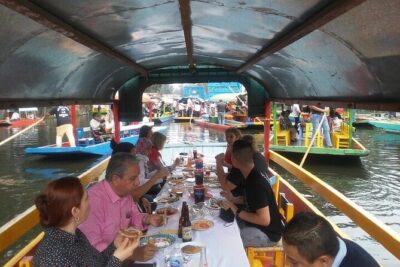 ★ 4.5Xochimilco, Coyoacan and Frida Kahlo with Optional LunchFrom $349 hours (approx.)
 ★ 5.0Balloon flight + Breakfast in cave + Pyramids + Pick up CDMX.From $1722 to 8 hours (approx.)
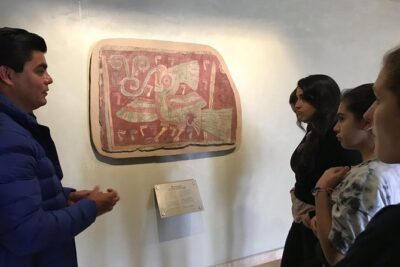 ★ 5.0Teotihuacan pyramids morning or afternoon without tourist trapsFrom $645 hours 30 minutes (approx.)
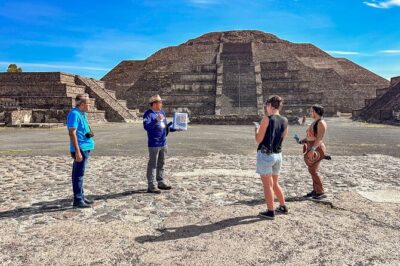 ★ 4.5Teotihuacan Early Access Guided Tour with optional LunchFrom $398 hours (approx.)
 ★ 5.0Balloon flight + pick up in CDMX + Breakfast in Cave + PyramidsFrom $1694 to 7 hours (approx.)
 ★ 5.0Balloon Flight + Cave Breakfast + Pick Up from CDMX or We FlyFrom $1663 to 9 hours (approx.)
 ★ 4.6Mexico City: Teotihuacan, Tlatelolco & Guadalupe Shrine TourFrom $49