
Reviewed · TEOTIHUACAN TOURS
Mexico City: Teotihuacan, Tlatelolco & Guadalupe Shrine Tour
Teotihuacan is the star of this long Mexico City day trip, but the clever part is the trio: Aztec-era Tlatelolco, the Basilica of Guadalupe, and the great pyramids all fit into one outing. Guides such as Alan, Alex, Lili, and Alicia bring the sites to life with clear storytelling, quizzes, and plenty of historical detail.
In This Article
- Key points to know before booking
- Why this day trip works
- Meeting the bus in central Mexico City
- Tlatelolco and the difficult side of Mexico’s past
- The Basilica of Guadalupe and a living place of faith
- Agave drinks and an obsidian workshop
- Lunch, music, and the Tlacaelel stop
- Teotihuacan’s Avenue of the Dead and giant pyramids
- Guides, languages, and group size
- Is $49 a fair price?
- Who should book this experience?
- Final recommendation
- FAQ
- How long does the tour last?
- Where does pickup take place?
- Where does the tour end?
- Which languages are available?
- Is lunch included?
- Is tequila tasting included?
- How much time is spent at Teotihuacan?
- Can wheelchair users join?
- Can I cancel the booking?
I like that you get round-trip transport, entrance to Teotihuacan, a professional guide, and a tequila tasting for $49. I also like the mix of archaeology, religion, food, music, and craft. The tradeoff is time: nine hours on the road and at busy sites can feel tiring, and the group may be much larger than the small-group wording suggests.
Key points to know before booking
- Three very different stops: Compare Tlatelolco’s ruins, Guadalupe’s living Catholic tradition, and Teotihuacan’s monumental pyramids in one day.
- Strong guide element: English and Spanish guides, including Alan, Alex, Lili, Alicia, and Sergio, are praised for vivid stories and easy-to-follow explanations.
- Teotihuacan gets about two hours: You have guided sightseeing and time to look around on your own, though climbing and walking in the sun can be demanding.
- The tasting is broader than tequila alone: Depending on the day, you may try agave drinks such as mezcal or pulque as well as tequila.
- Lunch is an add-on: The Mexican buffet is included only with the selected meal option, and the value of the restaurant can vary.
- Expect a large coach at times: A group may include 25 people or 40 to 50 on the bus, even if sightseeing is split into smaller language groups.
Why this day trip works
Mexico City can feel almost too large to grasp in a short visit. Its story reaches from pre-Hispanic cities to Spanish colonial religion and the modern capital. This excursion gives you three strong reference points in a single day.
Tlatelolco shows you an older city inside today’s Mexico City. Guadalupe connects faith, national identity, and the story of an indigenous man named Juan Diego. Teotihuacan then opens onto a huge ceremonial center north of the capital, with pyramids that make the scale of ancient Mesoamerica easy to understand.
I especially like the order. You begin with a relatively compact archaeological stop, move to a major religious center, pause for food and local products, and finish at the site most people picture when they think of an ancient Mexico City excursion.
The tour is not a slow, scholarly visit to one site. It is a packed introduction to several parts of Mexican culture. If you want long stretches of quiet time at Teotihuacan, a private guide there may suit you better. If you want to cover the main sights without arranging several separate trips, this package is good value.
A few more Mexico City tours and experiences worth a look

Meeting the bus in central Mexico City
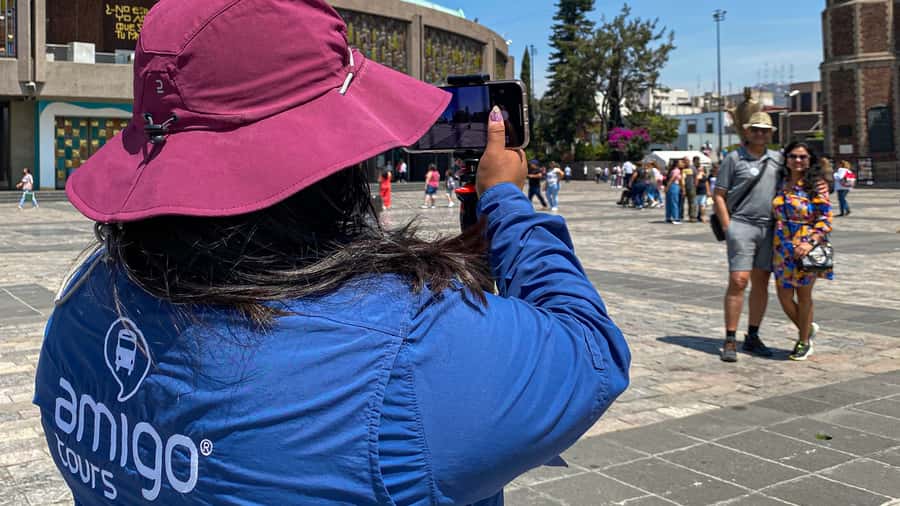
The listed meeting points include MIGA Café at Av. Hidalgo 2 and a location behind the Palace of Fine Arts. Pickup is scheduled around 8:20 AM at MIGA Café and 8:50 AM behind the Palace of Fine Arts.
Allow extra time to find the correct spot. MIGA Café can be crowded and confusing at departure time, so check the exact meeting instructions after booking. The return is to MIGA Café or Av. Hidalgo 2, with three stated drop-off options.
Transport matters here. Tlatelolco, Guadalupe, and Teotihuacan are not a neat walk from one another, and Mexico City traffic can be slow. The bus gives you a place to sit between stops, and several people particularly appreciated careful drivers who handled the city traffic safely.
This is a full nine-hour outing. Bring water, snacks, sunscreen, and a hat. Teotihuacan has little shade in the open areas, and the day includes plenty of walking.
Tlatelolco and the difficult side of Mexico’s past
After about 30 minutes by bus, the first major stop is Tlatelolco, visited for roughly 45 minutes with a guide.
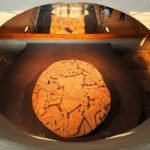
Tlatelolco is more than a collection of stone temples. Your guide discusses the religious buildings and the Mesoamerican world that produced them, but also the harsher evidence connected with the site, including human sacrifice and mass graves. The so-called Lovers of Tlatelolco, two skeletons found together, add a more personal and haunting detail.
This stop is short, so stay close and listen carefully. You will not have the same free time here that you get at Teotihuacan. The benefit is focus: a good guide can explain what you are seeing instead of leaving you to guess at a pile of stones.
Guides such as Alex, Leo, and Alan have been singled out for making Tlatelolco clear and engaging. Their strength is not just naming buildings. They connect the site with the larger story of Mexico City before and after the Spanish invasion.
That context matters because visitors often place every pre-Hispanic site under the label Aztec. Teotihuacan and the later Aztec world are not the same thing. A strong explanation at Tlatelolco helps you keep those periods apart.
The Basilica of Guadalupe and a living place of faith
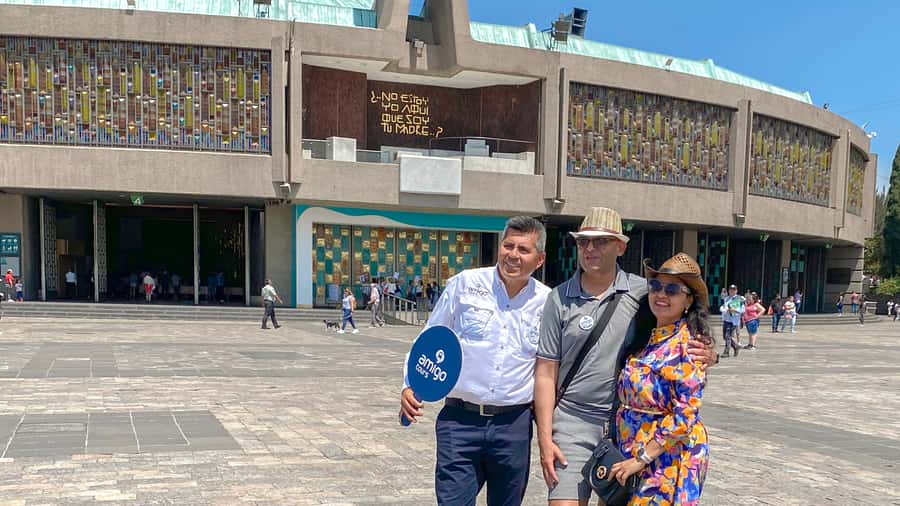
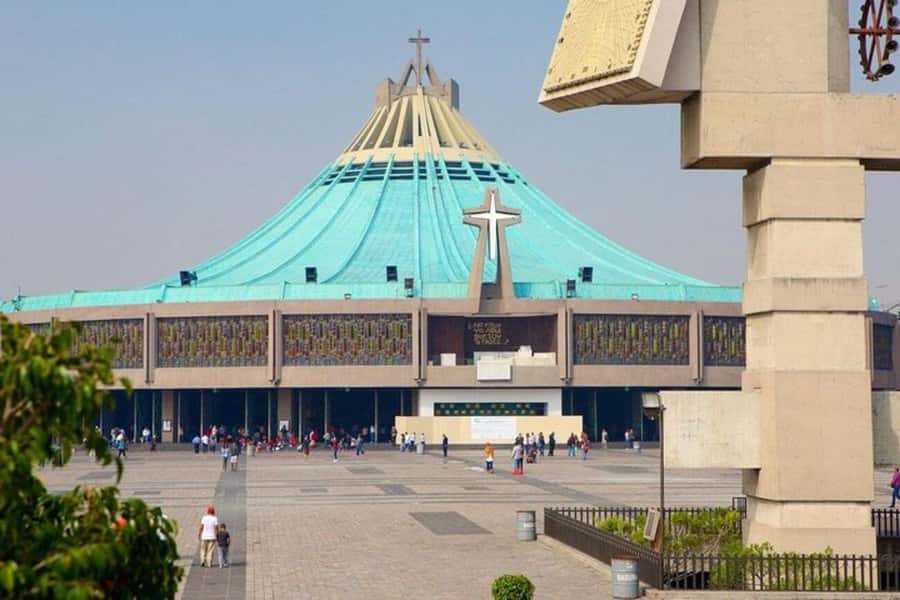
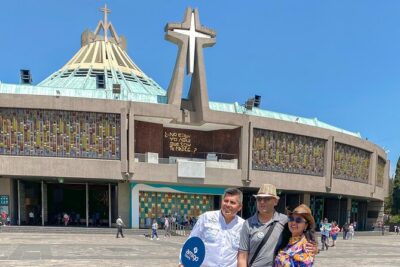
A short transfer brings you to the Basilica of Our Lady of Guadalupe, where the guided visit lasts about an hour and a half.
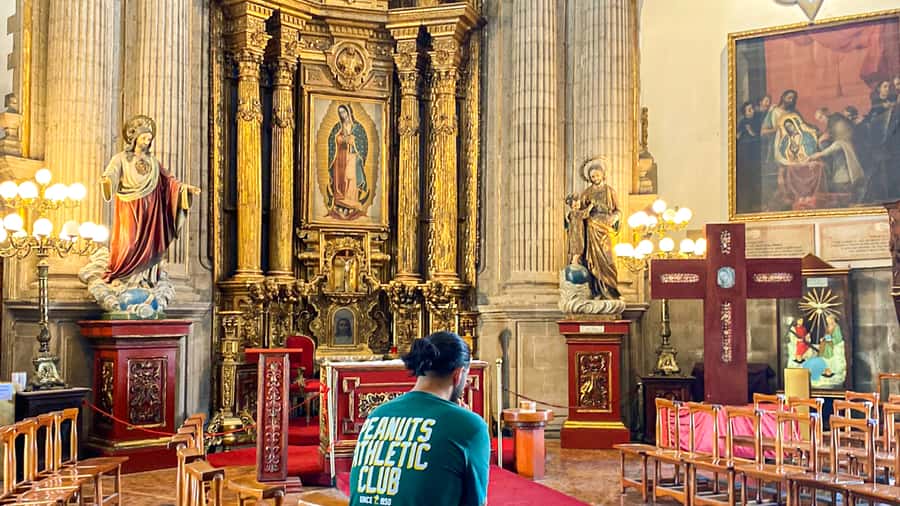
The shrine is one of the world’s major Catholic pilgrimage sites. The focus is an image of Guadalupe on a cloak, linked to the story of her appearance to Juan Diego, an indigenous Mexican. Your guide also explains why Guadalupe remains so important to Mexican culture and identity today.
This is a different kind of historical stop from Tlatelolco. You are not only looking at an archaeological site. You are entering a place that still carries intense religious meaning for many people. Be respectful, follow the guide’s instructions, and allow space for worshippers.
The basilica can be the emotional center of the day, especially if you are interested in religion, Mexican identity, or colonial and modern history. Guides including Lili, Alan, and Sergio are praised for telling the story with feeling rather than reducing it to a list of dates.
Time can feel tight here. Some people would prefer more than 90 minutes, while others find the visit sufficient. Since the day continues to Teotihuacan, you need to keep moving. If Guadalupe is your main reason for booking, check the pace and consider a tour focused on the basilica instead.
Agave drinks and an obsidian workshop
After Guadalupe, the group spends about 40 minutes at a stop devoted to spirits, local craft, free time, and shopping.
The advertised highlight is tequila, but the tasting may include several agave-based drinks. You might encounter mezcal and pulque, too. One particularly useful detail is that pulque, a traditional fermented agave drink, may be available to try. This makes the stop more interesting than a simple tequila sales pitch.
You also visit an obsidian workshop and hear about the craft. Obsidian was an important material in ancient Mesoamerica, and seeing it handled as a local product gives you a bridge between ancient tools, modern craft, and the tourist economy around the archaeological sites.
Treat this section as both cultural stop and shopping opportunity. You may have time to browse and buy products, but you are not required to purchase anything. The tasting can be fun and interactive, though anyone avoiding alcohol should confirm what non-alcoholic choices are available.
The wording around the drinks can vary. It is safer to think of this as an agave tasting that includes tequila rather than promising a formal tequila education.
A few more Mexico City tours and experiences worth a look
Lunch, music, and the Tlacaelel stop
The schedule allows about 45 minutes for lunch at Tlacaelel. The Mexican buffet is included only if you select the meal option, so compare the package choices before paying.
This is also the point where the tour adds its fiesta element, with traditional music, dancing, and a chance to sample familiar Mexican dishes. Some people enjoy the festive break because it breaks up the archaeology and gives the day a social feel. Families may find the music and food easier for children than another formal site explanation.
The buffet is not a universal strength of the excursion. Some meals have been described as delicious, while other diners found the food basic and the restaurant too geared toward tour groups. If you choose the meal, allow for drinks and a possible tip in addition to the meal price.
If lunch is not included in your option, remember that food and drinks are otherwise excluded. Bring snacks so you are not forced to buy a meal you do not want. This is one place where the $49 headline price may not be the final amount you spend.
Teotihuacan’s Avenue of the Dead and giant pyramids
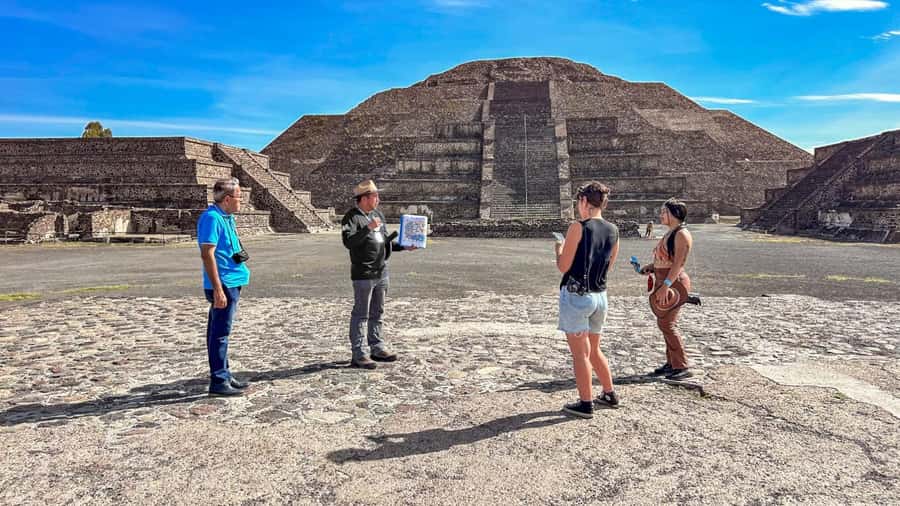
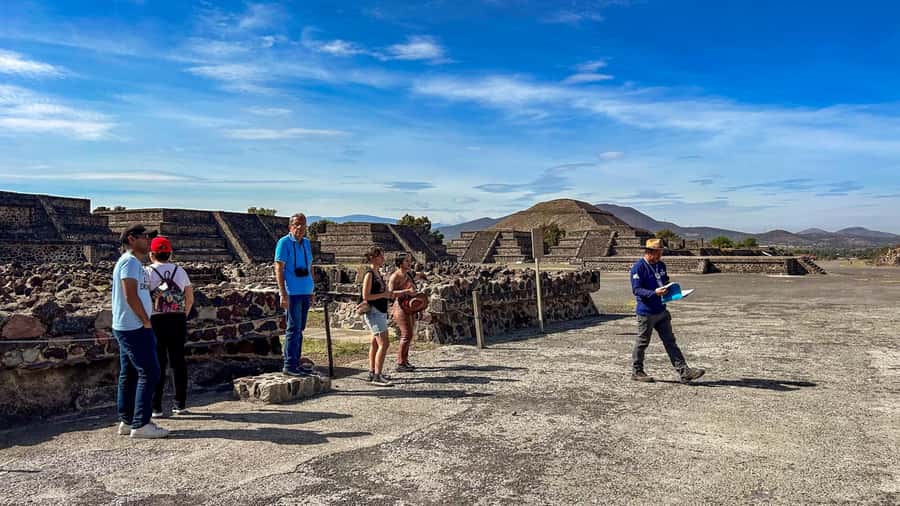
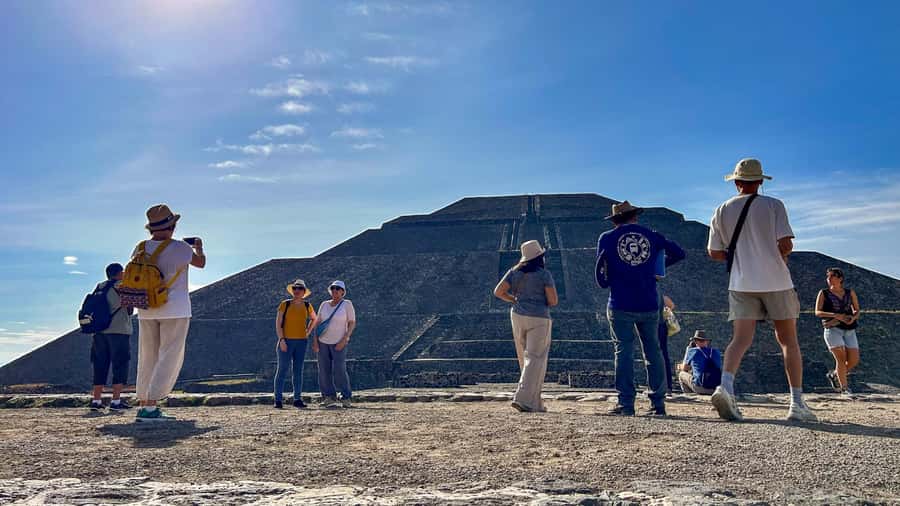
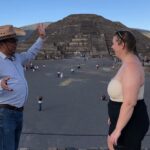
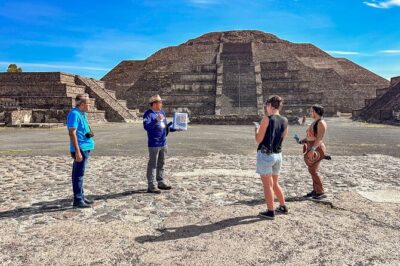
The final major stop is Teotihuacan, reached after another short bus ride. You get about two hours for a guided visit, photographs, sightseeing, and personal exploration.
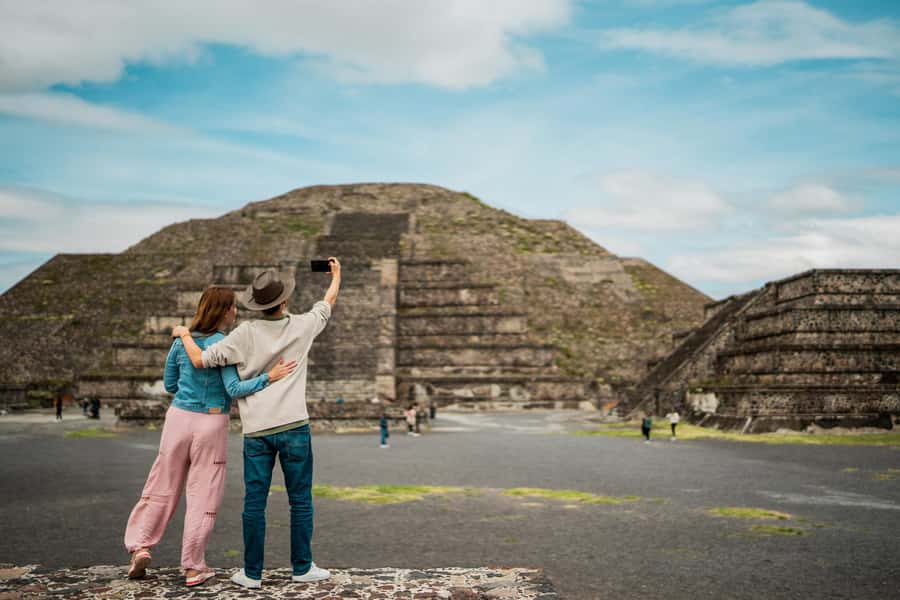
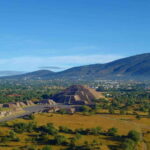
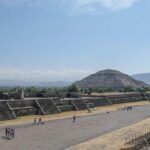
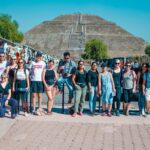
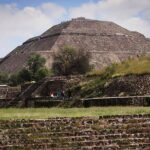
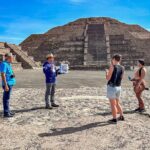
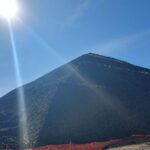
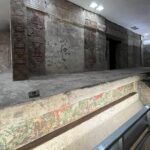
This is the payoff. The Avenue of the Dead gives the site a strong central axis, while the Pyramid of the Sun rises more than 200 feet and remains the largest pyramid in Mesoamerica. The Pyramid of the Moon, the Temple of Quetzalpapalotl, and the Temple of the Feathered Shells add variety, so the site is not just one enormous staircase.
Your guide explains how this religious city developed and what is known about its origins. Good storytelling makes a big difference here. Alex, Alicia, Leo, Lili, and several other guides are praised for keeping the explanations lively and answering questions without losing the group.
Two hours is a fair introduction, but it is not enough for every corner. You will need to choose between staying with the guide, taking photographs, and walking farther along the Avenue of the Dead. The open site can be hot, and the walking surfaces may be uneven. Wheelchair users should note that the tour is not considered suitable for them.
Some visitors would trade part of the Teotihuacan time for a longer stop at Guadalupe. I would not make that change for a first visit. The pyramids are the most expansive part of the day, and their scale is hard to appreciate from photographs alone.
Guides, languages, and group size
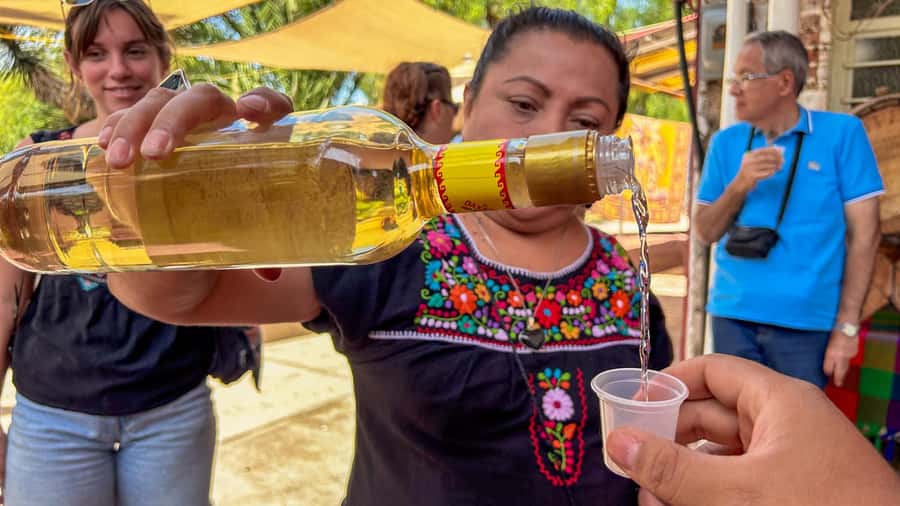
The tour runs in English and Spanish. The exact guide changes, but names repeatedly associated with strong days include Alan, Alex, Lili, Alicia, Sergio, Leo, Fernanda, Francisco, and Gio.
The best guides use stories, questions, humor, and clear timing notes. Lili is praised for expressive storytelling and careful explanations of the schedule. Alex is known for high energy and keeping a mixed group engaged. Alicia is described as precise, attentive, and ready for questions. These personal skills matter because the itinerary is long and the subjects are complex.
Do not assume that small group means a tiny van. Group sizes have ranged from about 25 people to 40 or 50 on a coach bus. The group may split into English and Spanish sections at the sites, which helps, but the departure area and bus can still feel crowded.
One practical improvement would be clearer instructions about when you are free and when you must stay with the guide. Keep listening for meeting times and locations. A few minutes of confusion can put pressure on the whole group.
Is $49 a fair price?
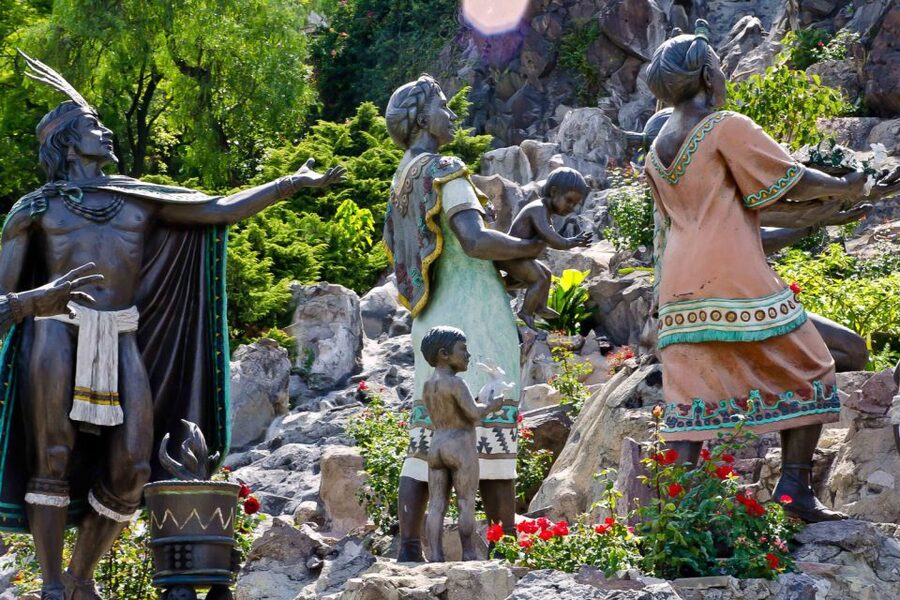
At $49 per person, this is a strong value if you want transportation and several major stops in one day. A self-planned Teotihuacan visit may cost less in transport, but it will not automatically include Tlatelolco, Guadalupe, a guide, or the tasting.
You are paying for convenience as much as admission. The bus removes the need to navigate between central Mexico City, the basilica, and the pyramids. The guide also provides the background that turns each stop from a photo opportunity into a connected story.
Watch the extras. Lunch is optional, food and drinks are not generally included, and the tasting may lead you toward purchases. The private option includes hotel pickup, but the standard outing uses designated meeting points.
The main cost is your time. You spend a full day with the group, and traffic can lengthen the ride. For a first Mexico City visit, that time is well spent if these three places are high on your list. For a second visit, you may prefer a slower neighborhood, museum, or food tour.
Who should book this experience?
I would choose this tour if you have one free day and want a broad introduction to Mexico City and its ancient surroundings. It suits history fans, first-time visitors, families who prefer organized transport, and anyone interested in the link between archaeology, religion, food, and local craft.
It also works well for budget-minded visitors. You get a guide and several major sights without arranging separate tickets and transport.
You should think twice if you dislike coach tours, need a slow pace, use a wheelchair, or want a carefully planned food experience. The day includes walking, sun, fixed departure times, and possible crowds. A private option may be worth the extra cost if you want more control over stops and pace.
The cancellation policy allows a full refund when you cancel at least 24 hours ahead, and you can reserve while paying later. Those features help if your Mexico City plans are still shifting, but they do not change the physical demands of the day.
Final recommendation
Book it if you want to understand Mexico City through three big themes: pre-Hispanic power, Catholic identity, and the monumental city of Teotihuacan. The guides are the strongest part, and a gifted storyteller such as Alan, Alex, Lili, or Alicia can make the long schedule pass quickly.
Go prepared for a large group, a basic lunch option, lots of walking, and sun at the pyramids. Select the meal only if the convenience matters to you, bring water and snacks, and confirm your pickup point. With those expectations, this is a practical and worthwhile day trip for first-time visitors.
FAQ
How long does the tour last?
The experience lasts about nine hours, including transport between Mexico City, Tlatelolco, Guadalupe Shrine, the tasting stop, lunch, and Teotihuacan.
Where does pickup take place?
Pickup is listed at MIGA Café at 8:20 AM and behind the Palace of Fine Arts at 8:50 AM. The meeting point information also lists Av. Hidalgo 2, so confirm your assigned location after booking.
Where does the tour end?
Drop-off options include MIGA Café and Av. Hidalgo 2 in Mexico City.
Which languages are available?
The tour is offered with live guides in English and Spanish.
Is lunch included?
A Mexican buffet lunch is included only when you select the meal option. Food and drinks are not included in the standard tour.
Is tequila tasting included?
Yes. Tequila tasting is included, and the tasting may also feature other agave-based drinks such as mezcal or pulque.
How much time is spent at Teotihuacan?
The scheduled visit at Teotihuacan lasts about two hours and includes guided sightseeing, photographs, and free time.
Can wheelchair users join?
The tour is listed as unsuitable for wheelchair users.
Can I cancel the booking?
You can cancel up to 24 hours in advance for a full refund. The reserve-now, pay-later option is also available.
More City Tours in Mexico City




More Guadalupe Shrine Tours in Mexico City
More Teotihuacan Tours in Mexico City

More tours in Mexico City we've reviewed




Teotihuacan Tours, compared.
 ★ 5.0Teotihuacan, Guadalupe Shrine & Tlatelolco Day Tour with LunchFrom $399 hours (approx.)
 ★ 5.0Balloon flight + Breakfast in cave + Pyramids + Pick up CDMX.From $1722 to 8 hours (approx.)
 ★ 5.0Teotihuacan pyramids morning or afternoon without tourist trapsFrom $645 hours 30 minutes (approx.)
 ★ 4.5Teotihuacan Early Access Guided Tour with optional LunchFrom $398 hours (approx.)
 ★ 5.0Balloon flight + pick up in CDMX + Breakfast in Cave + PyramidsFrom $1694 to 7 hours (approx.)
 ★ 5.0Teotihuacan Hot Air Balloon Flight from Mexico City / VolareFrom $1553 to 9 hours (approx.)
 ★ 5.0Hot Air Balloon Flight with Breakfast Cave and Pyramids TourFrom $1408 hours (approx.)
 ★ 5.0Balloon flight + pick up in CDMX + Breakfast in Cave + TeotihuacanFrom $1606 hours (approx.)
The lists this tour appears in