
Reviewed · CHAPULTEPEC & MUSEUM TOURS
Chapultepec Castle & Anthropology Museum Tour
The best thing about this half-day tour is the pairing: first, Mexico’s great pre-Columbian collections, then a hilltop castle tied to the empire, presidency, independence, and revolution. Your guide connects the Aztec world to modern Mexico instead of leaving you to decode a huge museum on your own.
In This Article
- Key points to know before booking
- Why these two landmarks belong together
- Starting with Olmec heads and the Aztec Stone of the Sun
- The tradeoff of a two-and-a-half-hour museum visit
- Walking through Chapultepec Park to the castle
- Inside 12 halls of imperial and national history
- How much value do you get for $79?
- Who will enjoy this tour most?
- Practical details that affect the day
- Should you book the Chapultepec Castle and Anthropology Museum tour?
- FAQ
- How long does the tour last?
- Where does the tour begin?
- Where does the tour end?
- Are admission tickets included?
- Is the tour offered in English?
- How much walking is involved?
- Can I bring a backpack?
- What is the group size?
- Can I cancel for a full refund?
I like the careful route through the Anthropology Museum, where guides such as Leonardo, Ligia, Gio, Miriam, Antonio, and Alan have been praised for making complex subjects clear. I also like the castle’s mix of royal apartments, battle murals, carriages, and fine city views. The main catch is simple: five hours of walking and standing can feel long, and the museum is so large that the tour must skip plenty.
Key points to know before booking
- Two major sites in one morning: Cover the Anthropology Museum and Chapultepec Castle without arranging separate admissions.
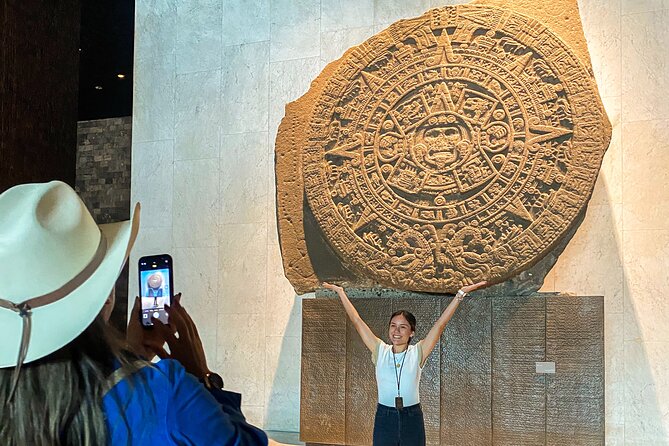
- A focused museum route: See the Aztec Stone of the Sun, Olmec carved heads, and key cultural galleries in about two and a half hours.
- A hilltop castle with many layers: Explore 12 halls linked to Aztec rulers, Emperor Maximilian, Mexican presidents, independence, and revolution.
- English guide commentary: The guide adds context that small museum panels cannot provide, though accents and group size can affect how easy it is to follow.
- About 3 kilometers on foot: Expect a hill climb at Chapultepec and a full morning on your feet.
- Best for limited time: At $79 per person, it can be a practical way to cover both sights, especially if you want historical explanation rather than a quick look.
Why these two landmarks belong together
Mexico City’s National Museum of Anthropology and Chapultepec Castle tell different parts of the same national story. The museum begins with the civilizations that shaped Mexico long before Spain arrived. The castle then carries the story through colonial rule, independence, empire, presidential power, and revolution.
That connection gives the tour more purpose than two unrelated sightseeing stops. At the museum, you see objects from the Olmec, Maya, Mexica, and other cultural traditions. At the castle, you see how later rulers and political movements used buildings, art, weapons, and symbols to define Mexico.
I especially like this pairing for a first visit to Mexico City. You get the broad outline of the country’s past in one concentrated outing. You will not see every gallery or read every panel, but you will leave with a useful framework for understanding what you encounter elsewhere in the city.
The experience is offered in English and includes admission to both museums. It runs for about five hours, with roughly two and a half hours at the Anthropology Museum and two hours at Chapultepec Castle. Food and drinks are not included.
A few more Mexico City tours and experiences worth a look
Starting with Olmec heads and the Aztec Stone of the Sun
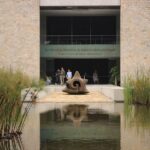
Meet your guide at the National Museum of Anthropology on Avenida Paseo de la Reforma, beside Chapultepec Park. This is a sensible starting point because the museum is enormous, and wandering in without a plan can cost you valuable time.
The first stop lasts about two and a half hours. That sounds generous, but it is only enough for a selected route. The museum holds far more than any half-day visit can cover, so your guide focuses on major objects and the cultural regions most useful for understanding Mexico.
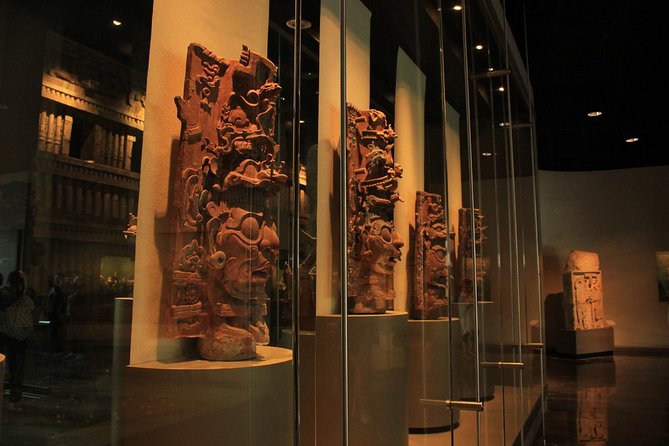
The Olmec carved heads are an early highlight. These monumental stone faces were found in the jungles of Tabasco and Veracruz, and their size alone makes them memorable. A guide can place them within the wider story of Mesoamerican cultures rather than treating them as isolated objects.
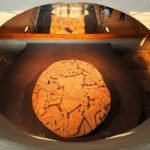
The Aztec Stone of the Sun is another central stop. It is often called the Aztec calendar, though that label can oversimplify what the carving represents. The symbolism is dense, and a good explanation helps you look beyond the familiar circular design. Recent praise for guides such as Leonardo specifically points to the way they explain the stone and its unanswered questions.
You will also learn about different cultural regions and Indigenous groups that shaped the area now called Mexico. That matters because Mexico was never one single culture before Spanish conquest. The museum’s galleries show a wide range of traditions, beliefs, technologies, and artistic styles.
The guide’s job here is not to list every object. It is to help you know which pieces deserve your attention and why. Antonio has been praised for giving visitors who do not speak or read Spanish a useful crash course in Mexican history. That kind of structure is valuable in a museum where labels can be brief and the number of displays can be overwhelming.
The tradeoff of a two-and-a-half-hour museum visit
The Anthropology Museum could easily occupy a full day. If you are an art historian, an archaeologist, or simply someone who wants to inspect every case, this tour will feel selective.
That is both its strength and its limitation. You get a guided introduction to major exhibits, but you do not have much time to stop for every video, side gallery, or object that catches your eye. One practical complaint is that the pace can feel rushed, especially when the group is large or the guide spends extra time on small details.
The tour may use headsets so you can hear the guide while moving through the galleries. Even so, group size matters. The stated maximum is 25 people, though the experience can still feel crowded when everyone gathers around a major artifact. A few participants have found that a guide’s accent or speaking style made some explanations difficult to follow.
For that reason, pay attention to the guide you are assigned and stay close enough to hear. Guides including Gio, Lili, Ligia, Alan, Nadia, Miriam, Fernando, and Leonardo have received strong praise for clear explanations and enthusiasm. The quality of the visit depends heavily on how well your particular guide balances detail with movement.
There is also a short break between the two sites. Plan to eat breakfast before you arrive. You should not count on this tour as a meal outing, since food and drinks are excluded and the schedule can leave little time for a relaxed refreshment stop.
Walking through Chapultepec Park to the castle
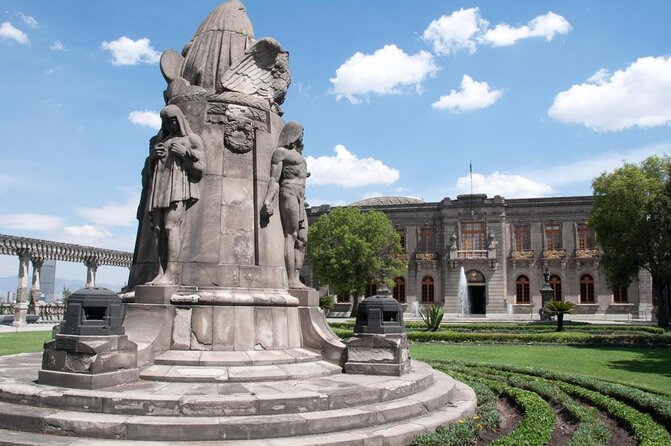
After the museum, the route continues through Chapultepec Forest, a huge urban park covering about 810 hectares. The park gives the experience breathing room between the indoor galleries and the castle. It also explains why these two attractions are often visited together.
Chapultepec Castle sits on top of Chapultepec Hill. Reaching it involves an uphill walk, and the full tour covers about 1.8 miles, or 3 kilometers. This is not a strenuous hike, but it is more than a gentle museum stroll. Wear comfortable shoes and expect to spend much of the day standing.
If you need help with the climb, one participant received assistance getting an elevator ride to the castle. Since the tour details do not promise a specific accessibility arrangement, ask the operator or guide ahead of time if stairs or the hill are a concern.
The approach is part of the story. Chapultepec began as a retreat for Aztec rulers. The site was later partly destroyed and rebuilt as a palace for Emperor Maximilian of Habsburg. It eventually served as a residence for Mexico’s presidents before much of the building became the National History Museum.
That sequence gives the castle unusual weight. You are not simply touring an elegant old building. You are moving through a place that has shifted from Indigenous royal retreat to imperial palace, presidential residence, and public museum.
Inside 12 halls of imperial and national history
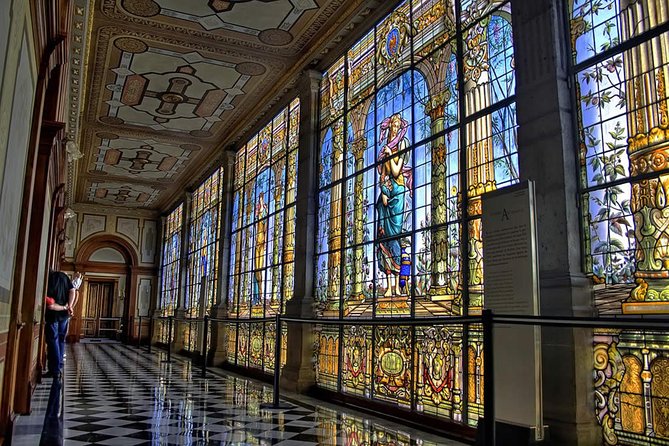
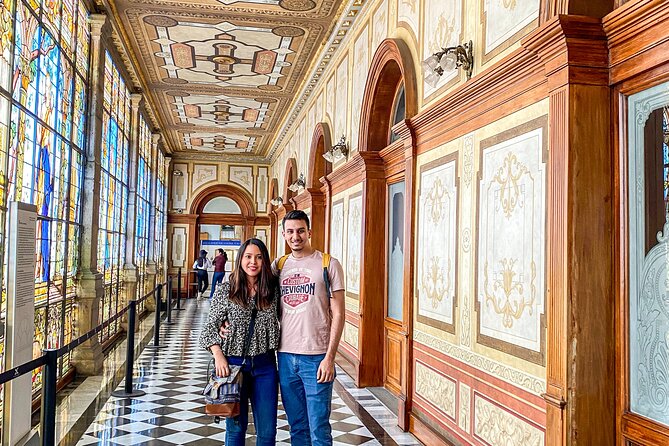
The castle portion lasts about two hours. Your guide takes you through 12 halls filled with furniture, royal objects, art, weapons, and political history.
The marble staircases and royal apartments show the building at its most formal. You can see the state carriages associated with Emperor Maximilian and Benito Juárez, two figures tied to very different visions of Mexico’s future. These objects make political change feel tangible. A carriage is not just decoration when you understand who used it and what kind of government it represented.
The sword associated with independence fighter José María Morelos adds another personal connection to the national story. Small objects like this can be easy to pass without a guide. With context, they become reminders that independence was shaped by people, conflict, and competing ideas, not just dates in a textbook.
The castle also contains murals depicting battles. Works by artists including José Clemente Orozco and John O’Gorman bring the country’s conflicts into the building itself. Be sure to look for these murals rather than focusing only on the grand rooms and skyline views.
The views are one of the castle’s pleasures. From the hilltop, you can look across Mexico City and see how the park provides a large green break within the city. The combination of historic rooms and open views makes the second half feel different from the museum, even though the walking continues.
Your guide explains the path from pre-Columbian society through Spanish colonialism, independence, the period of Maximilian, the presidency, and the Mexican Revolution. This broad sweep is useful, but it also means the discussion can move quickly. If you want a close study of the castle’s art or architecture, you may need a separate visit.
Other museum experiences in Mexico City




How much value do you get for $79?
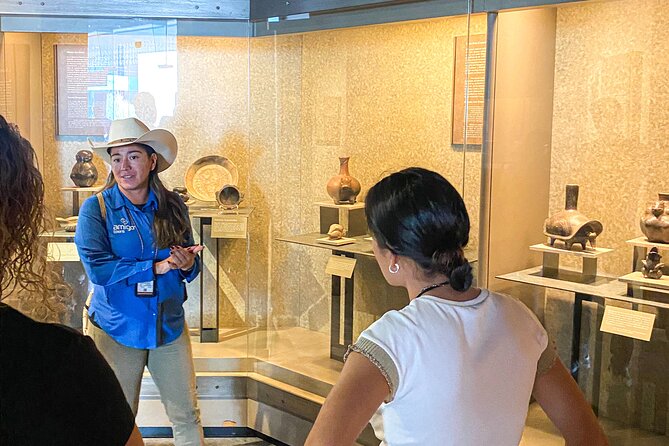
At $79 per person, this is not the cheapest way to enter the two sites. You are paying for more than admission, though. The price includes a professional English-speaking guide and tickets to both the Anthropology Museum and Chapultepec Castle.
The value is strongest if you have limited time in Mexico City or feel uneasy navigating a giant museum alone. Guides know which rooms to prioritize, and the historical links can save you from reading disconnected labels for hours. For a first visit, that organization can make the price worthwhile.
The value is less clear if you prefer to set your own pace. You could spend a full day at the Anthropology Museum alone, then return another day for the castle. Independent visitors also have the freedom to linger over the English-language videos, revisit favorite galleries, or stop for food without watching the clock.
A private-tour upgrade is available. I would consider it if you have a strong interest in archaeology, Mexican political history, or museum art, or if your group wants to ask many questions. A private format should also make it easier to adjust the pace, though the supplied information does not specify the exact private-tour price or schedule.
Group discounts may help reduce the cost for larger parties. The standard group is capped at 25 people, so do not expect the intimacy of a one-on-one museum lesson. If you choose the group option, arrive early and stay near the guide.
Who will enjoy this tour most?
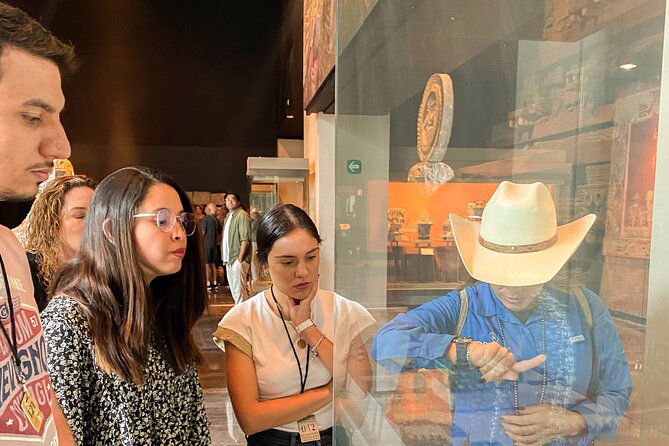
This experience suits you if you want an efficient introduction to Mexico City’s major historical collections. It is especially useful for first-time visitors, people with only a few days in the city, and anyone who finds large museums hard to approach without a plan.
History-minded couples, solo visitors, and friends can all get a lot from it. The guides are often praised for warmth, patience, and passion, with Leonardo, Ligia, Gio, Miriam, Antonio, and Alan among the names singled out for strong explanations. Lili and Nadia have also been praised for clear, detailed presentations.
It is a good match for anyone who wants the story behind the objects. The tour does not stop at the Aztec Stone of the Sun or the royal carriages, but explains how they fit into Mexico’s larger cultural and political story.
It is less suited to you if you dislike long walking tours, need frequent breaks, or want a slow museum study. You should also think twice if you are uncomfortable in a group setting or if clear spoken English is especially important to you. Most guide feedback is very positive, but the experience can vary by guide, group size, pacing, and accent.
Practical details that affect the day
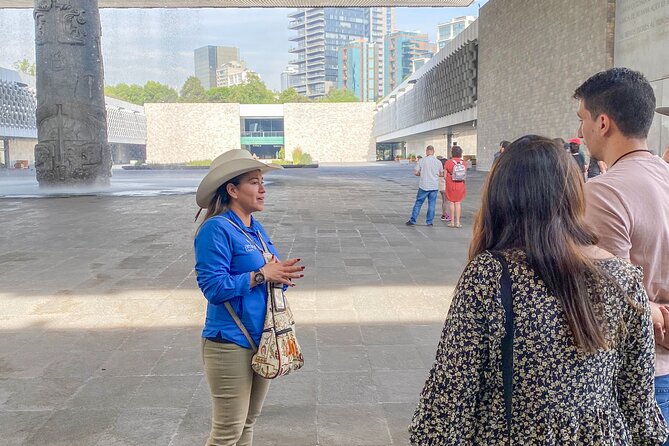
The tour starts at the Anthropology Museum and ends at Chapultepec Castle. It does not return you to your hotel, so plan your afternoon from the castle area.
The meeting point is near public transportation. Bring only a handbag if possible. Food, drinks, and backpacks are not allowed inside, so avoid arriving with a large daypack. Confirmation is provided at booking.
The activity requires good weather. You can cancel for a full refund up to 24 hours before the start time. Cancellations or changes within 24 hours are not refunded or accepted, and a weather cancellation offers a different date or a full refund.
Most people can take part, but remember the distance and hill. Start with a solid breakfast, wear comfortable shoes, and keep water plans in mind for before or after the museum portions, since food and drinks are not included.
Should you book the Chapultepec Castle and Anthropology Museum tour?
I would book this tour if you want the main sights, the main story, and a guide to keep the day moving. The combination of Olmec heads, the Aztec Stone of the Sun, Maximilian’s rooms, Morelos’s sword, battle murals, and city views gives you a strong introduction to Mexico’s past.
I would choose the private option if your budget allows and you care about questions, detail, or a slower pace. I would skip the tour and visit independently if you want to spend a full day in the Anthropology Museum or dislike being hurried.
The deciding question is how you like to see museums. If you want help making sense of a vast collection, $79 is a fair price for two admissions and several hours of guided context. If you want to read every label and follow your own interests, book the museums separately and give each one the time it deserves.
FAQ
How long does the tour last?
The experience lasts about five hours. The Anthropology Museum portion takes about two and a half hours, followed by about two hours at Chapultepec Castle.
Where does the tour begin?
It begins at the National Museum of Anthropology at Avenida Paseo de la Reforma in Chapultepec Park, Mexico City.
Where does the tour end?
The tour ends at Chapultepec Castle.
Are admission tickets included?
Yes. Admission to the National Museum of Anthropology and Chapultepec Castle is included.
Is the tour offered in English?
Yes. The tour is offered in English with a professional guide.
How much walking is involved?
The tour involves about 1.8 miles, or 3 kilometers, of walking. You also climb Chapultepec Hill to reach the castle.
Can I bring a backpack?
No. Food, drinks, and backpacks are not allowed inside. Only a handbag is permitted.
What is the group size?
The activity has a maximum of 25 travelers.
Can I cancel for a full refund?
Yes. You can cancel at least 24 hours before the start time for a full refund. Cancellations or changes made within 24 hours are not refunded or accepted.
More Museum Experiences in Mexico City
More Chapultepec & Museum Tours in Mexico City
More tours in Mexico City we've reviewed







Chapultepec & Museum Tours, compared.
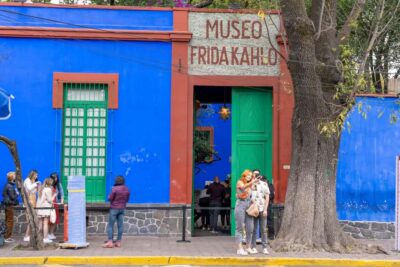 ★ 4.4CDMX: Xochimilco, Coyoacan, Frida Kahlo Museum & Murals TourFrom $89
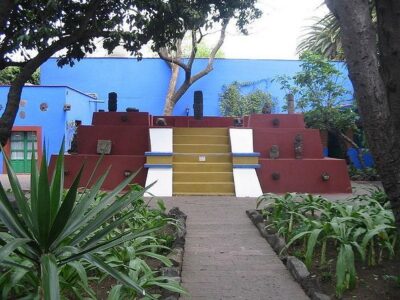 ★ 5.0Frida Kahlo VIP [Museum Tickets Included] Bike, Markets & ChurrosFrom $834 hours (approx.)
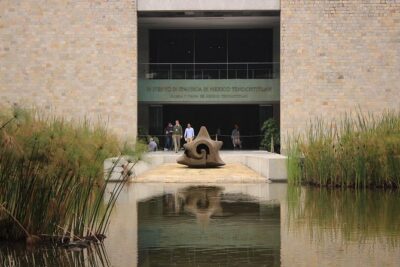 ★ 4.5Anthropology Museum Guided TourFrom $392 hours 30 minutes (approx.)
 ★ 5.0Frida Kahlo VIP [Museum Tickets Included] Walk, Markets & ChurrosFrom $833 to 4 hours (approx.)
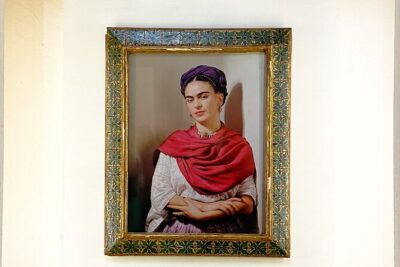 ★ 5.0EXCLUSIVE TOUR Frida Kahlo Museum – SMALL GROUPSFrom $862 hours (approx.)
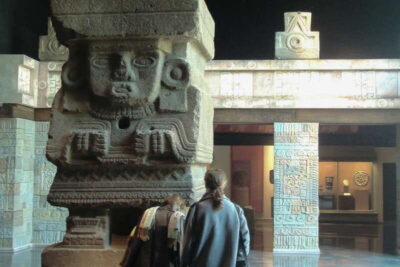 ★ 4.4Mexico City: Anthropology Museum Guided VisitFrom $672.5 hours
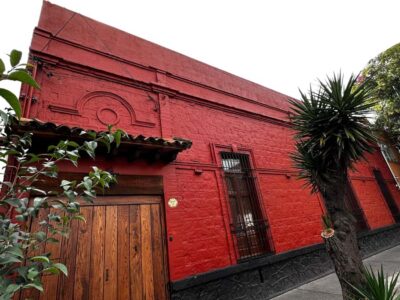 ★ 4.5Mexico City: Frida Kahlo Museum Entry Ticket w/Digital GuideFrom $34
 ★ 4.5Mexico City: Chapultepec Castle and Anthropology Museum TourFrom $475 hours
The lists this tour appears in