
Reviewed · CHAPULTEPEC & MUSEUM TOURS
Anthropology Museum Guided Tour
Mexico City’s National Museum of Anthropology is the kind of place where a guide can change the whole visit. The Aztec Sun Stone, Olmec heads, Maya tomb reconstructions, and Tenochtitlan model are impressive on their own, but the right guide connects them into a clear story of Mesoamerican cultures.
In This Article
- Key points to know before booking
- Why this museum deserves a guided visit
- The Aztec Sun Stone and the museum’s grand opening act
- Olmec heads, Maya treasures, and reconstructed tombs
- Tenochtitlan in model form
- How the two-and-a-half-hour route feels
- English explanations are the make-or-break factor
- Meeting at Reforma and handling the practical details
- Is $39 a fair price?
- Who should book this experience?
- My booking advice
- Should you book the Anthropology Museum Guided Tour?
- FAQ
- How long does the Anthropology Museum guided tour last?
- What is included in the $39 price?
- Where does the tour begin and end?
- How large is the tour group?
- Can I bring a backpack, food, or drinks?
- What happens if I arrive late?
I like the included admission, which keeps the $39 price simple, and I like the morning timing, since you can spend the afternoon in Chapultepec or elsewhere in Mexico City. The strongest guides, including names such as Alan, Alexa, Ligia, Leonardo, and Antonio, have been praised for making a huge collection easy to follow.
The catch is consistency. Some departures have suffered from unclear meeting arrangements, late starts, large groups, or guides whose English was difficult to understand. Arrive early, confirm exactly where to meet, and think carefully about how much you value live explanation.
Key points to know before booking
- The Aztec Sun Stone is the headline piece: You will see Mexico’s famous monumental calendar stone in its wider cultural setting, not as an isolated object.
- A guide helps with Spanish-only information: Several exhibit areas provide limited English explanation, so a strong English-speaking guide can add essential context.
- The museum is enormous: Two and a half hours gives you a guided foundation, not enough time to inspect every room at leisure.
- The group may reach 25 people: The advertised maximum is manageable on paper, but some tour parties have felt larger or poorly organized.
- Punctuality matters: The group may leave without late arrivals, and catching up can be difficult or impossible.
Why this museum deserves a guided visit
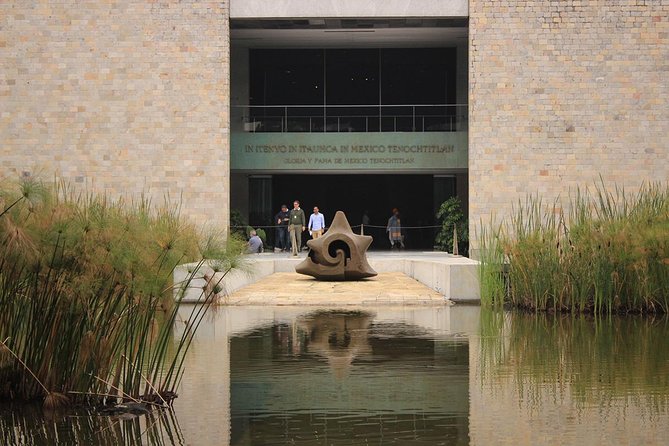
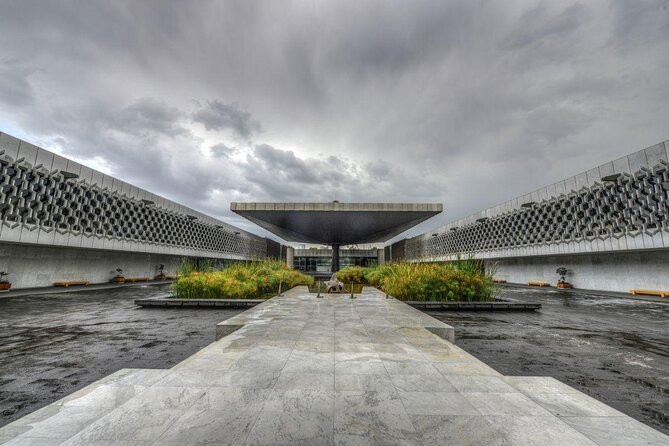
The National Museum of Anthropology is not simply a room full of old objects. It is a grand national museum built to explain the cultures that shaped Mexico, from early civilizations through the Aztec world and the arrival of the Spanish.
That mission is useful, but it can also make the museum hard to tackle alone. The permanent galleries cover pre-Columbian civilizations from across present-day Mexico, along with areas that once belonged to Mexico and are now part of the southwestern United States. You are moving across centuries and regions, often within a few steps.
The labels do not always do enough to connect the pieces. Some information is available only in Spanish, and even an English reader can have trouble seeing how Teotihuacan, the Toltec world, Maya cities, and Tenochtitlan relate to one another. A good guide gives you a timeline, a map, and a reason to care about each object.
That is the main value of this experience. You are not paying simply to walk into the museum. You are paying for someone to reduce the confusion and point out what deserves your attention.
A few more Mexico City tours and experiences worth a look
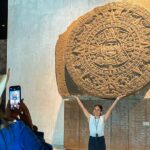
The Aztec Sun Stone and the museum’s grand opening act
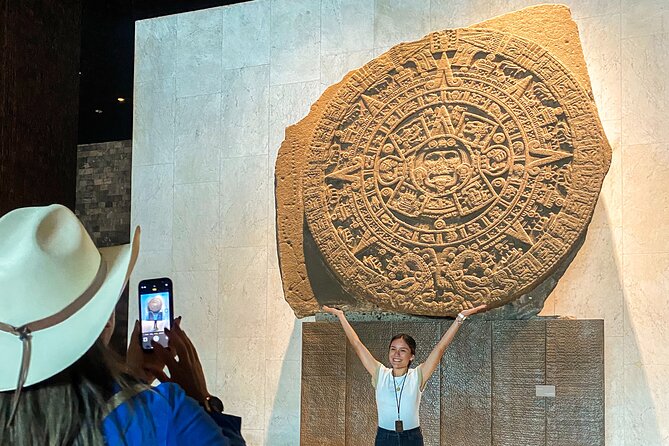
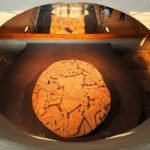
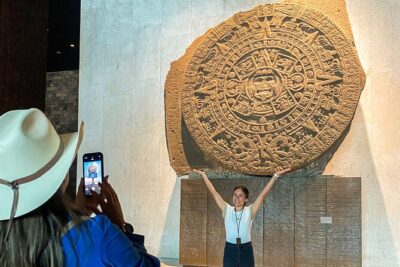
The Aztec Sun Stone, often called the Aztec Calendar, is one of the first major objects you will want to see. It is famous enough to recognize in photographs, but a guided explanation helps you understand why it mattered and how it fits into the Aztec view of time and the cosmos.
A guide may begin with broad geography and chronology before moving into individual artifacts. That approach works well here. The museum becomes easier to grasp when you first understand where the major civilizations developed and how the dates relate to one another.
Some of the best guide experiences have started with a big-picture explanation, then moved slowly into the details. Alan, for example, has been praised for building an overall sense of geography before discussing particular cultures. That is the right method for a museum this large.
You should also expect the guide to focus on selected highlights rather than every display. This is good if you want a clear introduction. It is less satisfying if you hoped to study each case or read every label during the tour.
Olmec heads, Maya treasures, and reconstructed tombs
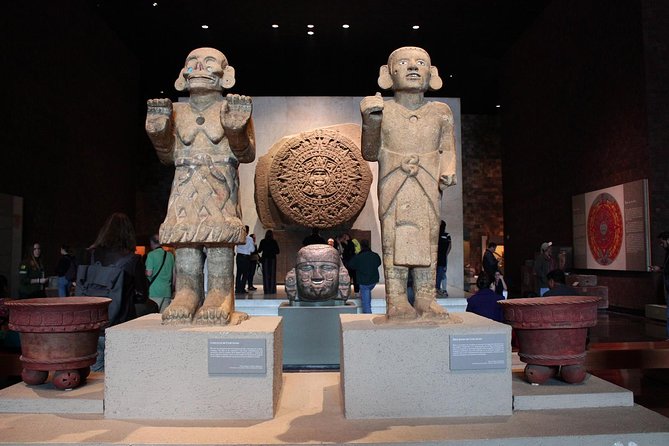
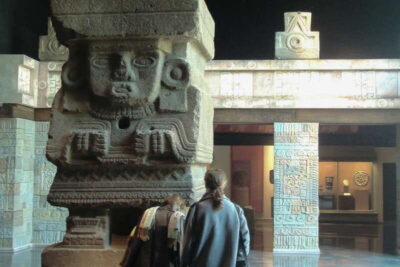
The giant Olmec heads are among the museum’s most memorable objects. Found in the jungles of Tabasco and Veracruz, these massive stone sculptures give you a quick sense of the technical skill and political power of a civilization that predates the Aztecs by many centuries.
The Maya galleries add another layer. The collection includes treasures associated with the Maya world, including objects recovered from the Sacred Cenote at Chichen Itza. Reconstructions of Maya tombs help turn an abstract lesson about burial customs into something you can picture.
A guide can explain what you are looking at, where it came from, and how it relates to the wider culture. That matters because the museum often gives you the object first and the explanation second. With a good guide, a carved figure or ceremonial object becomes part of a social and religious system rather than just an attractive stone.
Guide quality is especially important in these galleries. Several highly praised guides have used personal photographs, drawings, maps, and printed examples to show how buildings were constructed or how sites were arranged. You should not count on every guide bringing extra materials, but the best ones use more than a memorized speech.
Tenochtitlan in model form
One of the most useful displays is the model showing the location and layout of Tenochtitlan, the former Aztec capital. Modern Mexico City now covers much of the area, so the model gives you a way to picture the city before the Spanish conquest and to understand how its central setting relates to today’s capital.
This is also where a clear timeline and map matter most. Confusing Tenochtitlan with Teotihuacan is easy if you are unfamiliar with Mexican history, even though they belonged to different periods and cultural settings. A guide who points out both places and explains the time gap can save you from leaving with a muddled picture.
The strongest presentations move in a sensible order: geography, early civilizations, later urban centers, the Aztec period, and then the Spanish conquest. The weaker ones jump from Maya material to Toltec objects to Aztec subjects without warning. If the explanation starts to feel like a list of names, ask your guide to place the cultures on a timeline.
How the two-and-a-half-hour route feels
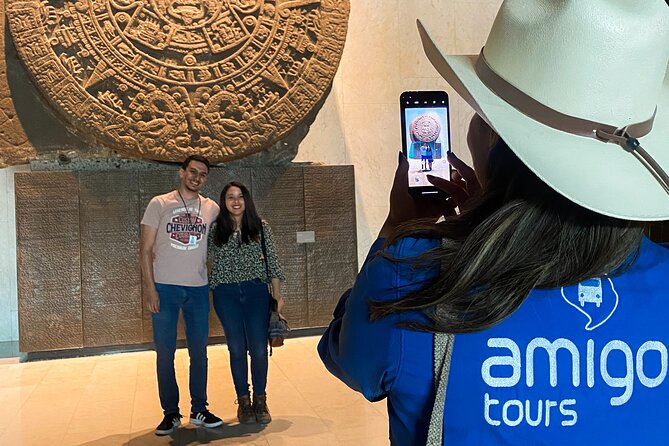
The advertised duration is about 2 hours and 30 minutes. That is enough for a strong orientation and a selection of major rooms, but not enough to see the entire museum properly.
Some guides allow short periods for you to look around a gallery before explaining key objects. This can work well when the free time is clearly explained. It can feel inefficient if the guide later covers the same material you were expected to inspect on your own.
You may also spend part of the tour getting the group organized, handing out audio equipment, validating tickets, or moving between rooms. At its best, the tour stays focused and uses the time to explain important objects. At its worst, the start is delayed and the actual instruction feels much shorter than the promised duration.
The museum is large enough that you should plan to return on your own if you want to read everything. The morning tour leaves your afternoon free, so you can come back later only if your schedule and admission arrangements allow it. Do not assume the guided visit is a full museum visit. Think of it as a well-selected introduction.
Other guided tours in Mexico City

English explanations are the make-or-break factor
This tour is offered in English, but the quality of spoken English can vary by guide. Many guides have received strong praise for clear explanations, patient answers, and warm delivery. Alexa has been noted for using drawings and photographs to explain difficult ideas, while Ligia has been praised for answering questions in both English and Spanish.
Other experiences have been much less successful. Some people found a guide’s accent or phrasing hard to follow, even when the guide clearly knew the subject. Another common complaint was a nonstop presentation with little time for questions.
That makes the guide assignment more important than the basic itinerary. The museum itself is excellent. The tour succeeds when the person leading it can explain chronology, geography, and cultural differences in plain English.
Headsets or audio equipment may be used, especially with a larger group. Equipment helps you hear, but it cannot fix unclear organization or difficult delivery. If you have trouble understanding, ask politely for shorter explanations or clarification early in the tour rather than waiting until the end.
Meeting at Reforma and handling the practical details
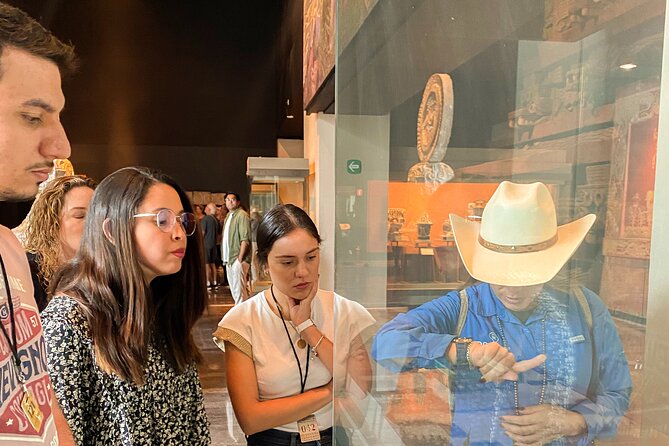
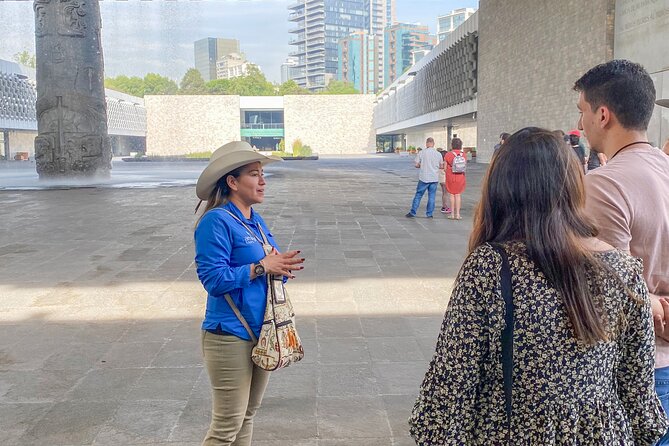
The meeting point is outside the National Museum of Anthropology on Avenida Paseo de la Reforma in Chapultepec, in the Polanco area. It is near public transportation, but Mexico City traffic can still make a short journey take much longer than expected.
Arrive well before the stated meeting time. One person arrived ten minutes late, even after sending a message, and found that the group had already left. The operator explained that the group cannot wait or be rejoined once it has departed. That is a hard rule, but it is easy to avoid the problem by treating the start time as firm.
The meeting area can also be confusing. You may need to identify the guide or tour group before entering the museum, and some people have had trouble finding the correct line. Confirm the guide’s name and look for the tour representative rather than simply joining the first ticket queue you see.
Bags require planning. Food, drinks, and backpacks are not allowed inside. Only a handbag is permitted, so leave larger items at your accommodation or check the museum’s current storage arrangements before arriving. The tour includes museum admission and a professional guide, but food and drinks are not included.
Is $39 a fair price?
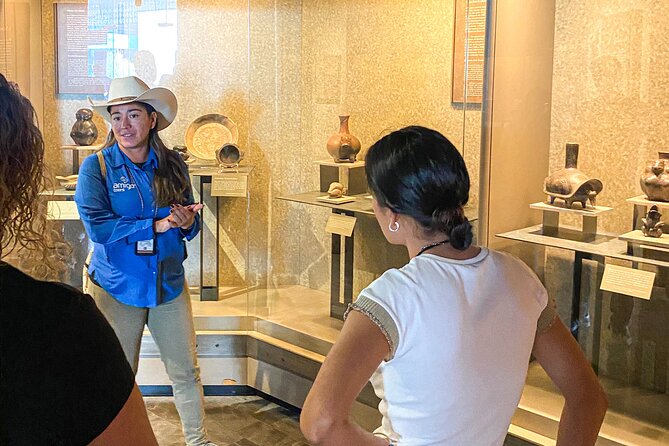
At $39 per person, the tour is reasonably priced if you receive a strong guide and use the visit as an orientation to the museum. Admission is included, so you are not paying the tour fee and then discovering another required charge at the door.
The value is highest for first-time visitors, people who do not read Spanish, and anyone who feels uneasy about sorting out a large archaeological museum alone. A clear explanation of the Sun Stone, Olmec sculpture, Maya material, and Tenochtitlan model can save hours of uncertain wandering.
The value drops if your group is larger than expected or if the guide spends too much time managing the crowd. Some people have felt that a 2.5-hour tour delivered only about an hour of useful explanation. Others received a longer-than-promised visit from a guide who continued answering questions after the scheduled end.
If you are already well-read on Mexican archaeology, you may prefer to enter independently and set your own pace. If you want a story that links the rooms together, $39 is a modest price for the right guide. The risk is not the museum. It is the uneven delivery.
Who should book this experience?
I would choose this tour if you are visiting the museum for the first time and want a basic framework before exploring on your own. It suits couples, families, and solo visitors who enjoy asking questions and prefer a human explanation to a wall of labels.
It is also a good fit if you have only one morning. The early departure gives you a useful overview and leaves the rest of the day open for Chapultepec, the castle, or another part of Mexico City.
Families should confirm the child ticket details before booking. One family reported confusion when a child ticket was not recognized at the entrance, creating a frustrating start. The supplied information says most people can participate, but it does not provide a detailed age policy.
You may want another option if you need a very small group, a guaranteed private guide, or highly polished English delivery. The maximum is listed as 25 people, and some departures have felt crowded. A private tour can offer more room for questions, but it will likely cost more than this $39 group format.
My booking advice
Book this tour for the museum’s scale and the help of a guide, not for a guaranteed flawless production. The best possible result is excellent: you get a clear timeline, strong explanations, useful answers, and a far better sense of what you are seeing.
To improve your odds, choose a morning departure, arrive early, carry only a small handbag, and confirm the meeting point before leaving your hotel. If English clarity is crucial, ask the operator in advance how guides are assigned, though the available information does not promise a particular person.
The cancellation terms are flexible if your plans change. You can cancel at least 24 hours before the start for a full refund. Changes or cancellations made inside that window are not accepted for a refund.
Should you book the Anthropology Museum Guided Tour?
Yes, with reservations. The National Museum of Anthropology is a must-see for anyone interested in Mexico’s past, and a good guide can make its enormous collection far easier to understand. The Aztec Sun Stone, Olmec heads, Maya objects, and Tenochtitlan model deserve more than a quick photo stop.
Book it if you want context, have limited time, or do not read Spanish comfortably. Skip it in favor of independent exploration if you dislike group pacing, already know the subject well, or cannot tolerate the possibility of a hard-to-understand guide.
At $39, it is a sensible gamble for a first visit. Just arrive early and remember that the quality of the tour depends heavily on the person holding the microphone.
FAQ
How long does the Anthropology Museum guided tour last?
The tour lasts approximately 2 hours and 30 minutes. This provides an introduction to major galleries and objects, but not enough time to study every permanent exhibition in detail.
What is included in the $39 price?
The price includes entrance to the National Museum of Anthropology and a professional English-speaking guide. Food and drinks are not included.
Where does the tour begin and end?
It begins at the National Museum of Anthropology on Avenida Paseo de la Reforma in Chapultepec, Mexico City. The activity ends back at the meeting point.
How large is the tour group?
The listed maximum is 25 travelers. Some tour parties have felt larger or crowded, so do not assume you will receive a private or very small-group experience.
Can I bring a backpack, food, or drinks?
No. Food, drinks, and backpacks are not allowed inside. Only a handbag is permitted.
What happens if I arrive late?
The group may leave without waiting, and you may not be able to rejoin it. Arrive early, since Mexico City traffic and confusion around the museum entrance can cause delays.
More Museum Experiences in Mexico City


More Guided Tours in Mexico City
More Chapultepec & Museum Tours in Mexico City
More tours in Mexico City we've reviewed





Chapultepec & Museum Tours, compared.
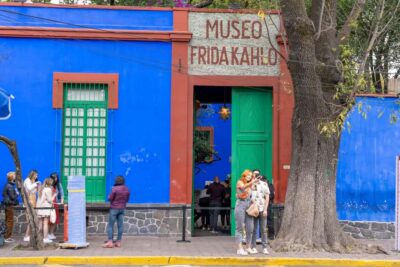 ★ 4.4CDMX: Xochimilco, Coyoacan, Frida Kahlo Museum & Murals TourFrom $89
 ★ 4.5Chapultepec Castle & Anthropology Museum TourFrom $795 hours (approx.)
 ★ 5.0Frida Kahlo VIP [Museum Tickets Included] Bike, Markets & ChurrosFrom $834 hours (approx.)
 ★ 5.0Frida Kahlo VIP [Museum Tickets Included] Walk, Markets & ChurrosFrom $833 to 4 hours (approx.)
 ★ 5.0EXCLUSIVE TOUR Frida Kahlo Museum – SMALL GROUPSFrom $862 hours (approx.)
 ★ 4.4Mexico City: Anthropology Museum Guided VisitFrom $672.5 hours
 ★ 4.5Mexico City: Frida Kahlo Museum Entry Ticket w/Digital GuideFrom $34
 ★ 4.5Mexico City: Chapultepec Castle and Anthropology Museum TourFrom $475 hours
The lists this tour appears in