
Reviewed · CHAPULTEPEC & MUSEUM TOURS
Mexico City: Anthropology Museum Guided Visit
Mexico City’s National Museum of Anthropology is so large that walking in alone can feel like opening ten history books at once. This 2.5-hour guided visit gives you a clear path through Mexico’s ancient cultures, from tiny spear points used more than 10,000 years ago to the famous Aztec Stone of the Sun.
In This Article
- Key points at a glance
- Why the Anthropology Museum works better with a guide
- Meeting at 8:50 am beside the flagpole
- Early hunters, clay objects, and daily life
- Maya, Aztec, Zapotec, and Teotihuacan connections
- The Stone of the Sun and the museum’s big moments
- A sensible pace through an enormous collection
- Free time after the guided visit
- What the $67 price really buys
- The guides make the difference
- Who should book this museum visit?
- Should you book the Anthropology Museum guided visit?
- FAQ
- Where does the tour meet?
- What time should I arrive?
- How long does the tour last?
- What languages are available?
- Is museum admission included?
- Does the tour include hotel pickup?
- Is food or drink included?
- Is free time included after the guided portion?
- Can I book a private or family tour?
I like the way the tour links ordinary objects, such as cooking vessels and clay ritual pieces, with larger ideas about how people lived. I also like the free time afterward, since you can return to a room that caught your eye instead of being hurried straight out. Guides including Leonardo, Lili, Alan, Giovanna, and Roberto have earned especially strong praise for clear English, humor, and vivid explanations.
The main drawback is the price. At $67 per person, this costs far more than museum admission alone, which one recent estimate put at about 200 pesos. It can still be good value if you want context and a sensible route, but casual museum visitors may prefer to enter independently and spend their money elsewhere.
Key points at a glance
- A guided route through a huge museum: You focus on key rooms rather than trying to see every object.
- Small objects get proper attention: Spear points, clay vessels, and ritual pieces help explain everyday life.
- Major cultures connect into one story: The tour covers Maya, Aztec, Zapotec, Teotihuacan, and other Mesoamerican traditions.
- The Stone of the Sun is a central highlight: Your guide explains its symbols and place in Mexican identity.
- English and Spanish tours are available: This matters because many exhibit labels are mainly in Spanish.
- Free time follows the guided portion: You can revisit favorite displays at your own pace.
Why the Anthropology Museum works better with a guide
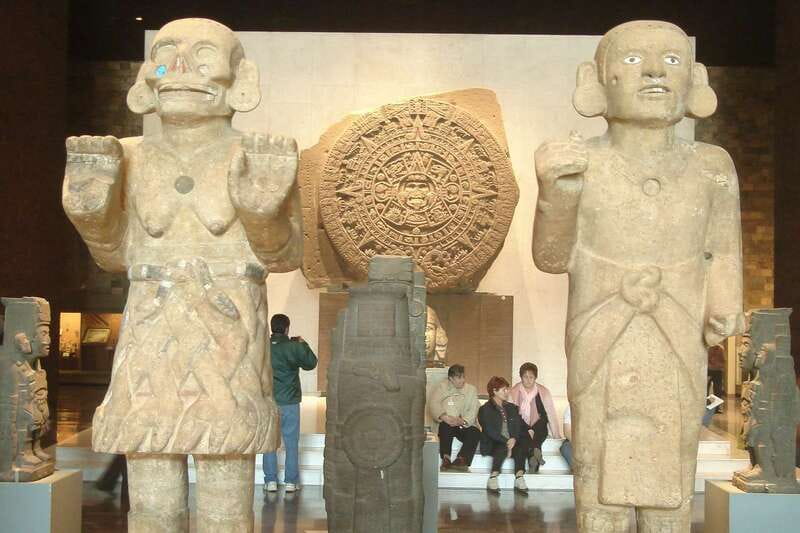
The National Museum of Anthropology is Mexico’s most popular museum, drawing about two million people a year. It protects objects from archaeological sites across the country and presents them in rooms devoted to different cultures and periods.
That scale is both its strength and its problem. You can spend hours moving from one display to another without understanding how the pieces fit together. I like having a guide here because the best part of the museum is not simply seeing an impressive object. It is understanding why that object mattered.
A good guide gives you a timeline, points out important details, and helps you avoid getting lost in a forest of names and dates. Several guides have been singled out for this skill. Alan is praised for connecting individual artifacts into one larger story. Lili is known for a clear, lively presentation. Giovanna has been appreciated for explaining the cultural setting and pointing out which pieces are originals and which are replicas.
That last detail is useful. The museum uses replicas to help explain sites and objects, and it is easy to assume that everything in front of you is an ancient original. A guide can make that distinction clear instead of leaving you to guess.
A few more Mexico City tours and experiences worth a look
Meeting at 8:50 am beside the flagpole
The tour begins at the flagpole next to the museum’s main entrance. The stated meeting time is 8:50 am, so I would arrive early enough to find the entrance and identify your guide without rushing.
You do not receive hotel pickup, transportation, food, or drinks. You make your own way to the museum, and the experience begins and ends there. That arrangement suits visitors staying in Mexico City who already have a plan for reaching Chapultepec, but it is worth allowing extra time if you are unfamiliar with the area.
The included entrance and skip-the-ticket-line access simplify the start. You are not buying a separate museum ticket and then trying to find your way through the entrance process. Once inside, the guide takes over the route.
Language choices are English and Spanish. If you do not speak Spanish, the English option has real value because many exhibit descriptions are mainly in Spanish. You can still appreciate the objects alone, but written labels will not always provide enough background.
Early hunters, clay objects, and daily life
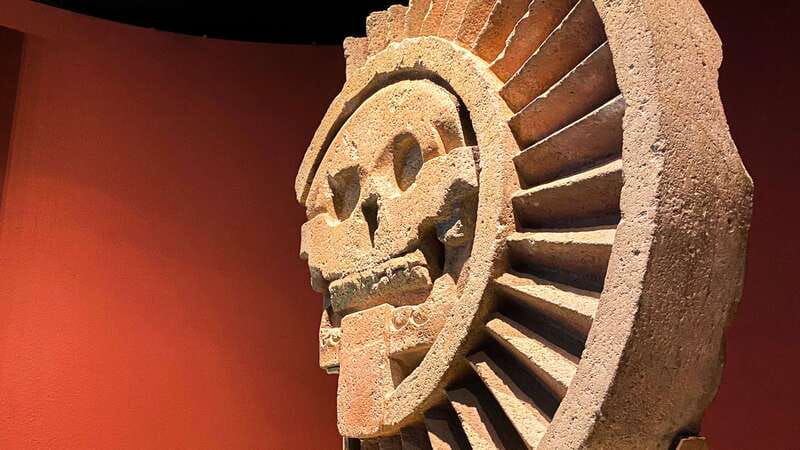
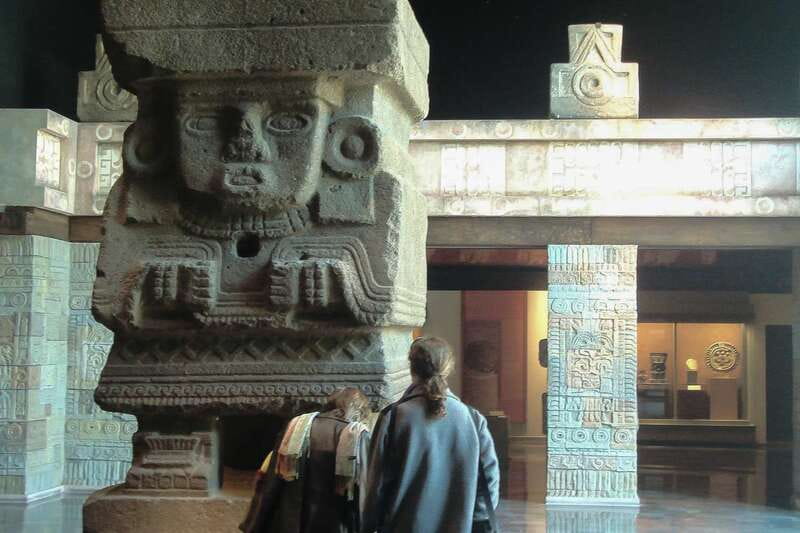
One of the more useful features of the tour is its attention to small objects. Monumental stone carvings naturally pull your eyes across a room, but spear points and simple clay pieces often tell you more about ordinary life.
The spear points date to early hunters on the continent more than 10,000 years ago. They are small, but their size makes the story feel practical. You are not only looking at a grand civilization. You are seeing tools made for survival, and your guide can explain how such objects fit into the earliest periods represented in the museum.
The clay pieces add another layer. Some were used in daily life, while others served symbolic purposes in religious ceremonies. That difference matters because ancient objects were rarely made for decoration alone. A vessel could be useful, sacred, or both, depending on its setting.
I find this part of the visit especially helpful for families and for anyone who does not already know much about Mesoamerican archaeology. Large monuments can seem distant. A hunting point or household object gives you something concrete to hold in your mind.
Maya, Aztec, Zapotec, and Teotihuacan connections
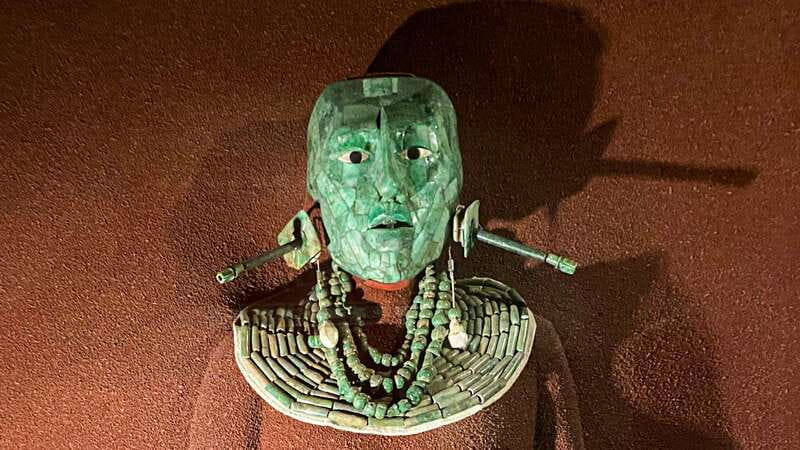
The museum covers many cultures, and the guided route helps you avoid treating them as one single civilization. Maya, Aztec, Zapotec, and Teotihuacan traditions developed in different places and periods, with their own beliefs, artistic styles, and political stories.
The guide’s job is to show connections without flattening those differences. You might move from a room filled with small objects to a major display that raises questions about religion, trade, power, or astronomy. The experience is strongest when the guide explains not just what an artifact is, but what it reveals about the people who made and used it.
Several guides have been praised for making this chronological movement easy to follow. Antonio, for example, has been noted for walking groups through the story in order while keeping the pace lively. Alex Gonzales has used extra photographs and visual material to explain Aztec, Teotihuacan, and Maya objects. Those details can help when an artifact is difficult to understand from its shape alone.
The museum also presents ideas that have changed over time. Your guide may explain how historians have had to rethink the development of Mesoamerican societies. That is an important point: archaeology is not a finished story. New evidence can change how scholars understand dates, relationships, and cultural development.
The Stone of the Sun and the museum’s big moments
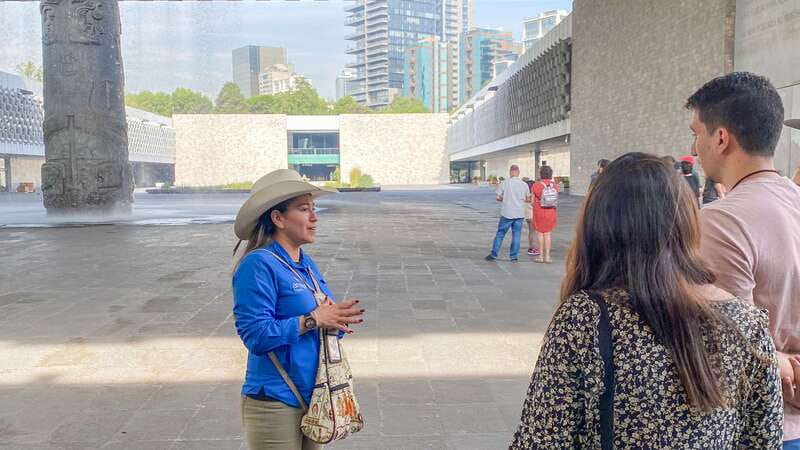
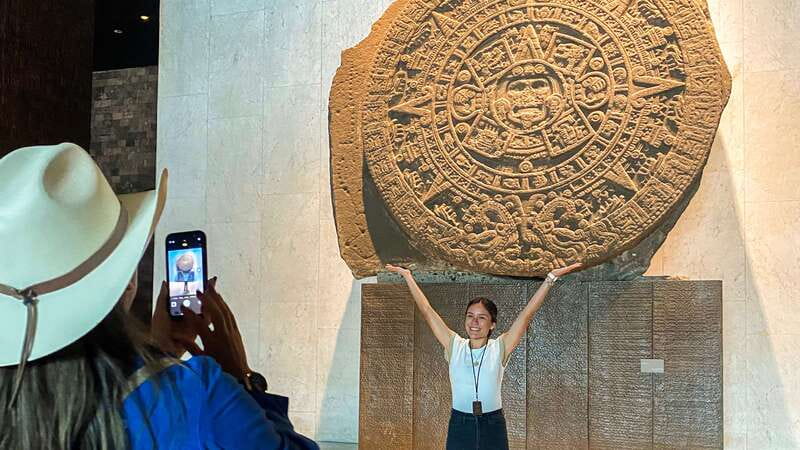
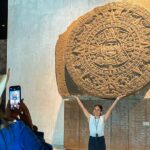
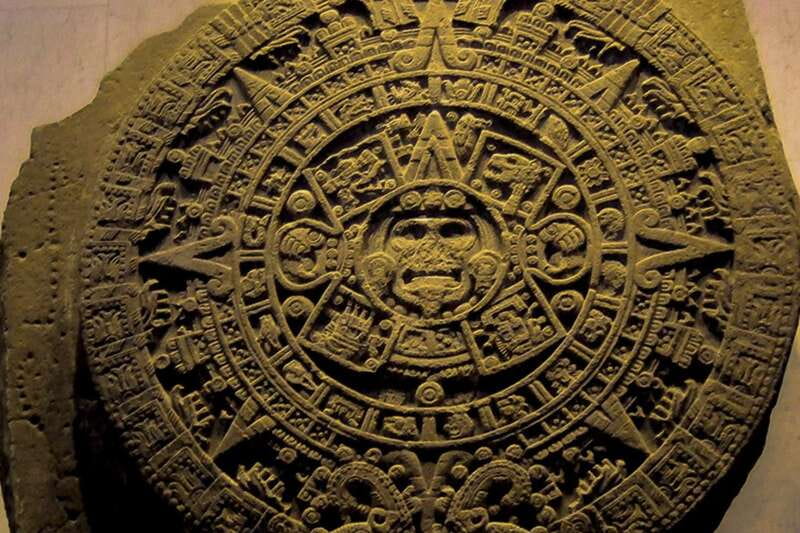
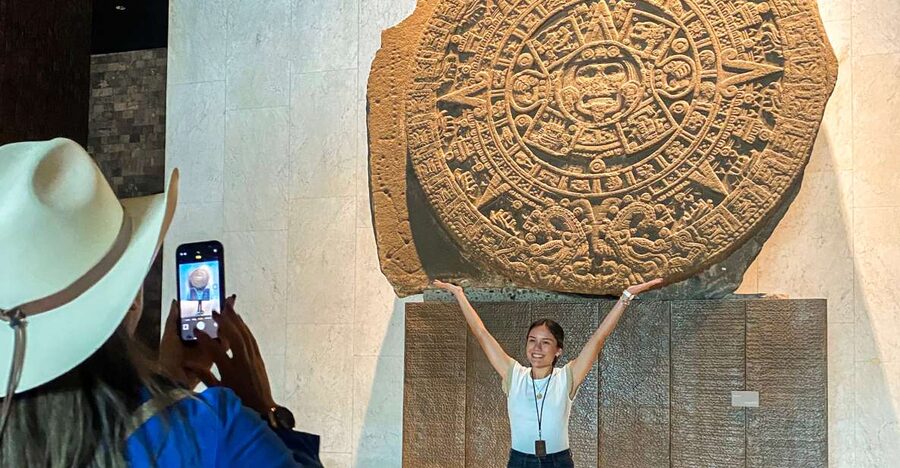
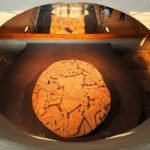
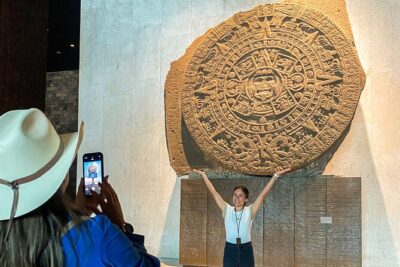
The Stone of the Sun, often called the Aztec calendar stone, is one of the visit’s main attractions. It is the kind of object that can dominate a room, but simply seeing it is not the same as understanding it.
Your guide explains the symbols and the stone’s meaning, along with its place in Mexico’s national identity. The object is impressive on its own, yet the explanation gives you a way to read its details instead of taking only a photograph and moving on.
This is where a guided visit earns its keep. A guide can draw your attention to the features that matter and explain how an object has been interpreted. The museum’s famous pieces are often surrounded by other material that helps put them into context. If you hurry directly to the biggest attraction, you miss much of that supporting story.
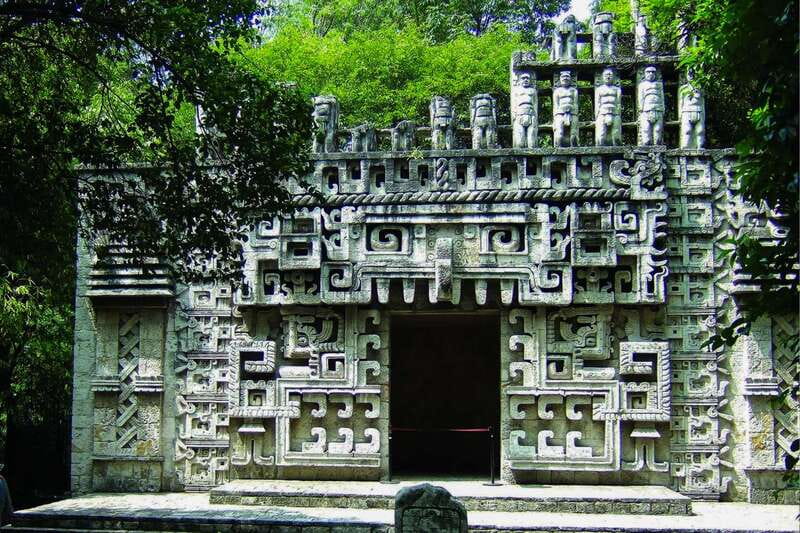
The tour is not limited to the Stone of the Sun. It also introduces rooms with monumental objects, smaller archaeological finds, religious imagery, and replicas that help you picture buildings or sites as they may once have appeared. The balance between famous objects and less obvious pieces makes the museum feel more human.
Other guided tours in Mexico City



A sensible pace through an enormous collection
The advertised tour lasts 2.5 hours, although some visits have run closer to three hours. One person reported that the experience lasted nearly five hours, which created a problem with later plans. I would not schedule a tight appointment immediately afterward.
A two-and-a-half-hour visit is enough for a strong overview, not a complete museum visit. One recent estimate suggested that seeing everything properly could take two days. That sounds believable given the museum’s size and the number of cultures represented.
The guide’s pacing is therefore important. Hector has been praised for combining humor, clear explanations, and a steady rhythm. Ligia has been appreciated for knowing how to move through the museum for maximum impact within the time available. Those are practical skills, not minor extras. A slow explanation at every case would leave you seeing only a fraction of the collection.
The group may be as large as about 20 people, depending on the option and day. In a bigger group, you may need to stay close to the guide and accept that not every question can receive a long answer. A private group is available if you want more flexibility, have many questions, or are arranging a family visit tailored to your needs.
Free time after the guided visit
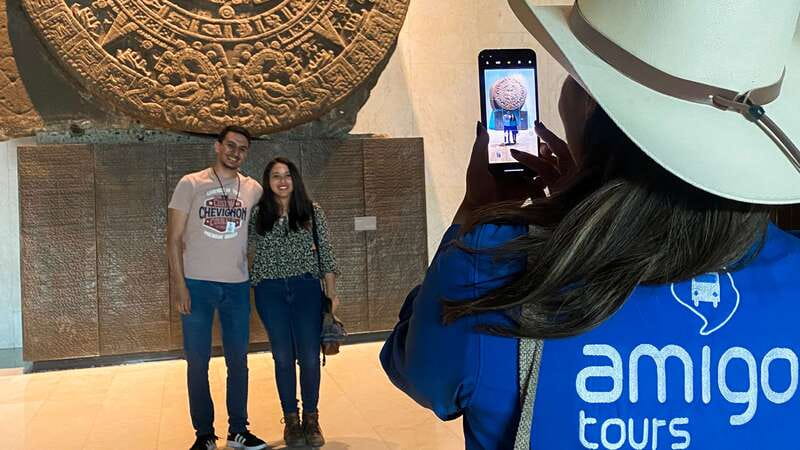
The guided portion ends with free time to explore on your own. I consider this essential rather than incidental.
The guide gives you the framework. The free period lets you follow your own curiosity. You can return to the Stone of the Sun, spend longer with the spear points, revisit a Maya or Zapotec room, or examine displays your group passed quickly.
This arrangement also solves one common museum problem. A guide must keep moving so the group does not stall, but you may want more time with one object. The independent portion gives you that chance.
If you have limited time in Mexico City, you can use the guided part as your main visit. If the museum is a major reason for your trip, plan a longer return visit on another day. The tour helps you identify where you want to spend that extra time.
What the $67 price really buys
At $67, the admission is only part of what you are paying for. The larger cost covers the guide, the route through the museum, the language help, and the saved time at the entrance.
The value depends on your travel style. I think the price is easier to justify if you are visiting for the first time, do not read Spanish comfortably, or want to understand the symbolism behind the objects. It is also a good fit if you are heading to Teotihuacan afterward, since one guide helped prepare visitors for that visit by explaining the wider cultural setting.
The price is harder to defend if you are mainly looking for a quick look at the famous displays. Museum admission alone is much cheaper, and independent visitors can return for a second day without paying for another guide. A large group can also make the cost feel high, especially when the admission fee is only a small part of the ticket price.
A private option changes the calculation. If you are traveling with family, have specific interests, or expect to ask many questions, the extra flexibility may make the higher cost worthwhile. If you choose a shared group, confirm the expected length and group arrangement when booking if your day is tightly planned.
The guides make the difference
The strongest part of this experience is the quality of the individual guide. That also means your experience may vary more than it would at a self-guided museum.
Names repeatedly associated with strong visits include Leonardo, Lili, Alan, Giovanna, Roberto, Hector, Antonio, Alex, Alicia, and Geo. The praised qualities are consistent: clear English, strong command of the subject, humor, patience, and an ability to explain difficult ideas without making the tour feel like a lecture.
Roberto has been noted for bringing extra photographs and material, which can help explain objects and sites. Giovanna has been praised for making the tour personal while still covering the main cultural points. Sergio’s animated explanations were engaging enough to draw the attention of people nearby. Those details suggest that the best guides do more than recite dates.
You generally cannot count on selecting a particular guide unless the booking option allows it. I would choose the tour for the structure and guide service, not because one specific person is guaranteed. Still, if the operator lets you request someone, names such as Lili, Alan, Leonardo, Giovanna, or Roberto are worth asking about.
Who should book this museum visit?
I would recommend this tour to first-time visitors who want a clear introduction to Mexico’s ancient cultures. It suits English speakers especially well because many labels are in Spanish only.
Families can benefit from the guided structure, and a tailor-made family tour is available with the appropriate option. The tour also works for history and archaeology fans who want to ask questions rather than simply read cases.
I would hesitate if you prefer complete independence, need to control every minute of your schedule, or are satisfied with seeing only the headline objects. The museum is easy to revisit, and a self-guided visit costs less.
Wear comfortable shoes and bring water for yourself, since food and drinks are not included. Most of all, leave space in your schedule. The official duration is 2.5 hours, but some tours run longer, and the museum itself deserves more time if you have it.
Should you book the Anthropology Museum guided visit?
Book it if you want the museum to make sense rather than simply want to enter it. The guide helps connect tiny tools, household pottery, religious objects, major monuments, and the Stone of the Sun into a readable story.
Skip it if the $67 price feels too high for a museum visit or if you prefer to explore without a fixed route. My practical choice would be the guided option for a first visit, followed by free time or a separate return visit. That gives you both structure and independence, which is the best way to handle such a huge collection.
The booking includes entrance, a live English or Spanish guide, skip-the-line access, and free time afterward. You can cancel up to 24 hours before the tour for a full refund, and reserve now while paying later, which helps if your Mexico City plans are still changing.
FAQ
Where does the tour meet?
Meet your guide at the flagpole beside the main entrance of the National Museum of Anthropology.
What time should I arrive?
The stated meeting time is 8:50 am. Arrive with enough time to reach the main entrance and find the flagpole.
How long does the tour last?
The advertised duration is 2.5 hours. Some tours may run closer to three hours, so avoid scheduling an immediate appointment afterward.
What languages are available?
Live tours are offered in English and Spanish.
Is museum admission included?
Yes. Entrance to the National Museum of Anthropology is included in the activity.
Does the tour include hotel pickup?
No. Hotel pickup, drop-off, and transportation are not included. You meet and finish at the museum.
Is food or drink included?
No. Food and drinks are not included.
Is free time included after the guided portion?
Yes. You receive time to explore the museum independently after the guided tour.
Can I book a private or family tour?
Yes. A private group option is available, and a family tour tailored to your needs is offered with the appropriate option selected.
More City Tours in Mexico City




More Guided Tours in Mexico City
More Chapultepec & Museum Tours in Mexico City


More tours in Mexico City we've reviewed







Chapultepec & Museum Tours, compared.
 ★ 4.4CDMX: Xochimilco, Coyoacan, Frida Kahlo Museum & Murals TourFrom $89
 ★ 4.5Chapultepec Castle & Anthropology Museum TourFrom $795 hours (approx.)
 ★ 5.0Frida Kahlo VIP [Museum Tickets Included] Bike, Markets & ChurrosFrom $834 hours (approx.)
 ★ 4.5Anthropology Museum Guided TourFrom $392 hours 30 minutes (approx.)
 ★ 5.0Frida Kahlo VIP [Museum Tickets Included] Walk, Markets & ChurrosFrom $833 to 4 hours (approx.)
 ★ 5.0EXCLUSIVE TOUR Frida Kahlo Museum – SMALL GROUPSFrom $862 hours (approx.)
 ★ 4.5Mexico City: Frida Kahlo Museum Entry Ticket w/Digital GuideFrom $34
 ★ 4.5Mexico City: Chapultepec Castle and Anthropology Museum TourFrom $475 hours
The lists this tour appears in