

Reviewed · SAN MIGUEL DAY TRIPS
Colonial Treasures: San Miguel de Allende, Guanajuato, Zacatecas and Guadalajara
Mexico’s colonial heartland is the real draw here. In 10 days, you move from Mexico City to Querétaro, San Miguel de Allende, Guanajuato, Zacatecas, Guadalajara, Pátzcuaro and Morelia, with the driving, hotels and basic sightseeing arranged for you. I like the wide sweep of cities and the chance to see places that are awkward to connect on your own. I also like that nine breakfasts, airport transfers and four-star lodging outside Mexico City are included.
In This Article
- Key points to know before booking
- What this 10-day route is really designed to do
- Arrival in Mexico City and the road to Querétaro
- Dolores Hidalgo and Guanajuato’s narrow streets
- Zacatecas at 8,100 feet
- Guadalajara, mariachi and the tequila question
- Pátzcuaro, Purepecha crafts and Morelia’s pink stone
- Mexico City’s final historic-center day
- Hotels, meals and long hours on the road
- Who will get the most from this tour
- Should you book Colonial Treasures?
- FAQ
- How long is the Colonial Treasures tour?
- What cities and towns are included?
- Are hotels and breakfasts included?
- Is airport transportation included?
- Is the tour conducted in English?
- How many people can join the group?
- What is included at El Edén Mine and the Guadalajara portion?
The tradeoff is pace. This is a lot of Mexico in a short time, with several long road days and some city visits that may feel more like orientation than full exploration. English guiding needs special attention: Roberto received high praise, while other arrangements involving Umberto and Fabricio were less easy to follow.
Key points to know before booking

- Eight cities and towns in ten days: You cover a large section of central and western Mexico, but sightseeing time is limited.
- Querétaro and San Miguel on day two: Colonial plazas, the aqueduct, Convent of the Crosses and San Miguel’s famous parish church begin the route.
- Guanajuato gets the underground-city treatment: Expect alleys, plazas, the Juárez Theater, museums and subterranean roads.
- Zacatecas adds altitude and silver-mining history: The city sits about 8,100 feet above sea level, with a cathedral, cable car and El Edén Mine.
- The route includes Pátzcuaro and Morelia: These stops bring Purepecha crafts, pink cantera stone, markets and a different regional character.
- Small-group logistics matter: The listed maximum is eight people, with shared transport, bilingual guiding and pickup available.
What this 10-day route is really designed to do

This is not a slow stay in one colonial town. It is a moving tour for someone who wants a broad introduction to central Mexico without renting a car or arranging several hotel changes. You get a guide, transport and a route that links major historic centers, but you trade free time for coverage.
The price is $1,405 per person. For nine nights, airport transfers, nine breakfasts, a bilingual local guide and four-star hotels in most destinations, that can be a fair package price. The value is strongest if you want someone else to handle the intercity travel. It is weaker if you prefer long museum visits, late mornings or several nights in each place.
The group size is advertised at a maximum of eight. That is small enough to make the van more manageable than a large coach, but you should still ask how many people are confirmed and how the language will be handled. A bilingual tour can operate well when English and Spanish are balanced. If most of the group speaks Spanish, explanations may naturally shift in that direction.
A few more Mexico City tours and experiences worth a look


Arrival in Mexico City and the road to Querétaro
Day one is simple: arrival at Benito Juárez International Airport, followed by a shared transfer to the hotel. The transfer is listed at about two hours, though actual time depends on traffic and the location of the hotel. Since Mexico City traffic can be slow, do not plan an ambitious evening after landing.
The tour begins in earnest on day two at 9:00 a.m. with Querétaro. The Historic Monuments Zone became a UNESCO World Heritage site in 1996, and the appeal is easy to understand: colonial mansions, pedestrian streets, small plazas and the famous aqueduct give the city a handsome, orderly center.
You visit the historic downtown, the aqueduct and the Convent of the Crosses. The entire stop is listed at about four hours, so you should expect a guided introduction rather than a leisurely museum day. Querétaro works well as the first taste of colonial Mexico because it gives you architectural context before the route reaches the more theatrical streets of Guanajuato.
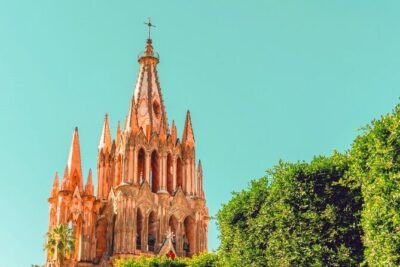
Later, you continue to San Miguel de Allende for another roughly four-hour visit. The Parroquia de San Miguel de Arcángel, with its Holy House Chapel, is the visual anchor. After the formal sightseeing, you have access to craft shops, restaurants and bars.
The hotel location matters here. A past arrangement placed some people far from central San Miguel, and time was lost coordinating hotel drop-offs. Ask in advance where the San Miguel lodging will be and how you will reach the center if it is outside walking distance. This is one town where an extra hour on foot can be more useful than another hurried stop.
Dolores Hidalgo and Guanajuato’s narrow streets

Day three adds Dolores Hidalgo, a small colonial town closely tied to Mexican independence. Father Miguel Hidalgo began the independence war here in 1810, and the parish church is the main historic stop. The town is also associated with José Alfredo Jiménez, one of Mexico’s well-known singer-songwriters.
The visit is listed at four hours, but the day also includes Guanajuato. That makes the timing important. Dolores Hidalgo may appeal most to you if national history and smaller towns interest you. If your priority is Guanajuato’s museums and architecture, you may wish the schedule gave more time there.
Guanajuato is one of the route’s strongest destinations. Its historic center is full of steep lanes, small plazas and buildings packed into a dramatic setting. The city’s underground avenues are unusual in Mexico, and the route uses them as part of the experience.
The planned highlights include the University of Guanajuato, Juárez Theater, the Museum of Don Quixote, the Museum of the Mummies, the famous Kissing Alley, Diego Rivera’s house, the Alhóndiga de Granaditas and the Regional Museum of Guanajuato. That is an ambitious list for one afternoon.
You should think of this as a survey. At some sights, the stop may be brief or outside the building rather than a full interior visit. If the Diego Rivera museum, Orozco murals or a particular collection is important to you, tell the guide early and ask what can actually fit. The tour does not promise every interior admission on that list.
Zacatecas at 8,100 feet
Day four takes you to Zacatecas, one of the most memorable cities on the route. At about 8,100 feet above sea level, it is Mexico’s second-highest city, and the altitude can make the first afternoon feel tiring. Walk slowly, drink water and do not expect to race through the historic center.
The cathedral is the visual centerpiece. Its Mexican Baroque decoration is unusually elaborate, and the surrounding historic district includes religious and civic buildings from the colonial period. The scheduled visit lasts about six hours, giving Zacatecas more room than some earlier stops.
The route also includes El Edén Mine, reached by aerial cable car. This adds a different side of Zacatecas, connecting the city’s beauty with its silver-mining past. The mine visit is listed separately at about two hours and may be conducted by a mine guide rather than your main guide. Confirm the language before entering, since a Spanish-only explanation can make the underground visit difficult if you need English.
There is a useful choice to discuss with your guide: the city’s museums. The Coronel brothers museums were considered a better use of time by some people who skipped the mine, but they are not named in the scheduled route. If art matters to you, ask whether one can replace or supplement El Edén Mine.
Hotel handling in Zacatecas deserves a direct question before departure. A previous booking problem involved a cancelled hotel, a suburban replacement and a long wait while the room was sorted out. That does not define every departure, but you should carry the current hotel name and confirmation details and verify the reservation when you arrive.
Guadalajara, mariachi and the tequila question
Day five brings Guadalajara, the large cultural center associated with tequila and mariachi. The city tour covers the historic center, Plaza Tapatía, the Metropolitan Cathedral, Government Palace and Degollado Theater.
The six-hour visit gives you a useful first look at the city’s public buildings and central squares. Guadalajara is larger and more urban than San Miguel or Guanajuato, so the experience shifts from intimate lanes to grand civic spaces. I would ask the guide how much time is planned inside the Government Palace and Degollado Theater, since the value of this stop depends on whether you see interiors or mainly pass by.
Day six is the least clear part of the published route. It is labeled Tequila, but the description begins at Vicente Fernández’s ranch and the Tres Potrillos souvenir store. It then describes Pátzcuaro, Lake Pátzcuaro, Janitzio and a continuation to Morelia. That is a major geographic jump, and day seven also includes Pátzcuaro.
You should contact Mexitours before paying to confirm the exact day-six route, the hotel city and whether Tequila is a true distillery visit or simply a travel label. The supplied details do not name a tequila factory tour. If tequila is your main reason for booking, do not assume that a production visit is included.
The Vicente Fernández stop is also limited. You may see part of the ranch as far as guards permit, along with the singer’s tomb and the large Tres Potrillos store. This will suit fans of the artist more than people seeking a detailed tequila lesson.


Pátzcuaro, Purepecha crafts and Morelia’s pink stone

Pátzcuaro appears on both days six and seven in the supplied schedule, so this section needs clarification. The town itself is a worthwhile inclusion. Its historic center, Basilica of Our Lady of Health and House of the Eleven Patios give you a view of colonial architecture alongside Purepecha craft traditions.
The town is known for woodwork, wrought iron, basketry and embroidery. The portals around the central square offer cafés, restaurants and local dishes, making this a good place to slow down for a meal if the schedule allows. Lake Pátzcuaro and Janitzio are also mentioned, but the exact time for those visits is not clear.
Day seven is listed as an eight-hour stop, followed by Morelia. That suggests a fuller Pátzcuaro visit, though you should ask whether day six is a separate route or a duplicated description. This is a practical point, not a minor editing issue. The answer affects your hotel, driving time and how much time you have in both towns.
Morelia follows with a four-hour visit on day eight. The city is famous for buildings made from pink cantera stone, and the cathedral, Government Palace, Clavijero Palace and Plaza de Armas form the main architectural core.
The Guadalupita Temple at the San Diego Convent adds Indian Baroque decoration. The aqueduct gives you another strong photo stop, while the Mercado de Dulces offers candied coconut, sweetened fruits and vegetables, local sweets and handicrafts. I like this market because it gives the route a taste beyond churches and government buildings.
After Morelia, you return to Mexico City for the night. This is another long road day, so keep your expectations realistic. You may reach the capital ready for dinner and sleep rather than another major attraction.
Mexico City’s final historic-center day

Day nine is devoted to central Mexico City. The tour visits the National Palace and Diego Rivera’s murals, Constitution Square, the Aztec Templo Mayor and the Metropolitan Cathedral. This is the most concentrated history lesson of the trip, bringing together Spanish colonial buildings, the modern capital and the remains of Tenochtitlan.
The tour continues to Chapultepec Park and Zona Rosa, known for restaurants and shops. The six-hour schedule gives you a solid overview, but Mexico City deserves much more time than a single guided day. If you have an extra night, use it for a museum or neighborhood visit not covered here.
Guide quality makes a real difference on this final day. One past Mexico City city tour received especially strong praise, while English clarity was uneven on some intercity portions. Ask who will guide this portion and whether the commentary will be delivered first in English when the group is bilingual.
Day ten ends with a shared transfer to the airport. Give Mexitours your flight details well in advance and allow plenty of traffic time. The transfer is listed at about two hours, and Mexico City is not a place where I would cut the timing close.
Hotels, meals and long hours on the road

Nine nights of lodging and nine breakfasts are included. Mexico City has five-star hotel options, while the other towns use four-star hotels. That distinction matters: do not book this expecting five-star lodging throughout the circuit.
Food and drinks beyond the included breakfasts are your responsibility. Because some days involve several hours in the vehicle, carry snacks and water. Water was not consistently supplied on one departure, and music in the van was sometimes too loud for everyone. I would politely ask for regular quiet periods and confirm that the air-conditioning and seating are comfortable.
The listed service is bilingual and offered in English, with a maximum of eight people. Guide names connected with past departures include Roberto, Umberto and Fabricio. Roberto was singled out for strong guiding, while Umberto was described as friendly and trying hard despite a mostly Spanish-speaking group. Fabricio was pleasant, but his English was difficult for some people to understand.
That range tells you exactly what to clarify. Ask how many English speakers are booked, who will guide the trip and whether mine tours or local attractions provide English explanations. Also ask how seating will work. On a long circuit, changing seats each day is a fair request, especially if you need to hear the guide from the back.
Who will get the most from this tour
I would choose this trip if you want a broad first look at colonial Mexico and prefer a prepared route to independent bus travel. It suits people who value included hotels, breakfasts and transfers, and who are happy to accept a brisk schedule.
It is less suitable if you want slow mornings, serious museum time or a carefully focused tequila holiday. The tour touches many places, but Guanajuato, Zacatecas, Guadalajara, Pátzcuaro and Mexico City can each reward more than the allotted time.
Most people can participate, and public transportation is nearby. Still, expect walking in historic centers, uneven streets, steep passages in Guanajuato and possible effects from Zacatecas’s altitude. The group discount and mobile ticket may help with booking, but the key value remains the transport and hotel package.
Should you book Colonial Treasures?
Book it if your goal is coverage. You will see an impressive chain of colonial cities, major churches, UNESCO-listed centers, craft traditions and Mexico City landmarks without arranging each leg yourself.
Before booking, get written answers about the day-six Tequila and Pátzcuaro routing, the exact hotels in San Miguel and Zacatecas, the English-speaking guide and the amount of free time in Guanajuato. If those answers are clear, the $1,405 price can work well for a small-group introduction.
If your ideal trip means lingering over one cathedral, visiting every museum or spending two full days in Guadalajara, build your own route instead. This tour gives you breadth, not slow travel.
FAQ
How long is the Colonial Treasures tour?
The experience lasts approximately 10 days and includes nine nights of accommodation. Day one covers airport arrival and transfer, while day ten includes the transfer back to Mexico City International Airport.
What cities and towns are included?
The route includes Mexico City, Querétaro, San Miguel de Allende, Dolores Hidalgo, Guanajuato, Zacatecas, Guadalajara, Tequila, Pátzcuaro, Morelia and places connected with Lake Pátzcuaro. The supplied schedule repeats Pátzcuaro and has an unclear day-six route, so confirm the final sequence before booking.
Are hotels and breakfasts included?
Yes. Nine nights of accommodation and nine breakfasts are included. Five-star hotel options are available in Mexico City only, while hotels in the other towns are four-star.
Is airport transportation included?
Yes. Shared transportation from Benito Juárez International Airport to the hotel and from the hotel back to the airport is included.
Is the tour conducted in English?
The tour is offered in English and includes a bilingual local guide. Since the service is shared and bilingual, ask how many English-speaking people are booked and who will guide your departure.
How many people can join the group?
The stated maximum is eight people. The tour requires at least two people per booking.
What is included at El Edén Mine and the Guadalajara portion?
El Edén Mine and an aerial cable car visit are included in the Zacatecas schedule. Guadalajara sightseeing includes the historic center, Plaza Tapatía, the Metropolitan Cathedral, Government Palace and Degollado Theater. The Tequila section should be confirmed, since the supplied details do not clearly promise a tequila factory visit.
More San Miguel Day Trips in Mexico City


More tours in Mexico City we've reviewed


San Miguel Day Trips, compared.
 ★ 4.5San Miguel de Allende Tour from Mexico CityFrom $11911 hours (approx.)
 ★ 5.0Private Historical Tour in San Miguel de Allende and GuanajuatoFrom $3502 days (approx.)
 ★ 3.5Private Transfers To San Miguel de AllendeFrom $125
 ★ 3.5San Miguel de Allende in a dayFrom $1458 hours (approx.)
 ★ 4.0Private tour to Queretaro and San Miguel de Allende12 hours (approx.)
 ★ 4.5Private Transportation from Mexico City to San Miguel de AllendeFrom $2693 to 4 hours (approx.)
 ★ 4.5Full Day: San Miguel de AllendeFrom $20210 to 12 hours (approx.)
 ★ 5.0San Miguel De Allende Private Transfer From Mexico CityFrom $6504 hours (approx.)
The lists this tour appears in