
Reviewed · SAN MIGUEL DAY TRIPS
Private Historical Tour in San Miguel de Allende and Guanajuato
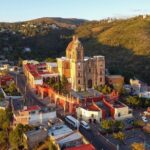
San Miguel de Allende and Guanajuato give you two very different views of colonial Mexico. San Miguel is polished, artistic, and centered on handsome plazas and churches, while Guanajuato feels more dramatic, shaped by steep streets, silver mines, and narrow alleys. With Daniel Mendívil Olvera driving and guiding in English, you get history along the road and on foot.
In This Article
- Key points to know before booking
- Why this two-day route works from Mexico City
- Day one in San Miguel de Allende: churches, government, and public squares
- Templo y ex-convento de la Santa Cruz de los Milagros
- Palacio de Gobierno Casa de la Corregidora
- Plaza de la Soledad
- Jardín Allende and the heart of San Miguel
- Day two in Guanajuato: art, silver, and steep city views
- Museo Casa Diego Rivera
- Monumento al Pípila
- The Alley of the Kiss
- Guanajuato School of Mines
- The guide makes the road time useful
- Is two days enough, or should you add Querétaro?
- Who will get the most from this private tour?
- Should you book the San Miguel and Guanajuato tour?
- FAQ
- How much does the private historical tour cost?
- How long does the tour last?
- Is transportation included?
- Is the tour offered in English?
- Are meals and hotels included?
- Are admission tickets included?
- Can I cancel for a full refund?
I especially like the private vehicle for up to five people, since it saves you from piecing together buses and local transport between Mexico City and the two hill towns. I also like Daniel’s flexibility: the route can respond to your pace and interests, with extra attention to churches, museums, food, shopping, or local history when time allows.
The main drawback is the long amount of time on the road. The two-day plan gives you a useful introduction, but it can feel rushed, especially if you want relaxed evenings, museums, or time in both towns. If your schedule allows, ask about extending the trip to three days and adding Querétaro.
Key points to know before booking
- Daniel guides and drives the trip himself, giving you one English-speaking contact from pickup through the return journey.
- The $350 price covers the whole private group, up to five people, so the per-person value is strongest with four or five guests.
- San Miguel’s churches, plazas, and colonial buildings make the first day a good fit for architecture and Mexican history.
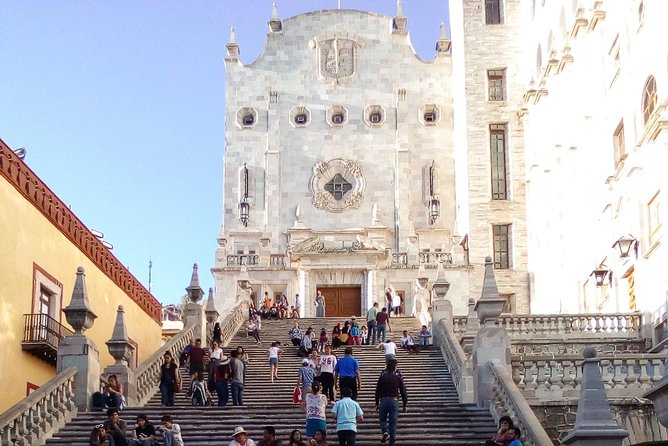
- Guanajuato’s silver-mining story comes through in the university, city views, historic center, and mountain setting.
- Walking is central to the sightseeing, even though private transportation handles the longer connections.
- A three-day version may be wiser if you want Guanajuato, San Miguel, and a stop in Querétaro without squeezing everything together.
Why this two-day route works from Mexico City
This is not simply a car transfer with a few photo stops. Daniel drives you out from Mexico City, then takes you on foot through the historic centers. That matters because the most interesting parts of San Miguel de Allende and Guanajuato are found around plazas, churches, alleys, and older public buildings, not from behind a car window.
The private format also changes the rhythm. Your group alone participates, and the vehicle accommodates up to five people. You can ask questions as they come up, pause for photographs, and adjust the sightseeing emphasis rather than follow a fixed large-group schedule.
The price is $350 per group, not per person. For five people, that is excellent value for private transport and guiding. For one or two people, it is still convenient, but the cost per person rises. Meals, lodging, museum admissions, and other site tickets are separate, so budget beyond the headline price.
The route is best understood as an overview, not a slow stay in either town. You will spend substantial time traveling between Mexico City and the colonial cities. That is the tradeoff for seeing both places in roughly two days without arranging your own transport.
A few more Mexico City tours and experiences worth a look


Day one in San Miguel de Allende: churches, government, and public squares
San Miguel de Allende is a town where the main sights are close enough to connect on foot, but each plaza opens a different window onto the city’s past. The first day moves through religious buildings, civic spaces, and homes linked to independence and local wealth.
Templo y ex-convento de la Santa Cruz de los Milagros
The tour begins with a look at the Templo y ex-convento de la Santa Cruz de los Milagros, a sixteenth-century religious complex. The stop focuses on convent life and the way these facilities worked as centers of faith, daily routine, and colonial society.
Allow about 45 minutes. Admission is not included, so confirm the current entry cost before you go. This is an especially useful stop if you want more than surface-level photographs of church façades. Daniel’s historical explanations help connect the building to Catholic influence in colonial Mexico.
You should also expect a religious site rather than a museum-style attraction. The value is in the setting, architecture, and explanation, so ask questions if you want to understand how the convent fit into local life.
Palacio de Gobierno Casa de la Corregidora
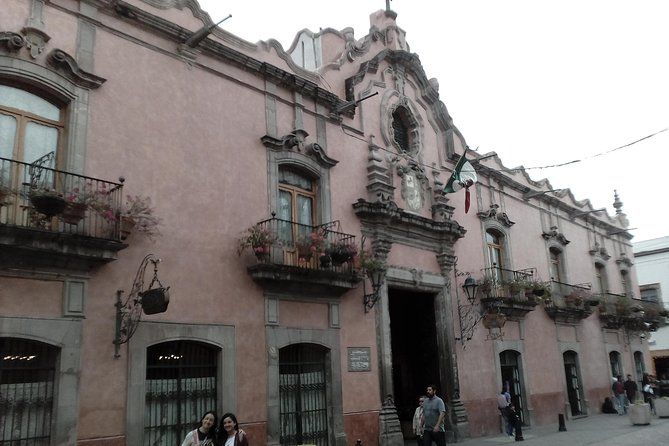
Next comes the Palacio de Gobierno Casa de la Corregidora and the surrounding colonial buildings. This area brings together several layers of San Miguel’s development: administration and government, private property linked to miners and landowners, and religious buildings grouped around a public square with fountains.
The visit lasts about an hour, and admission is free. I like this kind of stop because it helps you read the town as a working place, not just a pretty collection of façades. Look at the relationship between the square and the buildings around it. Public power, private wealth, and religious life were physically close together.
This is also a good point to ask Daniel about the people who shaped the city. The guide’s strength, according to the supplied experience details, is not only naming buildings but explaining the small connections between architecture, politics, religion, and local life.
Plaza de la Soledad
Plaza de la Soledad offers another look at the former city center. The square was enclosed by San Miguel’s former hospital, university institutions, and buildings connected with the clergy.
Plan on about 45 minutes, with no admission charge. The stop is less about one single showpiece and more about understanding how institutions gathered around a central public space. That makes it a worthwhile pause for anyone interested in urban design and the role of the church in colonial communities.
The square also gives you a chance to slow down after the first group of historical explanations. If you enjoy taking photographs, this is one of the places where the surrounding buildings and public space matter as much as any individual monument.
Other private tours in Mexico City



Jardín Allende and the heart of San Miguel
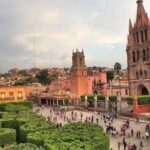
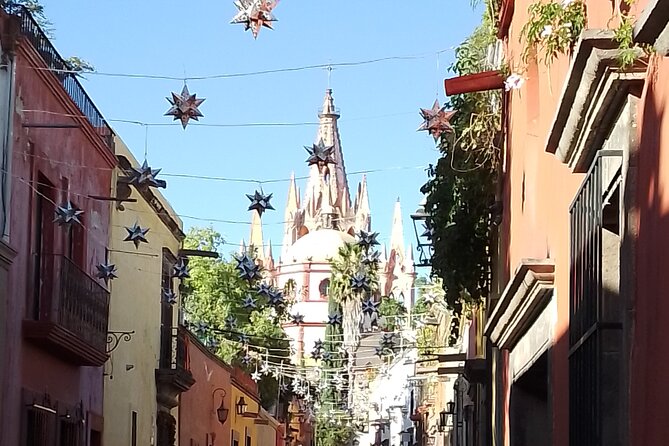
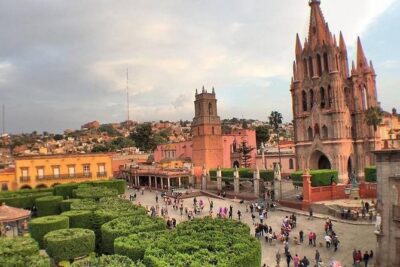
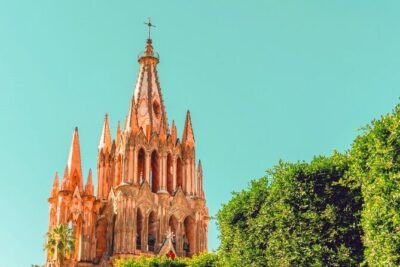
Jardín Allende is the day’s broadest stop, with about an hour set aside. It brings together several important sights: San Miguel’s Mexican Gothic cathedral, the house museum connected with independence figure Ignacio Allende, and Centro Cultural El Nigromante, known for decoration by David Alfaro Siqueiros and other artists.
This is the point where San Miguel’s visual appeal and political history meet. The cathedral offers an unusual example of indigenous understanding of European forms, while the Allende house ties the city to Mexico’s independence movement. The cultural center adds a later artistic layer, making the area more than a church-and-plaza circuit.
Admission to the listed stop is free, though museum entry elsewhere is not included in the tour price. If a particular interior matters to you, ask Daniel how much time is available and whether an admission fee applies.
San Miguel is also a place where you may want more time than the basic schedule allows. One of the supplied accounts specifically preferred spending more time in San Miguel than Guanajuato. That is a useful warning for shoppers, gallery fans, and anyone who wants a slower evening in the center.
Day two in Guanajuato: art, silver, and steep city views
Guanajuato feels different from San Miguel. Its identity is tied closely to silver mining, religious institutions, dramatic elevation changes, and compact streets. The second day gives you a quick but pointed introduction to those themes.
Museo Casa Diego Rivera
The Museo Casa Diego Rivera is the birthplace and house museum of Diego Rivera, one of Mexico’s major artists. The stop lasts about 30 minutes, and admission is not included.
That is a short visit, so consider your priorities. If you have a strong interest in Mexican art, you may want to ask whether the schedule can be adjusted. If your main goal is to understand Guanajuato’s city history and see the major viewpoints, the brief stop keeps the route moving.
The house museum also broadens the trip beyond colonial buildings and silver. It connects Guanajuato with modern Mexican art and with one of the country’s best-known cultural figures.
Monumento al Pípila
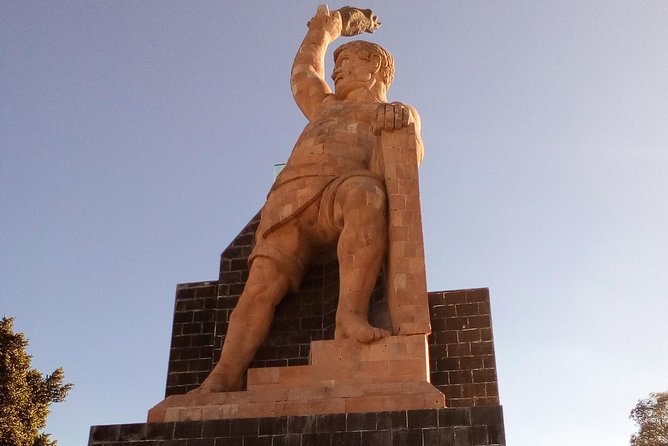
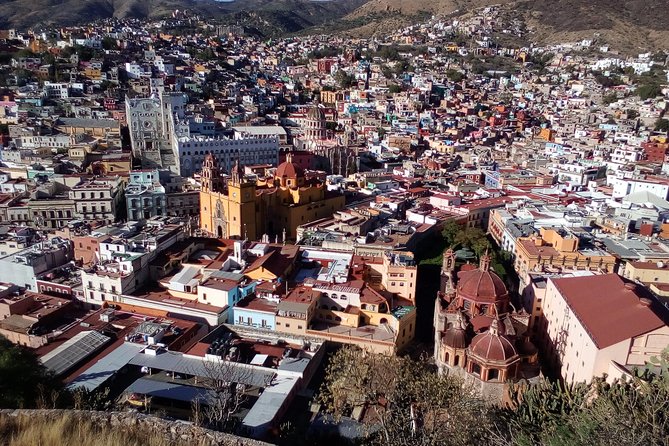
The Monumento al Pípila is a free stop of about 20 minutes at a viewpoint above the city. A funicular connects the monument area with the center, giving you a sense of Guanajuato’s steep geography.
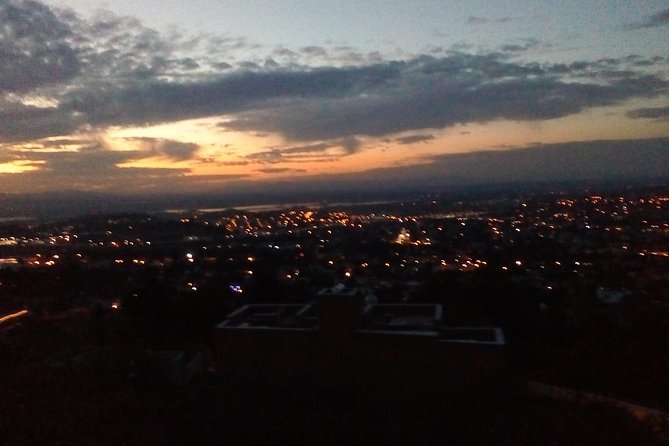
The view is the main event. From above, you can see how the city is packed into a narrow, hilly setting. That perspective helps explain why Guanajuato’s streets and alleys feel so different from the more open central spaces of San Miguel.
Twenty minutes is enough for a look and photographs, but not a long stay. If you want to use the funicular or spend more time at the viewpoint, ask how that fits the day’s timing. The tour information identifies the funicular connection, but does not state that its fare is included.
The Alley of the Kiss
The Alley of the Kiss is a narrow passage where balconies from facing homes come close enough for couples to kiss from one side to the other. It is a small stop, about 20 minutes, and admission is free.
The alley is playful, but it also shows how Guanajuato’s terrain shaped its architecture. Tight building lots, sloping streets, and close-set homes created a city unlike the broad plaza layouts you see elsewhere.
Expect a popular photo opportunity rather than a long historical visit. Daniel can give the setting context, but the stop works best as a quick, memorable contrast to the larger squares and viewpoints.
Guanajuato School of Mines
The final listed stop is the Guanajuato School of Mines, with about 20 minutes and no admission charge. The site reflects the city’s two major forces: silver mining and religion. The university is presented as a key example of the mining world and colonial society that grew around it.
This stop is important because Guanajuato’s beauty did not appear by accident. Silver brought wealth, labor, institutions, and strong links between economic power and religious life. The school helps make that story visible.
Again, the short visit means you are getting an introduction rather than a full academic tour. If mining history is your main interest, tell Daniel early. The longer versions of this road trip have included visits to mines outside Guanajuato, according to the supplied trip details, but those stops are not part of the stated two-day schedule.
The guide makes the road time useful
Daniel’s role is a major part of the experience. He is the driver, walking guide, historian, and English-speaking host. The supplied information describes him as punctual, patient, flexible, and comfortable adapting the route to different interests.
That flexibility is especially useful for families. He has adjusted explanations so one family member could translate for older parents who did not speak English, and he allowed time for photographs and questions. For solo visitors, the private format means the day can be adjusted without negotiating with a group.
You can ask for more focus on churches, museums, food, shopping, nightlife, or architecture. Daniel has also suggested restaurants and local dishes, and some people chose to invite him to meals for additional conversation. That is optional, not part of the tour price, but it can add a personal layer to the trip.
The vehicle is described as clean, reliable, spacious, and comfortable. That is not a minor detail here. The route involves long road sections, so a cramped or poorly maintained car would quickly change the mood.
One caution is worth keeping in mind: a Japanese-language account found the driving could have been gentler. That is one isolated concern among otherwise strong comments, but if you are sensitive to driving style, mention it at the start and ask for a relaxed pace.
Is two days enough, or should you add Querétaro?
The two-day plan is possible, but it is compact. You see the core sights in San Miguel and Guanajuato, yet there is little room for lingering, extra museums, long meals, or unplanned wandering.
The longer versions have included Querétaro and an additional night in Guanajuato or San Miguel. Querétaro can be added on a three-day route, and the supplied accounts describe stops such as the aqueduct, a convent, and the historic center. Those additions are not guaranteed by the basic two-day plan, so arrange them before booking or ask Daniel directly.
I would choose two days if you have limited time in Mexico and want a strong first look at both towns. I would choose three days if Guanajuato is a priority, if you want a relaxed evening in each city, or if you care about adding Querétaro.
The distinction matters because these towns reward walking without a stopwatch. San Miguel benefits from time around Jardín Allende, while Guanajuato deserves room for its views, alleys, and historic center. A longer plan also reduces the feeling that the car ride is taking over the trip.
Who will get the most from this private tour?
This experience suits you if you want history explained in clear English and do not want to manage intercity transportation yourself. It works especially well for couples, families, and small groups who value privacy and can share the $350 cost.
It is also a good fit if your interests are broad. You can combine churches, independence history, colonial architecture, museums, art, mining, food, and city views in one route.
You should think twice if you want a slow, independent stay in one town. The schedule covers a lot of ground, and admissions, meals, lodging, and parking costs are extra. You may prefer to book accommodation and spend several days in San Miguel or Guanajuato instead.
Airport pickup is available, and confirmation is provided at booking. Most people can participate, but the walking portions and the hilly setting of Guanajuato are worth considering for anyone with mobility concerns.
Should you book the San Miguel and Guanajuato tour?
I would book it for the convenience, private format, and Daniel’s ability to connect buildings with the larger story of Mexico. The strongest value comes when four or five people share the $350 group price, but even a smaller group may find the door-to-door transport worthwhile.
Choose the two-day version for an efficient introduction. If you can spare another night, ask for the three-day route with more time in both towns and a possible Querétaro stop. That extra day is the better choice for anyone who dislikes rushing.
Free cancellation is available up to 24 hours before the start time. After that point, the amount paid is not refunded, and late changes are not accepted.
FAQ
How much does the private historical tour cost?
The tour costs $350 per group of up to five people. The price is for the private group, not each person.
How long does the tour last?
The stated duration is approximately two days. Longer versions of the journey, including three-day and four-day arrangements, have also been made with route changes.
Is transportation included?
Yes. Private transportation is included, and airport pickup is available.
Is the tour offered in English?
Yes. The tour is offered in English, and Daniel Mendívil Olvera is the guide and driver identified for the experience.
Are meals and hotels included?
No. Meals and lodging are not included in the tour price.
Are admission tickets included?
No. Admission to the Templo y ex-convento de la Santa Cruz de los Milagros and Museo Casa Diego Rivera is not included. The Palacio de Gobierno Casa de la Corregidora, Plaza de la Soledad, Jardín Allende, Monumento al Pípila, The Alley of the Kiss, and Guanajuato School of Mines are listed as free stops.
Can I cancel for a full refund?
Yes, if you cancel at least 24 hours before the experience start time. Cancellations made less than 24 hours before the start time are not refunded, and late changes are not accepted.
More Historical Tours in Mexico City



More Private Tours in Mexico City
More San Miguel Day Trips in Mexico City


More tours in Mexico City we've reviewed


San Miguel Day Trips, compared.
 ★ 4.5San Miguel de Allende Tour from Mexico CityFrom $11911 hours (approx.)
 ★ 3.5Private Transfers To San Miguel de AllendeFrom $125
 ★ 3.5San Miguel de Allende in a dayFrom $1458 hours (approx.)
 ★ 4.0Private tour to Queretaro and San Miguel de Allende12 hours (approx.)
 ★ 4.5Private Transportation from Mexico City to San Miguel de AllendeFrom $2693 to 4 hours (approx.)
 ★ 3.5Colonial Treasures: San Miguel de Allende, Guanajuato, Zacatecas and GuadalajaraFrom $1,40510 days (approx.)
 ★ 4.5Full Day: San Miguel de AllendeFrom $20210 to 12 hours (approx.)
 ★ 5.0San Miguel De Allende Private Transfer From Mexico CityFrom $6504 hours (approx.)
The lists this tour appears in