
Reviewed · FRIDA KAHLO & COYOACAN TOURS
Coyoacan Food Tour
Coyoacán is one of Mexico City’s most rewarding neighborhoods for a food walk, and this tour gives you a tasty way to see it. In about three and a half hours, you move from cafés and market-style stops to small restaurants, street-food counters, and a contemporary bar, with local dishes and neighborhood stories along the way.
In This Article
- Key points at a glance
- Why Coyoacán works so well for a food tour
- Starting at El Beneficio Café
- Jardín Centenario and the center of Coyoacán
- The Parish of St. John the Baptist
- Francisco Sosa Avenue and the Fuente de los Coyotes
- Tlayuda, quesadilla, and mole tostada
- Suadero sope, craft beer, and pork belly taco
- Esquites, hot chocolate, and churros
- What the $110 price really covers
- The guides make the afternoon
- Who should book this Coyoacán food walk
- Practical details before you go
- Should you book it?
- FAQ
- How long does the Coyoacán Food Tour last?
- How many people can join the tour?
- What food is included?
- Are drinks included?
- Where does the tour begin and end?
- Is the tour offered in English?
- Can I cancel for a full refund?
I like the small maximum of 10 people, which makes it easier to ask questions and keep up with the guide. I also like the mix of food: you get familiar favorites such as quesadillas and churros, along with dishes that may be less familiar, including tlayuda, mole tostada, and suadero sope.
The main consideration is the $110 price. That is a serious food-tour cost, but it covers lunch tastings at six places, beer and mezcal, bottled water, and a full guided walk. Come hungry. The portions add up quickly, and several people have found themselves completely full before the final bite.
Key points at a glance
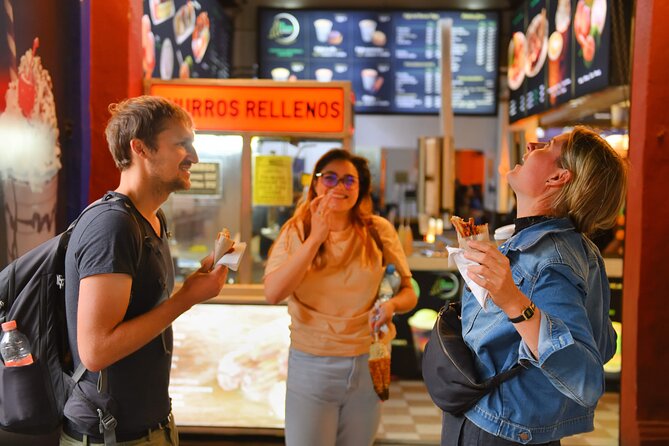
- Six food stops in roughly three and a half hours: You sample a broad range of Mexican dishes rather than eating one large meal in one restaurant.
- A maximum of 10 people: The small group suits solo visitors and anyone who wants direct time with the guide.
- Coyoacán’s central sights included: The route passes Jardín Centenario, the Parish of St. John the Baptist, Francisco Sosa Avenue, and the Fuente de los Coyotes.
- Guides who add local context: Joss, Jimena, Kiomi, Josette, Enya, Andy, Andrea, and others have led tours with a focus on food, neighborhood stories, and practical Mexico City advice.
- Drinks are part of the experience: Beer and mezcal are included, along with bottled water.
- Best for adventurous eaters: The menu includes beef, pork belly, chicken, cheese, corn, mole, spicy toppings, churros, and hot chocolate.
Why Coyoacán works so well for a food tour
Coyoacán has a different feel from Mexico City’s grand central avenues. Its core is built around public squares, old streets, churches, cafés, food vendors, and local gathering places. The tour uses that setting well, linking what you eat to where you are.
I like food tours that do more than shuttle you between restaurants. Here, the walking matters. You see the neighborhood’s public spaces and historic buildings while your guide explains how the dishes fit into Mexican food culture. The result is not just lunch with a few facts added on. It is a way to understand Coyoacán through its streets, vendors, and everyday flavors.
The group size helps. With no more than 10 people, the guide can explain an unfamiliar dish, answer questions about ingredients, and keep an eye on dietary needs. Joss, Jimena, Kiomi, Josette, Enya, Andrea, Andy, and other guides have received especially strong praise for their warmth, storytelling, organization, and useful suggestions for the rest of a Mexico City visit.
This also works well for solo visitors. Several guides make a point of helping people in the group get acquainted, which can turn a meal-based outing into a social afternoon. If you are traveling alone and want an easy way to meet people without committing to a full-day excursion, the format makes sense.
A few more Mexico City tours and experiences worth a look
Starting at El Beneficio Café
The tour begins at El Beneficio Café #2C on Xicoténcatl 275 in the Del Carmen area of Coyoacán. From there, you set off on foot toward the main sights and food stops.
The exact order of food venues is not provided, and the route can depend on the day’s arrangements. What is clear is the general shape: a guided walk through central Coyoacán with six food tastings, drinks, and historical notes. You should plan for frequent stops rather than a long uninterrupted walk.
The meeting point is near public transportation, and confirmation arrives when you book. The tour is offered in English. Service animals are allowed, and the activity states that most people can participate.
One practical point matters more than it may seem: arrive on time. A late arrival was handled successfully in one case because the organizer communicated and the guides waited, but you should not count on that every time. A walking tour with multiple stops is easier for everyone when the group starts together.
Jardín Centenario and the center of Coyoacán
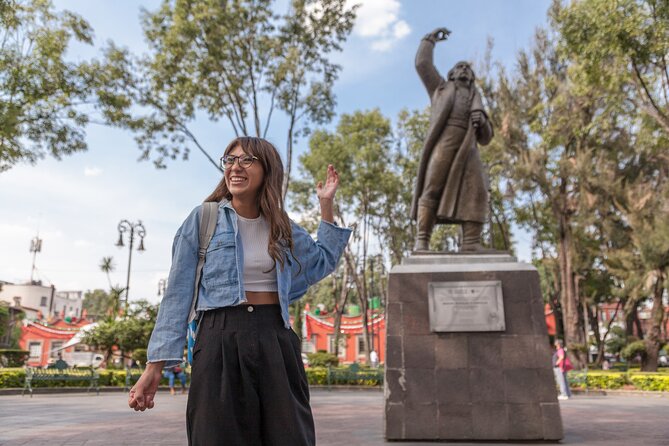
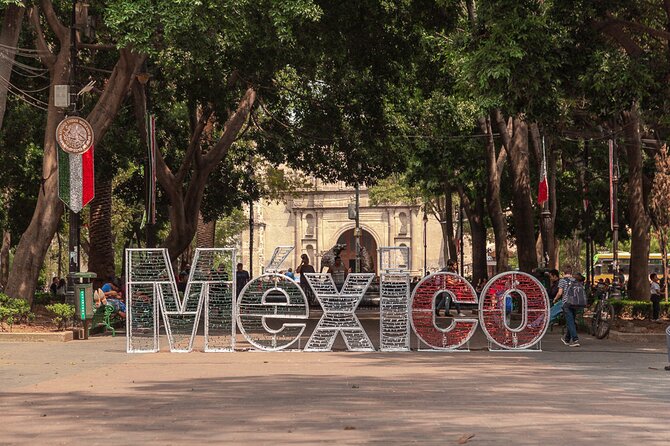
The first listed sight is Jardín Centenario, Coyoacán’s main square. Its roots reach back to pre-Hispanic times, making it a useful place to begin the neighborhood story.
Expect about 10 minutes here, with no admission fee. This is not a museum visit or a long formal lecture. Instead, the guide uses the square as an introduction to Coyoacán, its public life, and the historical layers beneath the streets you are about to walk.
I value this kind of opening because it gives the food stops a setting. You are not simply eating a dish called Mexican because it appears on a menu. You are beginning in a historic neighborhood where plazas, churches, homes, and food traditions meet.
The square is also a practical orientation point. Your guide can help you understand where you are in relation to the rest of Coyoacán before the group continues through the neighborhood.
The Parish of St. John the Baptist
The next listed stop is the Parish of St. John the Baptist, one of the first parish churches built by the Spaniards after the conquest of Mexico. The visit lasts about 10 minutes and is free.
This stop adds a different historical layer from Jardín Centenario. The square points to Coyoacán’s pre-Hispanic past, while the parish reflects the changes brought by Spanish rule. Your guide’s role is important here because the value comes from the explanation, not simply from pausing outside a church.
The tour description promises anecdotes that are not found in every guidebook. In practice, that means you should expect stories tied to the neighborhood and its food rather than a long academic account. Guides have been praised for explaining the origin of dishes and landmarks, which helps connect the short sightseeing stops to the larger meal.
If your main goal is a formal church tour, this brief stop may feel too short. If you want a compact dose of history between tastings, it fits the pace well.
Francisco Sosa Avenue and the Fuente de los Coyotes
Francisco Sosa Avenue receives another 10-minute stop. It is described as one of Coyoacán’s most iconic streets, with an unusually high number of buildings considered historical monuments along a single avenue.
This is the sort of place best appreciated while walking slowly and listening to someone who knows the area. The tour gives you a reason to look beyond the food stalls and notice the buildings around you. You get a sense of why Coyoacán is more than a collection of restaurants.
The route then reaches the Fuente de los Coyotes, a five-minute stop and a classic photo point. The fountain is an emblem of Coyoacán, so it makes a natural place for a quick picture and a short explanation.
Neither stop requires an admission ticket. Together, they keep the tour from becoming a restaurant crawl. You have time to eat, but also time to see the public spaces and architecture that make the neighborhood worth visiting.
A few more Mexico City tours and experiences worth a look




Tlayuda, quesadilla, and mole tostada
The food begins with several dishes that show different sides of Mexican cooking.
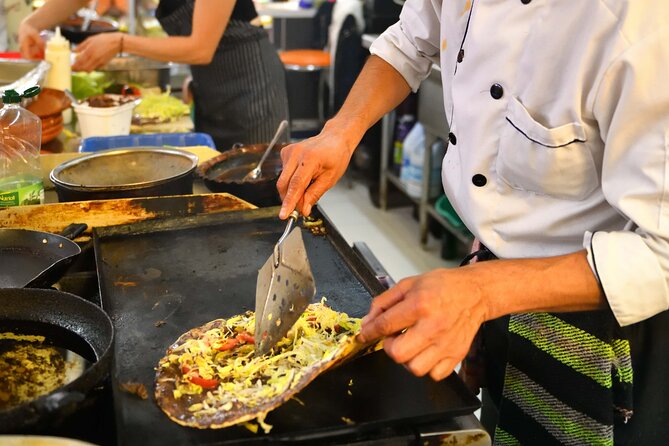
A tlayuda is a large corn tortilla associated with Oaxaca, topped here with beans, cheese, and beef. It is a substantial item, not a tiny sample. The combination gives you crisp or toasted corn, creamy beans, salty cheese, and beef in one broad bite.
The quesadilla raises the familiar Mexico City question: cheese or no cheese? That detail is useful because the word quesadilla does not always mean the same thing throughout Mexico. You get a chance to consider the local style rather than treating the dish as a generic folded snack.
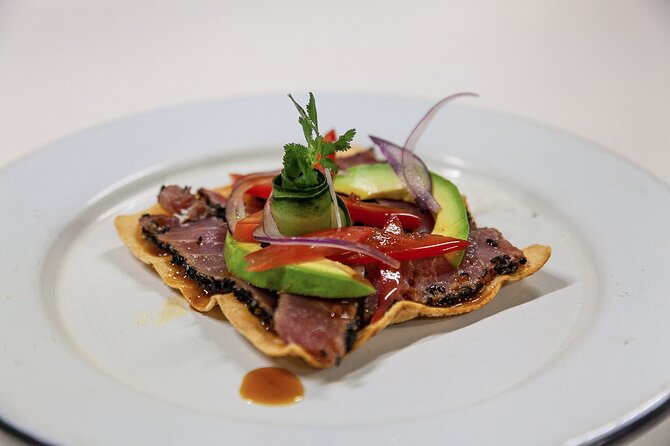
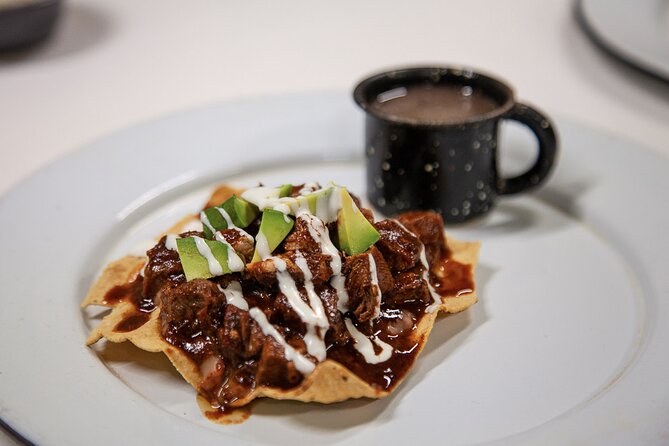
The mole tostada adds more contrast. It combines mole sauce with chicken, plantain, and cheese on a crisp corn tortilla. Mole can bring sweet, savory, spicy, and earthy notes at once, while the tostada supplies crunch. This is one of the more interesting tastings because it shows how a traditional sauce can work with several textures and flavors.
At this point, you may already understand the warning to arrive hungry. The tour does not restrict itself to one-bite samples.
Suadero sope, craft beer, and pork belly taco
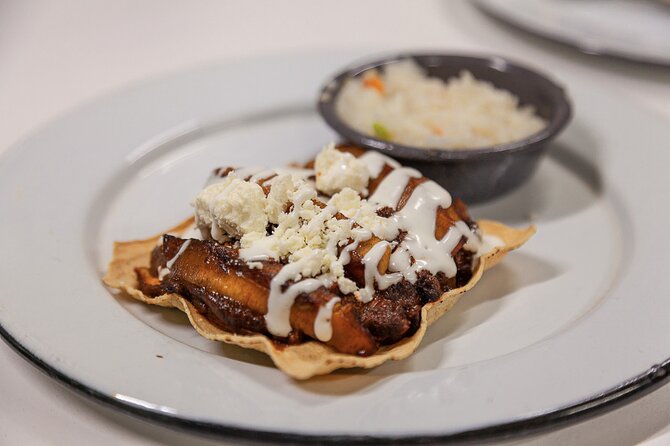
The suadero sope offers a more contemporary street-food presentation. Slow-cooked beef is placed on a sope with beans, then paired with local craft beer.
A sope is thicker and softer than a standard tortilla, so the beans and beef create a filling combination. The beer pairing gives the stop a relaxed break and helps vary the meal after the earlier corn-based dishes.
The pork belly taco moves in a different direction. It includes pork belly and avocado, plus a secret ingredient, and comes with a signature cocktail. Since the secret ingredient is not disclosed, part of the fun is tasting the taco without a full preview.
This is also where the tour broadens beyond strictly traditional market food. You get a contemporary approach while still working with ingredients and formats that are familiar in Mexico. The beer and cocktail are included, but drinkers should pace themselves because mezcal is also part of the package.
The alcohol is a welcome value for some people and less important for others. If you do not drink, the included beverages will not add much to the price, though bottled water is included. Tour gratuities are not included, so plan for that extra cost.
Esquites, hot chocolate, and churros
Esquites are corn kernels served in a cup with mayonnaise, cheese, lime juice, and spicy powder. It is classic street food, easy to eat while standing or walking, and packed with creamy, tangy, salty, and spicy flavors.
This dish is a good reminder that Mexican food is not only about tacos. Corn appears again, but in a new form and with a different texture. If you are sensitive to spice, ask your guide about the powder before it is added.
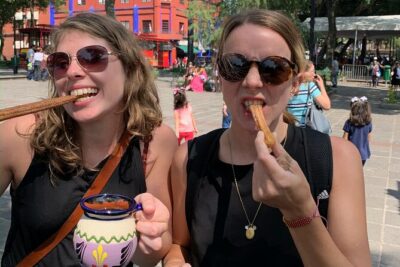
Dessert includes hot chocolate, prepared with milk or water, and traditional churros dusted with sugar and cinnamon. The hot chocolate is described as a traditional beverage of Coyoacán, giving the final course a local connection rather than making it a generic café stop.
Churros are familiar, but they are a fitting finish after the savory dishes. The sugar and cinnamon provide a simple ending to a meal that has already covered beef, chicken, pork, beans, cheese, corn, mole, avocado, and several drinks.
What the $110 price really covers
At $110 per person, this is not the cheapest way to eat in Coyoacán. You can certainly buy individual street-food dishes for much less. The price makes more sense if you value the guide, the planning, the range of stops, and the included drinks.
You receive lunch tastings at six places, beer and mezcal, bottled water, and a guided neighborhood walk lasting about three and a half hours. You also avoid the work of choosing unfamiliar dishes, finding suitable vendors, and deciding how much to order at each place.
The small group improves the value. With a maximum of 10 people, your guide can give personal attention rather than addressing a large crowd. That matters when you want food explanations, help with ingredients, or advice on what else to see in Mexico City.
The price is easiest to justify if you are new to Mexican food or visiting Mexico City for a short time. You can sample a broad menu in one afternoon and leave with a better sense of what to order later. It is less compelling if you already know Coyoacán well, prefer to eat slowly in one restaurant, or do not want alcohol included in the package.
The guides make the afternoon
The guide can shape this experience as much as the food. Joss has been praised for careful attention to dietary restrictions, strong storytelling, and useful follow-up recommendations. Jimena has been singled out for her local knowledge, enthusiasm, and advice for the rest of a trip.
Kiomi is associated with a friendly, courteous approach and a wide range of food and drink. Josette has been especially effective at explaining dish origins and maintaining warm relationships with vendors. Enya has helped solo participants connect with one another, while Andrea and Enya have also been praised for making the route a welcoming introduction to Mexico City.
Names and guides can vary by date, so you should not book expecting one particular person unless the provider confirms it. The consistent pattern is the important part: guides are expected to explain the neighborhood, introduce the food, and make the group feel comfortable.
One useful feature is the advice you may receive beyond the tour. Guides have offered restaurant and sightseeing suggestions based on individual interests. That can be valuable early in your visit, when a local pointer can shape the next few days.
Who should book this Coyoacán food walk
I would choose this tour for a first or early day in Mexico City, especially if you plan to visit Coyoacán or the Frida Kahlo Museum area. The tour helps you understand the neighborhood before you explore it on your own, and the food gives you an immediate reason to pay attention to local details.
It suits solo visitors particularly well. The group is small enough for conversation, and the guides make an effort to help people meet. Couples and families can also enjoy it, provided everyone is ready for several substantial tastings rather than a light snack tour.
Food-focused visitors will get the most from the menu. You sample dishes from Oaxaca, Mexico City street-food traditions, modern taco presentations, corn-based snacks, and classic sweets. If you avoid gluten, one guide has shown care with that restriction, but you should communicate your needs when booking and again at the meeting point.
This is not the best pick for someone who wants a quiet, seated lunch or a tightly scheduled architecture tour. The route includes free sightseeing stops, but food and conversation are the main event.
Practical details before you go
The tour is offered in English and uses a mobile ticket. It lasts approximately three hours and 30 minutes, and the average booking lead time is 28 days, so reserving ahead is sensible if your Mexico City dates are fixed.
The tour begins at El Beneficio Café #2C, Xicoténcatl 275, Del Carmen, Coyoacán, and ends at El Kiosko de Coyoacán in Jardín Plaza Hidalgo. Since the end point differs from the start, you finish in a useful central area rather than returning to the café.
Wear comfortable shoes and leave room in your schedule after the tour. The route is on foot, with several food stops and short sightseeing pauses. You may be full by the end, so do not plan a large dinner immediately afterward.
Free cancellation is available up to 24 hours before the start time for a full refund. Changes or cancellations made less than 24 hours before the start are not accepted for a refund. The cut-off follows local Mexico City time.
Should you book it?
Book the Coyoacán Food Tour if you want a social, food-heavy introduction to one of Mexico City’s most characterful neighborhoods. The strongest reasons are the small group, the large range of tastings, the included beer and mezcal, and guides who add stories and practical advice rather than simply pointing out monuments.
I would hesitate only if $110 feels high for lunch, if you do not drink, or if you prefer to choose each restaurant yourself. For everyone else, especially solo visitors, first-time Mexico City visitors, and curious eaters, this is a useful way to spend an afternoon. Arrive hungry, tell the guide about dietary needs, and expect a very full finish.
FAQ
How long does the Coyoacán Food Tour last?
The tour lasts approximately three hours and 30 minutes.
How many people can join the tour?
The maximum group size is 10 travelers.
What food is included?
The tastings include tlayuda, quesadilla, mole tostada, suadero sope, pork belly taco, esquites, hot chocolate, and churros.
Are drinks included?
Yes. Beer, mezcal, and bottled water are included.
Where does the tour begin and end?
It begins at El Beneficio Café #2C, Xicoténcatl 275, Del Carmen, Coyoacán. It ends at El Kiosko de Coyoacán in Jardín Plaza Hidalgo.
Is the tour offered in English?
Yes. The activity is offered in English and uses a mobile ticket.
Can I cancel for a full refund?
Yes, if you cancel at least 24 hours before the experience start time. Cancellations or changes made less than 24 hours before the start are not refunded or accepted.
More Food Experiences in Mexico City


More Mexico City Food Tours in Mexico City
More Frida Kahlo & Coyoacan Tours in Mexico City

More tours in Mexico City we've reviewed



Frida Kahlo & Coyoacan Tours, compared.
 ★ 4.5Xochimilco, Coyoacan and Frida Kahlo with Optional LunchFrom $349 hours (approx.)
 ★ 4.4CDMX: Xochimilco, Coyoacan, Frida Kahlo Museum & Murals TourFrom $89
 ★ 5.0Frida Kahlo VIP [Museum Tickets Included] Bike, Markets & ChurrosFrom $834 hours (approx.)
 ★ 5.0Frida Kahlo VIP [Museum Tickets Included] Walk, Markets & ChurrosFrom $833 to 4 hours (approx.)
 ★ 5.0EXCLUSIVE TOUR Frida Kahlo Museum – SMALL GROUPSFrom $862 hours (approx.)
 ★ 4.5Mexico City: Frida Kahlo Museum Entry Ticket w/Digital GuideFrom $34
 ★ 5.0Private City Tour in Frida Kahlo, Coyoacan, and XochimilcoFrom $1954 to 6 hours (approx.)
 ★ 5.0PREMIUM Frida Kahlo Museum and Xochimilco (Small Groups)From $806 to 7 hours (approx.)
The lists this tour appears in