
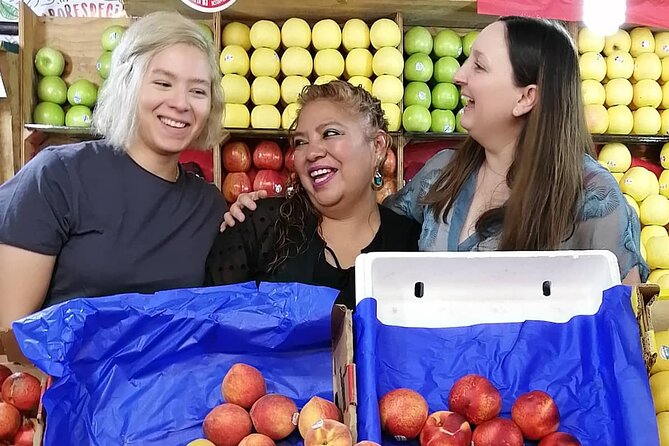
Reviewed · FOOD
Eat and Explore Local Markets in Mexico City
Mexico City’s markets are not polished attractions. They are working places where tortillas are made, produce changes hands, families shop, and strange-looking ingredients sit beside everyday staples. This four-hour tour takes you through La Merced, Mercado Sonora, and Mercado de San Juan, with plenty to eat along the way.
In This Article
- Key points to know before booking
- Why this market tour works so well in Mexico City
- La Merced: two hours inside Mexico City’s food world
- Mercado Sonora: the unusual half-hour stop
- Mercado de San Juan: exotic ingredients and mezcal
- What you eat, and how much food to expect
- The walking, transport, and group size
- Is the tour good value?
- Who should book this morning
- Should you book Eat and Explore Local Markets in Mexico City?
- FAQ
- How long does the Mexico City market tour last?
- What time does the tour start?
- Where does the tour begin?
- Where does the tour finish?
- Which markets are included?
- What food is included?
- Is mezcal included?
- Is public transportation included?
- How large is the group?
- Is cancellation free?
I like two things right away: you get a real introduction to local food, from quesadillas and tamales to moles, fruit, and edible insects, and the small group makes crowded markets much easier to manage. Guides such as Ivan, Orson, Aremi, Dara, and Denisse have been praised for clear English, good humor, patience, and careful help with purchases and dietary needs.
The main consideration is the walking. The route can cover more than three miles, with subway and bus rides mixed in, and the markets can feel intense. Mercado Sonora, in particular, focuses on folk magic and religious goods rather than food, so it may not appeal to everyone.
Key points to know before booking

- Three very different markets: La Merced is the food-heavy heart of the morning, Sonora explores Mexico’s folk-magic traditions, and San Juan brings exotic foods and a final mezcal tasting.
- Come hungry: Breakfast includes quesadillas, tlacoyos, gorditas, and coffee or tea, followed by mole and fruit tastings.
- Public transport is part of the tour: Subway and bus travel help connect the markets and give you a quick lesson in getting around central Mexico City.
- Small groups matter: The maximum is 10 people, though several outings have had only four to seven participants.
- Expect unusual samples: Depending on the tasting selection, you might encounter insects, scorpion or wasp mezcal, and even tarantula-infused mezcal.
- Wear practical shoes: This is an active morning in crowded market aisles, not a short stroll between quiet stalls.
Why this market tour works so well in Mexico City
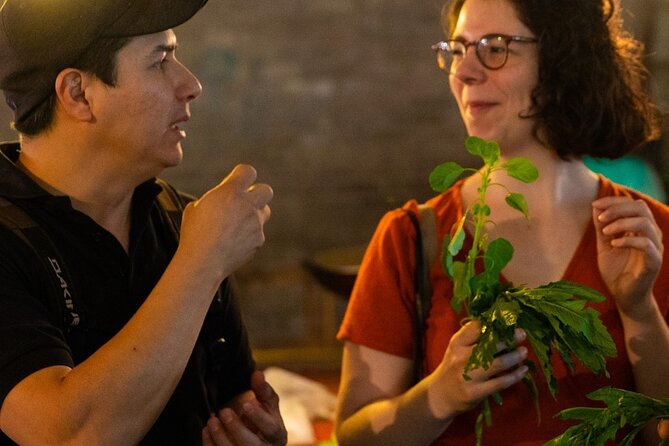
Mexico City’s central markets can be hard to understand on your own. They are large, noisy, crowded, and arranged for local shoppers who already know where to go. A guide gives the morning shape, handles the route, and helps you focus on what matters instead of spending half your time trying to find the right entrance or food stall.
The tour begins at 9 a.m. by the Museo de la Ciudad in the Historic Center. That early start is useful. You can see the markets during the main shopping day, then still have much of the afternoon free for museums, historic sights, or a craft market.
The experience is also more than a food walk. You use public transportation, see how residents move through the center, learn about ingredients, and get a look at a side of Mexico City that a standard sightseeing route often misses. The public transport costs are included, according to the tour information, which adds modest value and removes one small worry.
Guides are a major part of the experience. Ivan is repeatedly praised for his warmth, organization, humor, and ability to adjust the pace. Orson is noted for careful food preparation, useful historical context, and frank advice, including the point that mezcal can be cheaper in Oaxaca than in Mexico City. Aremi, Dara, Denisse, and other guides have also been singled out for patience and personal attention.
A few more Mexico City tours and experiences worth a look



La Merced: two hours inside Mexico City’s food world
La Merced receives the longest visit, and that is the right choice. This is one of Mexico City’s oldest and most traditional markets, with a huge range of food, produce, sweets, and household goods. You are not simply shown a row of stalls. You are taken into the daily shopping life of the market.
The food begins early, with quesadillas, tlacoyos, gorditas, and coffee or tea. These are filling foods, so you should not eat a large breakfast before meeting the group. The exact vendors and dishes can vary, but the purpose is clear: you sample familiar Mexican foods in the place where people buy and eat them, rather than receiving a generic restaurant version.
Mole tasting adds another layer. You may try several varieties, along with Mexican fruits and other local ingredients. The value here is comparison. Mole is not one single sauce with one fixed flavor, and tasting several versions side by side gives you a better sense of the range than ordering one dish at a restaurant.
The market itself is as important as the food. You can shop for produce, sweets, toys, souvenirs, and small keepsakes. Guides help explain what you are seeing and can assist when you want to buy something. One guide even adjusted the route to include a tortilla factory and a better fruit shop after a participant showed interest.
La Merced can also be overwhelming. The aisles are crowded, and a large market is not always easy on the knees or hips. One outing covered more than three miles, though a 71-year-old participant with a knee replacement six months earlier managed the route with regular rest stops. That does not make the walk effortless, but it does show that guides may be willing to slow down and make reasonable adjustments.
Keep your phone and wallet secure. A brief attempted pickpocketing incident during one outing was a useful reminder that crowded markets require attention. This is not a reason to avoid La Merced. It is a reason to carry less, keep valuables close, and stay with the group.
Mercado Sonora: the unusual half-hour stop
Mercado Sonora is known for witchcraft, folk healing, religious objects, and spiritual practices. The 30-minute visit is short, but it gives the tour a sharp change of mood after the food stalls of La Merced.
This is the stop that may divide opinion. Some people find the displays fascinating because they offer a look at beliefs and customs that are rarely presented on a normal city tour. You might see products connected with spells, rituals, and folk religion, making the market one of the more unusual places in central Mexico City.
Others may feel that the stop is less relevant to a food-focused morning. One participant felt the tour could skip this market. That is a fair point if your main goal is eating, but the contrast is part of the tour’s design. You move from everyday food shopping to another side of local culture, then finish at a gourmet market.
The guide matters here. A careful explanation keeps the visit from becoming a cheap spectacle. The supplied tour details describe Mercado Sonora as a witchcraft market, while the guide provides the context needed to understand what is being sold and why the market is interesting.
Mercado de San Juan: exotic ingredients and mezcal

The final stop is Mercado de San Juan, described as Mexico City’s gourmet market. You have about an hour here, enough time to see specialty ingredients, unusual meats, and edible insects used in Mexican cooking.
This is where the tour becomes especially useful for curious eaters. You may find foods that are unfamiliar in the United States, including insects and other exotic ingredients. Several tasting accounts mention mezcal served with unusual additions such as scorpions, wasps, or tarantula. These samples are not the whole point of the market, but they give the final stop a memorable edge.
The experience ends with a mezcal tasting at Mercado de San Juan. Alcoholic drinks are included, and the mezcal portion is part of the planned finish rather than an optional purchase. If you do not drink alcohol, check with the operator before booking so you understand how that portion will work for you.
This is also a good place to continue your day. From the market, you can walk to a craft market or back toward the Historic Center, or arrange an Uber pickup. The tour does not strand you at an isolated meeting point.
What you eat, and how much food to expect
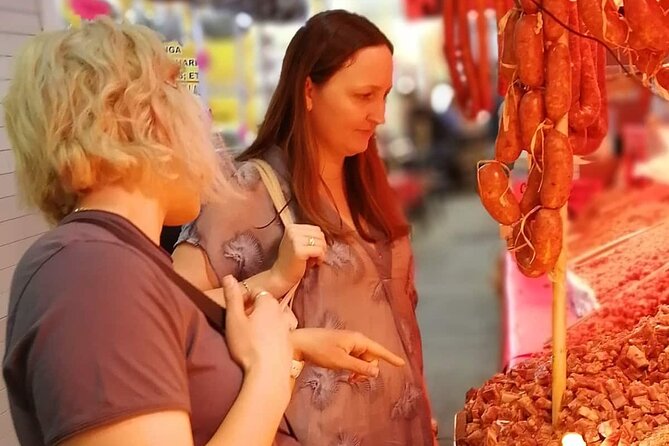
The included food is substantial for a four-hour morning. Breakfast consists of quesadillas, tlacoyos, gorditas, and pot coffee or tea. Snacks include mole and Mexican fruit, while additional tastings may include tamales, sweets, tacos, local drinks, and other market foods.
You should arrive hungry. Several participants described the food as plentiful, not just a series of tiny samples. That is useful if you are deciding between this and a formal breakfast, because you may not need another full meal until later in the afternoon.
The food is not presented as a fixed restaurant menu. Markets change, vendors change, and the guide may choose stops based on the group. That gives the tour a local feel, but it also means you should not book expecting an exact list of every dish.
Food safety is handled with practical care. Guides have been seen carrying hand sanitizer, wet tissues, disposable spoons, and a small trash bag for the group. One guide also made sure there were clean, free restrooms available during the route. If you have dietary needs, mention them when booking or before the tour begins. A gluten-free participant received special attention from the guides.
Other city tours we've reviewed in Mexico City





The walking, transport, and group size

The tour lasts about four hours and starts at the Museo de la Ciudad in central Mexico City. It finishes at Mercado de San Juan. The route includes walking through market aisles as well as subway and bus rides, and the public transport costs are included.
The maximum group size is 10. That is small enough for a guide to keep everyone together, especially in tight aisles and on public transport. Some groups have been smaller, with four, five, six, or seven people. The exact size depends on the date, but this is not designed as a large coach outing.
Comfort depends on your mobility. You should expect a long morning on your feet, uneven or crowded walking conditions, and regular movement through busy areas. Guides have helped older participants and made frequent rest stops when needed, but you should still contact the operator if you have serious mobility limits.
The start point is convenient for anyone staying near the Historic Center. Since the tour ends in another central neighborhood, you can continue sightseeing without returning to the original meeting point.
Is the tour good value?
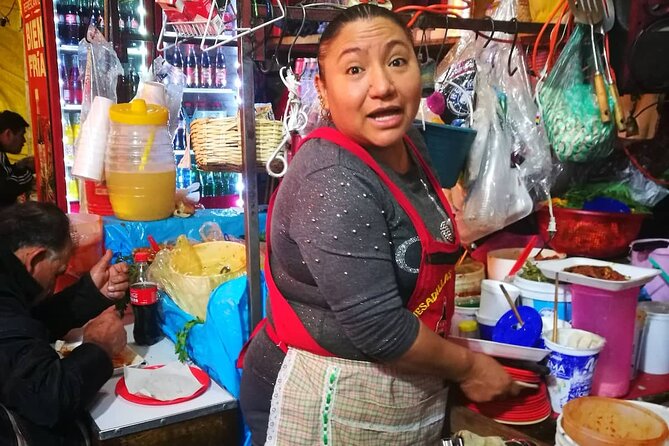
No price is provided here, so I cannot judge it against a specific ticket cost. I can judge what is included. You receive a four-hour guided route, food tastings, bottled water, coffee or tea, mezcal, and public transport costs. You also get help navigating three difficult markets and assistance with purchases and questions.
That package can be good value if you would otherwise spend time and money finding safe food stalls, paying separate transit fares, and trying to understand the markets without context. The strongest value is not the amount of food alone. It is the access and structure.
The tour also removes some of the stress of eating in unfamiliar places. Guides choose the food stops, explain what you are tasting, and take practical steps such as providing sanitizer and tasting spoons. Tips are not included, so carry some pesos if you want to thank your guide for good service.
Who should book this morning

I would choose this tour early in a Mexico City visit. It gives you a useful introduction to food, transport, shopping customs, and the city center. You can then return to markets on your own with a better idea of what you are seeing.
It suits people who want local food rather than a formal cooking demonstration, and it works well for first-time visitors who find central markets intimidating. It is also a good choice for curious eaters who want to try mole, unusual fruit, insects, or flavored mezcal.
Families and older adults may enjoy it if they can manage a long walk and crowded public spaces. Guides have shown patience with older relatives and participants who needed extra stops, but this is not a low-mobility outing.
Skip it if you want a quiet, highly structured tasting menu, dislike public transportation, or have no interest in Mercado Sonora’s folk-magic displays. You may also prefer a shorter food tour if four hours and three markets sound tiring.
The experience has a 4.9 rating from 83 ratings, with 96 percent recommending it. Those numbers fit the strongest features: personable guides, generous tastings, a small group, and access to places that are hard to navigate alone. The occasional drawback is clear too: the route is long, and Mercado Sonora is not for every taste.
Should you book Eat and Explore Local Markets in Mexico City?
Book it if you want to eat your way through central Mexico City while learning how the markets work. I especially recommend it for your first or second day, when a guide can help you get your bearings and point out foods and areas you might otherwise miss.
Go prepared: wear walking shoes, protect your valuables, bring an appetite, and tell the operator about dietary or mobility needs. If you want a polished sightseeing tour, choose something else. If you want tacos, moles, fruit, strange ingredients, public transport, and a candid look at everyday market life, this is a strong choice.
FAQ
How long does the Mexico City market tour last?
The tour lasts approximately four hours.
What time does the tour start?
The tour starts at 9 a.m.
Where does the tour begin?
It begins at the Museo de la Ciudad in Mexico City’s Historic Center, at Centro, 06060 Mexico City, CDMX.
Where does the tour finish?
It finishes at Mercado de San Juan Pugibet, 2a Calle de Ernesto Pugibet 21, Colonia Centro, Centro, Cuauhtémoc, 06070 Ciudad de México, CDMX.
Which markets are included?
The route includes La Merced, Mercado Sonora, and Mercado de San Juan.
What food is included?
Included food consists of quesadillas, tlacoyos, gorditas, pot coffee or tea, mole tasting, and Mexican fruit tasting. Other tastings may include tacos, tamales, sweets, local drinks, and edible insects.
Is mezcal included?
Yes. A mezcal tasting is included, and it takes place at Mercado de San Juan near the end of the tour.
Is public transportation included?
The tour uses the subway and bus between markets. The supplied tour information states that transportation costs are included.
How large is the group?
The tour can have a maximum of 10 participants.
Is cancellation free?
You can cancel for a full refund up to 24 hours before the scheduled start time. Cancellations or changes made less than 24 hours before the start time are not accepted for a refund.
More City Tours in Mexico City
More Food Experiences in Mexico City


More tours in Mexico City we've reviewed





Food, compared.
 ★ 5.0Historic Center Food Tour in Mexico CityFrom $1155 hours (approx.)
 ★ 5.0Polanco Food Tour: The Bestselling Food Adventure in Mexico CityFrom $1093 hours (approx.)
 ★ 5.0Colonia Roma Food TourFrom $1104 hours (approx.)
 ★ 5.0Mexico City Historical Centre Food Tour with 7 Authentic TastingsFrom $653 hours (approx.)
 ★ 5.0Mexico City Boat Tour Food and Unlimited Drinks Priority BoardingFrom $632 hours 30 minutes (approx.)
 ★ 5.0Mexican Cooking Class with Food Market Visit in Mexico CityFrom $1243 hours 30 minutes (approx.)
 ★ 5.0Local Foodie Adventure in Mexico: +10 dishes with Sherpa ToursFrom $853 hours 30 minutes (approx.)
 ★ 5.0Street Food Tour with Friends4 hours 30 minutes (approx.)
The lists this tour appears in