
Reviewed · HISTORIC CENTER WALKS
Historic Center Food Tour in Mexico City
Mexico City’s Centro Histórico is best understood one bite at a time. This five-hour walk takes you from Mercado de San Juan to street food stands, restaurants, a cantina, historic buildings, and a final stop for traditional sweets. You get food, drinks, and city stories in one well-fed afternoon.
In This Article
- Key points at a glance
- Why this food walk works so well in Centro Histórico
- Mercado de San Juan: begin with the city’s food pantry
- Madero Avenue: a short walk through Mexico City’s main street
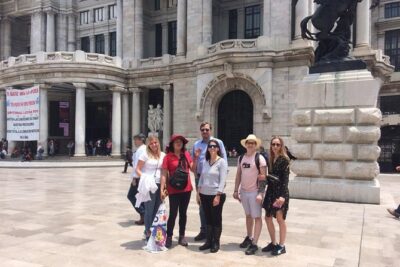
- Biblioteca Miguel Lerdo de Tejada: a former church covered in art
- Centro Histórico: from street food to sit-down flavor
- A peek at Chinatown and a sweet finish
- What the $115 price really covers
- Timing, walking, and dietary needs
- Who should book this tour
- Booking details that matter
- FAQ
- How long does the Historic Center Food Tour last?
- Where does the tour start?
- Where does the tour end?
- Are food and drinks included?
- What foods might I taste?
- Are vegetarian and vegan options available?
- Can children join the tour?
- What happens if I need to cancel?
- Should you book it?
I like the small maximum of 10 people, which gives guides such as Angel, Tania, Jimena, Josette, and Tamara room to explain unfamiliar dishes and adjust for dietary needs. I also like the range: ceviche tostada, black mole enchilada, mixiote, a plantain empanada, Mexican candy, and stops that run from humble stalls to polished dining rooms.
The main thing to consider is the sheer amount of food. One five-hour outing ran close to six hours, and several people needed to pace themselves. Come hungry, wear comfortable shoes, and treat this as a full meal stretched across the historic center, not a quick snack tour.
Key points at a glance
- Three tastings inside Mercado de San Juan: Start with one of Mexico City’s most interesting food markets and sample from several stalls.
- Fourteen tastings may be served: The exact selection can vary, but you should expect a very generous amount of food and drink.
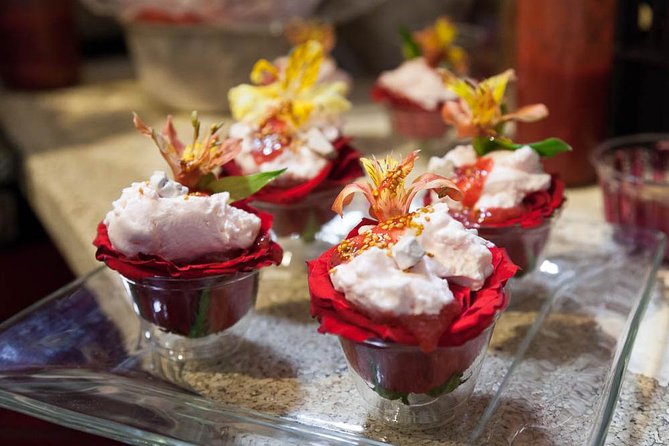
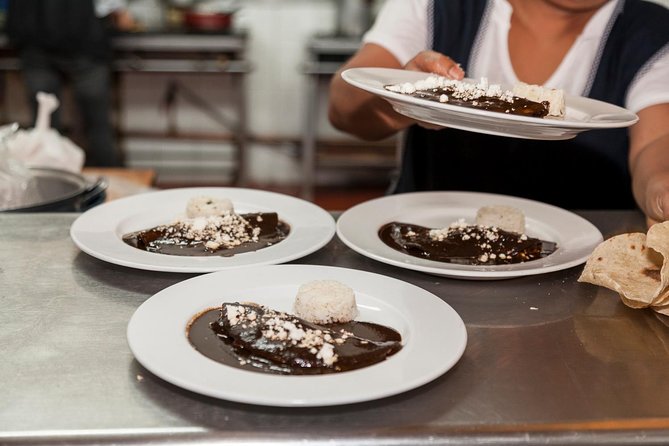
- A real range of Mexican cooking: Try black mole enchiladas, mixiote, ceviche tostada, plantain empanadas, and Mexican sweets.
- Food and architecture share the stage: Walk along Madero Avenue, see the former church now used as Biblioteca Miguel Lerdo de Tejada, and explore Centro Histórico.
- A group capped at 10: The format suits people who want personal attention without paying for a private tour.
- Best taken early in your stay: You finish near metro stations and can return later to places you discover along the route.
Why this food walk works so well in Centro Histórico
I like food tours that use eating as a way into a city. This one does that well. Mexico’s cuisine is recognized by UNESCO as an Intangible Cultural Heritage, and the tour gives you a practical look at why: old ingredients, regional methods, family recipes, market trade, and dishes shaped by both pre-Hispanic and later Mexican traditions.
The setting matters just as much as the menu. Centro Histórico is Mexico City’s oldest district, and you move through its busiest streets while learning about buildings, public spaces, local businesses, and the stories attached to them. The walking breaks up the tasting, though you should still expect a full afternoon on your feet.
The guide is central to the experience. The strongest guide names associated with this tour include Angel, Tania, Jimena, Josette, Tamara, Jossie, Mayra, Miriam, Maya, and Tami. Their approach can vary, but the core job is the same: explain what is on your plate, help you order outside your comfort zone, and connect each stop to Mexico City’s culture.
Angel is especially noted for food and city storytelling, while Tania has helped with dietary changes and offered restaurant and bar suggestions. Jimena is a good fit if you enjoy history along with your meal. Tamara brings a personal connection to the city’s food scene and speaks multiple languages. You cannot request a particular guide with certainty from the information provided, but the team has a strong record for warmth, clear explanations, and good organization.
A few more Mexico City tours and experiences worth a look



Mercado de San Juan: begin with the city’s food pantry
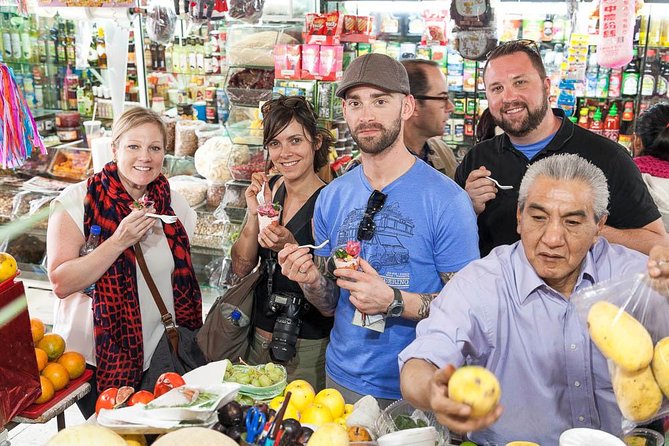
The tour begins at Testal, at Dolores 16, in Centro Histórico. From there, your guide leads you through Mercado de San Juan, a market long favored by chefs and serious food fans. You spend about two hours in this part of the tour and taste at three different food spots.
That extended market time is one of the best features. Instead of rushing through a market for a photo, you have time to understand how the place works and why it matters. Your guide can make the unfamiliar feel manageable, especially if you are not used to choosing food from busy market counters.
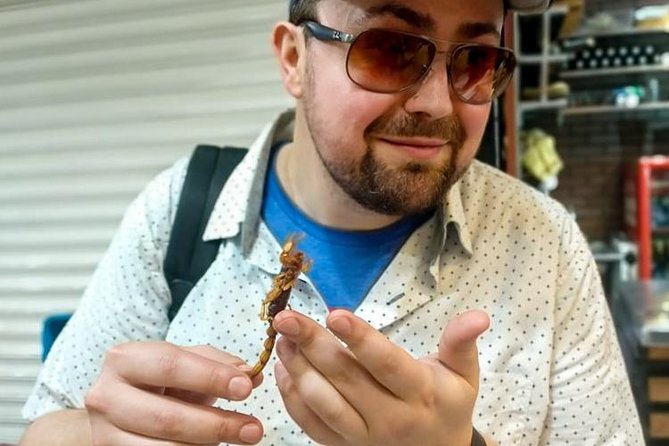
The listed tasting stops include dishes from different parts of Mexico, rather than a narrow Mexico City-only menu. You may try a pre-Hispanic-style mixiote, prepared according to a traditional recipe passed through generations. You may also encounter seafood, stewed dishes, antojitos, or other foods selected by the guide and local vendors.
The ceviche tostada is a useful early taste because it brings freshness and texture into an otherwise substantial day. The seafood sits on a crisp tostada, with flavors designed to be bright and immediate. If seafood is not your thing, tell the operator about your needs when booking so an alternative can be arranged.
Three market tastings can sound modest, but this is only the first major food section. Do not eat a full breakfast immediately before meeting the group. A light start is wiser, especially if you want to try everything.
Madero Avenue: a short walk through Mexico City’s main street
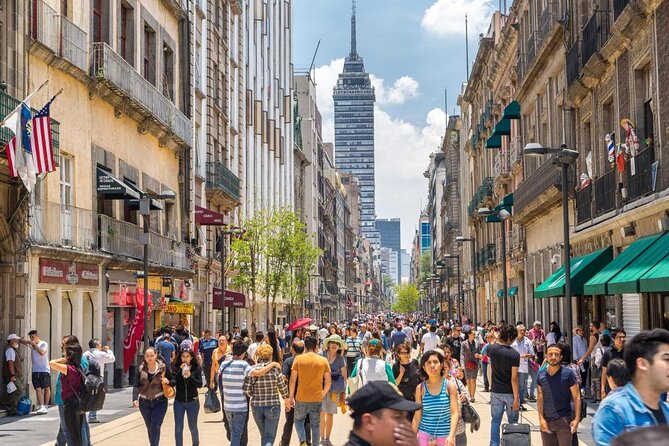
After the market, the route reaches Francisco I. Madero Avenue. The listed stop lasts only about 10 minutes, but it gives your stomach a break and shifts the focus from food to the city around you.
Madero is one of Mexico City’s busiest pedestrian streets. Your guide shares its legends and lesser-known stories while you walk through the center. This is not a long architectural lecture, and that is a good thing on a food tour. You get enough context to notice the street differently without losing the pace of the afternoon.
The walking sections also serve a practical purpose. With so many tastings, you need time to digest. One person described the route as well paced between eating and walking, while another found the total day too long. Both points are useful: the movement helps, but the food volume can still catch up with you.
Biblioteca Miguel Lerdo de Tejada: a former church covered in art
The next brief stop is Biblioteca Miguel Lerdo de Tejada, a former church now used as a library. The building contains striking murals by one of Mexico’s most talented artists, according to the tour description.
You spend about 15 minutes here. That is enough for a quick look and an explanation of the building’s change from religious use to library. It is a small but worthwhile pause because it shows how Mexico City’s old structures keep finding new purposes.
I would not book this tour mainly for the library visit. It is a supporting stop, not a formal museum tour, and access or viewing time may depend on the day’s conditions. Think of it as one architectural chapter woven into the food route.
Centro Histórico: from street food to sit-down flavor
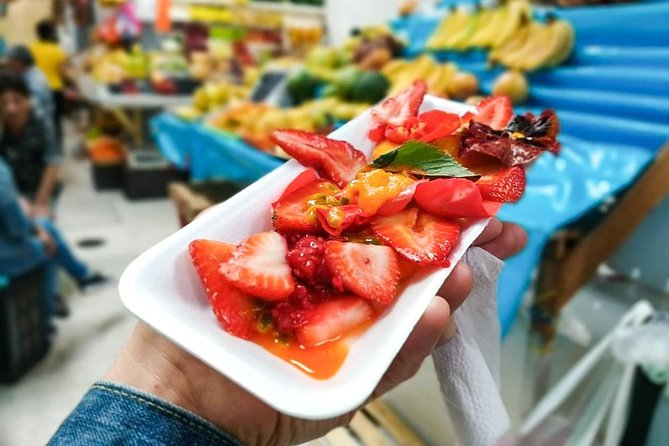
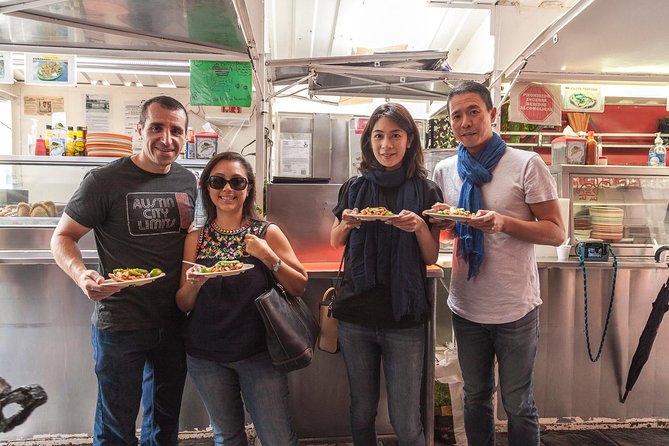
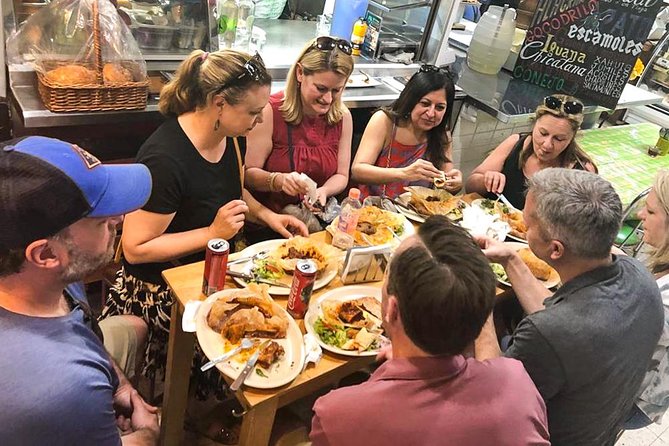
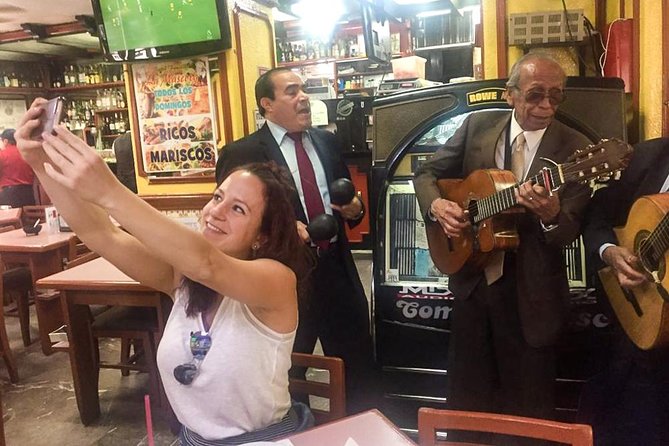
The largest walking section takes place in Centro Histórico, where you continue eating your way through the city’s oldest area. The route includes secret eateries, local food stalls, a taqueria, a cantina, and more formal restaurants. The mix of settings is important because it lets you compare how Mexican food changes with the place where it is served.
The food may include a black mole enchilada, with the complex, savory-sweet flavor associated with mole. This is a dish to eat slowly. You are not merely checking off another taco or snack, but tasting a sauce with a long cooking tradition.
Mixiote offers a different experience. It is described as a pre-Hispanic dish prepared by a traditional method passed down through generations. Your guide can explain the cooking process and cultural background, which gives the dish more meaning than a short menu label ever could.
The plantain empanada is another unusual stop. It is served at a restaurant recognized by Taste Atlas among the world’s 100 legendary restaurants. That does not make the food automatically perfect, but it does point to a place with a distinct reputation and a preparation worth seeking out.
You may also stop at Azul Histórico, a restaurant praised for its setting, service, and food from different regions of Mexico. This is a useful contrast to the market and street stalls. You see that Mexican cooking is not one fixed style. A polished restaurant can present regional dishes with the same sense of place as a small stand.
The tour can include around 14 tastings, depending on the route and day. That number explains why so many people advise arriving with an empty stomach. Portions may be tasting-sized, but the total adds up quickly, especially when drinks are included.
A few more Mexico City tours and experiences worth a look





A peek at Chinatown and a sweet finish
The route also offers a short look at Mexico City’s Chinatown. The provided details do not specify a separate tasting or a long stop there, so treat it as a brief neighborhood glimpse rather than a major part of the tour.
The final tasting location is Dulcería de Celaya, at Avenida 5 de Mayo 39. This historic-style sweets stop brings the meal to a gentler close with Mexican candies and traditional confections. The mix of sugar, texture, and old-fashioned preparation gives you a different view of Mexican food culture.
The tour ends here, not back at the starting point. That is convenient if you plan to continue sightseeing in the center, and the end point is close to metro stations. It is less convenient if you arrive by taxi and expect a round trip, so save the end address and plan your onward route before you start.
What the $115 price really covers
At $115 per person, this is not the cheapest way to eat in Mexico City. You could spend far less by buying tacos and market snacks on your own. The value comes from what the fee bundles together: all tastings, alcoholic drinks, the guide, and the work of choosing places that you might not identify on your own.
The small group also matters. With a limit of 10, the guide can answer questions, explain ingredients, and help manage dietary requests. You are paying for access and interpretation as much as for the food itself.
The price makes the most sense if you are new to Centro Histórico, want a broad introduction to Mexican food, or prefer not to guess what to order. It is also useful for repeat visitors who have seen the main sights but want a more local food focus.
It is less compelling if you already know the center well, dislike group tours, or prefer to choose one restaurant and linger over a single meal. You should also compare the cost with your appetite. Since the included food is abundant, the tour can replace lunch and dinner rather than simply adding a few samples to your day.
Timing, walking, and dietary needs
The advertised duration is about five hours. Most of the schedule fits that estimate, but the day may run longer if the group is large, a stop takes extra time, or restaurants need more time to serve. If you have an evening reservation, leave a generous buffer. One reported outing lasted about six hours, and that extra hour affected the experience for someone already feeling full.
Wear comfortable walking shoes and dress for the weather. The tour operates in all weather conditions, and much of the experience takes place outdoors as you move between markets, streets, and eateries.
Vegetarian and vegan options are available, but you must advise the operator at booking. The same applies to other dietary requirements. The guide team has accommodated food restrictions, but last-minute requests are harder to manage when the route is built around specific vendors.
Children can participate when accompanied by an adult. The minimum drinking age is 18, so younger participants should not expect the included alcoholic drinks. Most people can take part, but anyone who struggles with extended walking or long food-focused outings should think carefully about the five-hour format.
Who should book this tour
I would recommend it most strongly to first-time visitors who want a quick education in Mexican food and the historic center at the same time. You get a broad range of dishes, several types of eating places, and enough city context to make later wandering more rewarding.
It also suits solo visitors. The group size is small enough to make conversation easy, and the guide helps with both food choices and getting around. Couples and families can enjoy it too, though parents should consider the length and the amount of food for younger children.
Food-focused repeat visitors should not dismiss it. The route reaches places you might pass without noticing, and the menu crosses from street food to restaurants. The main benefit for an experienced Mexico City visitor is not simply trying a taco. It is seeing how the city’s food traditions connect to markets, neighborhoods, architecture, and local businesses.
I would skip it if you need a short, tightly timed activity or if eating large amounts over several hours sounds tiring. This is a generous food crawl with a walking tour attached, not a light sampling session.
Booking details that matter
The meeting point is Testal, CentroDolores 16, Centro Histórico de la Ciudad de México. The tour finishes at Dulcería de Celaya, Avenida 5 de Mayo 39, close to metro stations. Hotel pickup and drop-off are not included.
Confirmation arrives at booking, and the experience is offered in English with a mobile ticket. It is capped at 10 people and is often reserved about 32 days ahead, so booking early is sensible for a preferred date.
Free cancellation is available up to 24 hours before the start time for a full refund. Changes or cancellations inside that 24-hour window are not accepted and are not refunded. The cut-off uses Mexico City local time.
FAQ
How long does the Historic Center Food Tour last?
The advertised duration is approximately five hours. The route can sometimes take longer, so avoid scheduling a tight evening plan immediately afterward.
Where does the tour start?
It starts at Testal, CentroDolores 16, in Centro Histórico, Mexico City.
Where does the tour end?
The final tasting is at Dulcería de Celaya, Avenida 5 de Mayo 39, in Centro Histórico. The location is close to metro stations.
Are food and drinks included?
Yes. Food tastings and alcoholic drinks are included in the tour price.
What foods might I taste?
The sample menu includes a black mole enchilada, mixiote, ceviche tostada, plantain empanada, and Mexican sweets. The route may also include food from markets, street stalls, a taqueria, a cantina, and restaurants.
Are vegetarian and vegan options available?
Yes. Vegetarian and vegan options are available, but you should advise the operator of your requirements when booking.
Can children join the tour?
Yes. Children must be accompanied by an adult. The minimum drinking age for alcoholic drinks is 18.
What happens if I need to cancel?
You receive a full refund if you cancel at least 24 hours before the experience starts. Cancellations or changes made less than 24 hours before the start time are not refunded or accepted.
Should you book it?
Book this tour if you want to eat broadly and learn as you go. The combination of San Juan Market, street food, traditional dishes, historic buildings, local restaurants, drinks, and sweets gives you a strong first look at Centro Histórico.
The best strategy is to take it near the start of your Mexico City stay, then return to the places you liked most. Just arrive hungry, leave room in your schedule, and remember that five hours of tasting can be more filling than it sounds. At $115, it is a worthwhile splurge for guided access and a well-planned introduction, but not the right choice for anyone seeking a short or inexpensive meal.
More Food Experiences in Mexico City



More Mexico City Food Tours in Mexico City
More Historic Center Walks in Mexico City

More tours in Mexico City we've reviewed







Historic Center Walks, compared.
 ★ 5.0Historic Downtown Walking TourFrom $263 hours (approx.)
 ★ 4.8Mexico City: Historic Downtown Walking TourFrom $263 hours
 ★ 5.0Walking Tour of the Historic Center of Mexico City3 hours (approx.)
 ★ 5.0Mexico City Historical Centre Food Tour with 7 Authentic TastingsFrom $653 hours (approx.)
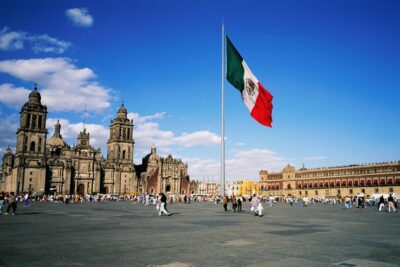 ★ 5.0Private Walking Tour Gems of the Historic Center of Mexico CityFrom $1564 hours (approx.)
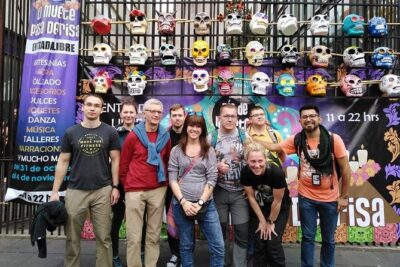 ★ 5.010 wonders of the Historic Center of Mexico City food and musicFrom $493 hours (approx.)
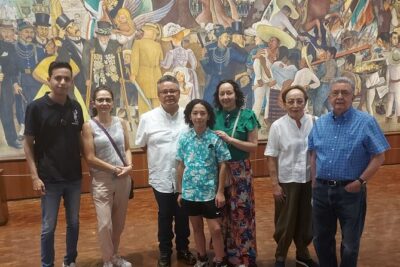 ★ 5.0Walking Tour in Historic Center CDMXFrom $832 hours 30 minutes to 3 hours 10 minutes (approx.)
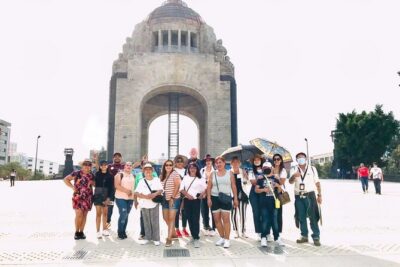 ★ 5.0The best and most complete PRIVATE CITY TOUR through the Historic CenterFrom $683 hours (approx.)
The lists this tour appears in