
Reviewed · MEXICO CITY
Diego Rivera’s murals, hidden treasures
Mexico City’s Diego Rivera story is bigger than one famous painting. This three-hour tour links murals in three central museums, including the vast collection at the Museo Vivo del Muralismo and Rivera’s celebrated Man at the Crossroads mural at the Palacio de Bellas Artes.
In This Article
- Key points before you book
- Why Rivera’s murals work best as a guided story
- Starting at the Museo Vivo del Muralismo
- Reading the Rockefeller mural at Palacio de Bellas Artes
- Meeting Mexico’s past at the Diego Rivera Mural Museum
- What the guides add to the experience
- Is $80.60 a fair price?
- Who will get the most from this mural tour?
- Practical details that shape the day
- Should you book this Diego Rivera tour?
- FAQ
- How long does the Diego Rivera mural tour last?
- Where does the tour begin?
- Where does the tour end?
- Which museums are included?
- Is admission included?
- What language is the tour offered in?
- How many people can join the tour?
- Can I cancel for a full refund?
I like the way the route moves from Rivera’s broad vision of Mexico to specific people, trades, festivals, and political struggles. I also like that the guides, especially David and Laila, bring more than dates and names. They explain how the murals fit together, then often share suggestions for food and museums around the city.
The main thing to consider is the pace. You spend about an hour at each stop, so this is a focused introduction rather than a slow art-school seminar. Admission to the Museo Vivo del Muralismo also depends on availability on the scheduled date and may change without notice.
Key points before you book
- Three mural stops in about three hours: You visit the Museo Vivo del Muralismo, Palacio de Bellas Artes, and Museo Mural Diego Rivera.
- A strong focus on Rivera’s ideas: The art is tied to revolution, inequality, education, identity, work, and Mexican traditions.
- Two highly praised guides: David and Laila are noted for clear explanations, flexible help, and enthusiasm for the subject.
- The Rockefeller controversy is part of the route: At Bellas Artes, you see a replica of the mural destroyed in New York.
- Small-group format: The maximum group size is 15 people, which should allow more room for questions than a large coach tour.
- Central meeting point: The tour begins and ends at República de Argentina 28 in the Centro Histórico.
Why Rivera’s murals work best as a guided story
Rivera’s murals are large, busy, and full of people. You can admire the colors and scale on your own, but it is easy to miss the small political details, historical figures, and visual jokes packed into the walls.
That is where this tour earns its keep. A good guide gives you a way to read the paintings instead of simply looking at them. You learn to connect the workers, teachers, soldiers, artists, political leaders, and ordinary families to the larger story Rivera wanted to tell about Mexico.
The tour also gives you a useful view of muralism as a movement. Rivera appears at the center, but the Museo Vivo del Muralismo includes work by other major artists, including David Alfaro Siqueiros, Roberto Montenegro, Amado de la Cueva, Jean Charlot, Federico Canessi, and Manuel Felguérez.
I especially like this wider frame. If you only visit Rivera’s most famous works, you may leave thinking muralism was a one-man project. Here, you get a sense of the different artists and subjects that shaped public art in Mexico.
If you're still narrowing it down, here are other tours in Mexico City we've reviewed.


Starting at the Museo Vivo del Muralismo
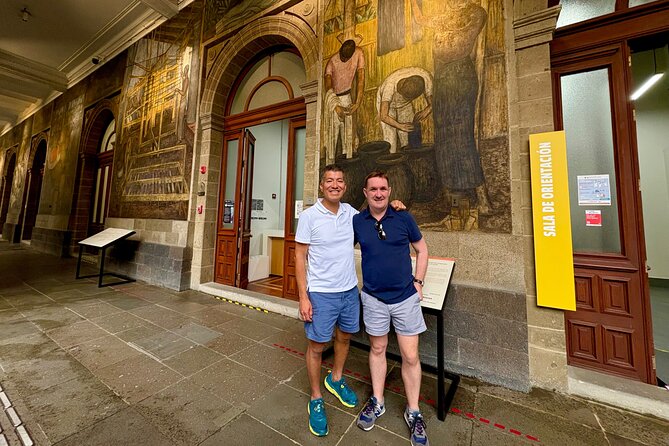
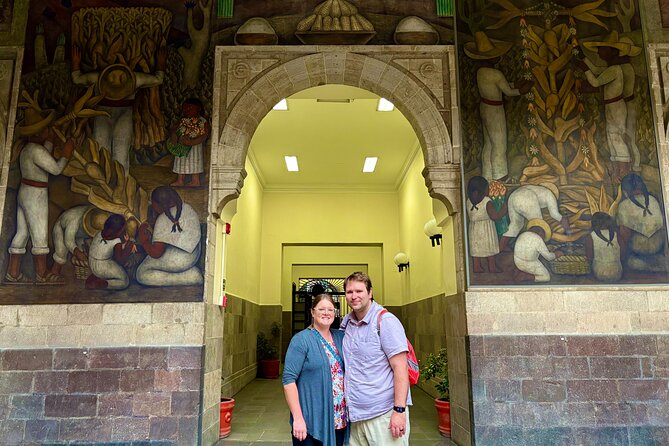
The tour begins at the Museo Vivo del Muralismo, at República de Argentina 28 in the Centro Histórico. The museum is open for this visit from Wednesday through Monday, so you should pay close attention to the operating schedule when choosing your date.
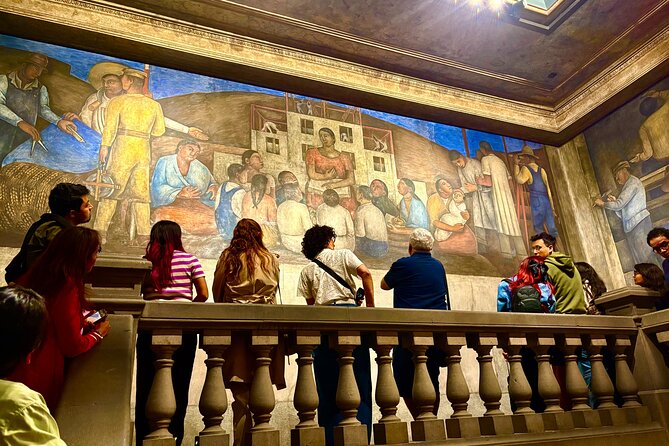
This is the longest and broadest stop in terms of subject matter, even though the planned visit is about one hour. The museum houses the largest number of Diego Rivera murals on the route, making it the best place to understand the range of his work.
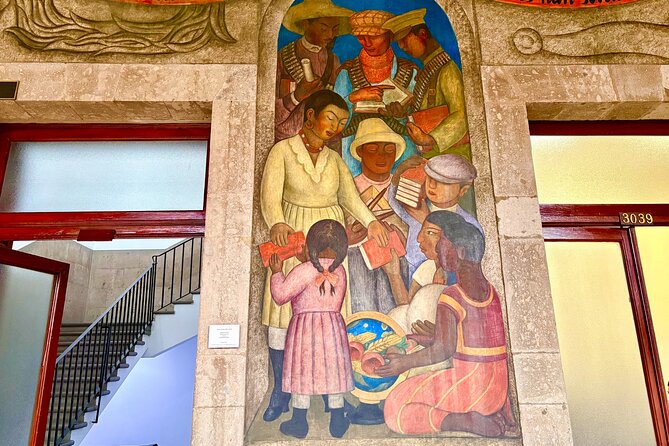
The subjects are not limited to famous political figures. You look at Mexican trades, festivals, traditions, education, cultural missions, the revolution, inequality, identity, and the hopes of ordinary people. That variety matters because Rivera was not painting isolated decorative panels. He was building a public account of how people lived and what kind of country they wanted.
The guide helps you see how Rivera’s return from Europe shaped his view of Mexico. The paintings reflect his interest in national identity and in placing working people at the center of the story. You can expect the discussion to move between biography, politics, and visual details.
This stop is also where the tour broadens beyond Rivera. Works by other artists give you useful comparisons, even if the title of the experience keeps Rivera in the foreground. If you enjoy art that connects to social questions, this hour may be the most rewarding part of the route.
There is one practical limitation. Admission is listed as free, but entry is subject to availability at the scheduled date and time. It may change because of circumstances outside the tour operator’s control. That makes the next stops important, since the experience still has substantial content at Bellas Artes and the Diego Rivera Mural Museum.
Reading the Rockefeller mural at Palacio de Bellas Artes
The second stop is the Palacio de Bellas Artes, Mexico’s best-known cultural venue and one of the city’s essential art buildings. The visit here lasts about an hour, with admission included in the tour price.
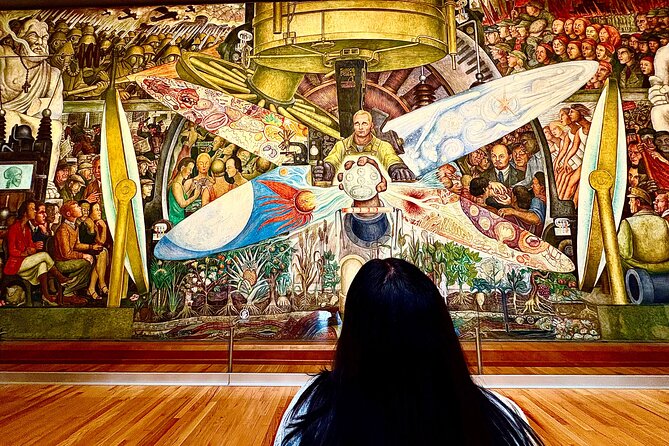
The key work is the replica of Rivera’s Man at the Crossroads, the mural created for New York’s Rockefeller Center and later destroyed after a dispute over its political content. The version you see in Mexico City preserves the argument at the heart of the work: who controls society, technology, and the future?
A guide is particularly useful here because the mural is not just a large wall painting with a dramatic backstory. Its figures and symbols reflect Rivera’s views on class, power, science, labor, and political authority. The controversy gives you a clear example of why his work caused trouble. Rivera did not treat public art as neutral decoration.
This stop also changes the rhythm of the tour. After the larger group of murals at the first museum, you focus on one major composition and the conflict surrounding it. You have time to look at the image while the guide explains what was removed, what survived in replica form, and why the work remains politically charged.
If you have already visited Bellas Artes, this visit can still add value because the explanation gives the mural a stronger place in Rivera’s career. If you are new to Mexican art, it is an efficient introduction to the link between public commissions and political debate.
The drawback is that one hour can pass quickly in a major cultural site. If you want to study every figure in the mural or explore the rest of Bellas Artes at length, plan a separate visit. This tour is designed to explain the Rivera work, not to cover the entire building.
Meeting Mexico’s past at the Diego Rivera Mural Museum
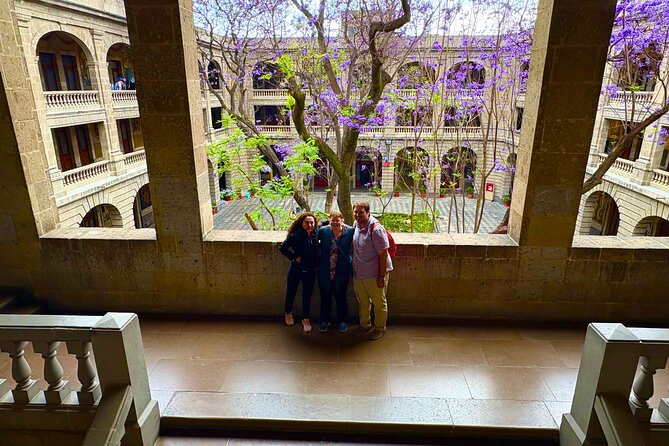
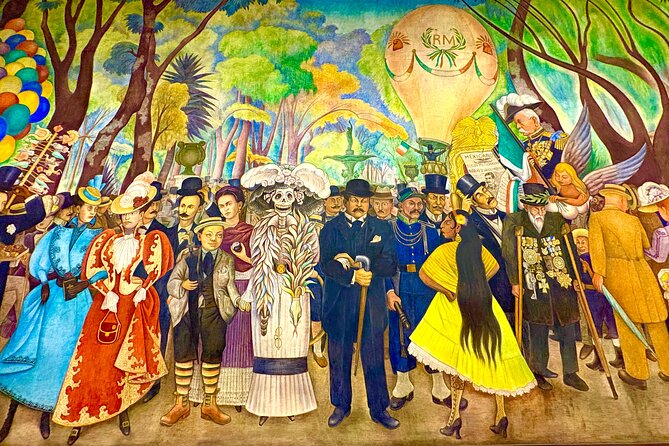
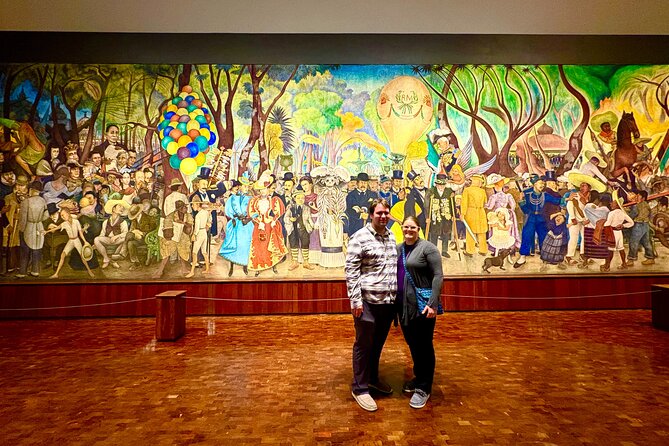
The final stop is the Museo Mural Diego Rivera, another one-hour visit with admission included. It is built around one of the most impressive murals in Mexico City, a work that brings characters from Mexican history together in a single composition.
That idea gives this museum a different role from the first two stops. At the Museo Vivo del Muralismo, you see a wide set of works and themes. At Bellas Artes, you focus on a controversial political commission. Here, the attention turns to Rivera’s ability to gather many historical figures into one visual scene.
This is the kind of painting that can feel confusing without help. A guide can point out who is represented and explain how the figures relate to Mexico’s past. You may find that the mural becomes easier to follow once you understand that Rivera was not simply listing famous people. He was shaping an argument about national identity and memory.
The final stop also works well as a conclusion because it brings together many of the ideas raised earlier: history, inequality, political power, ordinary life, and the question of who gets included in the national story.
The museum is described as a hidden treasure of Mexico City, but the more useful point for you is its scale and focus. The visit is concentrated around one major mural, so you are less likely to feel scattered at the end of a three-hour art tour. You finish with a single image that gathers much of Rivera’s historical vision in one place.
What the guides add to the experience
The strongest part of this experience is the human guide. David receives especially strong praise for his ability to make the history feel alive, explain Rivera clearly, and adjust to the needs of the group. Laila is also described as spirited, friendly, and passionate about the subject.
That matters with Rivera. His murals need interpretation, but a lecture full of dates would drain the color from them. The best guiding here seems to connect facts with stories, symbols, and the social issues Rivera wanted to put on public walls.
You should also feel free to ask questions. The group size is capped at 15 people, which is small enough for a more personal exchange than you would get in a large group. The exact style may vary by guide, but David and Laila are both praised for making the visit engaging rather than stiff.
One especially useful touch is the local advice offered at the end. Laila has shared suggestions for food and museums around Mexico City, along with small gifts for one participant. That is not the core reason to book, and it is not guaranteed, but it shows how the tour can extend beyond the scheduled museum visits.
The published experience is offered in English. One account describes booking a Spanish version, so if language is crucial to your plans, confirm the language attached to your selected departure before paying.



Is $80.60 a fair price?
At $80.60 per person, this is not the cheapest way to see a few murals. The value depends on how much help you want reading the art and organizing your time in the Centro Histórico.
Your price includes all listed entrance tickets and a guide. You also avoid having to work out the order of three sites on your own. For a first visit to Mexico City, that structure has real value. You get a clear three-hour lesson in Rivera and Mexican muralism without spending time figuring out which works to prioritize.
The price is easier to justify if you are new to Rivera, enjoy social and political art, or want context instead of quick photographs. It is less compelling if you already know the major murals well, prefer to move slowly, or plan to spend a full day at Bellas Artes and the surrounding museums.
Tips are not included. Set aside a little extra if your guide gives you the kind of thoughtful, personal service described by the strong feedback.
The tour is booked on average about 25 days ahead, which suggests that planning early is sensible, especially if your Mexico City dates are fixed. Free cancellation is available up to 24 hours before the start time. Changes or cancellations made inside that window are not accepted for a refund.
Who will get the most from this mural tour?
I would recommend this experience to you if you want a focused introduction to Rivera and prefer art explained through Mexican history and public life. It should suit solo visitors, couples, and small groups who like asking questions and moving between several central museums.
It is also a good choice if you have seen Rivera’s name but never understood why his murals matter. The route gives you a useful sequence: many murals and social themes at the first museum, a major political controversy at Bellas Artes, and a broad historical scene at the final museum.
Families and older visitors may appreciate the three-hour length and the fact that most travelers can participate. Service animals are allowed, and the meeting point is near public transportation.
You may want a different plan if your main goal is private, unhurried study. Each stop lasts about an hour, and the tour ends back at the starting point. That is convenient, but it leaves limited time for wandering beyond the guide’s chosen works.
Practical details that shape the day
Meet at the Museo Vivo del Muralismo, República de Argentina 28, Centro Histórico de la Ciudad de México, Cuauhtémoc, 06020. The activity returns to this same meeting point, so you do not need to arrange a separate ride from the final museum.
The tour lasts approximately three hours and has a maximum of 15 people. Admission is included at Bellas Artes and the Museo Mural Diego Rivera, while entry to the Museo Vivo del Muralismo is free but subject to availability.
Confirmation arrives at booking. The activity is near public transportation, and most people can take part. Since the route includes museums and a fixed schedule, arrive ready to begin at the stated meeting time rather than treating it as a drop-in visit.
Should you book this Diego Rivera tour?
Book it if you want Rivera’s murals explained as part of Mexico’s political, social, and cultural story. The best reasons are the three-stop route, included admission, small maximum group, and guides such as David and Laila, who bring unusual warmth and clarity to the subject.
Skip it if you want a slow museum day or already have a detailed plan for these sites. For everyone else, $80.60 buys a well-shaped introduction to Mexican muralism, with enough variety to keep the three hours moving and enough context to make the paintings easier to remember.
FAQ
How long does the Diego Rivera mural tour last?
The tour lasts approximately three hours, with about one hour scheduled at each of the three stops.
Where does the tour begin?
It begins at the Museo Vivo del Muralismo, República de Argentina 28, Centro Histórico de la Ciudad de México, Cuauhtémoc, 06020 Ciudad de México, Mexico.
Where does the tour end?
The activity ends back at the original meeting point.
Which museums are included?
The route includes the Museo Vivo del Muralismo, Palacio de Bellas Artes, and Museo Mural Diego Rivera.
Is admission included?
Yes. Entrance tickets are included for the listed museums. Admission to the Museo Vivo del Muralismo is free but subject to availability on the scheduled date and time.
What language is the tour offered in?
The experience is offered in English.
How many people can join the tour?
The maximum group size is 15 people.
Can I cancel for a full refund?
Yes. You can cancel at least 24 hours before the experience start time for a full refund. Cancellations or changes made less than 24 hours before the start time are not accepted for a refund.
More tours in Mexico City we've reviewed


Mexico City, compared.
 ★ 5.0Teotihuacan, Guadalupe Shrine & Tlatelolco Day Tour with LunchFrom $399 hours (approx.)
 ★ 4.5Xochimilco, Coyoacan and Frida Kahlo with Optional LunchFrom $349 hours (approx.)
 ★ 5.0Balloon flight + Breakfast in cave + Pyramids + Pick up CDMX.From $1722 to 8 hours (approx.)
 ★ 5.0Teotihuacan pyramids morning or afternoon without tourist trapsFrom $645 hours 30 minutes (approx.)
 ★ 4.5Teotihuacan Early Access Guided Tour with optional LunchFrom $398 hours (approx.)
 ★ 5.0Balloon flight + pick up in CDMX + Breakfast in Cave + PyramidsFrom $1694 to 7 hours (approx.)
 ★ 5.0Balloon Flight + Cave Breakfast + Pick Up from CDMX or We FlyFrom $1663 to 9 hours (approx.)
 ★ 4.6Mexico City: Teotihuacan, Tlatelolco & Guadalupe Shrine TourFrom $49