
Reviewed · MEXICO CITY
Fly over to the Unexplored Parts of CDMX by Cable Car
Mexico City looks very different from a Cablebús cabin. This four-and-a-half-hour outing carries you from Centro Histórico into Iztapalapa by public transport, then above dense neighborhoods, rooftop murals, and the far-reaching sprawl of CDMX. Fernando guides the trip with history, local context, and practical lessons on using the city’s metro and cable car system.
In This Article
- Key points to know before booking
- Why ride the Cablebús into Iztapalapa?
- Starting at Churrería El Moro in Centro Histórico
- Museum of Cultures by Iztapalapa Passion
- Walking through Iztapalapa beyond the tourist zone
- Mercado Quetzalcóatl: tacos, murals, and a local stop
- Seeing the city from the Cablebús
- Finishing with pulque in the historic center
- Is the $58 price fair?
- Who should book this CDMX experience?
- Cancellation and weather details
- Should you book it?
- FAQ
- How long does the tour last?
- How much does the tour cost?
- Where does the tour start?
- Where does the tour end?
- Is the tour offered in English?
- How many people can join?
- Is public transportation part of the tour?
- Are food and drinks included?
- Can I cancel for a full refund?
I like two things here: you see a part of the city most visitors skip, and the transport itself becomes part of the lesson rather than a simple ride between sights. The tacos, murals, museum, and pre-Hispanic drink add real local flavor. The tradeoff is that this is a fast-paced walking tour with stairs, metro transfers, and rapid English, so it is not a good fit for everyone.
Key points to know before booking
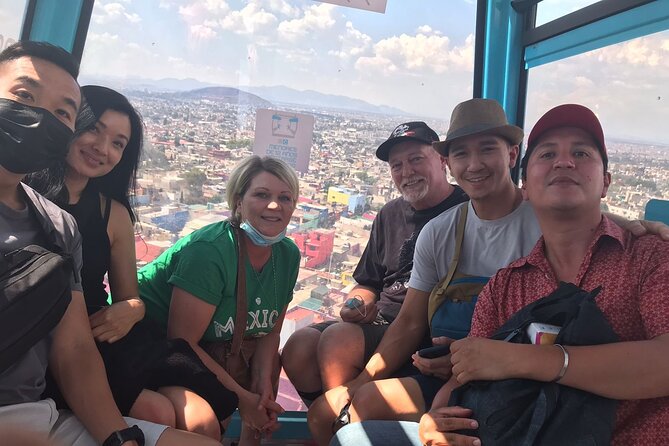
- The Cablebús is working public transport: You ride above ordinary neighborhoods rather than taking a sightseeing gondola built only for tourists.
- Iztapalapa is the focus: The tour explains the district’s traditions, growth, culture, and place in Mexico City.
- Fernando leads with strong local context: Expect history, sociology, geography, transit instruction, and tips for the rest of your stay.
- Food is part of the route: You visit Mercado Quetzalcóatl for tacos and murals, with a snack and alcoholic drink included.
- The pace is demanding: Allow for regular walking, stairs, public transportation, and time outdoors.
- The final bar details need checking: The itinerary names Pulquería Vacas Verdes Bellas Artes, while the stated end point is Pulquería La Risa on Mesones Street.
Why ride the Cablebús into Iztapalapa?
Most first-time visits to Mexico City stay near Centro Histórico, Roma, Condesa, Chapultepec, and the major museums. Those places deserve your time, but they show only one slice of this enormous capital. Iztapalapa offers another view: a large district where daily life, local traditions, public housing, street commerce, murals, and transport infrastructure all meet.
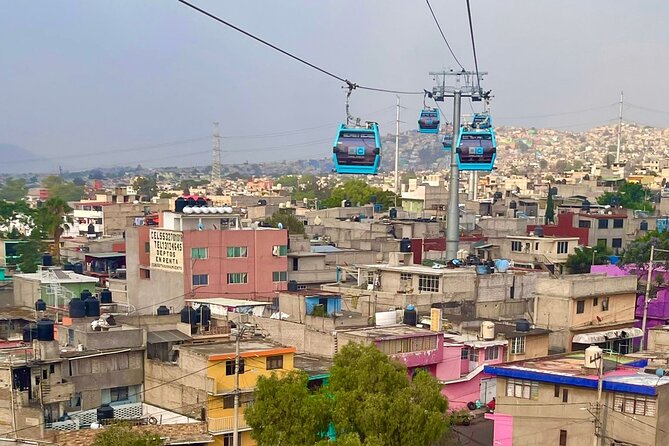
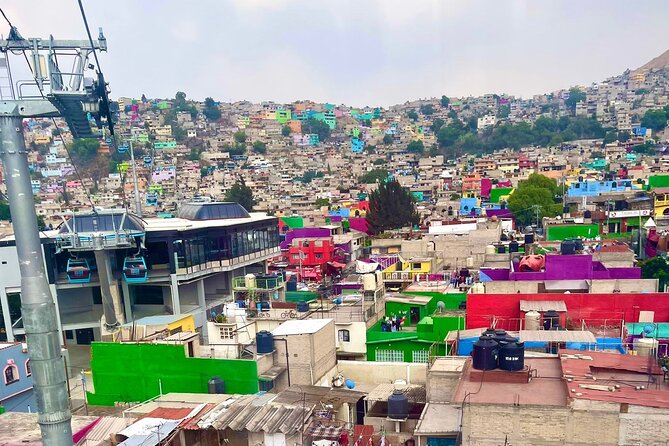
The Cablebús gives you a useful frame for understanding that scale. From the cabin, you can see blocks of colorful homes, rooftops painted with large murals, roads threading through crowded neighborhoods, and the city stretching toward the old volcanoes. The ride is smooth and designed for regular commuters, which makes the experience feel more grounded than a standard tourist attraction.
I especially like the way the guide connects the view below to the city’s story. Without commentary, a cable car ride can become a pleasant flight over rooftops. With Fernando explaining how the districts developed and how residents use the transport network, the view becomes easier to read.
The ride also helps you understand why public transport matters in CDMX. Traffic can turn a short car trip into a slow crawl. This route shows how the metro and Cablebús link outer districts with the historic center, and you learn practical habits that can help you move around the city for the rest of your trip.
If you're still narrowing it down, here are other tours in Mexico City we've reviewed.

Starting at Churrería El Moro in Centro Histórico
The group meets at Churrería El Moro Centro on Eje Central Lázaro Cárdenas 42. This is a practical downtown starting point, near public transportation and familiar to many people staying in the historic center.
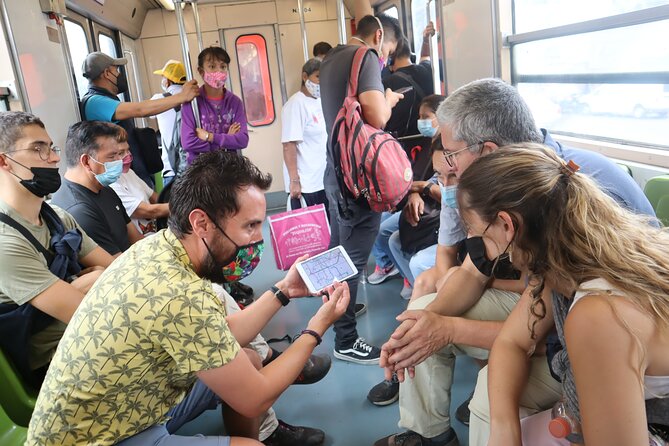
From there, expect the tour to move quickly into the city’s transport system. The public-transit portion is not just a means of getting to Iztapalapa. Fernando uses it to explain how the network works and how to navigate it with more confidence.
That makes this outing particularly useful early in a CDMX visit. You receive an introduction to the metro and Cablebús while traveling with someone who can explain the route. If you have never used Mexico City’s public transport, pay close attention to the instructions and station changes.
The group can reach up to 20 people. That size is still manageable, but the pace may feel less personal than a private outing, especially in noisy stations or busy public areas. The tour is offered in English, and one important practical point is worth stressing: Fernando can speak quickly. If you have hearing difficulty or need slower English, consider this carefully before booking.
Museum of Cultures by Iztapalapa Passion
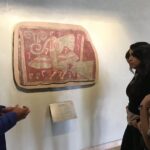
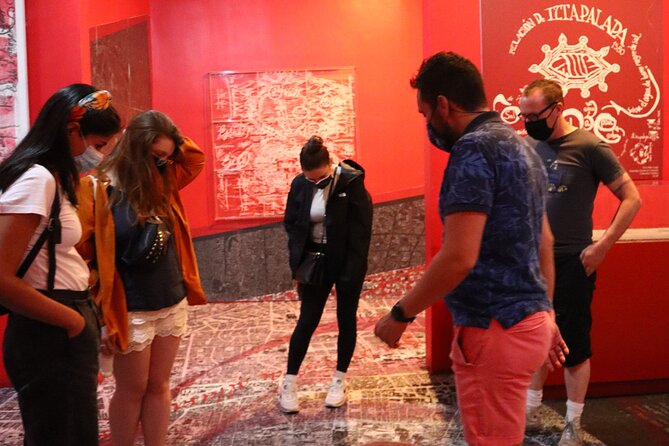
The first scheduled stop is the Museum of Cultures by Iztapalapa Passion, with about 35 minutes inside and admission included. Its purpose is to explain the history and traditions of Iztapalapa, giving you background before you walk through the district.
This is a smart first stop. Iztapalapa can seem like a vast collection of buildings if you arrive without context. A museum visit helps you understand the area as a community with its own customs and identity, rather than treating it as a peripheral part of the capital.
Do not expect a huge museum visit in 35 minutes. The stop is brief, so the value comes from focusing on the key displays and listening to the guide’s explanation. The schedule favors breadth over a slow, detailed museum study.
The museum also gives the rest of the tour a stronger purpose. Later, when you see murals, local streets, and public gathering places, you have a little more context for the traditions and civic life of the district.
Walking through Iztapalapa beyond the tourist zone
The next portion takes you through Iztapalapa on foot, with a visit to a cultural center and time to eat local food. This is the part of the experience that asks the most from you. You are not being carried from one polished attraction to another. You are walking through an ordinary part of the city and paying attention to how it functions.
That is also where the tour earns its unusual character. You may see streets and public spaces that do not appear in standard guidebooks, along with murals and neighborhood details that are easy to miss from a passing taxi.
Fernando’s role matters here. He explains the district’s history, geography, and social setting while you move through it. The strongest part of the tour is not simply reaching Iztapalapa. It is learning how to interpret what you are seeing.
The pace is not leisurely. Several people found the route fast and educational, with frequent walking and stairs in and out of metro and Cablebús stations. If you use a cane, have limited mobility, or prefer long pauses between stops, this may be a poor match. The operator has acknowledged that the structure should be made clear, and you should treat the published four-and-a-half-hour duration as active sightseeing time, not a relaxed café crawl.
Mercado Quetzalcóatl: tacos, murals, and a local stop
Mercado Quetzalcóatl receives about 30 minutes, with admission included. The market visit centers on two things: tacos and murals.
The food is an important part of the experience because it gives you a direct connection to local daily life. The tour description specifically highlights amazing tacos, and one detailed account singles out carnitas as especially good. Your included food should be viewed as a tasting stop rather than a full, long meal.
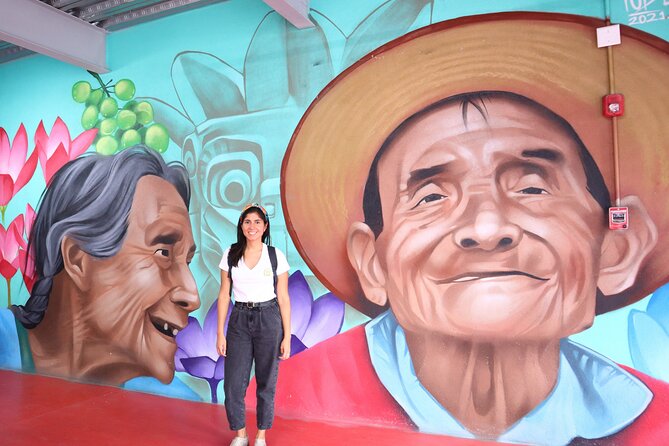
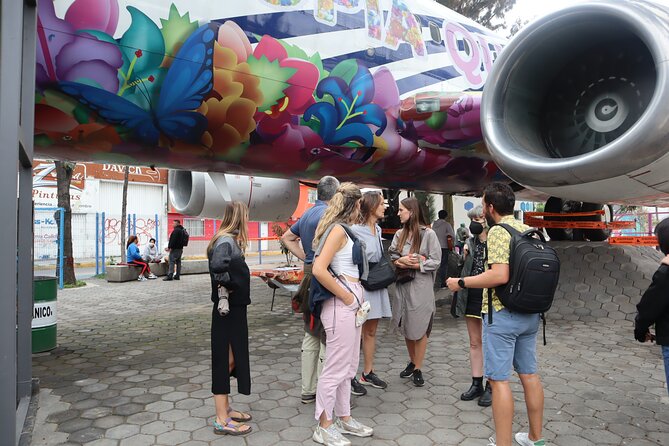
The murals add another layer. Some are painted across walls or rooftops, and the Cablebús makes it possible to see large works from angles you would not get at street level. If you care about design, public art, or urban planning, this may be one of the most rewarding sections.
Thirty minutes is enough for a focused market stop, but not enough to browse every aisle or linger over a long meal. Keep your expectations practical. You are sampling a place within a tightly arranged route, not spending an afternoon at the market.
A complimentary snack and alcoholic beverage are also listed among the tour features. The final drink is described as a pre-Hispanic beverage, so the food and drink are woven into the cultural theme rather than added as generic refreshments.



Seeing the city from the Cablebús
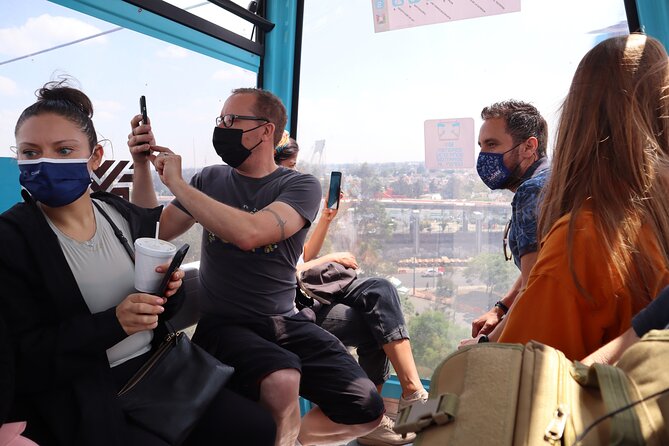
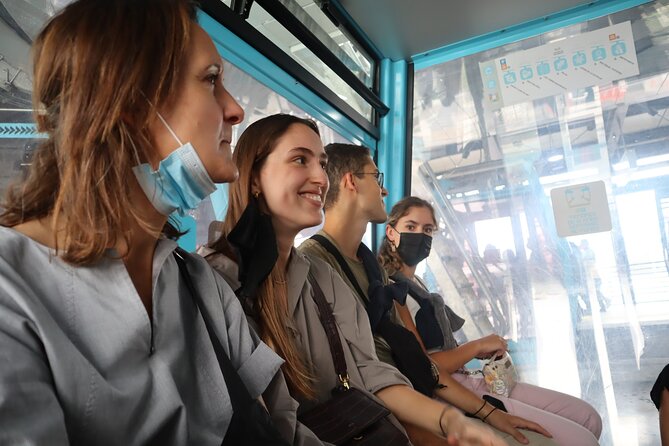
The Cablebús ride is the clear visual centerpiece. From above, you gain a sense of the size and density of Mexico City that is difficult to get from a sidewalk. Houses spread across the slopes, rooftops form a patchwork of colors and murals, and the city’s outer reaches appear far less abstract.
The system functions as public transport, not a decorative attraction. That distinction matters. You are sharing the route with people using it to get to work, school, shopping, and home. The ride feels like a practical piece of urban life, and that gives the view more meaning.
The cabins are described as smooth and safe in operation. Still, conditions can change with weather and crowding, and your experience depends partly on visibility. The tour requires good weather. If poor conditions force a cancellation, you are offered another date or a full refund.
Listen closely during this section. Fernando uses the view to discuss the city’s size, the development of Iztapalapa, and the connection between transport and housing. The Cablebús is memorable on its own, but the explanations are what turn the ride into a lesson in how CDMX works.
Finishing with pulque in the historic center
The tour ends at a local bar for a traditional drink. The itinerary identifies Pulquería Vacas Verdes Bellas Artes and describes a pre-Hispanic beverage, while the meeting information gives Pulquería La Risa, Calle de Mesones 71, as the final location in Centro Histórico.
Because those names do not match, confirm the exact closing bar before the day of the tour. Both details place the ending downtown, but you should not rely on one name if you are arranging a later reservation or planning to meet someone.
Pulque is a fermented agave drink with a long place in Mexican culture. It is not the same as tequila or mezcal, and trying it in a local bar gives the day a fitting finish. The scheduled stop lasts about 20 minutes, so expect one short drink and conversation rather than a long night out.
The bar stop is included, but alcohol is not a good reason to book this tour on its own. The real value lies in the combination of transport, neighborhood walking, history, food, murals, and the final taste of a traditional drink.
Is the $58 price fair?
At $58 per person, the price is reasonable if you value access and instruction more than a long list of admission tickets. The included elements are modest: museum entry, market entry, a snack, and an alcoholic beverage. You are mainly paying for Fernando’s guiding, the organized public-transport route, and the chance to visit an area you might not feel comfortable or prepared to reach independently.
The transit lesson alone can be useful. Mexico City has an extensive system, but the first metro ride may feel confusing if you do not know how the lines and stations fit together. This tour gives you a practical introduction while placing the route in a social and historical setting.
The value is strongest for people who want more than the usual central sights. If you only want a Cablebús ride and a few scenic photographs, you may find a simpler outing better suited to you. If you want to understand how the wider city lives and moves, the cost makes more sense.
The group limit of 20 keeps the price below a private tour while still allowing a guide to manage the route. Just remember that a larger group can slow station movement or make it harder to hear in a noisy metro car.
Who should book this CDMX experience?
I would recommend it to an active visitor who enjoys public art, local food, urban history, and public transportation. It works especially well as an early activity because you learn useful transit skills and receive suggestions for food, bars, and other places to visit during your stay.
Families can enjoy it, including older children and teenagers, if they are comfortable walking at a brisk pace. The experience is interactive and educational, but it is not designed as a slow, child-focused attraction.
This is also a good choice for repeat visitors who have already seen the Zócalo, major museums, and central neighborhoods. You will get a very different sense of CDMX from Iztapalapa’s streets and the Cablebús cabins.
Think twice if you have mobility limits, difficulty with stairs, hearing impairment, or trouble following rapid English. One critical account describes a guide interaction that felt disrespectful and notes frustration around a slower walker. Most of the available feedback praises Fernando’s energy and teaching, but that criticism should not be ignored. A demanding route needs clear communication and patience from everyone involved.
The tour is offered in English, and confirmation arrives when you book. Most people can participate according to the activity information, but that broad statement does not remove the practical concerns about stairs, speed, and transit transfers.
Cancellation and weather details
You can cancel up to 24 hours before the start time for a full refund. Changes or cancellations inside that 24-hour window are not accepted and are not refunded.
The experience requires good weather and a minimum number of participants. If the operator cancels for either reason, you are offered another date or experience, or a full refund.
Should you book it?
Book this tour if you want to see how Mexico City works beyond its postcard center. The strongest reasons are the Cablebús views, the Iztapalapa context, the murals, the tacos, and Fernando’s detailed guidance through public transport.
Skip it if you want a gentle half-day with little walking or if you need slow, quiet explanations. Before booking, confirm the final pulquería, prepare for stairs and a quick pace, and decide honestly if you can keep up. For the right kind of visitor, this is an unusual and useful introduction to the wider CDMX.
FAQ
How long does the tour last?
The experience lasts approximately 4 hours and 30 minutes.
How much does the tour cost?
The listed price is $58 per person.
Where does the tour start?
It starts at Churrería El Moro Centro, Eje Central Lázaro Cárdenas 42, Centro Histórico, Cuauhtémoc, Mexico City.
Where does the tour end?
The stated end point is Pulquería La Risa, Calle de Mesones 71, in Centro Histórico. The itinerary also names Pulquería Vacas Verdes Bellas Artes, so confirm the final bar location before the tour.
Is the tour offered in English?
Yes. The tour is offered in English.
How many people can join?
The activity allows a maximum of 20 participants.
Is public transportation part of the tour?
Yes. The route uses Mexico City public transportation, including the metro and Cablebús.
Are food and drinks included?
A complimentary snack and alcoholic beverage are included. The market stop includes tacos, and the final bar stop includes a traditional pre-Hispanic beverage.
Can I cancel for a full refund?
Yes. You can cancel at least 24 hours before the start time for a full refund. Cancellations within 24 hours are not refunded.
More tours in Mexico City we've reviewed





Mexico City, compared.
 ★ 5.0Teotihuacan, Guadalupe Shrine & Tlatelolco Day Tour with LunchFrom $399 hours (approx.)
 ★ 4.5Xochimilco, Coyoacan and Frida Kahlo with Optional LunchFrom $349 hours (approx.)
 ★ 5.0Balloon flight + Breakfast in cave + Pyramids + Pick up CDMX.From $1722 to 8 hours (approx.)
 ★ 5.0Teotihuacan pyramids morning or afternoon without tourist trapsFrom $645 hours 30 minutes (approx.)
 ★ 4.5Teotihuacan Early Access Guided Tour with optional LunchFrom $398 hours (approx.)
 ★ 5.0Balloon flight + pick up in CDMX + Breakfast in Cave + PyramidsFrom $1694 to 7 hours (approx.)
 ★ 5.0Balloon Flight + Cave Breakfast + Pick Up from CDMX or We FlyFrom $1663 to 9 hours (approx.)
 ★ 4.6Mexico City: Teotihuacan, Tlatelolco & Guadalupe Shrine TourFrom $49