
Reviewed · SELF-GUIDED TOURS
Hidden Gems of Mexico City: Exploration Game and Tour
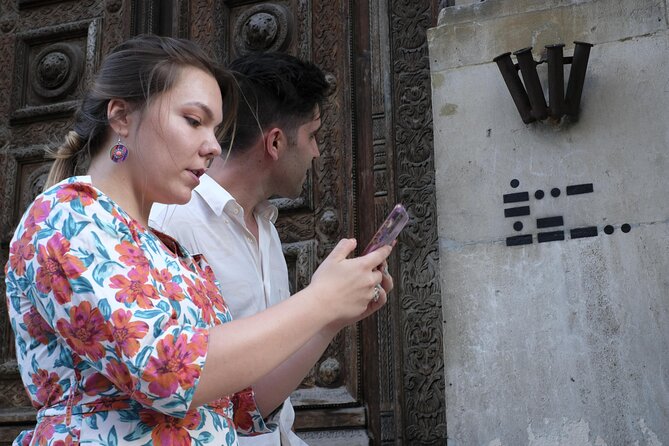
Chimalistac feels far removed from Mexico City’s louder avenues, yet this self-guided game begins near a major monument and quickly leads you into old lanes, small parks, fountains, and chapels. You use the Questo app to solve clues, learn local stories, and find the next stop without a guide or fixed departure time.
In This Article
- Key points at a glance
- Why Chimalistac makes a good game board
- Starting at Parque de la Bombilla
- Finding the Hermitage of the Secret
- Pausing at the fountain in the old orchard
- Looking across Tagle Park
- Ending at San Sebastián Mártir Chapel
- What the $7.51 price really offers
- Using the flexible schedule well
- Who will enjoy this format most
- Practical details before you go
- Should you book the Chimalistac exploration game?
- FAQ
- How long does the Chimalistac exploration game take?
- How much does the activity cost?
- Is a tour guide included?
- In what language is the experience offered?
- Can I choose when to start?
- Can I pause the game?
- Are attraction entry tickets included?
- Where does the experience begin and end?
- Can I cancel for a refund?
I like the quiet setting and the way the game points you toward details you could easily miss on a normal walk. I also like the low price of $7.51, especially for families or small groups who can share the experience at their own pace.
The main trade-off is simple: you are on your own. If you want a historian explaining every building or answering questions as you go, this is not that kind of tour. Some puzzles can also become quite challenging.
Key points at a glance
- A quieter side of Mexico City: Explore Chimalistac, a colonial area in the Álvaro Obregón district, away from the city’s busiest routes.
- A puzzle-led walk: Search for answers at each stop to move through the experience and learn the story behind the site.
- Five notable places: See Parque de la Bombilla, the Hermitage of the Secret, a historic fountain, Tagle Park, and San Sebastián Mártir Chapel.
- Your own schedule: Start any day between 5:00 AM and 11:30 PM, pause when you like, and continue later.
- Good value for a private group: The $7.51 per-person price is especially appealing with group discounts.
- Open-air and crowd-light: No attraction admission is needed, and the activity takes place outdoors.
Why Chimalistac makes a good game board
Mexico City is famous for grand museums, major plazas, and crowded historic streets. Chimalistac offers a different kind of outing. Its appeal comes from small details: a chapel tucked beside a lane, an old fountain, a leafy park, or a building with a story that is easy to miss if you are rushing from one major sight to the next.
The walk takes place in and around the old Chimalistac neighborhood, in the south of the city. The area has colonial roots and a strong connection to the Carmelite order, which developed orchards and religious sites here. You are not simply crossing a checklist of monuments. The app gives you a reason to stop, look around, and notice what is in front of you.
That makes the format useful. At each location, you search for an answer to a challenge before moving onward. The clues turn an ordinary stroll into a small investigation. One person can read the prompt while another looks for the detail, which gives families and friends an easy way to share the walk.
The game starts with simpler tasks and becomes harder. That gradual change is part of the fun, but it also means you should not expect every clue to be solved in seconds. If you prefer a relaxed walk with no mental work, the puzzle format may feel like an interruption. If you enjoy solving things, it gives the route purpose.
Other city tours we've reviewed in Mexico City


Starting at Parque de la Bombilla
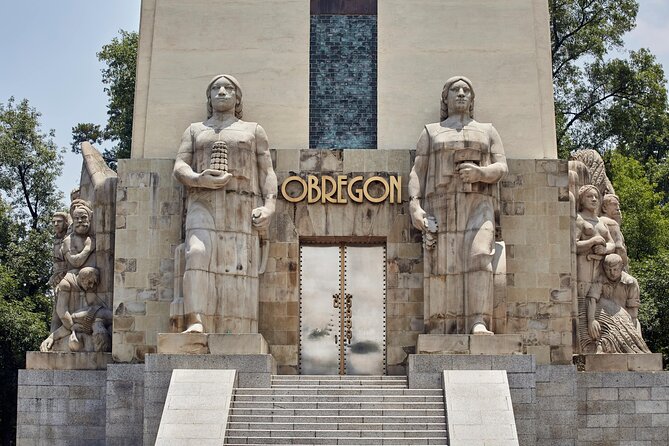
The experience begins at San Luis Potosí in Chimalistac and takes you to Parque de la Bombilla. The park is in San Ángel, within the Álvaro Obregón district, and is tied to one of Mexico’s more dramatic political stories.
The monument honors Álvaro Obregón, a revolutionary general and president from 1920 to 1924. He was elected again in 1928 but was assassinated that year while dining at the restaurant La Bombilla. The monument complex opened on July 17, 1935, seven years after the killing.
You have about five minutes here, enough time to look around and find the answer to the opening challenge. The point is not to spend a long time inside a museum or wait for a presentation. You inspect the park and monument, use the app, and learn why this place matters.
I like this as a starting point because it gives the route a clear historical hook. You begin with national politics and a public memorial, then move toward much smaller neighborhood sites. That change in scale helps you see how Mexico City’s history works at street level.
The stop is brief, so do not expect a full account of Obregón’s career or the assassination. The app offers a prompt and story, not a long lecture. If this subject interests you, treat the information as an introduction and make a note to learn more later.
Finding the Hermitage of the Secret
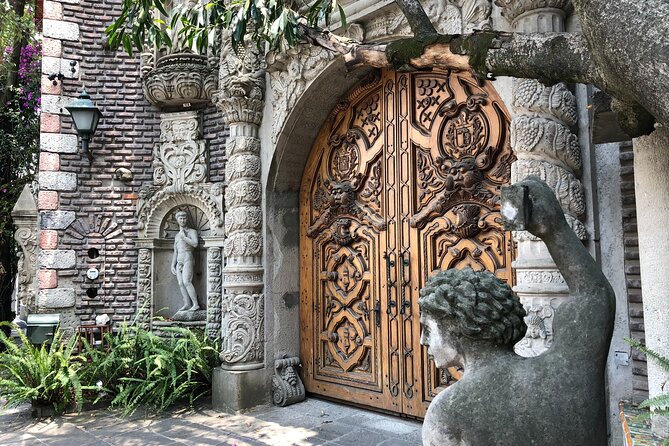
One of the most unusual stops is known as the Chamber or Hermitage of the Secret. The name comes from its location on Del Secreto Street at the corner of Huerto Alley. It is a small construction connected to the former orchards of Chimalistac.
The building dates to 1626 and was built under the care of Carmelite friar Andrés de San Miguel. It is dedicated to the Virgen de los Dolores. Inside, there is a stone cross that reaches the ceiling, and the walls carry religious paintings, including The Sermon on the Mount.
The site’s name reflects its old use. People from the neighborhood came here to speak in low voices or listen to the Prior’s sermon, represented in one of the friars. That detail gives the place an intimate quality. It is not a grand cathedral built to impress a city. It is a small religious space tied to neighborhood life.
The game asks you to examine the surroundings for the answer that sends you to the next point. This is where the activity works best. A guide might tell you to glance at the building, but the challenge makes you look more closely.
The available information does not give a precise visit duration for this stop, and the experience does not require an entry ticket. You should think of it as an exterior discovery, or as a brief look at a small historic structure, rather than a formal chapel tour. Access details inside are not provided, so keep your expectations modest.
Pausing at the fountain in the old orchard
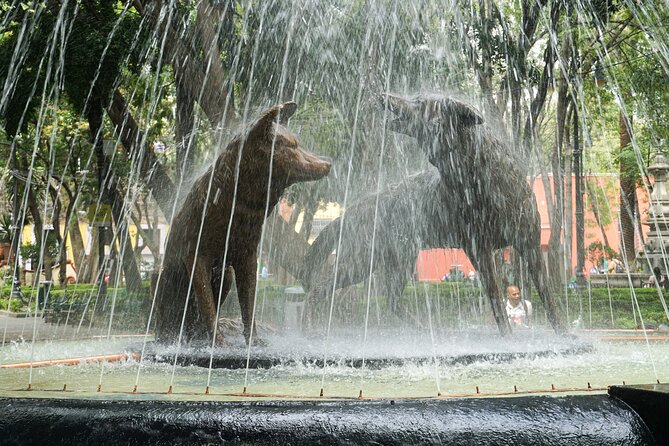
The fountain in the Huerto is one of the route’s more visual stops. Its construction dates to 1896, when it was made to commemorate 400 years since the Carmelites arrived in the Chimalistac area.
You have about five minutes here. That is enough for photos, a close look at the fountain, and another puzzle. The stop gives the walk a lighter rhythm after the political story at Parque de la Bombilla and the religious history of the Hermitage of the Secret.
This is also a good place to pause if you are walking with children. The task is short, the object is easy to identify, and the route does not demand a long period of quiet attention. You can let one child search for the clue while another takes pictures.
The fountain is not presented as a major attraction with a ticket desk or formal interpretation. Its value comes from the way it fits into the neighborhood. You see how commemorative objects, religious history, and public spaces overlap in Chimalistac.
Looking across Tagle Park
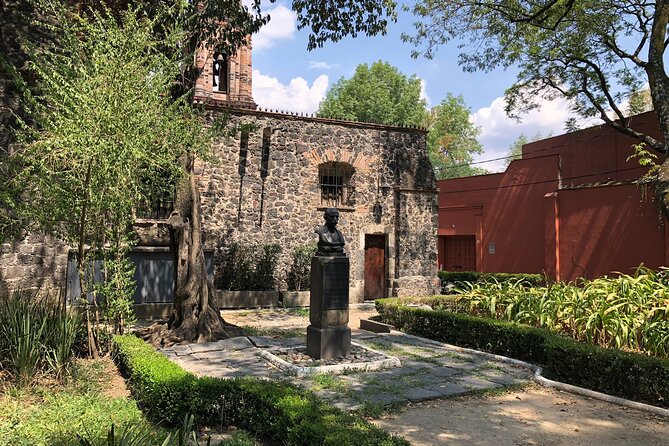
Tagle Park honors Protasio Tagle, a military figure and politician who later served as Governing Secretary of the Federal District and as Secretary of Justice and Public Instruction.
Again, the planned stop is short, about five minutes. The app directs you to search the park for the next answer, so the place functions both as a green break and as part of the route’s historical trail.
This section will probably appeal most to visitors who like connecting names on monuments and parks with the people behind them. The information is brief, but it gives you a reason to remember the name Protasio Tagle instead of passing through an anonymous public space.
Do not expect a long park visit or a major recreational facility. The supplied details focus on the person commemorated here, not on amenities, playgrounds, gardens, or food options. Plan to use it as a short stop within the puzzle walk.
A few more Mexico City tours and experiences worth a look





Ending at San Sebastián Mártir Chapel
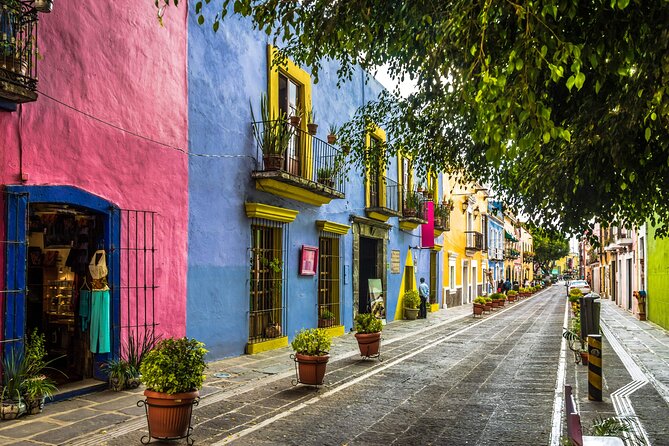
The route finishes at Federico Gamboa 11, near the Chapel of San Sebastián Mártir. This small Catholic temple is in the old part of Chimalistac and is described as the oldest construction in the neighborhood.
The chapel was built at the end of the 16th century, then altered in the 17th and 20th centuries. It was declared a historical monument on September 1, 1932. Its patronal feast is held on January 30.
This final stop gives the walk a strong sense of place. You finish not at a large modern attraction, but beside a small religious building that has remained part of the neighborhood through several periods of change.
As with the other stops, you solve a challenge by looking around and use the answer to complete the next stage. The experience does not include a guide or an entry ticket, and no interior tour is promised. You should respect the chapel as an active religious site and treat the visit as an exterior sighting unless access is clearly available.
I like the ending because it brings the route back to Chimalistac’s oldest layer. The earlier stops cover politics, public space, Carmelite history, and neighborhood memory. The chapel pulls those threads together without needing a grand finale.
What the $7.51 price really offers
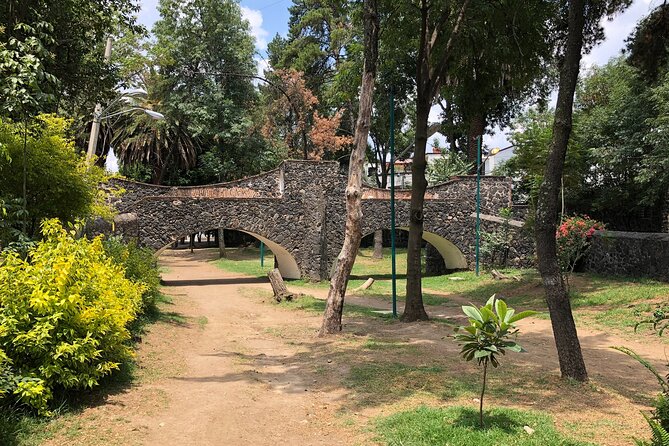
At $7.51 per person, this is a very inexpensive way to spend roughly 1 hour and 40 minutes in Mexico City. The price covers the Questo city exploration game on your phone, not a personal guide, transportation, meals, or admission to attractions.
That distinction matters. You are paying for a route, clues, and information delivered through an app. You are not paying for live commentary, a scheduled group departure, or someone to manage the walk for you.
The value improves if you are traveling with a group and can use the available group discount. Because only your group participates, you also avoid being folded into a large tour party. The experience can work for couples, families, and friends who prefer to set their own pace.
At this price, I would view the activity as a smart add-on rather than the only cultural tour you take in Mexico City. It gives you an organized way to see Chimalistac, but it will not replace a full guided history tour for someone who wants detailed explanations.
No attraction tickets are needed to complete the walk, which keeps the total cost predictable. You should still budget for your own transport to the starting point if needed, since transportation is not included.
Using the flexible schedule well
The activity is available every day of the year, with a stated operating window from 5:00 AM to 11:30 PM. You can begin, pause, and continue at your own pace.
That flexibility is one of its strongest features. You might start in the morning, stop for food, and finish later. You can also fit it around a museum visit or another plan without worrying about missing a fixed departure.
The flexible hours do not mean every part of the route will feel the same at every time. The experience is open-air, and the route includes public parks and neighborhood streets. Daylight will make it easier to read signs, inspect details, and take photos. The very early and late hours are available, but the information does not promise special lighting, staffed sites, or added safety support at those times.
The practical approach is to use the app before setting out. Confirmation arrives at booking, and the activity is mobile-based, so make sure your phone is ready for the route. Since the game depends on finding visual answers, a charged phone is important.
Who will enjoy this format most
I would recommend this experience to you if you like walking, puzzles, and small historical sites. It is especially suitable for families because the challenges give children a job to do instead of asking them to listen to a long explanation.
It also suits people who have already seen Mexico City’s main sights and want a quieter change of pace. One person who lives in Mexico City found monuments they had never noticed before, which tells you something useful about the route: local familiarity does not guarantee that you have explored this corner of the city.
The activity can work for couples and friends who enjoy taking photos and trading clues. The neighborhood’s chapels, fountain, parks, and old buildings provide plenty of visual pauses.
I would be more cautious if you need a guide, have limited phone access, or want a tightly narrated historical tour. The app cannot respond to follow-up questions in the way a person can. It also cannot adjust the route based on your interests.
The puzzle difficulty is another factor. The challenges begin simply and become harder. That progression can keep the walk engaging, but it may frustrate you if you want instant answers. Give yourself time to look carefully before assuming you have missed something.
Practical details before you go
The start point is on San Luis Potosí in Chimalistac, Álvaro Obregón, Mexico City. The endpoint is Federico Gamboa 11, also in Chimalistac. The route is near public transportation, and most people can take part.
This is a private activity for your group, not a shared tour. There is no guide, and the experience is offered in English through the Questo app. Service animals are allowed.
Because the walk takes place outside, wear shoes suitable for walking and plan around the weather, though specific surface conditions are not provided. Bring your phone, and allow enough time to search for answers rather than rushing from stop to stop.
You can cancel for a full refund if you do so at least 24 hours before the local start time. Changes or cancellations inside that 24-hour window are not accepted for a refund. The activity is commonly booked about 15 days ahead, but its broad operating hours make last-minute planning possible when space is available.
Should you book the Chimalistac exploration game?
Book it if you want an inexpensive, flexible way to see a peaceful part of Mexico City while learning about places that are easy to overlook. The mix of a revolutionary monument, Carmelite sites, a commemorative fountain, a political namesake, and one of Chimalistac’s oldest chapels gives the walk real variety.
Skip it if you want a live guide, detailed academic history, or guaranteed access inside the religious buildings. This is a phone-led puzzle walk, and its success depends on your willingness to search, think, and set your own pace.
For $7.51, the risk is low. I would choose it for a family afternoon, a relaxed outing with friends, or a break from Mexico City’s busiest sights. Just remember that the app is the guide, and the neighborhood itself is the main attraction.
FAQ
How long does the Chimalistac exploration game take?
The experience lasts approximately 1 hour and 40 minutes.
How much does the activity cost?
The listed price is $7.51 per person. Group discounts are available.
Is a tour guide included?
No. This is a self-guided activity that uses the Questo app on your phone.
In what language is the experience offered?
The activity is offered in English.
Can I choose when to start?
Yes. It is available every day from 5:00 AM to 11:30 PM during the stated operating period, and you can start at your preferred time.
Can I pause the game?
Yes. You can take a break and continue later at your own pace.
Are attraction entry tickets included?
No entry tickets are needed to complete the activity, and no attraction admission is included.
Where does the experience begin and end?
It begins at San Luis Potosí in Chimalistac and ends at Federico Gamboa 11, also in Chimalistac.
Can I cancel for a refund?
Yes. You can receive a full refund if you cancel at least 24 hours before the local start time. Cancellations or changes made within 24 hours are not refunded or accepted.
More Self-Guided Tours in Mexico City
More City Tours in Mexico City



More tours in Mexico City we've reviewed







Self-Guided Tours, compared.
 ★ 2.5Self-Guided Audio Tour-Moctezuma and the Zocalo:The Aztec Empire1 hour to 1 hour 20 minutes (approx.)
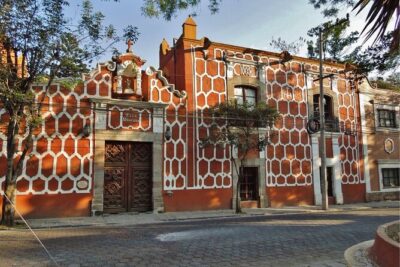 ★ 5.0Mexico City (Coyoacan) Scavenger Hunt and Sights Self-Guided TourFrom $102 hours (approx.)
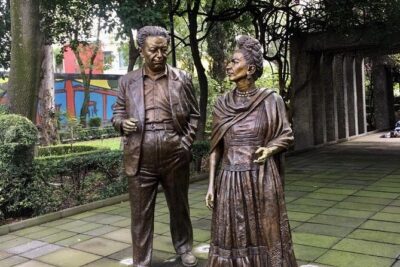 ★ 4.0Mexico City Coyoacán, Frida Kahlo Exploration Game and TourFrom $51 to 30 minutes (approx.)
 ★ 3.0Self-Guided Audio Tour – Mexico for Beginners40 minutes (approx.)
 ★ 5.0Mexico City (Historic Centre) Scavenger Hunt and Self-Guided TourFrom $102 hours (approx.)
The lists this tour appears in