
Reviewed · FRIDA KAHLO & COYOACAN TOURS
La Catrina & Muralism: Diego Rivera’s Legacy & Frida Kahlo
La Catrina is more than a Day of the Dead decoration. On this three-hour walk, you see how Diego Rivera turned a skeleton figure into an international symbol, then connect that image to Mexico’s politics, art, and public memory. You also visit the place where Rivera and Frida Kahlo first met, adding a personal spark to the story.
In This Article
- Key points to know before you book
- Starting with Mexican muralism at San Ildefonso
- Reading the walls at Museo Vivo del Muralismo
- The 20-minute public transport link
- Meeting La Catrina at the Diego Rivera Mural Museum
- Ending beneath the murals at Palace of Fine Arts
- What the guide adds to the art
- Is $58 a fair price?
- Who should book this three-hour route?
- Should you book La Catrina and Muralism?
- FAQ
- Where does the tour begin?
- Where does the tour finish?
- How long does the tour last?
- What languages are available?
- Is transportation included?
- Is the tour wheelchair accessible?
- What should I bring?
I like the route’s clear artistic arc, from the former College of San Ildefonso to the Diego Rivera Mural Museum and Palace of Fine Arts. I also like the guides’ focus on meaning, not just names and dates. Sam, Jesús, Luís, and Aldo are among the guides praised for explaining symbolism, Mexican culture, and Rivera’s complicated life with patience and enthusiasm.
The main consideration is the pace. You walk between several cultural sites and use public transport for about 20 minutes, all within a three-hour window. Large bags, luggage, food, baby carriages, and flash photography are not allowed, so arrive light and ready to move.
Key points to know before you book
- La Catrina takes center stage: Learn how Rivera’s famous skeleton image became linked with Day of the Dead and modern Mexican popular culture.
- The route begins at San Ildefonso: This former college is presented as the birthplace of Mexican muralism.
- Frida and Diego’s story gets a real setting: You visit the amphitheater where their relationship began.
- The murals are read, not merely viewed: Your guide explains symbols, social criticism, technique, and historical context.
- The tour ends at Bellas Artes: You finish among Mexico City’s best-known cultural landmarks.
- $58 buys a focused art-history tour: The price makes the most sense if you want explanation and context, not simply access to several buildings.
Starting with Mexican muralism at San Ildefonso
Your meeting point is in front of the entrance to the former College of San Ildefonso. Look for guides wearing pink shirts and carrying umbrellas. Transportation to this first stop is not included, so you need to make your own way there.
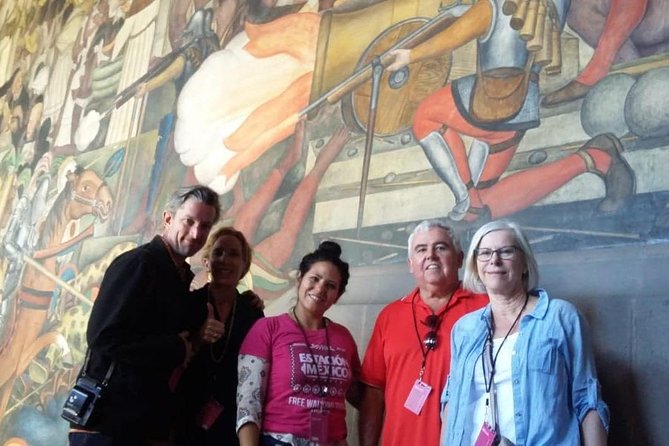
San Ildefonso matters because the tour treats it as the birthplace of muralism. That gives the morning a strong starting point. Instead of beginning with a famous finished painting, you begin with the setting in which a public art movement took shape.
Your guide introduces Diego Rivera’s life, artistic aims, and role in Mexican cultural identity. The useful part is the connection between painting and public life. Rivera’s murals were not made simply to decorate private homes. They carried ideas about class, labor, national identity, education, and Mexico’s past.
That context changes how you look at a large wall painting. You start asking who appears in the scene, who is missing, what the artist is praising, and what he is criticizing. A guide can point out the layers that are easy to miss when you are standing alone with a camera.
The San Ildefonso visit is also where the personal story enters. The tour takes you to the amphitheater associated with the first meeting between Rivera and Frida Kahlo. Their romance was passionate and difficult, and it shaped the public image of both artists.
You should not expect a gossip-focused outing. The relationship is useful here because it helps explain the people behind the murals. Rivera’s work is not separated from his politics, friendships, loves, and arguments. The guide uses that story to make the art feel connected to real lives.
A few more Mexico City tours and experiences worth a look
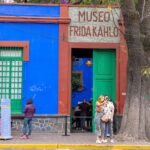
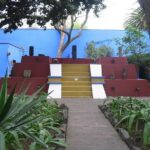
Reading the walls at Museo Vivo del Muralismo
The next stop is Museo Vivo del Muralismo, where the focus remains on the development of mural painting and its place in Mexican culture. The exact value of this stop is not just the number of works you see. It is the chance to understand muralism as a movement with a purpose.
You learn about historical setting, painting methods, and symbolism. Those three subjects work well together. A mural’s technique affects how it survives on a wall, its historical setting explains why the image was created, and its symbols give the composition a message beyond the surface.
The guide’s role is especially important here. A museum can offer labels, but a live guide can connect one work to the next and adjust the explanation to the group. The people who led this experience, including Jesús and Aldo, are described as patient, enthusiastic, and clear. That matters if you are new to Mexican art or visiting with children.
If you are traveling as a family, this is one of the stronger reasons to consider the tour. A 12-year-old or 10-year-old may not want a long lecture on Mexican politics, but a good explanation of a strange figure, a hidden symbol, or a dramatic scene can hold attention. The guide can also explain ideas in plain language instead of assuming a university-level art background.
This is not a quiet, self-guided museum visit. You are there to ask questions and follow a story. That makes the experience better for someone who wants an introduction, but less ideal for someone who prefers to study every mural alone for as long as desired.
The 20-minute public transport link
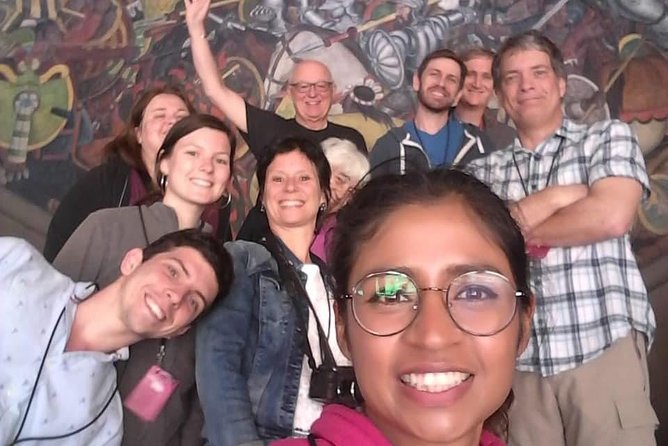
Between the mural sites, the tour uses public transport for about 20 minutes. That detail is worth noting because it keeps the experience rooted in ordinary Mexico City movement rather than placing you inside a private vehicle for the whole route.
The transfer also creates a practical constraint. You need comfortable shoes, and you should be prepared for walking before and after the ride. The tour lasts three hours, so the schedule is designed to keep moving.
No transportation to the starting point is provided, and meals and drinks are not included. You should eat beforehand and carry only what is permitted. Large bags, luggage, food, and baby carriages are not allowed, and flash photography is prohibited.
The activity is listed as wheelchair accessible, but the amount of walking and the public transport segment are still worth considering when planning. If you have specific mobility needs, confirm that the route and transfer work for you before booking.
Meeting La Catrina at the Diego Rivera Mural Museum
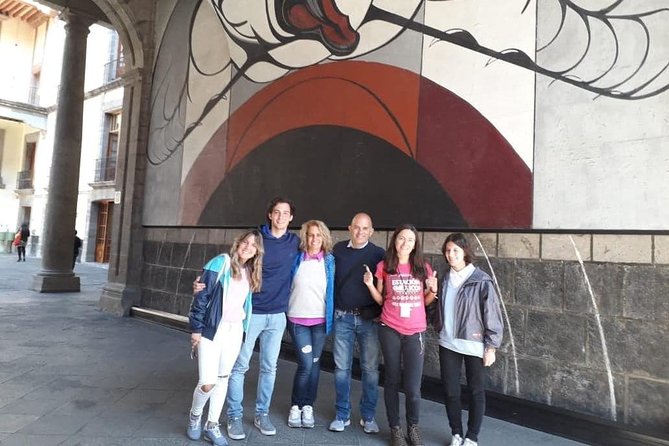
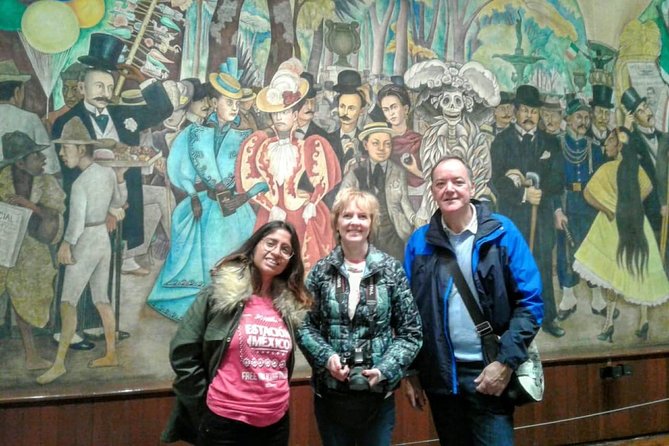
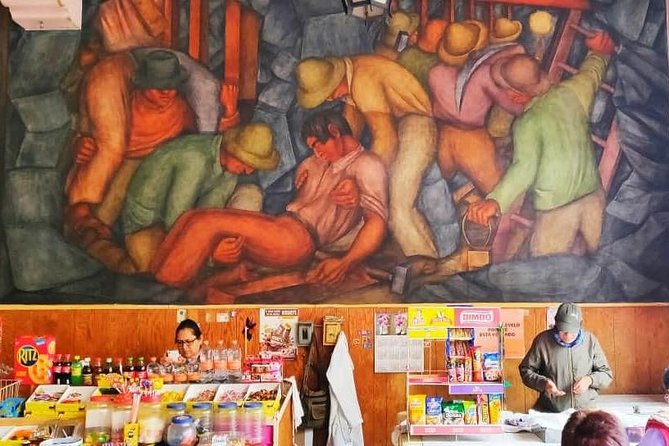
At the Diego Rivera Mural Museum, the tour reaches one of its clearest visual anchors: Rivera’s depiction of La Catrina. The figure is now recognized around the world, especially during Day of the Dead celebrations, but this tour explains how the image connects to Mexican history and social criticism.
La Catrina is powerful because she is both amusing and unsettling. Her skeleton form reminds you that death cuts across social rank. In Rivera’s hands, the image also carries historical and political meaning, not just seasonal decoration.
Your guide explains how the figure became part of Mexico’s public identity and how the image appears in films and in Mexico City’s famous Day of the Dead parade. That connection helps you see why a mural can travel far beyond its original wall. A single character can become a national symbol, a parade figure, and an image known by people who have never studied Rivera.
The museum is also where the tour’s explanation of social critique becomes most direct. You learn to look at how Rivera arranges people, clothing, gestures, and historical references. The work rewards a slower look, but the group format means your time is guided rather than unlimited.
I would pay close attention to the guide’s reading of the mural. One of the strongest parts of this experience is the explanation of what sits below the obvious image. Bernard, who took the tour with Sam, specifically highlighted the symbolism and meaning beneath Rivera’s murals. That is exactly the sort of information you may miss if you visit the museum on your own.
Do not expect every question about Rivera’s life to receive a simple answer. His artistic legacy is tied to strong political views and a turbulent private life. The tour presents that complexity as part of the story rather than smoothing it away.
Ending beneath the murals at Palace of Fine Arts
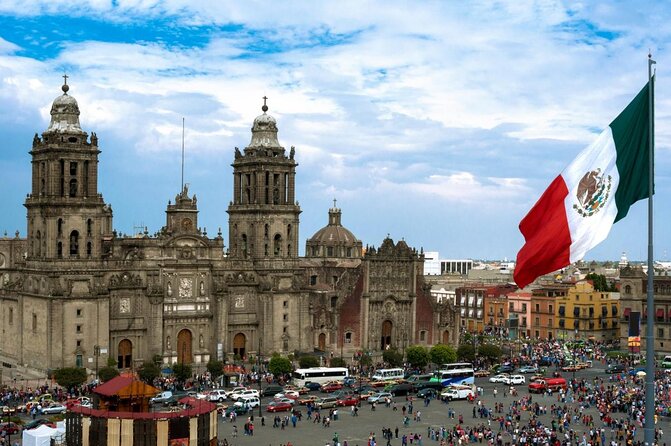
The final stop is the Palace of Fine Arts, where the tour ends. You finish at Palacio de Bellas Artes, giving you a memorable landmark as both the endpoint and a useful marker for the rest of your Mexico City plans.
The building brings the tour back to the larger role of public art. By this point, you have heard about Rivera’s early setting, his relationship with Kahlo, the development of muralism, and La Catrina’s lasting image. Bellas Artes gives the story a grand final setting.
The ending is also practical. You are not returned to the original meeting point, so plan the rest of your day from Palacio de Bellas Artes. That can be convenient if you want to continue sightseeing from there, but it is important to know if you expected a round trip.
The tour does not include meals or drinks, so you can arrange lunch or a break after the visit. Since the experience is only three hours, it fits neatly into a morning or afternoon plan without taking over the entire day.



What the guide adds to the art
A local guide makes the largest difference on this experience. Rivera’s murals are large, crowded, and packed with references. You can see the broad subject immediately, but the social message and historical clues require help.
The strongest guiding approach links three things:
- What you see: figures, colors, gestures, placement, and repeated symbols.
- When it was made: the political and cultural setting behind the image.
- Why it matters now: the way Rivera’s work still shapes Mexican identity and public celebrations.
The guide names associated with this experience include Sam, Jesús, Luís, and Aldo. Their languages are Spanish and English. The personal style may differ from one guide to another, but the experience is built around a passionate local art enthusiast rather than an audio guide or a simple transfer between museums.
That format worked particularly well for people new to Mexico City and for families. Jesús was praised for patience and for keeping children engaged, while Aldo was noted for explaining Mexico’s history and culture with warmth. Luís guided in Portuguese for one group and was described as clear and helpful. These details suggest that the quality of the day depends heavily on the guide assigned to your departure.
You should ask questions as you go. The route is short enough that a good question about one mural can improve your understanding of the next one. Ask about La Catrina’s symbolism, Rivera’s artistic choices, the meeting with Kahlo, or the social criticism in the murals.
Is $58 a fair price?
The cost is $58 per person. Meals, drinks, and transportation to the first meeting point are not included, so the value comes from the guided visits and the interpretation.
I see the price as reasonable for a focused three-hour introduction if you already plan to visit these art sites. You are paying for a connected route and for someone to explain what you are seeing. That can save you from moving between museums without understanding how the works relate.
The value is weaker if you want a long, leisurely museum visit. Three hours covers several stops, a public transport connection, and walking. You will gain breadth and context, but you may not have time to study every mural at length.
For a first visit to Mexico City, the tour can also function as an orientation to Mexican cultural identity. It brings together art, politics, personal drama, Day of the Dead traditions, and major city landmarks. That is a lot of ground in one morning or afternoon.
Free cancellation up to 24 hours before the start and the option to reserve now and pay later make the booking less rigid. Starting times vary, so check availability before planning the rest of your day.
Who should book this three-hour route?
I would recommend it most strongly to:
- First-time visitors who want an introduction to Rivera and Kahlo.
- Families with older children who respond well to stories and visual clues.
- Art lovers who want social and historical context, not just museum entry.
- Visitors interested in Day of the Dead and the meaning of La Catrina.
- People who prefer a short guided route to a full-day art tour.
You may want a different plan if you dislike group pacing, need a great deal of time at each artwork, or prefer contemporary art over Mexican muralism. The tour is tightly focused on Rivera, Kahlo, La Catrina, and the history of muralism.
Wear comfortable shoes and use sunscreen. Bring no large bag, luggage, food, or baby carriage. Flash photography is not allowed. These rules are easy to follow, but knowing them ahead of time prevents a frustrating start.
Should you book La Catrina and Muralism?
Book it if you want the story behind the walls. The route gives you a strong introduction to Diego Rivera, a meaningful connection to Frida Kahlo, and a close look at La Catrina as more than a colorful skeleton.
I especially like that the tour does not treat Rivera as an isolated genius. It places his work within Mexico’s cultural identity and explains how murals can carry memory, politics, beauty, and criticism at once.
The main tradeoff is time. You will walk, use public transport, and visit several places in three hours. If you accept that brisk rhythm, $58 is a fair price for guided context and a well-shaped route that finishes at Bellas Artes.
FAQ
Where does the tour begin?
The tour begins in front of the entrance to the former College of San Ildefonso. Look for guides wearing pink shirts and carrying umbrellas.
Where does the tour finish?
The experience finishes at Palacio de Bellas Artes, also called the Palace of Fine Arts.
How long does the tour last?
The tour lasts three hours.
What languages are available?
The live guide operates in Spanish and English.
Is transportation included?
Transportation to the starting point is not included. The route includes a public transport segment of about 20 minutes between stops.
Is the tour wheelchair accessible?
Yes, the activity is listed as wheelchair accessible. It also involves walking and public transport, so check that the route suits your individual needs.
What should I bring?
Bring comfortable shoes and sunscreen. Large bags, luggage, food, baby carriages, and flash photography are not allowed.
More Frida Kahlo & Coyoacan Tours in Mexico City


More tours in Mexico City we've reviewed


Frida Kahlo & Coyoacan Tours, compared.
 ★ 4.5Xochimilco, Coyoacan and Frida Kahlo with Optional LunchFrom $349 hours (approx.)
 ★ 4.4CDMX: Xochimilco, Coyoacan, Frida Kahlo Museum & Murals TourFrom $89
 ★ 5.0Frida Kahlo VIP [Museum Tickets Included] Bike, Markets & ChurrosFrom $834 hours (approx.)
 ★ 5.0Frida Kahlo VIP [Museum Tickets Included] Walk, Markets & ChurrosFrom $833 to 4 hours (approx.)
 ★ 5.0EXCLUSIVE TOUR Frida Kahlo Museum – SMALL GROUPSFrom $862 hours (approx.)
 ★ 4.5Mexico City: Frida Kahlo Museum Entry Ticket w/Digital GuideFrom $34
 ★ 5.0Private City Tour in Frida Kahlo, Coyoacan, and XochimilcoFrom $1954 to 6 hours (approx.)
 ★ 5.0PREMIUM Frida Kahlo Museum and Xochimilco (Small Groups)From $806 to 7 hours (approx.)
The lists this tour appears in