
Mexico City’s past is packed into one ambitious half-day here. You begin among Aztec ruins, colonial churches, and government palaces in the historic center, then ride through Reforma and Chapultepec Park before reaching the National Museum of Anthropology. It is a useful first look at a huge city.
In This Article
- Key points to know before booking
- Why this route works for a first look at Mexico City
- Fine Arts Palace, an ornate opening scene
- The Zócalo and the city beneath the city
- National Palace and Diego Rivera’s painted history
- Templo Mayor, Aztec remains beside colonial power
- The Metropolitan Cathedral and colonial engineering
- Paseo de la Reforma, Mexico City in motion
- Chapultepec Park from the air-conditioned vehicle
- One hour at the National Museum of Anthropology
- What the $44 price delivers
- Timing, communication, and the museum warning
- Who should choose this Mexico City tour
- Should you book it?
- FAQ
- How long does the Walking Mexico City Tour with Anthropology Museum last?
- What places are included in the route?
- Is the Anthropology Museum entrance included?
- Are the National Palace and Templo Mayor admission fees included?
- Is hotel pickup available?
- Is the tour offered in English?
- How large is the group?
- What happens if I need to cancel?
I like the clear march through time, from Templo Mayor to Diego Rivera and then to ancient Mesoamerican objects. I also like the small group limit of 16 and the chance to have a guide such as Juan Castro explain how the city’s cultures connect.
The main caution is timing. Four to five hours is not enough for a full museum visit, and a late pickup or a museum closure can seriously affect the day. Confirm the schedule and museum opening before you go.
Key points to know before booking
- A time-travel route: Move from Aztec foundations and the Spanish colonial center to modern Mexico City in one outing.
- The Anthropology Museum is the main prize: About one hour is allotted, with admission included when that option is selected.
- A moving city tour: Air-conditioned transport connects the Zócalo, Paseo de la Reforma, Chapultepec Park, and the museum.
- Good guide potential: Juan Castro and other guides have been praised for explaining Mexico’s past in a clear, personal way.
- Pickup is limited: Hotel collection is available only in selected areas, and another meeting point is assigned outside the pickup zone.
- Allow for a packed schedule: The city sights are mostly viewed on foot or from outside, rather than explored at length.
Why this route works for a first look at Mexico City
The clever part of this tour is its shape. It does not keep you in one museum or one neighborhood. Instead, it links the places that explain Mexico City: the Aztec capital, the Spanish colonial center, the modern ceremonial avenues, and the national museum devoted to Mexico’s many peoples.
You get a professional guide, an air-conditioned vehicle, and hotel pickup and drop-off when your hotel falls within the included area. The total outing lasts about four to five hours, so you can fit it into a morning or afternoon without surrendering an entire day.
That convenience has a tradeoff. This is a survey, not a series of long visits. The National Palace, Templo Mayor, and cathedral receive short stops or panoramic views. If you want to read every museum label or study each mural, you will need to return on your own.
The group may include up to 16 people. That is small enough to hear a guide without being part of a giant bus tour, though it is not the same as a private walk. English guiding is available on request, so make that request clearly when booking.
A few more Mexico City tours and experiences worth a look
Fine Arts Palace, an ornate opening scene
The Fine Arts Palace provides a striking introduction to the city’s mixture of styles. Its architecture combines Art Deco and Renaissance elements, with Carrara and Mexican marble and a famous Tiffany glass curtain.
The palace is one of the key cultural buildings in the historic center, but this tour treats it mainly as a city sight rather than a full interior visit. You should expect to admire the exterior and hear why it matters, not spend a long stretch inside its galleries.
That is a sensible opening. Before the tour reaches the Zócalo, you get a quick reminder that Mexico City is not defined by one period. Its buildings, art, and public spaces reflect several centuries of change.
The Zócalo and the city beneath the city
The Plaza de la Constitución, commonly called the Zócalo, is the core of the historic center. The square is described as the world’s third-largest, and its scale becomes clear as you look around at the National Palace, City Hall, Justice Palace, and Metropolitan Cathedral.
This is the point where the tour’s themes come together. You are not simply looking at a grand plaza. Beneath and around it are traces of Tenochtitlan, the Aztec capital, and the colonial city built after the Spanish conquest.
A guide adds real value here because the streets can otherwise feel like a jumble of monumental buildings. With the right explanation, the square becomes a map of power: Aztec ceremonial authority, Spanish religious control, and Mexico’s present-day government all occupy the same central space.
You receive about an hour in this area, including the cathedral and views toward the National Palace and Templo Mayor. Wear comfortable shoes. The walking is manageable for most people, but the historic center is too important to rush through in uncomfortable footwear.
National Palace and Diego Rivera’s painted history
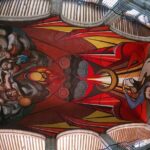
The National Palace is the seat of Mexico’s federal executive power. Its most famous artistic feature is Diego Rivera’s series of frescoes showing Mexico’s past and the many cultures that shaped the nation.
The planned stop lasts about 25 minutes and is listed as a panoramic visit, with admission not included. That distinction matters. You may see the building and murals as part of the guide’s presentation, but you should not assume this portion gives you enough time to examine every panel.
Rivera’s murals are especially useful for understanding how Mexico chose to tell its own story in the twentieth century. They connect Indigenous civilizations, Spanish rule, independence, and later political change in a single public setting.
If the palace is a priority for you, ask the guide at the start how much of the interior is included that day. The schedule is tight, and this tour’s main entrance ticket is for the Anthropology Museum, not the National Palace.
Templo Mayor, Aztec remains beside colonial power
The Museo del Templo Mayor protects the remains of the Great Temple of Mexico, the central sacred precinct of the Aztec capital. The site once included temples, towers, courtyards, walls, and gateways opening toward major roads.
The tour provides a short panoramic visit of about 15 minutes, with admission not included. That is enough to point out the ruins and explain their place in the old city, but it is not a museum visit in the usual sense.
Still, even a brief look is valuable. Templo Mayor sits beside the colonial center, making the city’s layers visible rather than abstract. The old Aztec ceremonial world was not somewhere far from today’s Mexico City. Its remains are part of the present center.
If you want archaeological detail, plan a separate return visit. The stop here works best as a concise orientation before the tour moves to the cathedral.
Other walking tours we've reviewed in Mexico City




The Metropolitan Cathedral and colonial engineering
The Metropolitan Cathedral occupies the north side of the Zócalo and is dedicated to the Assumption of the Blessed Virgin Mary. The building is known for its Churrigueresque main altar and for the engineering challenge of constructing a massive church on swampy ground.
You have about 25 minutes, with admission listed as free. That gives you time to take in the vast interior and the connection between the cathedral and the plaza outside.
The cathedral is also the seat of Mexico’s First Archdiocese. Its importance is religious, architectural, and political, which makes it a useful counterpoint to Templo Mayor. The tour places both within the same walking section, allowing you to see how one power center replaced and absorbed another.
The guide’s explanation matters more here than a hurried checklist of decorative details. Ask about the building’s long construction and its foundations if that subject interests you. The allotted time is enough for a focused visit, not a complete architectural study.
Paseo de la Reforma, Mexico City in motion
After the historic center, the experience shifts from walking to sightseeing by vehicle. Paseo de la Reforma connects the historic center with the financial district, cultural areas, and Chapultepec Park.
Along the route, you may see major monuments such as the Angel of Independence, the Diana Fountain, and the Christopher Columbus monument. The road gives you a sense of Mexico City’s size and changing identity.
This section is not a stop-by-stop monument tour. It is a moving view, so keep your eyes open and listen for the guide’s short explanations. Traffic can affect how much you see, and the exact amount of time on the avenue is not specified.
I like this transition because it prevents the outing from feeling like one long old-town walk. You move from colonial facades to broad modern avenues, office towers, monuments, and the city’s central park.
Chapultepec Park from the air-conditioned vehicle
Chapultepec is more than a patch of trees. The first and second sections contain museums, fountains, monuments, lakes, children’s areas, and open spaces for walking.
During the drive, you may see the Tamayo Museum of Modern Art, Chapultepec Lake, the National Auditorium, Los Pinos, the Chapultepec Fair, the Composers Fountain, Papalote Museo del Niño, and the Tlaloc Fountain. These are sightseeing references rather than guaranteed admissions or separate visits.
For me, this is a useful way to understand the park’s scale. You see how it functions as a major public space, cultural center, and place for everyday recreation. The vehicle also helps conserve your time and energy for the museum, which is the final major stop.
Do not book this tour expecting a long walk through Chapultepec. The park is mainly viewed during the drive. If you want its museums, lake activities, or fountains in depth, return on another day.
One hour at the National Museum of Anthropology
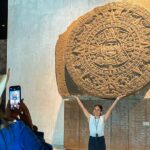
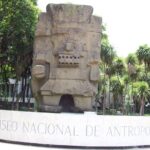
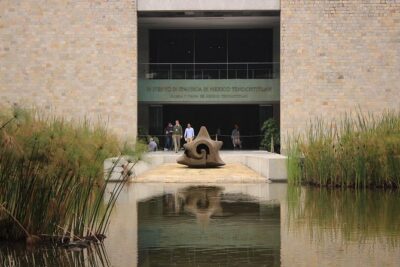
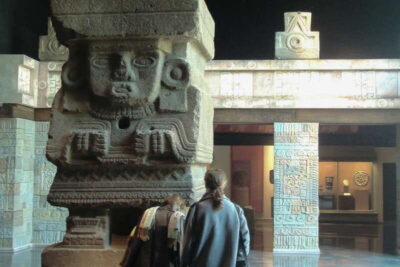
The National Museum of Anthropology is the tour’s central cultural visit. It was designed to preserve and display the archaeological legacy of Mesoamerica and to present the many ethnic groups of Mexico today.
Admission is included when you select the option that includes it. The planned museum visit lasts about one hour, which is enough for a guided introduction to major sections but not enough for the entire building.
That time limit is both a strength and a weakness. You get a focused first meeting with one of the most important museums in Mexico and the Americas, without needing to plan your own route. But the collection is much larger than a one-hour visit. If ancient civilizations, Indigenous cultures, or archaeology are major interests, schedule a separate return.
A strong guide can make this short visit count. Juan Castro has been specifically praised for explaining the origins and development of Mexico and its people across the centuries. Other guides have also been described as friendly and clear in their explanations. Ask questions as you go, since a guided hour is far more useful when it follows your interests.
The museum also gives the earlier stops more meaning. After seeing the Aztec remains at Templo Mayor and the colonial center, you can place those fragments within the broader story of Mesoamerican cultures and present-day Mexico.
What the $44 price delivers
At about $44 per person, the price is reasonable if you value transport, a guide, and a planned route through several far-apart areas. Hotel pickup and drop-off are included for selected hotels, and the vehicle is air-conditioned. The Anthropology Museum entrance is included only when that option is selected, so check the booking choice carefully.
The price is less attractive if you want extended museum time or a private experience. The historic center is walkable on its own, and the museum can be visited independently. You are paying for the guide’s interpretation and the convenience of linking the center, Reforma, Chapultepec, and the museum in one half-day.
Food and drinks are not included. Bring water and eat before or after the tour, since the schedule does not list a meal break. The outing operates in all weather, so light rain protection and suitable clothing are sensible.
The current rating is 3.9 out of 5 from 13 ratings, which suggests a mixed but useful picture. The strongest praise centers on the itinerary and guide explanations. The main problems involve late pickup, poor communication, museum closure, and a disappointing substitute route when the museum was unavailable.
Timing, communication, and the museum warning
The most important practical step is to confirm the museum’s opening status and your pickup time before departure. One past outing was badly affected when the museum was closed and the planned replacement became a drive through Polanco, including views of hotels and car dealerships. That is not what you are booking this experience for.
Museum schedules can change, and a closure may be outside the operator’s control. Even so, you should expect clear communication and a fair explanation. If the museum is essential to your plans, ask for confirmation in writing and keep enough flexibility in your schedule to return independently if needed.
A separate problem involved a guide arriving very late, leaving the outing behind schedule. This appears to be an operational risk rather than a feature of the route, but it matters when you have flights, dinner plans, or another timed activity.
The cancellation terms are simple but strict: cancel at least 24 hours before the local start time for a full refund. Changes or cancellations inside that window are not accepted for a refund. Children must be accompanied by an adult, and most people can participate.
Who should choose this Mexico City tour
I would choose this outing if you are visiting Mexico City for the first time and want a guided framework before exploring on your own. It is also a good fit if you want to combine the historic center with the Anthropology Museum but do not want to organize transport across the city.
The tour suits people who prefer context over long independent visits. You will hear why the buildings matter, see the main public spaces, and get an introductory museum visit in one package.
I would not choose it if your main goal is detailed archaeology, a full day inside the museum, or a slow architectural walk. The short visits and moving views are designed for orientation.
English guiding must be requested, and pickup depends on your hotel’s location. Those two points deserve attention before payment. If you are outside the pickup area, you will receive a meeting point instead.
Should you book it?
Book this tour if you want a practical first pass through Mexico City’s central sights, especially if the Anthropology Museum is high on your list. The route is well chosen, the $44 price includes useful transport and guiding, and the guide can connect places that otherwise seem unrelated.
Skip it if you dislike fixed schedules or want to linger. In that case, visit the Zócalo and its cathedral independently, then give the museum at least half a day on its own.
My advice is to treat this as an orientation tour, not the final word on Mexico City. Confirm the museum is open, request an English guide, verify pickup, and keep another visit in reserve for the National Museum of Anthropology.
FAQ
How long does the Walking Mexico City Tour with Anthropology Museum last?
The tour lasts approximately four to five hours.
What places are included in the route?
The route includes the Fine Arts Palace, Zócalo, National Palace, Templo Mayor, Metropolitan Cathedral, Paseo de la Reforma, Chapultepec Park, and the National Museum of Anthropology.
Is the Anthropology Museum entrance included?
The entrance fee is included when you select the option that includes admission. Check the selected option carefully when booking.
Are the National Palace and Templo Mayor admission fees included?
No. The National Palace and Templo Mayor stops are listed as panoramic visits, and their admission fees are not included.
Is hotel pickup available?
Hotel pickup and drop-off are offered for selected hotels. If your hotel is outside the included area, a meeting point will be assigned.
Is the tour offered in English?
Yes, but an English-speaking guide is available on request. Make that request when booking.
How large is the group?
The tour has a maximum group size of 16 travelers.
What happens if I need to cancel?
You can receive a full refund if you cancel at least 24 hours before the experience start time. Cancellations or changes made less than 24 hours before the start are not accepted for a refund.
More City Tours in Mexico City



More Walking Tours in Mexico City
More Chapultepec & Museum Tours in Mexico City

More tours in Mexico City we've reviewed




Chapultepec & Museum Tours, compared.
 ★ 4.4CDMX: Xochimilco, Coyoacan, Frida Kahlo Museum & Murals TourFrom $89
 ★ 4.5Chapultepec Castle & Anthropology Museum TourFrom $795 hours (approx.)
 ★ 5.0Frida Kahlo VIP [Museum Tickets Included] Bike, Markets & ChurrosFrom $834 hours (approx.)
 ★ 4.5Anthropology Museum Guided TourFrom $392 hours 30 minutes (approx.)
 ★ 5.0Frida Kahlo VIP [Museum Tickets Included] Walk, Markets & ChurrosFrom $833 to 4 hours (approx.)
 ★ 5.0EXCLUSIVE TOUR Frida Kahlo Museum – SMALL GROUPSFrom $862 hours (approx.)
 ★ 4.4Mexico City: Anthropology Museum Guided VisitFrom $672.5 hours
 ★ 4.5Mexico City: Frida Kahlo Museum Entry Ticket w/Digital GuideFrom $34
The lists this tour appears in