
Reviewed · FOOD
Learn How To Cook Mexican Food
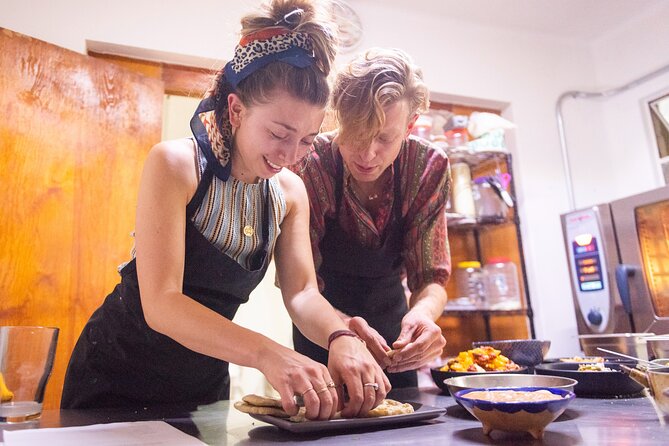
The best part of this Mexico City cooking class is that you do not simply watch a chef prepare dinner. You work with corn masa, fresh and dried chiles, nopales, and salsa, learning the everyday techniques behind Mexican home cooking. Chef Julieta Carrion teaches in her working kitchen in Roma Norte, where her pastry business supplies restaurants and coffee shops.
In This Article
- Key points to know before booking
- A hands-on introduction to Mexican home cooking
- Inside the kitchen on Tonalá Street
- Starting with sopes and corn masa
- Learning why nopales belong on the table
- Fresh chiles, dried chiles, and the right amount of heat
- Tinga, papas con chorizo, and the main meal
- Finishing with red chilaquiles
- What the $149.28 price gets you
- Who will enjoy this evening most
- Practical details for a smooth visit
- Should you book Chef Julieta’s cooking class?
- FAQ
- Where does the cooking class take place?
- What time does the class start?
- How long does the experience last?
- How many people can join the class?
- Is the class offered in English?
- What food will I prepare?
- Is there a vegetarian option?
- Is dinner included?
- Are ingredients and an apron included?
- Can I cancel for a full refund?
I like the small maximum group of eight, which gives the class a friendly, hands-on feel instead of turning it into a cooking demonstration. I also like the practical finish: you eat everything you cook, and you receive written recipes to try at home. The main consideration is the evening schedule. The class begins at 6:00 pm, lasts about three hours, and the $149.28 price is a serious splurge for a single meal, even though dinner, ingredients, and an apron are included.
Key points to know before booking
- Cook in Chef Julieta’s professional Roma Norte kitchen, not a staged restaurant classroom.
- Practice basic Mexican techniques, including green salsa, dried chiles, corn masa, and cactus.
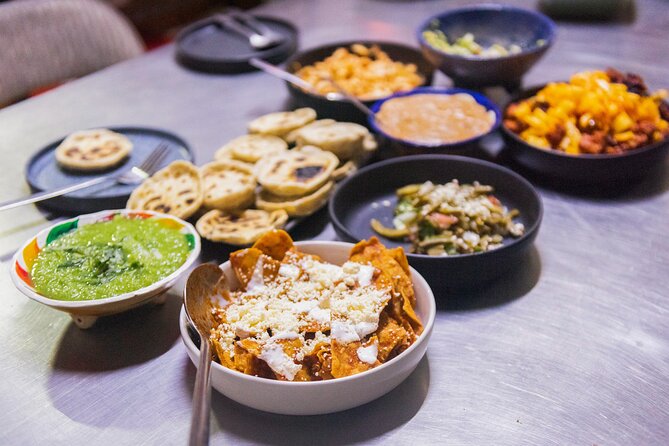
- Prepare several traditional dishes, from sopes and nopales salad to tinga and red chilaquiles.
- Eat everything you make, with containers supplied for leftovers.
- Join a maximum of eight people, a useful size for personal instruction.
- Receive written recipes, so the class can continue in your own kitchen.
A hands-on introduction to Mexican home cooking
This class is built around techniques rather than a long list of complicated recipes. You learn how to make a basic green salsa, work with fresh and dried chiles, handle corn masa, shape it by hand, and cook nopales. Those skills matter because they appear again and again in Mexican kitchens.
That makes the experience useful for more than one evening. You are not just copying a recipe step by step. You are learning how ingredients behave and how Mexican cooks build flavor with corn, chiles, herbs, beans, and toppings.
The pace is designed to be enjoyable rather than rushed. In roughly three hours, you have enough time to take part in the preparation, ask questions, taste the food, and sit down to eat. The maximum group size of eight should help you get your hands on the ingredients instead of standing at the back of a crowded room.
You should expect an informal class rather than a formal culinary-school lesson. The goal is confidence. By the end, you should have a better sense of how to make salsa, shape masa, season chicken or mushrooms, and bring several familiar Mexican dishes together.
A few more Mexico City tours and experiences worth a look


Inside the kitchen on Tonalá Street
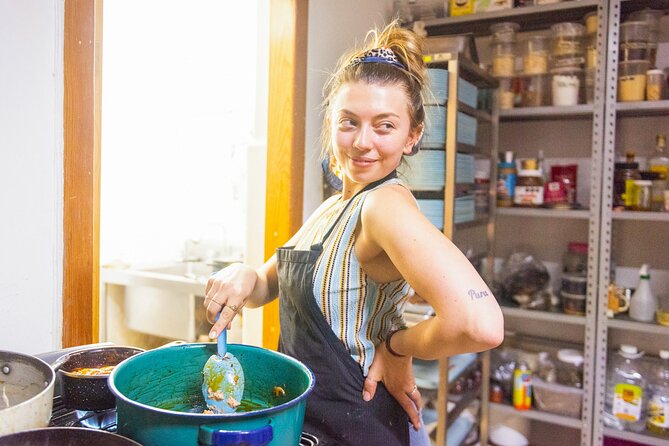
The class meets at Tonalá 194 in Roma Norte, a central Mexico City neighborhood with public transportation nearby. Chef Julieta owns a pastry business that supplies restaurants and coffee shops, and she teaches Mexican food classes in the same professional kitchen.
That detail gives the class a useful connection to working food production. You are cooking in a kitchen that serves a real business, not simply entering a room prepared for tourists. The setting also ties the food lesson to the neighborhood and to Chef Julieta’s larger effort to promote Mexican cuisine and culture through ingredients and cooking.
The meeting time is 6:00 pm. Since the activity ends back at the same place, you do not need to arrange a second pickup point. Private transportation is not included, so you are responsible for getting to Tonalá 194 and returning afterward.
Because the location is near public transportation, you can plan the class as an evening stop in Roma Norte. Still, allow enough time to arrive before the start. A cooking class loses some of its pleasure if you enter late, apron in hand, while the first salsa is already being prepared.
Starting with sopes and corn masa
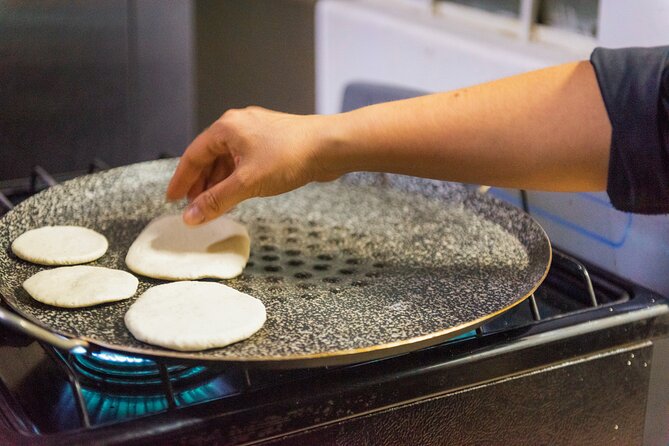
One of the most valuable parts of the class is working with nixtamalized corn dough. This is the masa used for many Mexican staples, and you learn to shape it with your hands into round patties for sopes.
The sopes are topped with refried beans, salsa, onion, and cilantro if you want them. This is a simple dish, but it teaches several building blocks at once: how to shape masa, how to create a sturdy base, and how toppings add texture and flavor.
For you, the hands-on shaping is likely to be more useful than watching someone else do it. Corn dough has its own feel, and the class gives you a chance to practice without needing to produce a perfect restaurant plate. The relaxed pace matters here. You can learn by touch and adjust your technique as you go.
Sopes also make a good first course because they are small, filling, and adaptable. The basic combination of beans, salsa, onion, and cilantro lets you taste how a few well-chosen ingredients can turn masa into a complete snack or meal.
Learning why nopales belong on the table
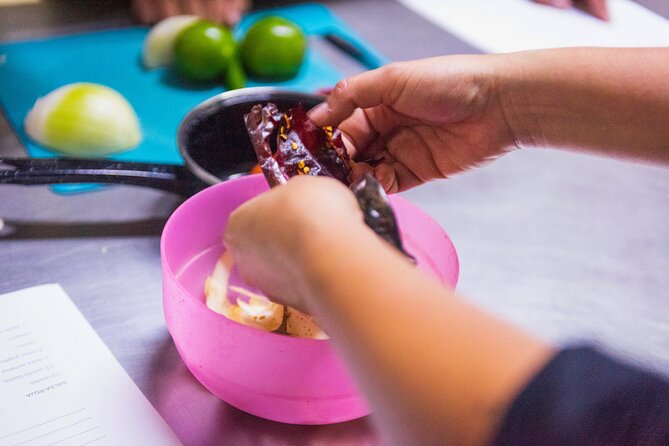
The nopales salad introduces you to cactus as a regular Mexican food, not a novelty. Nopales are a staple of the Mexican diet, and the class shows you how to prepare them as a fresh salad.
This is a useful lesson for anyone who wants to cook more Mexican food at home because nopales offer a change from the usual beans, rice, and meat routine. Their place in the class also helps explain the variety of Mexican cooking. The cuisine is not only about rich sauces and chiles. Fresh vegetables and cactus have an important role too.
The class description points to the health benefits of nopales, but the practical value is learning how they fit into a dish. You taste them as part of the meal and see how a vegetable with a firm identity can work in a simple salad.
If you are not accustomed to cactus, this may be one of the more interesting parts of the evening. It gives you a chance to try an ingredient that many visitors may skip when ordering in a restaurant.
Fresh chiles, dried chiles, and the right amount of heat
Salsa work is central to the class. You learn how to make a basic green salsa and how to use both fresh and dried chiles. This is more helpful than memorizing one sauce because it gives you a way to think about Mexican flavor.
The tinga, for example, uses smoked chipotles. You can have it as mild or spicy as you like, which makes the dish approachable even if your tolerance for heat is limited. The lesson is not that every Mexican dish must burn. It is that you can adjust the heat and still keep the character of the food.
You should pay close attention to the difference between fresh and dried chiles. They do not provide identical flavors, and learning how each is used gives you more control when you cook at home. The class is especially suitable if you have tasted Mexican food often but have never understood how the sauces are built.
Because you prepare and taste several dishes in one session, you can compare salsa with different foods rather than sampling it in isolation. Green salsa works with the sopes, while red salsa forms the base of the chilaquiles. That contrast gives the class a clear thread from one dish to the next.


Tinga, papas con chorizo, and the main meal
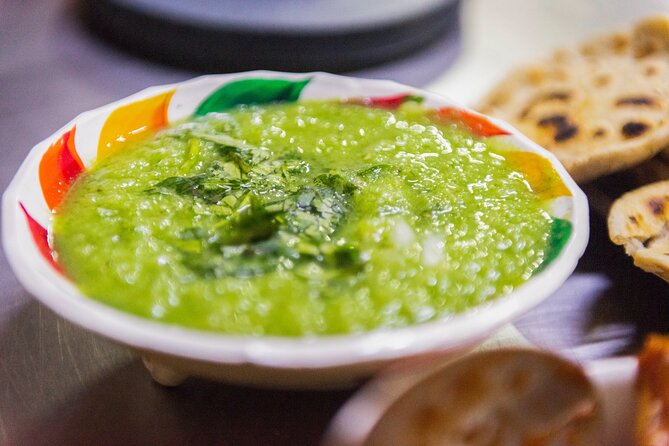
The main part of the meal includes tinga and papas con chorizo. Tinga is made with chicken seasoned with smoked chipotles. Vegetarians can have oyster mushrooms instead of chicken, so the class offers a meaningful alternative rather than leaving one person with only side dishes.
That substitution is important because the mushroom version follows the same general seasoning idea. You still learn how smoked chile flavors a main dish, while the texture and ingredient change. If you are vegetarian, mention your needs when booking so the appropriate preparation can be planned.
Papas con chorizo means potatoes with chorizo, a flavorful sausage with mild spice. It is a direct, comforting combination and a good example of how Mexican cooking can make a satisfying meal from everyday ingredients.
Together, the two dishes give you different lessons. Tinga shows how sauce and smoked chile can carry a dish, while papas con chorizo shows how potatoes and sausage create a hearty filling. Neither is presented as an isolated restaurant plate. Both are part of the larger meal you prepare and share.
The class is not intended to leave you with a single signature dish. You come away with several flexible ideas for weeknight cooking, from a mushroom tinga to potatoes with chorizo and the salsa techniques that can be used with other foods.
Finishing with red chilaquiles
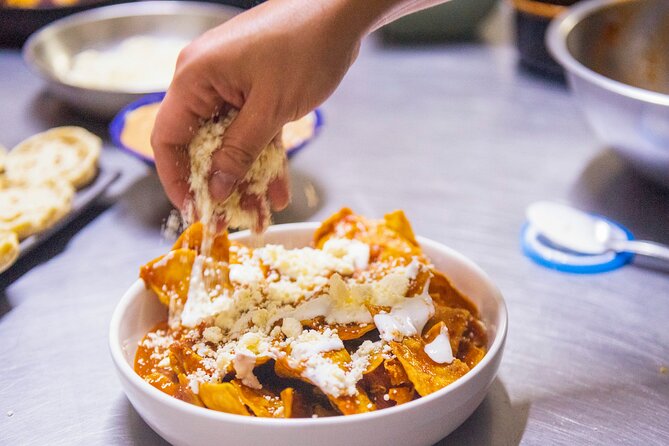
Chilaquiles rojos close the menu. Crunchy tortilla chips are dipped in red salsa and topped with fresh, thick crema. The dish shows how a simple base can become something substantial through sauce, dairy, and texture.
Timing matters with chilaquiles. The chips need enough salsa to take on flavor, but their texture is part of the appeal. Preparing them in class helps you understand why the dish is not simply nachos with a different name.
For many people, this will be the most familiar-sounding dish on the menu, but making it yourself adds useful context. You see how red salsa changes the chips, how crema softens the heat, and how a few toppings complete the plate.
Since all of the dishes are cooked during the class, the final meal should feel generous. Dinner is included, and you can eat as much as you want once the cooking is over. If you cannot finish everything, containers are provided for leftovers.
What the $149.28 price gets you
At $149.28 per person, this is not a budget meal. You could eat several inexpensive dishes in Mexico City for less, so the value depends on what you want from the evening.
The price includes all ingredients, an apron for each participant, the roughly three-hour class, and the food you prepare. It also includes instruction in a small group, access to a professional working kitchen, and written recipes for later use.
I would consider it worthwhile if you want an active food experience and expect to cook Mexican dishes after returning home. The recipe sheets give the class value beyond the meal, while the limited group size should make the instruction more personal.
If you only want to eat and have no interest in cooking, this is probably not the right use of your money. Much of the evening is spent preparing food, shaping masa, handling chiles, and learning techniques. You should book it because you want the process as much as the dinner.
The class is booked an average of 24 days ahead, so planning early is sensible. The maximum of eight people also means available dates may be limited.
Who will enjoy this evening most
I would recommend this class to anyone who wants a practical introduction to Mexican cooking without committing to a full culinary course. It suits people who like to ask questions, work with their hands, and sit down to a meal they helped prepare.
It is also a good choice for couples, friends, and small groups who want a shared evening activity. The intimate size makes it easier to participate, and the food provides plenty of natural conversation once the cooking is done.
Vegetarians are accommodated with oyster mushroom tinga, though the menu also includes chorizo, so you should make your dietary needs clear before the class. The available information confirms the vegetarian tinga substitution but does not specify other dietary adaptations.
Families with young children should consider the 6:00 pm start and the three-hour length. The class is described as relaxed and enjoyable, but the supplied details do not set a minimum age or describe child-specific activities.
You should also like Mexican food in several forms. The menu includes masa, beans, cactus, chicken or mushrooms, chorizo, tortilla chips, crema, and chiles. It is not a neutral cooking lesson with bland substitutions.
Practical details for a smooth visit
The class is offered in English and uses a mobile ticket. Confirmation arrives at booking, and the meeting point is Tonalá 194, Roma Nte., Cuauhtémoc, 06700 Ciudad de México, CDMX, Mexico.
Wear something you do not mind cooking in, although an apron is supplied. Private transportation is not included, and the activity begins and ends at the same meeting point.
The cancellation policy is generous if your plans change. You can cancel at least 24 hours before the local start time for a full refund. Changes or cancellations made less than 24 hours before the start are not accepted for a refund. The class also requires a minimum number of participants, and if the provider cancels because that minimum is not reached, you will be offered another date or experience, or a full refund.
The experience has a five-out-of-five rating from 32 reviews, with 100 percent recommending it. The most consistent praise centers on the fun, friendly teaching style and the practical recipes people can take home. One especially useful sign is that the class is described as an evening where participants learn many new things and feel ready to try the recipes later.
That is the right standard to use. You should finish with more than a full stomach. You should feel able to make at least some of the food again.
Should you book Chef Julieta’s cooking class?
Book it if you want a small, active class with traditional dishes, a real working kitchen, and recipes you can use after Mexico City. The combination of masa, salsa, nopales, tinga, chorizo, and chilaquiles gives you a broad taste of Mexican cooking in one evening.
Skip it if $149.28 feels too high for dinner, or if you would rather spend the evening ordering food than preparing it. For everyone else, the small group, English instruction, included meal, and take-home recipes make this a strong choice for a food-focused night in Roma Norte.
FAQ
Where does the cooking class take place?
The class takes place at Tonalá 194, Roma Nte., Cuauhtémoc, 06700 Ciudad de México, CDMX, Mexico.
What time does the class start?
The class starts at 6:00 pm.
How long does the experience last?
The cooking class lasts approximately three hours.
How many people can join the class?
The class has a maximum of eight participants.
Is the class offered in English?
Yes, the experience is offered in English.
What food will I prepare?
The menu includes sopes, nopales salad, tinga, papas con chorizo, and chilaquiles rojos.
Is there a vegetarian option?
Yes. Vegetarian participants can have oyster mushroom tinga instead of chicken tinga.
Is dinner included?
Yes. Everything you cook is included for your meal, and you can take leftovers in containers provided by the kitchen.
Are ingredients and an apron included?
Yes. All cooking ingredients are included, and an apron is provided for each participant to use during the class.
Can I cancel for a full refund?
Yes. You can cancel at least 24 hours before the experience start time for a full refund. Cancellations made less than 24 hours before the start are not refunded.
More Food Experiences in Mexico City

More tours in Mexico City we've reviewed



Food, compared.
 ★ 5.0Historic Center Food Tour in Mexico CityFrom $1155 hours (approx.)
 ★ 5.0Polanco Food Tour: The Bestselling Food Adventure in Mexico CityFrom $1093 hours (approx.)
 ★ 5.0Colonia Roma Food TourFrom $1104 hours (approx.)
 ★ 5.0Mexico City Historical Centre Food Tour with 7 Authentic TastingsFrom $653 hours (approx.)
 ★ 5.0Mexico City Boat Tour Food and Unlimited Drinks Priority BoardingFrom $632 hours 30 minutes (approx.)
 ★ 5.0Mexican Cooking Class with Food Market Visit in Mexico CityFrom $1243 hours 30 minutes (approx.)
 ★ 5.0Local Foodie Adventure in Mexico: +10 dishes with Sherpa ToursFrom $853 hours 30 minutes (approx.)
 ★ 5.0Street Food Tour with Friends4 hours 30 minutes (approx.)
The lists this tour appears in