
Reviewed · MEXICO CITY
Learn to Cook Mexican Bread
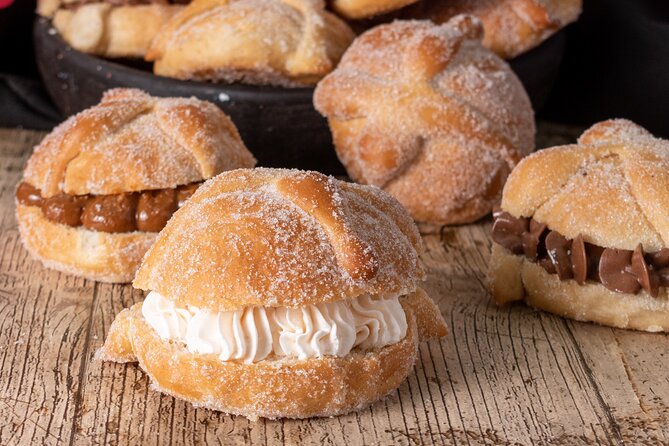
Pan de Muerto is not just sweet bread. Its orange and anise flavors, soft crumb, and bone-shaped decorations carry the spirit of Mexico’s Day of the Dead traditions. This three-hour class takes you from an old church in Tacuba to the kitchen, where you make the bread yourself and pair it with high-cacao hot chocolate.
In This Article
- Meeting at Parroquia San Gabriel Arcángel in Tacuba
- A small kitchen class with a personal feel
- Mixing the dough and learning the basics
- Shaping the bones and understanding Pan de Muerto
- High-cacao hot chocolate with the finished bread
- A possible market element, but do not count on it
- What the $65 price includes
- Who will enjoy this class most
- Timing, booking, and cancellation details
- The strongest reasons to book
- Should you book Learn to Cook Mexican Bread?
- FAQ
- Where does the Pan de Muerto class meet?
- Where does the activity end?
- How long does the experience last?
- How much does the class cost?
- What is included in the price?
- Is the class gluten free?
- Is transportation included?
- How many people can join the class?
- Can I cancel for a full refund?
I like the small group size of up to 10 people, which should give you a fair chance to ask questions and work with the dough. I also like the local touch: hosts Veronica and Natalia bring warmth and clear instruction, while booking supports local commerce. The main consideration is that this is a hands-on food class, not a broad Mexico City sightseeing tour, and it is not gluten free.
- Meet at a historic Tacuba church: Begin at Parroquia San Gabriel Arcángel, in an area with roots reaching back before the Spanish arrived.
- Make Pan de Muerto from scratch: Learn ingredient selection, kneading, shaping, decoration, and baking.
- Understand the symbolism: Create the familiar bone-shaped pieces and learn why they belong on the bread.
- Pair bread with cacao: Prepare a full-flavored hot chocolate to serve with your freshly baked loaf.
- Take home useful souvenirs: You receive your Pan de Muerto and recipes, not just a quick taste.
- Plan around a firm cancellation rule: Cancel at least 24 hours ahead for a full refund.
Meeting at Parroquia San Gabriel Arcángel in Tacuba
Your starting point is Parroquia San Gabriel Arcángel, at Calz México-Tacuba S/N in the Tacuba area of Miguel Hidalgo. The church sits near public transportation, which makes this meeting point practical if you are getting around Mexico City without a private car.
The location also gives the class a sense of place before you begin cooking. Tacuba has a history that reaches back to the period before the Spanish arrived in America, so the meeting point is more than a neutral street corner. Still, keep your expectations in check: the activity is centered on bread making, not a formal church tour or a long historical walk.
The activity ends back at the same meeting point. Private transportation is not included, so you need to arrange your own way there and back. A mobile ticket is accepted, and confirmation is normally issued when you book, subject to availability for bookings made close to the start time.
A small kitchen class with a personal feel
The group can have a maximum of 10 people. That is a useful limit for a cooking lesson because you should have room to handle ingredients and follow each stage without being lost in a crowd.
Veronica is one of the hosts associated with the class, and Natalia also leads bread-making sessions. The strongest impressions from the available comments are their friendly manner, enthusiasm, and ability to explain each step. One account describes Veronica as especially good at showing how the dough should be handled, while another highlights Natalia’s warm welcome and passion for baking.
The class may be conducted in more than one language at the same time. That can help mixed-language groups, but it may also mean that instructions take a little longer as they are explained in multiple languages. If language is important to you, ask about the planned language before booking.
You can also request a different day or time. That flexibility is useful if your Mexico City schedule is tight, though any alternate arrangement depends on availability.
If you're still narrowing it down, here are other tours in Mexico City we've reviewed.
Mixing the dough and learning the basics
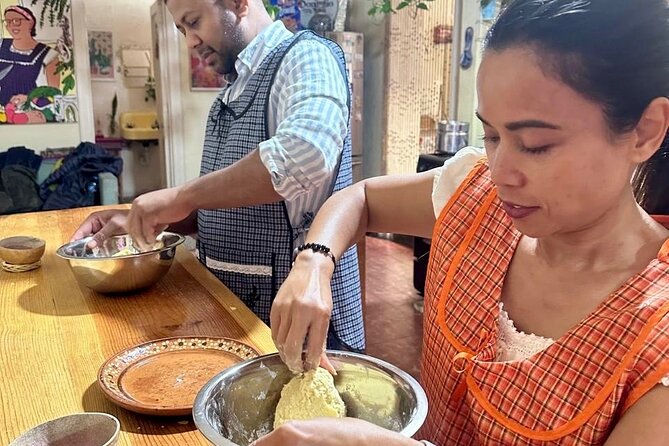
The central lesson begins with the ingredients. You learn how to choose and combine what goes into Pan de Muerto, then work through the dough from its early mixture to a form ready for shaping.
The value here is practical. Many food tours let you watch a cook prepare a dish, then hand you a plate. This class asks you to take part in the process. You should leave with a better sense of how the dough changes as you knead it and why technique matters as much as the ingredient list.
Kneading is one of the key skills covered. You will work the dough by hand and learn how to develop the texture needed for the finished bread. The supplied equipment is included, so you do not need to bring cooking tools.
The information provided does not specify a complete ingredient list, oven setup, or exact cooking method. That is worth noting if you are an experienced baker looking for a highly technical pastry workshop. For most visitors, the strength is the chance to make a traditional Mexican bread with guidance rather than attempting it alone.
Shaping the bones and understanding Pan de Muerto
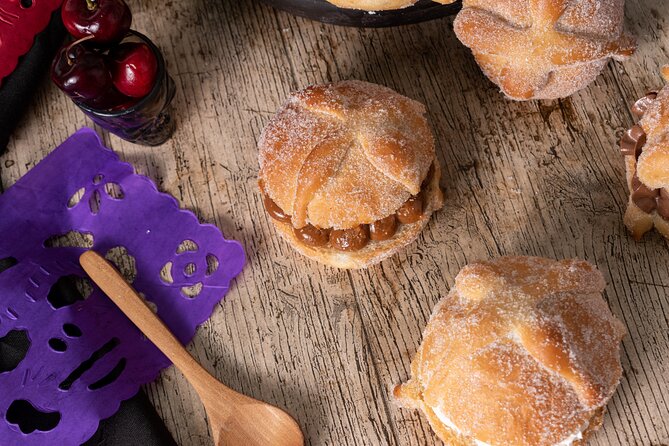
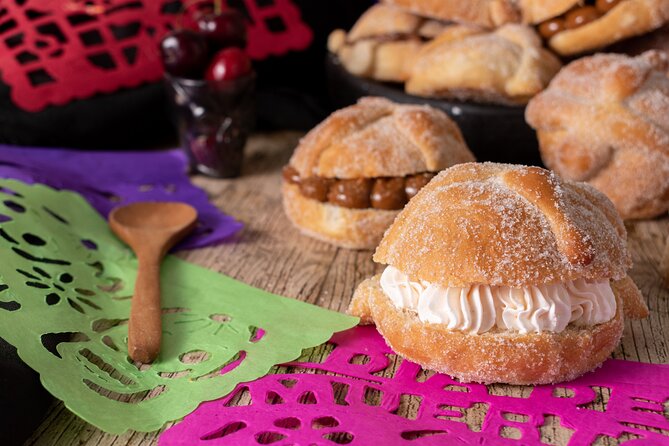
The most recognizable part of Pan de Muerto is its decoration. You shape bone-like pieces and place them on the loaf, learning about the meaning connected to this design.
This gives the class more depth than a standard sweet-bread lesson. You are not only trying to make a good-looking loaf. You are also learning how the bread fits into Day of the Dead celebrations and why its shape and flavors matter.
The bread has delicate orange and anise notes. Those flavors give it a clear Mexican identity without making the lesson too complicated for someone new to the cuisine. You will work toward a loaf that is both edible and presentable, then bake it as part of the session.
An optional filled Pan de Muerto is also included among the snacks. The information does not say that every participant makes a filled loaf, so treat this as an additional tasting rather than a promised second baking project. The main takeaway is your own baked Pan de Muerto.
High-cacao hot chocolate with the finished bread
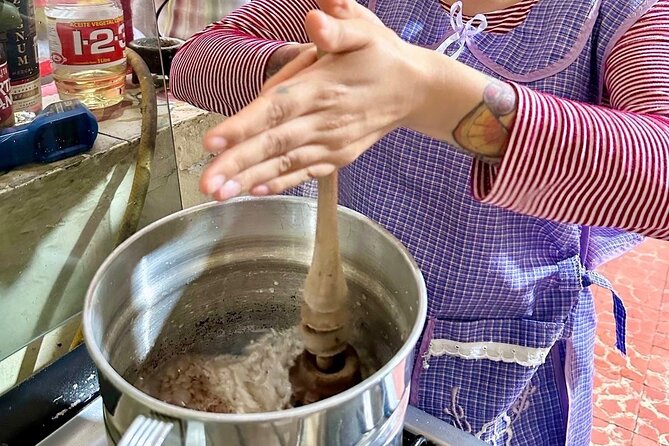
The class also includes chocolate made with cacao. It is prepared as the traditional partner for the bread, giving you a warm drink to serve alongside the orange-scented loaf.
This pairing is one of the smartest parts of the experience. Pan de Muerto is sweet and aromatic, while cacao adds a darker, fuller flavor. Together, they make the food feel connected to a Day of the Dead celebration rather than just a baking exercise.
Snacks include Pan de Muerto, an optional filled version, and chocolate with cacao. The description does not promise a full meal, so arrive with the understanding that this is a cooking class with tastings, not lunch or dinner.
A possible market element, but do not count on it
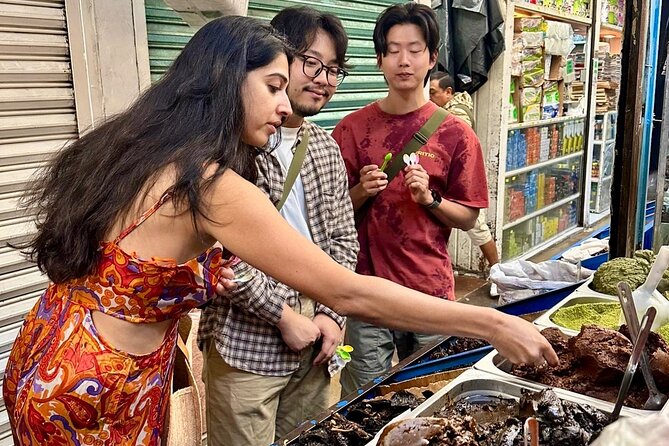
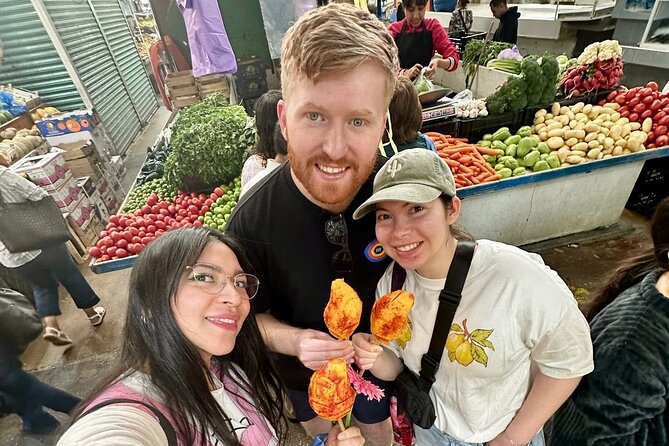
One account of the activity includes a market visit and describes the market as an unexpected highlight. The setting allowed participants to see local goods and interact with people selling them before returning to the bread lesson.
That sounds like a useful addition because ingredient shopping can explain Mexican food better than a lecture. It also fits the activity’s local focus and gives you a chance to see ordinary commerce in Tacuba.
However, a market stop is not listed as a fixed part of the stated itinerary. I would not book this experience solely for the market visit. Think of it as something that may be included in a particular version or schedule, and confirm it when arranging your date if that matters to you.


What the $65 price includes
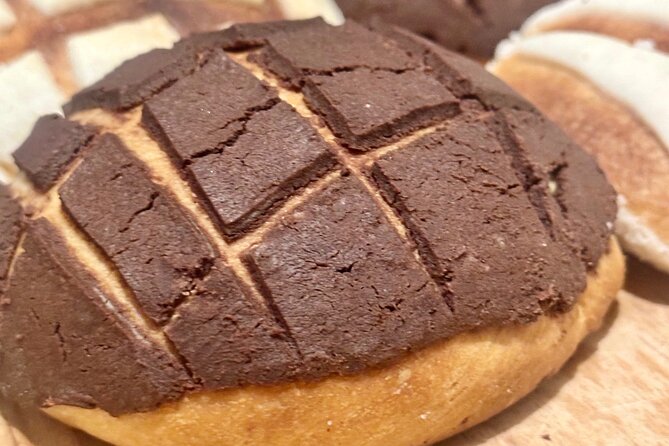
At $65 per person, this is priced above a simple bakery demonstration but includes several elements that make the cost easier to understand. You get roughly three hours of instruction, cooking equipment, snacks, cacao hot chocolate, recipes, and your own Pan de Muerto to take home.
The recipes are especially useful. A food tasting disappears quickly, but written instructions give you a way to repeat the bread for another Day of the Dead celebration. The lesson also saves you the trouble of buying equipment or finding a kitchen during your visit.
I see the value most clearly if you enjoy cooking or want a cultural activity with something tangible at the end. If you only want to sample Mexican bread, $65 may feel high compared with visiting a bakery. If you want personal instruction, a small group, food, and a recipe you can use later, the price is more reasonable.
Booking also supports local commerce. That does not replace the need to judge the class on its own merits, but it adds value for people who prefer spending part of their travel budget with local hosts.
Who will enjoy this class most
This activity suits you if you like to work with your hands and want a focused introduction to Mexican cuisine. It is also a good fit for couples, families with an interest in cooking, and solo visitors who prefer a social activity with a clear purpose.
You do not need to arrive as an expert baker. The class covers basic stages from selecting ingredients through baking, so beginners should be able to follow along. At the same time, experienced home cooks may appreciate learning about the flavors and symbolism of a bread they have not made before.
The class is less suitable if you need a gluten-free meal or baking experience. It is specifically not gluten free. You should also look elsewhere if your main goal is a full city tour, a large tasting menu, or private transportation.
Service animals are allowed, and the meeting point is near public transportation. The activity requires good weather and a minimum number of participants. If either condition causes cancellation, you are offered another date or experience, or a full refund.
Timing, booking, and cancellation details
The class lasts about three hours. That is long enough to cover the dough, decoration, baking, chocolate, and tasting without turning the activity into an all-day commitment.
It is typically booked around 17 days ahead. I would use that as a planning guide, especially if you want a particular day or need a specific language arrangement. The provider is Mexican Salsas, and alternate times or dates may be arranged if you ask.
You can cancel for a full refund up to 24 hours before the local start time. Inside that window, cancellations and changes are not accepted and the payment is not refunded. Confirmation is normally received at booking, though reservations made within one hour of departure are confirmed as soon as possible, subject to availability.
The strongest reasons to book
The best reason to choose this activity is its combination of food and tradition. You are not simply eating Pan de Muerto. You are learning how the bread is made, shaping its symbolic decorations, and serving it with cacao hot chocolate.
I also value the direct contact with local hosts. Veronica and Natalia bring different personal touches to the class, but both are connected with the warm, practical instruction that makes a cooking lesson work. The available feedback repeatedly points to friendly teaching, clear demonstrations, and bread that participants enjoyed eating.
The small group cap helps protect that personal quality. A maximum of 10 people is not a guarantee of perfect pacing, especially if several languages are used at once, but it is far more manageable than a large demonstration.
Should you book Learn to Cook Mexican Bread?
Book it if you want a three-hour cooking experience that connects a classic Mexican bread with Day of the Dead customs. The included recipe, equipment, chocolate, snacks, and loaf to take home make the $65 cost fair for hands-on instruction.
Skip it if you are gluten free, want private transport, or expect a full Tacuba history tour. Also confirm whether a market visit and your preferred language are part of the schedule before you pay.
For a visitor who wants to meet local hosts, support local commerce, and leave Mexico City with a skill rather than another souvenir, this is a thoughtful choice.
FAQ
Where does the Pan de Muerto class meet?
The class starts at Parroquia San Gabriel Arcángel, Calz México-Tacuba S/N, Tacuba, Miguel Hidalgo, 11490 Ciudad de México, CDMX, Mexico.
Where does the activity end?
The activity ends back at the same meeting point, Parroquia San Gabriel Arcángel.
How long does the experience last?
The cooking experience lasts approximately three hours.
How much does the class cost?
The listed price is $65 per person.
What is included in the price?
Cooking equipment, Pan de Muerto snacks, an optional filled Pan de Muerto, chocolate with cacao, recipes, and the Pan de Muerto you make are included.
Is the class gluten free?
No. The activity is not gluten free.
Is transportation included?
No. Private transportation is not included. The meeting point is near public transportation.
How many people can join the class?
The activity has a maximum of 10 travelers.
Can I cancel for a full refund?
Yes. You must cancel at least 24 hours before the local start time for a full refund. Cancellations within 24 hours are not refunded.
More tours in Mexico City we've reviewed


Mexico City, compared.
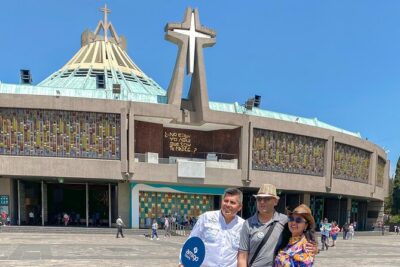 ★ 5.0Teotihuacan, Guadalupe Shrine & Tlatelolco Day Tour with LunchFrom $399 hours (approx.)
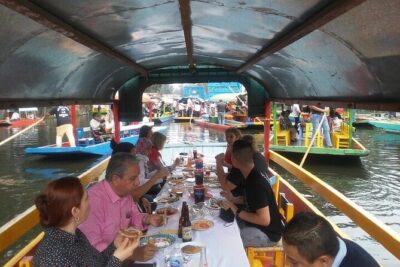 ★ 4.5Xochimilco, Coyoacan and Frida Kahlo with Optional LunchFrom $349 hours (approx.)
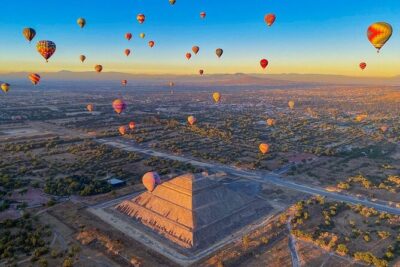 ★ 5.0Balloon flight + Breakfast in cave + Pyramids + Pick up CDMX.From $1722 to 8 hours (approx.)
 ★ 5.0Teotihuacan pyramids morning or afternoon without tourist trapsFrom $645 hours 30 minutes (approx.)
 ★ 4.5Teotihuacan Early Access Guided Tour with optional LunchFrom $398 hours (approx.)
 ★ 5.0Balloon flight + pick up in CDMX + Breakfast in Cave + PyramidsFrom $1694 to 7 hours (approx.)
 ★ 5.0Balloon Flight + Cave Breakfast + Pick Up from CDMX or We FlyFrom $1663 to 9 hours (approx.)
 ★ 4.6Mexico City: Teotihuacan, Tlatelolco & Guadalupe Shrine TourFrom $49