
Reviewed · TICKETS
Mexico City: Ticket de entrada Museo Memoria y Tolerancia
The most powerful part of this Mexico City museum is its refusal to treat genocide as distant history. Across 43 permanent exhibition rooms, you move from the Holocaust to Armenia, Rwanda, Guatemala, Cambodia, Darfur, and Yugoslavia, then face the harder question: what does indifference allow to happen today? I like the clear moral purpose and the careful mix of objects, documents, photographs, film, and art.
In This Article
- Key points
- Why this museum asks more of you
- Starting with 43 rooms of permanent exhibitions
- The Holocaust exhibition and the Anne Frank display
- From Armenia to Darfur: placing atrocities side by side
- The train wagon and the Berlin Wall fragment
- Jan Hendrix and the museum’s art installations
- Why the temporary exhibitions are worth checking
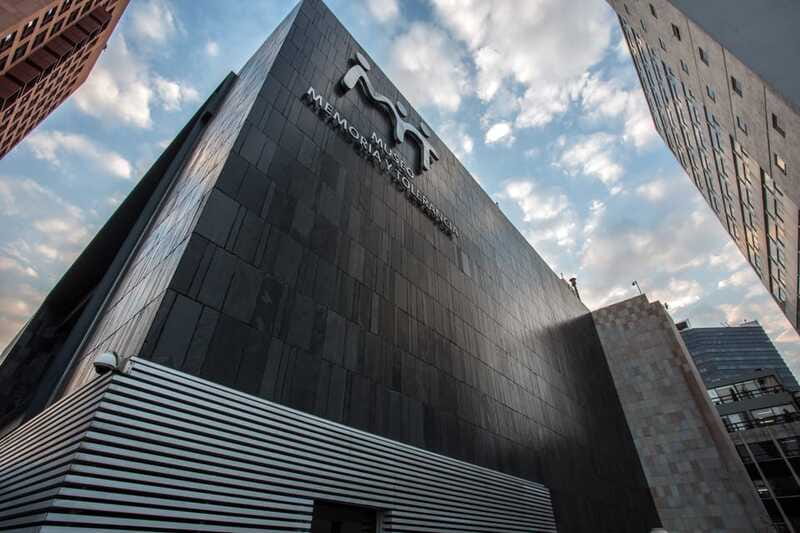
- Location at Plaza Juarez in downtown Mexico City
- Is $13 good value for a full day?
- Who should visit, and who may want to skip it?
- Should you book the Memory and Tolerance Museum?
- FAQ
- Where is the Memory and Tolerance Museum located?
- How much does admission cost?
- How long is the ticket valid?
- Is an audioguide included?
- What does the permanent exhibition cover?
- How many rooms does the permanent exhibition have?
- Are temporary exhibitions included?
- Is the museum suitable for children?
- Is the museum wheelchair accessible?
I also like that the museum gives you an English or Spanish audioguide, so you can take the material at your own pace. The main drawback is emotional rather than practical: the permanent exhibitions are serious and are recommended for children over 15. Younger children must be with an adult, and this is not a light sightseeing stop.
Key points
- 43 rooms and more than 1,200 objects: Expect a large, serious museum visit rather than a quick stop.
- Holocaust and genocide focus: The permanent displays cover several cases of mass violence and crimes against humanity.
- Art with a social message: Look for works by Jan Hendrix, Jorge Marin, Rivelino, Carl Fredrik Reuterswärd, and others.
- English and Spanish audio: The included guide helps you follow the historical material without relying only on exhibit text.
- Temporary exhibitions included: Your ticket covers changing displays as well as the permanent collection.
- Central Mexico City setting: Find the museum at Plaza Juarez, beside the Secretariat of Foreign Affairs and opposite the Hemicycle to Juarez.
Why this museum asks more of you
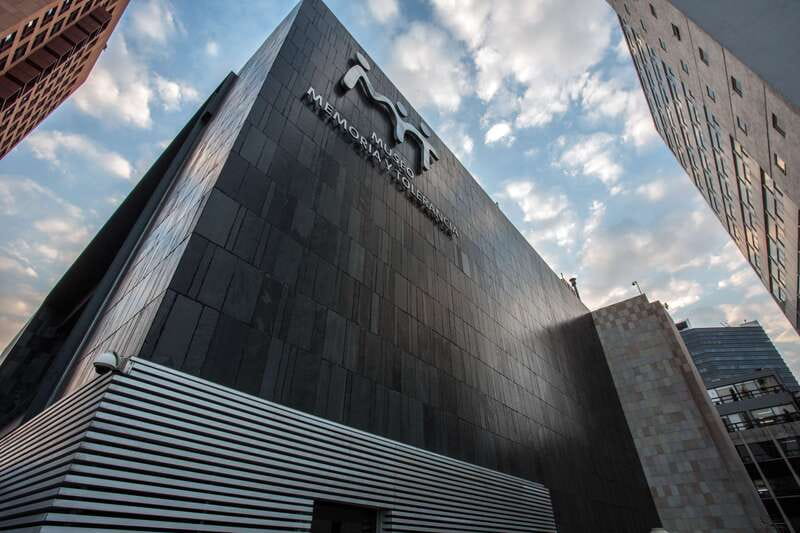
The Memory and Tolerance Museum is not designed as a cheerful break between Mexico City’s monuments. Its purpose is to make historical memory useful in the present.
You begin with the Holocaust, then encounter other genocides and crimes against humanity. The subjects include the Armenian genocides, Rwanda, Guatemala, Cambodia, Darfur, and Yugoslavia. That wider reach matters because it prevents the Holocaust from being treated as a single, sealed chapter of European history.
I appreciate the museum’s direct connection between past violence and present behavior. The message is not simply that terrible events happened. It is that discrimination, silence, dehumanization, and indifference can create the conditions for violence.
That approach gives the visit a clear shape. You are not only collecting dates and facts. You are being asked to consider tolerance, human rights, peace, and social action. It can feel demanding, but that is also why the museum leaves a lasting impression.
A few more Mexico City tours and experiences worth a look


Starting with 43 rooms of permanent exhibitions
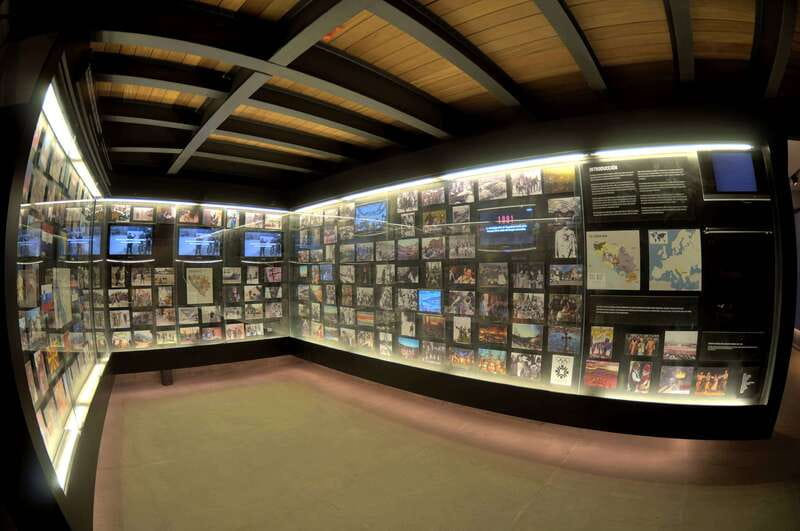
The permanent collection is the heart of the visit. With 43 rooms and more than 1,200 objects, documents, and audiovisual pieces, you should plan for a substantial museum session.
The scale gives the subject room to breathe, but it also means you should not rush. The museum contains more than a few dramatic displays arranged around a simple storyline. You will encounter historical material, personal testimony, visual records, and installations that ask you to stop and think.
The audioguide is included in your ticket and is available in English and Spanish. This is especially useful if you want more context than a short label can provide. You can listen carefully, pause when the material feels heavy, and spend less time worrying about translating unfamiliar terms.
The content is recommended for children older than 15. That advice makes sense. The exhibitions address mass death, persecution, displacement, and crimes against humanity. If you are visiting with a younger child, an adult must accompany them, and you should think carefully about how much of the permanent collection is suitable.
The Holocaust exhibition and the Anne Frank display
The Holocaust section is likely to be the emotional center of the museum. It presents the subject through historical information, photographs, documents, and objects rather than reducing it to one famous story.
The Anne Frank exhibition adds a personal point of entry. Her life gives the larger history a human scale, helping you connect the machinery of persecution with the experience of one young person and her family.
I find this kind of presentation valuable because statistics alone can become hard to absorb. A personal story can make the consequences of discrimination and persecution easier to understand, while the wider exhibition reminds you that Anne Frank’s experience formed part of a much larger crime.
Give yourself time here. The material is not something to skim while checking your phone. The museum’s strongest quality is its effort to connect evidence with empathy, and that works best when you slow down.
From Armenia to Darfur: placing atrocities side by side
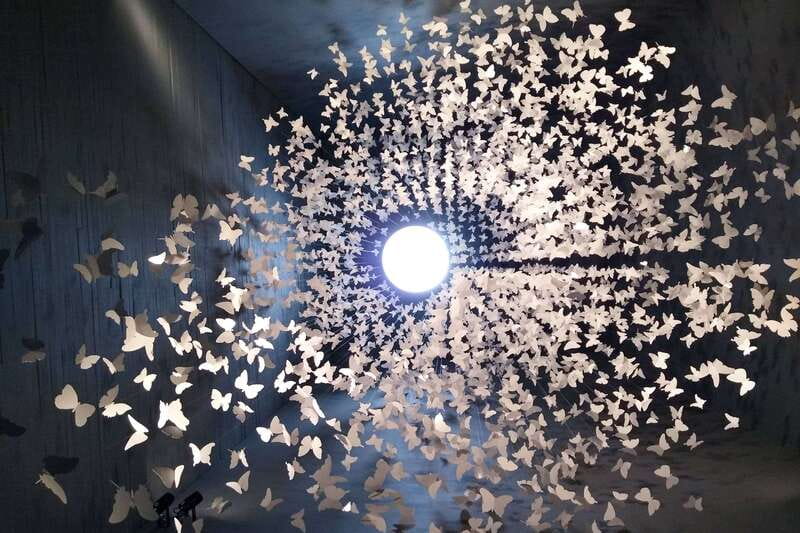
After the Holocaust section, the museum broadens its view. The displays address the Armenian genocides and later crimes in Rwanda, Guatemala, Cambodia, Darfur, and Yugoslavia.
This wider comparison is one of the museum’s most useful features. It lets you notice recurring patterns without suggesting that every event was identical. The subjects differ in time, place, politics, and scale, yet the museum asks you to consider how prejudice, propaganda, exclusion, and inaction can help produce mass violence.
For you, the practical benefit is a clearer understanding of why the museum uses the word tolerance in its name. Tolerance here is not just polite behavior or a vague appeal to be kind. It is tied to human rights and the need to oppose discrimination before it becomes something worse.
The subject matter may feel repetitive at points because several sections deal with persecution and loss. That is not a flaw in the museum’s purpose, but it can be tiring. Plan a pause if you need one, especially if you are trying to see all 43 rooms in one visit.
The train wagon and the Berlin Wall fragment
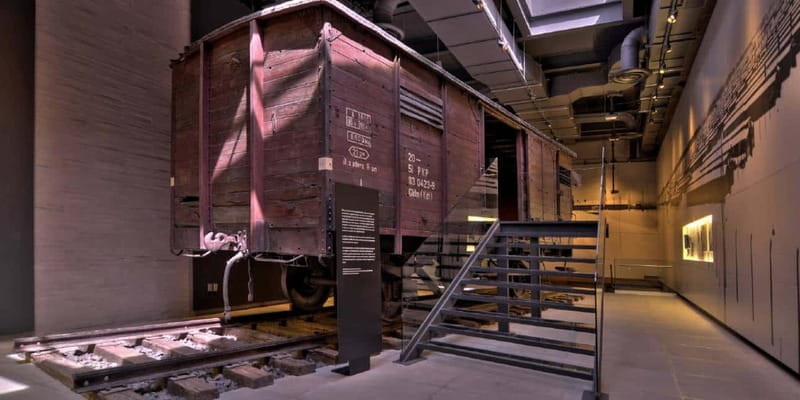
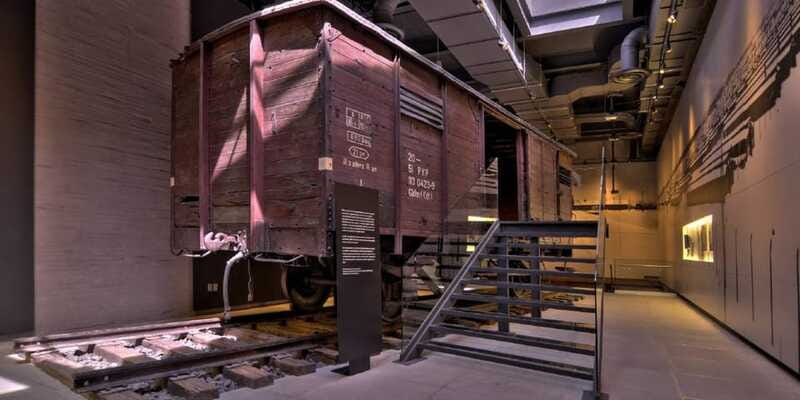
Among the museum’s larger historical objects are a train wagon used during World War II to transfer prisoners and a fragment of the Berlin Wall.
The train wagon brings the transport system of wartime persecution into physical view. A document can explain forced transfer, but a full-sized wagon gives you a stronger sense of the machinery involved. It is a sober object, and the setting asks you to look at it as evidence rather than scenery.
The Berlin Wall fragment shifts the focus toward division and political history. Placed within a museum dedicated to memory and tolerance, it points to the damage caused when societies are split by ideology, borders, fear, and exclusion.
These objects help break up the reading-heavy parts of the visit. They also show the museum’s range. You are not only moving from case to case. You are encountering objects that carry physical weight and historical associations.
Other city tours we've reviewed in Mexico City





Jan Hendrix and the museum’s art installations
Art plays a major role here. It is not decoration added around the historical material. The installations give you another way to think about memory, absence, violence, and change.
Jan Hendrix is represented by several pieces, including Lost Potential and Cube. These works encourage reflection rather than offering a simple historical explanation. You might find them most useful after reading about the museum’s difficult subjects, when a nonverbal pause allows the information to settle.
Another installation uses metronomes by Lozano-Hemmer. The steady mechanical motion creates a different kind of tension from the photographs and documents. It makes time, repetition, and human action feel present in the room.
The Wings of Peace, by Jorge Marin, is a sculptural and interactive work. Rivelino’s YOU is also interactive, giving you a more active role in the art rather than asking you only to look.
You will also find Non-Violence Project, a sculpture by Carl Fredrik Reuterswärd. Together, these installations support the museum’s larger goal: using art to promote social change and encourage a culture of peace.
Why the temporary exhibitions are worth checking
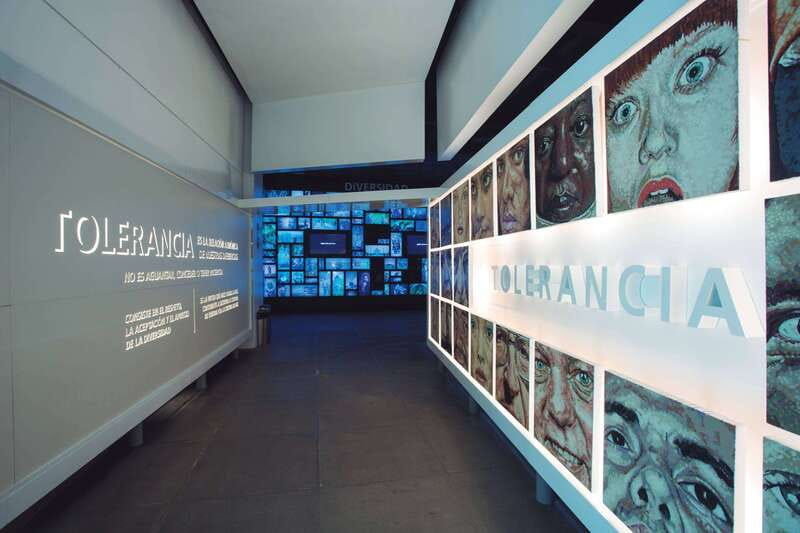
Your entry includes the temporary exhibitions, which adds value to the $13 ticket. The permanent collection gives the museum its core identity, while the temporary displays can provide a different pace or a more focused subject.
Because temporary exhibitions change, I cannot promise what you will see on a particular date. Still, it is worth checking them rather than heading straight for the exit after the permanent galleries.
They may be especially useful if you have already visited other museums about the Holocaust or genocide. The main collection has a broad scope, while a temporary show can offer a fresh artistic or historical angle.
This also makes the ticket more worthwhile for anyone who wants to spend much of the day at the museum. You are paying for access to both parts of the program, not just a single fixed display.
Location at Plaza Juarez in downtown Mexico City
The museum is at Plaza Juarez in central Mexico City, next to the Secretariat of Foreign Affairs and opposite the Hemicycle to Juarez.
That location makes it easy to pair with other downtown sights, though the museum itself deserves more than a rushed visit between appointments. I would treat the plaza as your orientation point, then allow enough time for the permanent rooms, installations, and temporary exhibitions.
The meeting point is clearly defined, which helps in a busy central area. You do not need to search for an obscure side street. The reference to the Secretariat of Foreign Affairs and the Hemicycle to Juarez gives you two useful landmarks.
Food and drinks are not allowed inside. Have anything you need before entering, since the museum wants its galleries kept clean and focused.
Is $13 good value for a full day?
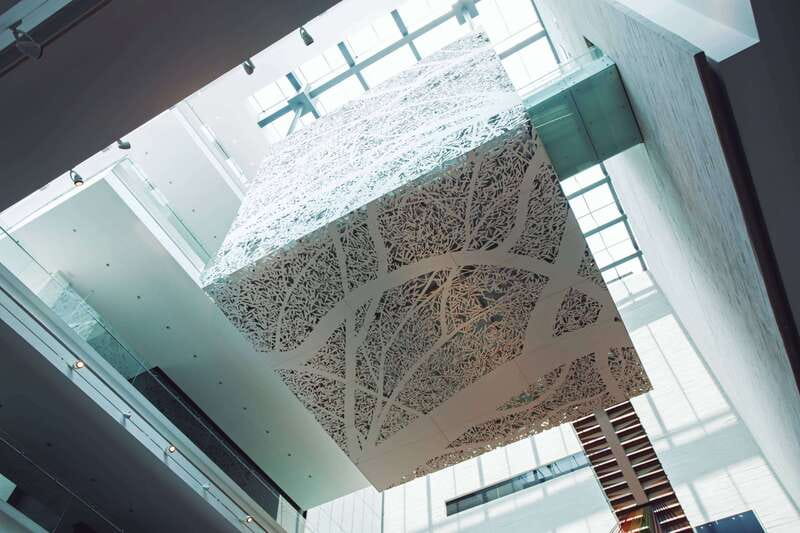
At $13 per person, this is a strong value if you take time with the material. The ticket includes the permanent exhibitions, temporary exhibitions, and an audioguide in English or Spanish. It also remains valid for one day, so you have flexibility about when you visit within the stated availability.
The value is not based on entertainment or the number of photo opportunities. It comes from the museum’s size, the range of historical subjects, the more than 1,200 objects and audiovisual pieces, and the number of installations included in one admission.
If you only have 30 minutes, the ticket may feel less useful because the museum is built for a longer visit. If you want a thoughtful cultural stop in downtown Mexico City, the price is reasonable.
The museum also offers free cancellation up to 24 hours in advance and a reserve now, pay later option. Those policies can help if your Mexico City schedule is still changing, but the main value remains the content inside.
Who should visit, and who may want to skip it?
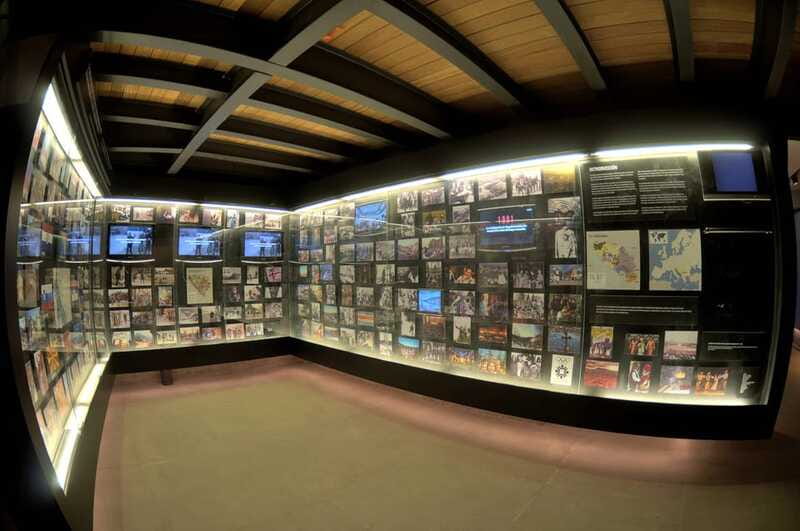
I would recommend this museum to you if you want history presented with a strong human-rights focus. It suits older teenagers and adults, students, teachers, museum fans, and anyone interested in how societies respond to discrimination and mass violence.
It is also a good choice if you prefer museums that ask questions rather than simply display beautiful objects. The art installations give the visit variety, but the tone remains serious from beginning to end.
You may want to skip it if you are looking for a relaxed family attraction, a short photo stop, or a museum centered on Mexico’s art and archaeology. The content can be emotionally heavy, and the permanent exhibitions are specifically recommended for children over 15.
The museum is wheelchair accessible, which makes it a practical option for more visitors. Since no food or drinks are allowed, plan that small detail before you enter.
Should you book the Memory and Tolerance Museum?
Book it if you want a serious, well-organized visit focused on the Holocaust, genocide, tolerance, and human rights. The combination of 43 rooms, historical objects, audiovisual material, temporary exhibitions, and Spanish or English audio gives you plenty to work with for the $13 admission.
I especially like the Anne Frank display, the World War II train wagon, the Berlin Wall fragment, and the works by Jan Hendrix and other artists. They keep the visit from becoming a long sequence of written panels.
Skip it only if your time is extremely short or if you want a lighter museum experience. For most adults and older teenagers who can give the subject proper attention, this is a meaningful downtown Mexico City stop.
FAQ
Where is the Memory and Tolerance Museum located?
The museum is at Plaza Juarez in downtown Mexico City, beside the Secretariat of Foreign Affairs and opposite the Hemicycle to Juarez.
How much does admission cost?
The listed price is $13 per person.
How long is the ticket valid?
The ticket is valid for one day. You should check availability for the available starting times.
Is an audioguide included?
Yes. An audioguide is included in Spanish and English.
What does the permanent exhibition cover?
The permanent exhibition focuses on the Holocaust and other genocides and crimes against humanity, including the Armenian genocides, Rwanda, Guatemala, Cambodia, Darfur, and Yugoslavia.
How many rooms does the permanent exhibition have?
The permanent exhibition has 43 rooms and more than 1,200 objects, documents, and audiovisual pieces.
Are temporary exhibitions included?
Yes. Your entry ticket includes access to temporary exhibitions as well as the permanent exhibitions.
Is the museum suitable for children?
The permanent exhibitions are recommended for children older than 15. Children younger than 15 must be accompanied by an adult.
Is the museum wheelchair accessible?
Yes. The museum is wheelchair accessible. Food and drinks are not allowed inside.
More City Tours in Mexico City
More Tickets in Mexico City
More tours in Mexico City we've reviewed







Tickets, compared.
 ★ 5.0Lucha Libre Tickets & Tacos & Beer & Mezcal – BEST NIGHT EVER!From $84
 ★ 5.0Frida Kahlo VIP [Museum Tickets Included] Bike, Markets & ChurrosFrom $834 hours (approx.)
 ★ 5.0Frida Kahlo VIP [Museum Tickets Included] Walk, Markets & ChurrosFrom $833 to 4 hours (approx.)
 ★ 4.5Mexico City: Frida Kahlo Museum Entry Ticket w/Digital GuideFrom $34
 ★ 4.4Mexico City: Anthropology Museum Skip-the-Line TicketFrom $15
 ★ 3.5Frida Kahlo and Anahuacalli Museums Ticket with Digital GuideFrom $491 hour (approx.)
 ★ 3.8Mexico City: Chapultepec Castle Skip-the-Line TicketFrom $291 day
 ★ 4.0Frida Kahlo Museum Ticket with Written Digital GuideFrom $472 to 4 hours (approx.)
The lists this tour appears in