
Reviewed · MEXICO CITY FOOD TOURS
Mexico Off the Beaten Track: Street Food & Bikes — All Inclusive
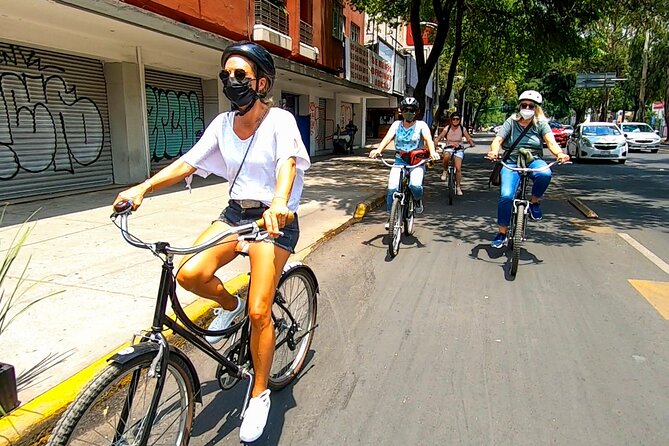
Mexico City reveals itself quickly on two wheels. This small-group bike tour links leafy Condesa with San Rafael, Santa María la Ribera, Paseo de la Reforma, and the Monument to the Revolution, while folding in street food and local drinks. It is less about checking off one famous sight and more about seeing how several neighborhoods fit together.
In This Article
- Key points at a glance
- Why a bike is a smart way to see Mexico City
- Starting with tacos or tamales in La Condesa
- Paseo de la Reforma and a serious local issue
- San Rafael, where old buildings meet a creative city
- Cine Opera and a quick Art Deco stop
- Santa María la Ribera and the Kiosco Morisco
- A second dish at the Kiosco Morisco
- Pulque beside the Monument to the Revolution
- Reforma icons: the Angel and Cibeles Fountain
- Finishing in Condesa with a michelada
- What the $86.68 price really includes
- Who should book this bike and food route?
- Should you book Mexico Off the Beaten Track?
- FAQ
- Where does the tour start?
- Where does the tour end?
- How long does the experience last?
- How much does the tour cost?
- Is food included?
- Are drinks included?
- What language is the tour offered in?
- How large is the group?
- Are bikes provided for children ages 5 to 14?
- Can I cancel for a full refund?
I like the food included in the price, especially since the tour uses tacos or tamales, another Mexican dish, pulque, and a final michelada to give you more than one taste of the city. I also like the small maximum of eight people. Guides named Raul, Simon, and Mario have led this experience, with Simon praised for making the ride safe, educational, and fun.
The main consideration is pace. Four and a half hours on a bike, with several stops and city streets between them, will suit active visitors better than anyone wanting a slow museum tour. The route also requires good weather, and bikes are not provided for children ages 5 to 14.
Key points at a glance
- Street food begins in Condesa: Depending on the tour time, your first bite may be tamales or tacos, with a drink to break the ice.
- Eight people maximum: The small group makes it easier to ask questions and keep the ride together.
- Neighborhoods beyond the usual circuit: San Rafael and Santa María la Ribera bring architecture, parks, and everyday city life into the route.
- Pulque and michelada included: You try a traditional fermented drink at the Revolution Monument and finish with a cold michelada in Condesa.
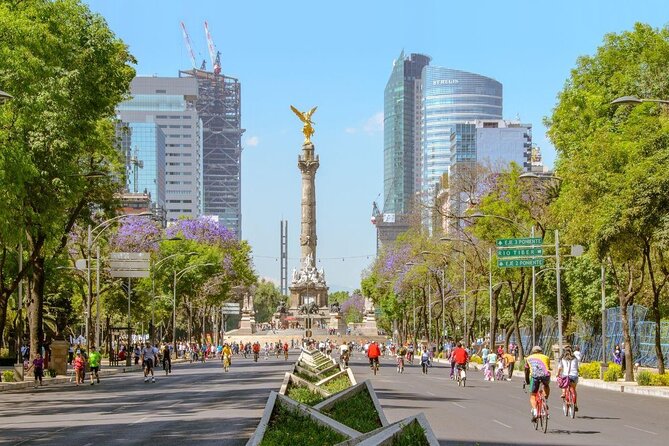
- A useful four-and-a-half-hour overview: The route covers major sights such as the Angel of Independence, Cibeles Fountain, and Kiosco Morisco without turning into a full-day commitment.
Why a bike is a smart way to see Mexico City
At $86.68 per person, this is not the cheapest way to eat in Mexico City or see its monuments. It is a good value if you want both in one outing, especially with two street food dishes and two drinks included.
The bike matters because the tour covers several districts that are too far apart for a comfortable walking route in four and a half hours. You move from Condesa toward Reforma, continue through San Rafael and Santa María la Ribera, then return to Condesa for the final drink.
The group limit of eight is another practical advantage. A guide can give more attention to questions, explain neighborhood changes, and help the group stay organized around city traffic. The experience is offered in English, which makes it useful for visitors who want cultural context rather than only directions and photo stops.
You should still be comfortable riding in an urban setting. The information provided does not describe the bike model, traffic conditions, or riding difficulty, so I would treat this as an active city outing rather than a gentle park cycle.
A few more Mexico City tours and experiences worth a look



Starting with tacos or tamales in La Condesa
The tour begins at Av Sonora 164 in Hipódromo, Cuauhtémoc, an area associated with La Condesa. The first 30 minutes are meant to get the group acquainted over food and drinks.
Depending on the start time, you may begin with tamales or tacos. That small variation is worth noting. A morning or earlier departure may feel different from a later food-focused start, and the exact first dish is not fixed.
I like beginning here because it gives the tour a social rhythm before the cycling gets underway. You are not simply handed a bike and sent into the city. You have a chance to meet the guide and the other food lovers, then start with something recognizably local.
The food is also part of the tour’s real value. Condesa has plenty of polished restaurants, but this experience points you toward street food and casual eating. That gives you a more useful introduction to everyday Mexican flavors than a standard sightseeing ride with no meal included.
Paseo de la Reforma and a serious local issue
The ride then reaches Paseo de la Reforma, where the group spends about 20 minutes discussing a controversial topic that affects Mexican life and is often left out of mainstream coverage.
The subject is not named in the supplied details, so you should not book this expecting a particular political lecture. What is clear is that the guide intends to address social change and an issue that many conventional city tours skip.
This stop adds weight to the experience. Mexico City is not just monuments, cafés, and good food. A guide who brings in a difficult current issue can help you see the city as a place where history and present-day concerns meet.
Some people will value that frankness. Others may prefer a lighter sightseeing outing. If you want only architecture and snacks, this discussion may feel like a shift in tone. If you want a tour with more substance, it is one of the more distinctive parts of the route.
San Rafael, where old buildings meet a creative city
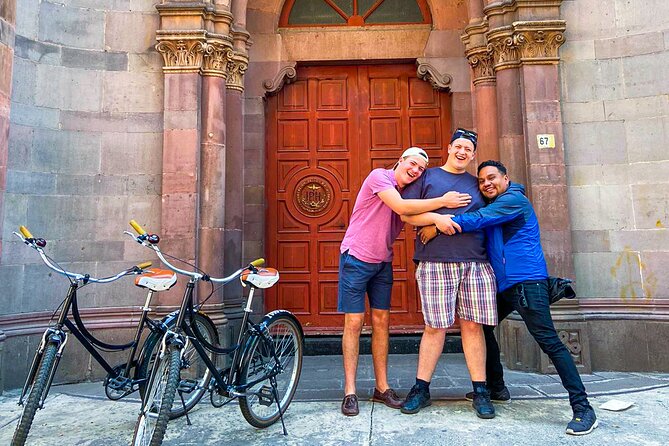
The 40-minute stop in San Rafael is one of the best reasons to choose this tour over a standard central-city circuit. The neighborhood is near Tabacalera and is described through its tree-lined streets, historic buildings, and newer establishments.
You can expect the guide to point out how the area mixes older architecture with a more contemporary urban feel. The tour does not promise entry into particular buildings, so think of this as a street-level neighborhood visit rather than an interiors tour.
San Rafael gives the ride breathing room after Reforma. Instead of rushing from one famous monument to another, you get time to notice the blocks between them. That is often where Mexico City becomes most interesting, especially for someone who has already seen the Zócalo and the main museum district.
The 40-minute timing is generous enough for explanation and a few photographs. Since the tour is by bike, you can cover more ground than on foot, but you still get a chance to pause.
Cine Opera and a quick Art Deco stop
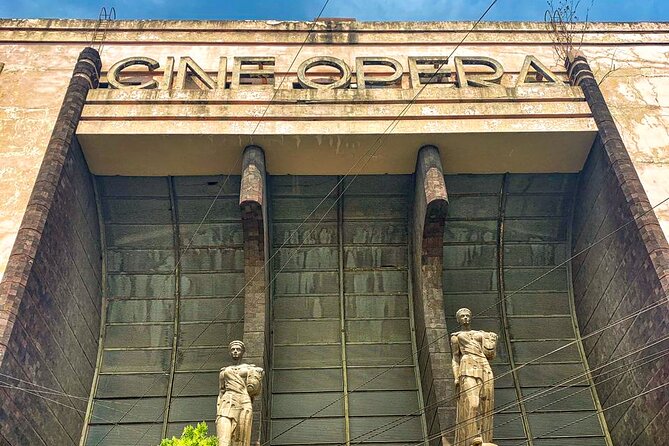
Cine Opera receives only about 10 minutes, so this is a brief look rather than a long visit. The building is associated with Art Deco design, with stone sculptures representing comedy and tragedy on the facade.
The original interior included bronze and crystal chandeliers, mirrored walls, and luxurious finishes. The description focuses on the cinema’s design, so the appeal here is architectural and visual.
I would keep expectations measured. Ten minutes is enough to understand why the building matters and take in its exterior details, but not enough for a full examination. It works well as a short punctuation mark between the longer neighborhood stops.
For anyone interested in Mexico City’s old cinemas and urban design, this is a worthwhile inclusion. It also shows that the route is not built only around national monuments. Smaller cultural landmarks receive attention too.
A few more Mexico City tours and experiences worth a look





Santa María la Ribera and the Kiosco Morisco
The tour gives Santa María la Ribera about 45 minutes, making it one of the longer stops. The neighborhood brings together Art Nouveau, Art Deco, and neoclassical buildings, along with broad tree-lined streets and Alameda de Santa María la Ribera.
The park offers a change of pace. It includes a pond and sculptures, giving you a quieter setting after the road sections. The area helps explain how Mexico City’s districts can feel distinct even when they are relatively close together.
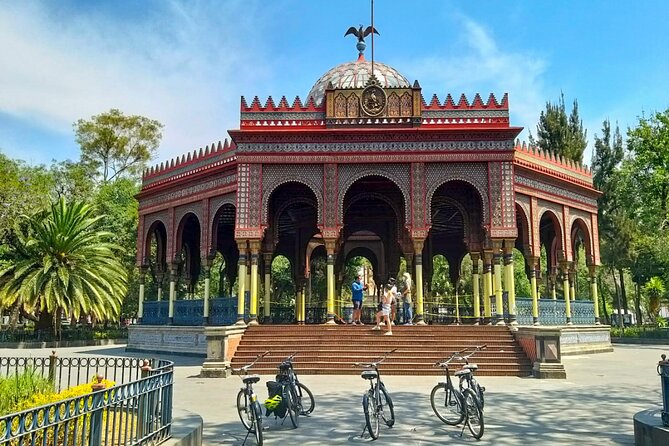
The main attraction is the Kiosco Morisco, an ornate iron-and-glass pavilion in the center of the Alameda. It is a neighborhood symbol and a meeting place for the local community. The design recalls Moorish architecture, which makes it visually different from the city’s many neoclassical and colonial structures.
This stop combines architecture, public space, and local identity. You are not only looking at a pretty pavilion. You are seeing how a neighborhood uses a central park and a recognizable structure as part of its daily life.
A second dish at the Kiosco Morisco
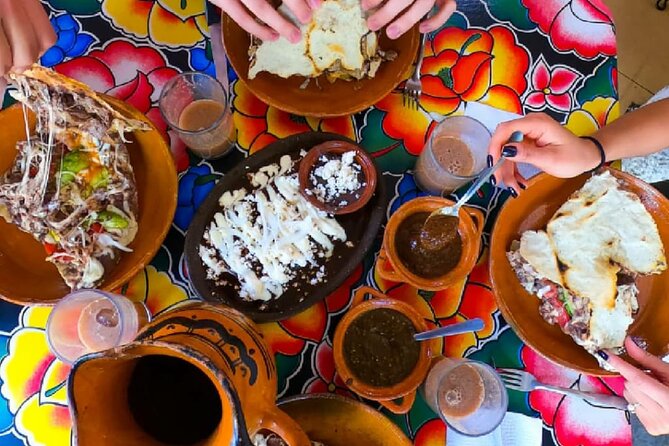
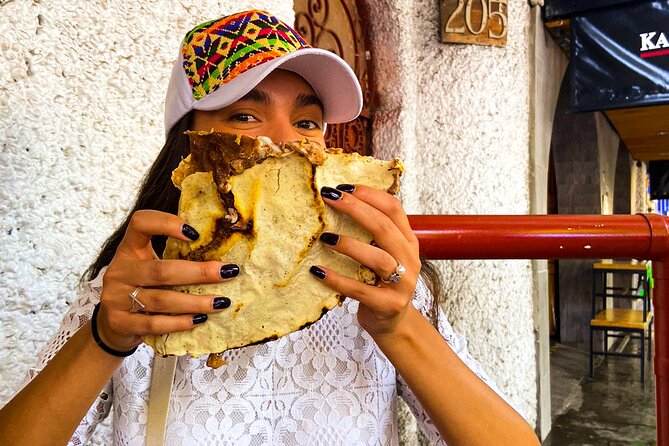
The food continues at the Kiosco Morisco stop, where you receive another dish as you explore Mexican cuisine. The overall tour description promises two street food dishes and two drinks, all included.
The exact second dish is not specified, so you should be open to whatever the guide has planned. That is part of the fun of a food tour, but it also means this may not be the right choice if you need a fixed menu for dietary reasons.
The sequence works well. You have already had an opening bite in Condesa, then time to ride and see neighborhoods before eating again. The food is spread across the route instead of being packed into one meal at the start or end.
I would not confuse this with a sit-down culinary class. You are tasting food as part of a moving city tour. The payoff is variety and context, not a detailed lesson in preparation.
Pulque beside the Monument to the Revolution
The stop at the Monument to the Revolution lasts about 40 minutes and includes pulque, a traditional Mexican beverage. The monument provides a strong setting for the drink, linking a major national landmark with a beverage that has been part of Mexican culture for generations.
Pulque has a distinctive place in Mexico’s food and drink story. Including it makes the tour feel more local than one that serves only beer or soft drinks. If you have never tried it, this is a simple way to add something unfamiliar to your day.
The Monument to the Revolution is also a useful anchor on the route. Its scale and design give the guide plenty to discuss, while the drink gives you time to pause instead of simply taking a quick photograph and moving on.
The itinerary does not say how much pulque is served or whether alternatives are available. If you do not drink alcohol, ask the provider before booking. The tour specifically highlights pulque and the final michelada as alcoholic beverages.
Reforma icons: the Angel and Cibeles Fountain
Two additional city sights are included along the route: the Angel of Independence and the Cibeles Fountain. The timing for these stops is not separately listed, so they appear to be brief sightseeing and photo points within the broader ride.
The Angel of Independence is one of Mexico City’s best-known landmarks, positioned on Paseo de la Reforma. It represents Mexican independence and is one of the city’s most recognizable symbols.
The Cibeles Fountain brings a different note. It was inspired by the fountain in Madrid, Spain, and represents a link between the two cities. Its sculptural detail makes it a natural place for photographs.
These stops help balance the neighborhood sections. San Rafael and Santa María la Ribera show you districts that many first-time visitors miss, while the Angel and Cibeles Fountain connect the tour to famous Mexico City images.
Because no separate duration is given, I would not expect a long guided visit at either monument. Think of them as part of the cycling route, with time to appreciate the setting and hear why they matter.
Finishing in Condesa with a michelada
The tour returns to La Condesa for a 30-minute finale. You sit down with a michelada, chat with the group, and exchange suggestions for the rest of your time in Mexico City.
This is a smart ending. You finish where you began, so you do not need to arrange transport from an unfamiliar district. You also have a natural chance to ask the guide for ideas after learning which neighborhoods interest you most.
The michelada is listed as an alcoholic drink. The tour description also promises two drinks overall, while the route specifically mentions a starting drink, pulque, and a final michelada. Since the exact drink count and serving details are not fully spelled out at each stop, I would confirm the menu if that point matters to you.
The final half hour also gives the experience a social finish. The tour is designed for people who enjoy food and meeting others, not just for visitors who want a private ride with no conversation.
What the $86.68 price really includes
The price is $86.68 per person. That is a fair but not bargain-level rate for a four-and-a-half-hour guided bike outing in Mexico City, particularly because food and drinks are part of the package.
You are paying for several things at once:
- A guide in English
- A bike-based route through multiple neighborhoods
- Two street food dishes
- Two drinks
- Stops at major landmarks and less familiar districts
- A maximum group size of eight
The biggest value comes from combining transport, sightseeing, and food. If you would otherwise pay separately for a food tour and a city sightseeing tour, this could save time and give the day a clearer shape.
The value is lower if you are mainly interested in a long meal, museum admissions, or private guiding. No museum entry is included, and the tour does not describe a formal restaurant meal. It is best understood as a social, active introduction to the city.
The strong score of 5 from 14 reviews and a 100 percent recommendation rate are encouraging, though the sample is small. The praise centers on the guides, the amount of food and drink, safety, and the quality of the information. Raul was singled out for providing extensive food and information, while Simon was praised for balancing education, safety, and fun. Mario received especially positive attention for his understanding of the different neighborhoods.
Who should book this bike and food route?
I would recommend it to you if you want to:
- See more than the main tourist districts in one morning or afternoon
- Meet a small group of people with similar food interests
- Try street food without planning every stop yourself
- Add pulque and a michelada to your Mexico City experience
- Learn about neighborhoods as well as monuments
- Use an active tour to get your bearings early in a trip
It is less suitable if you dislike cycling, want a private experience, need a fully fixed menu, or prefer long indoor visits. It may also be a poor fit for children ages 5 to 14 because bikes are not offered for that age group.
The tour is near public transportation, and it begins and ends at Av Sonora 164. Most people can participate, but the activity requires good weather. You can cancel for a full refund up to 24 hours before the start time. If poor weather cancels the tour, you are offered another date or a full refund.
Should you book Mexico Off the Beaten Track?
I would book this if you want a lively first look at Mexico City that mixes neighborhood character with local food. The route is unusually well balanced: Condesa for the welcome and farewell, Reforma for major symbols, San Rafael and Santa María la Ribera for street-level character, and the Revolution Monument for pulque and national history.
The best reason to choose it is the combination of small group size, named guides with strong feedback, and included food and drinks. Just remember that this is a bike ride with several stops, not a relaxed restaurant crawl. If you are ready to pedal, taste, listen, and cover a lot of ground, $86.68 buys a useful and sociable half-day in Mexico City.
FAQ
Where does the tour start?
It starts at Av Sonora 164, Hipódromo, Cuauhtémoc, 06100 Ciudad de México, CDMX, Mexico.
Where does the tour end?
The activity ends back at the meeting point.
How long does the experience last?
The tour lasts approximately 4 hours and 30 minutes.
How much does the tour cost?
The listed price is $86.68 per person.
Is food included?
Yes. The tour includes two street food dishes. The first may be tamales or tacos, depending on the tour time, and another dish is served at the Kiosco Morisco stop.
Are drinks included?
Yes. Two drinks are included. The route specifically mentions pulque and a final michelada.
What language is the tour offered in?
The tour is offered in English.
How large is the group?
The maximum group size is eight travelers.
Are bikes provided for children ages 5 to 14?
No. The provider does not offer bikes for children ages 5 to 14.
Can I cancel for a full refund?
Yes. You can cancel at least 24 hours before the experience start time for a full refund. Changes or cancellations made less than 24 hours before the start time are not accepted for a refund.
More Food Experiences in Mexico City
More Mexico City Food Tours in Mexico City
More tours in Mexico City we've reviewed

Mexico City Food Tours, compared.
 ★ 5.0Historic Center Food Tour in Mexico CityFrom $1155 hours (approx.)
 ★ 5.0Xochimilco Barco Fiesta Tentacion 18+ with Open Bar and TacosFrom $592 hours (approx.)
 ★ 5.0Lucha Libre Tickets & Tacos & Beer & Mezcal – BEST NIGHT EVER!From $84
 ★ 5.0Polanco Food Tour: The Bestselling Food Adventure in Mexico CityFrom $1093 hours (approx.)
 ★ 5.0Colonia Roma Food TourFrom $1104 hours (approx.)
 ★ 5.0Mexico City Historical Centre Food Tour with 7 Authentic TastingsFrom $653 hours (approx.)
 ★ 5.0Street Food Tour with Friends4 hours 30 minutes (approx.)
 ★ 5.0Mexico City: Hidden Markets, Street Food & Salsa-Making TourFrom $695 hours (approx.)
The lists this tour appears in