
Reviewed · PRIVATE
Private City Tour Mexico City – Best Rated
Mexico City’s historic center packs centuries into a few walkable blocks. In about two hours, this private tour links grand palaces, an Aztec temple site, the enormous Zócalo, and Mexico’s most important cathedral. You get the city’s big picture without spending half your vacation figuring out a map.
In This Article
- Key points at a glance
- Why this short walk works so well
- Starting at Palacio de Bellas Artes
- Palacio Postal and the beauty of public buildings
- Palacio de Minería and the colonial center
- The blue and white House of Tiles
- A sweet stop at Pastelería Ideal
- The Aztec past at Templo Mayor
- The Zócalo, the center of the center
- Mexico City Metropolitan Cathedral
- The guides make the private format worthwhile
- Timing, walking, and what to bring
- Who gets the best value from this tour
- Should you book the Mexico City private city tour?
- FAQ
- Where does the tour start?
- Where does the tour finish?
- How long does the tour last?
- Is the tour private?
- Is the tour offered in English?
- Is private transportation included?
- What sights are included?
- Is the pastry tasting included?
- Are admission tickets included?
- Can I cancel for a refund?
I like the private format, since your group can ask questions and set the pace. I also like the practical help from guides such as Brenda, Daniel, Rosa Maria, Joss, and Ricardo, who have suggested restaurants, museums, and next stops for the rest of the trip. The main drawback is simple: this is a walking tour with no private transportation, and the route can mean more than 10,000 steps.
Key points at a glance
- A two-hour introduction to central Mexico City: You cover major sights without committing an entire day.
- A private English-language guide: Only your group participates, making questions and adjustments easier.
- A striking mix of eras: The route moves from Aztec ruins to Spanish colonial buildings and modern city life.
- A useful first-day choice: Guides can help you decide which museums, restaurants, and neighborhoods to visit next.
- Flexible handling of city conditions: Guides have adapted routes around demonstrations, parades, traffic, and late arrivals.
- Good value at $35 per person: The price is modest for a private guide, though admission and transportation details need attention.
Why this short walk works so well
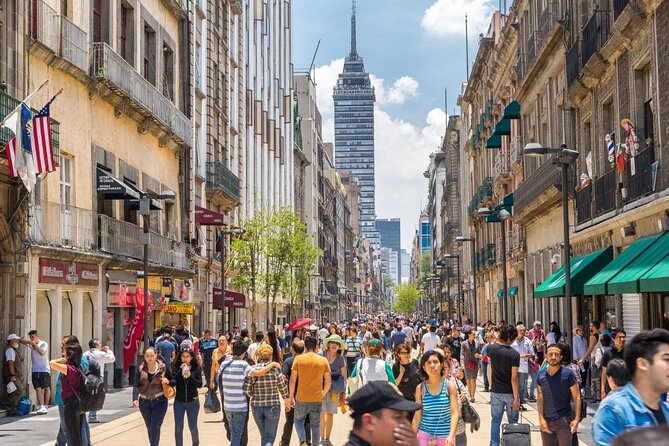
I like this tour because it does not treat Mexico City as a collection of unrelated sights. The route connects the city’s layers: the Aztec capital beneath today’s streets, the colonial center built after the Spanish conquest, the grand public buildings of modern Mexico, and the everyday pleasures of pastry shops and city squares.
At $35 per person, the value depends partly on the size of your group. For two people, you are paying for a private, guide-led introduction rather than a large group walk. For a family or small group, the cost becomes especially reasonable because everyone gets the same guide and can ask questions freely.
The two-hour length is another strength. Mexico City’s center can be visually and historically overwhelming, so a short orientation helps you get your bearings without draining your first day. Ernesto’s approach, for example, gave his group enough background to choose museums and return to them later at their own pace.
Still, do not mistake this for a relaxed café stroll. The route includes several stops in quick succession, and one person reported walking more than 10,000 steps. Comfortable shoes are not optional. Since the tour ends back at the Palacio de Bellas Artes meeting point, you will also need to plan your next activity around that location.
Other city tours we've reviewed in Mexico City

Starting at Palacio de Bellas Artes
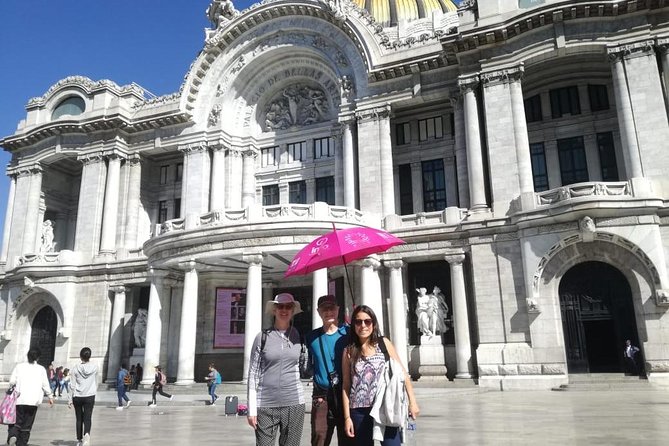
The tour begins at the Palacio de Bellas Artes, on Avenida Juárez in the Centro Histórico. This is a smart meeting point because the building gives your guide an immediate way to explain Mexico City’s artistic and political story.
Allow about 15 minutes here. You will hear about the palace itself, its place in Mexican culture, and the art connected with the country. The tour does not include an admission ticket, so treat this as an exterior introduction rather than a full museum visit.
The nearby area also offers a quick lesson in Mexico City’s changing skyline. One of the stops in this opening stretch concerns a building that was once the tallest in Latin America and has survived three major earthquakes. That detail helps explain a basic fact about the city: its impressive architecture exists alongside serious seismic challenges.
This opening is particularly useful for first-time visitors. Instead of beginning with a long lecture about dates and names, the guide can point to the buildings around you and make the city’s past visible.
Palacio Postal and the beauty of public buildings
The Palacio Postal takes about 15 minutes, and it is one of the route’s best visual stops. Italian marble and gold decoration give the post office a grand, almost theatrical appearance. The building still functions as a post office, which makes the visit more interesting than looking at a preserved monument that no longer has a daily purpose.
I appreciate stops like this because they show how Mexico City uses historic buildings as part of ordinary life. You are not only looking at architecture. You are seeing a working public place that has kept its original role.
The guide can also point out nearby views toward the National Art Museum and the statue of El Caballito, Charles IV. This part of the walk brings together civic art, public squares, and architectural styles in a compact area.
The practical limitation is time. Fifteen minutes is enough for an explanation and photographs, but not enough for a slow architectural study. If the Palacio Postal captures your attention, make a note to return later.
Palacio de Minería and the colonial center
The Palacio de Minería receives about five minutes, but the building deserves attention. Completed in 1797, it was originally used as a mining school and is one of the oldest buildings in the city. The stop gives you a glimpse of Mexico’s colonial-era education and scientific institutions.
Admission is included here, according to the tour details. Even so, five minutes is brief, so you should not expect an extended indoor visit. The value is in understanding what the building represented and seeing how it fits into the historic center.
This is where a private guide can make a short stop count. A plain façade can pass unnoticed when you walk alone. With context, you begin to see the historic center as a working record of changing power, education, religion, and trade.
The blue and white House of Tiles
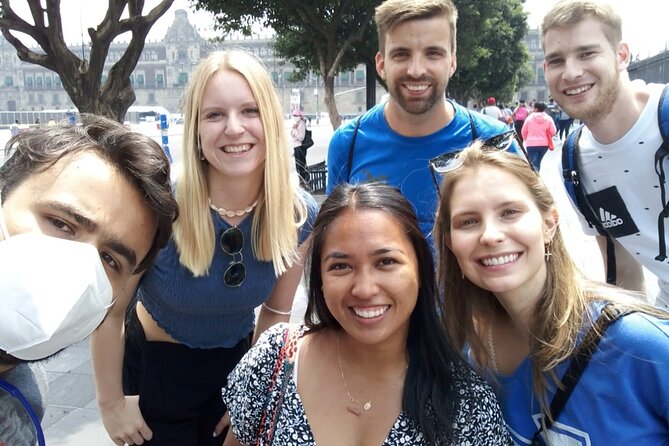
The House of Tiles, or Casa de los Azulejos, gets roughly 15 minutes. Its blue and white tile façade is the obvious attraction, but the interior adds murals, frescoes, and sculptures.
This is a strong photo stop and one of the places where the tour’s mix of architecture and daily life works well. The building is not presented as an isolated palace. It is part of a city street, surrounded by the movement and noise of the center.
Admission is included in the tour details. Your guide can explain what you are seeing, then help you decide if you want to return for a longer look later. Fifteen minutes lets you appreciate the design without allowing one building to take over the whole morning.
I would keep expectations measured. The itinerary moves quickly, and the tour’s purpose is orientation. If you enjoy tilework, murals, or historic interiors, you may want to spend extra time here after the walk.
Other private tours in Mexico City



A sweet stop at Pastelería Ideal
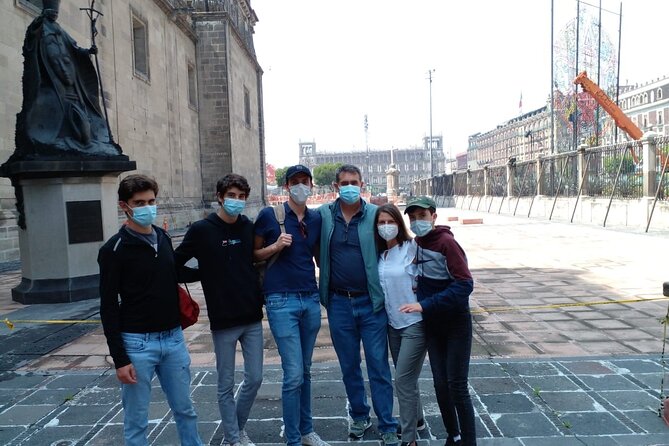
Pastelería Ideal adds something many city tours miss: a taste of ordinary Mexican food culture. The stop lasts about 10 minutes, and you can learn about the history of Mexican baked goods while trying pastries yourself.
This is a small detail, but it helps keep the tour from becoming a parade of government buildings and churches. Food gives you a direct connection to the city’s habits and traditions. It also offers a pleasant change after several architecture stops.
The pastry tasting is included in the stated experience, but the details do not specify exactly which items are offered. Think of it as a brief introduction, not a full bakery visit or meal.
I especially like this stop for families. Children may remember the pastries more clearly than a date from colonial history, while adults get a useful glimpse of local baking culture. If you have dietary restrictions, ask the provider in advance, since no specific ingredient information is provided.
The Aztec past at Templo Mayor
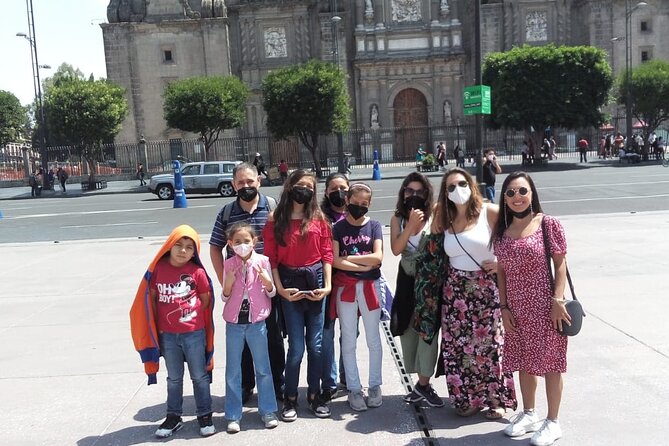
The Museo del Templo Mayor is the route’s most important stop for understanding the city before Spanish rule. Here you see a real Aztec ruin in the middle of present-day Mexico City and hear about the ancient civilizations of Mexico.
The visit is listed as free, but the stop itself lasts only about five minutes. That is enough for a clear explanation of what the ruins mean and why this site matters. It is not enough for a full museum visit.
This short introduction can change how you see the rest of the walk. The modern city center was built over an older capital, and the Aztec past is not tucked away in a distant archaeological park. It is right beside the major square and cathedral.
If ancient Mexico interests you, plan a separate visit to the museum when you have more time. The tour gives you the essential context, then lets you decide how far you want to pursue it.
The Zócalo, the center of the center
The Zócalo receives about 20 minutes, making it one of the longer stops. It is described as the largest square in the Western Hemisphere and the second largest in the world. More important for your visit, it is the symbolic heart of Mexico City.
The open space gives your guide room to explain the city’s political and civic life. You can look across the square and connect the surrounding buildings to the larger story of Mexico.
This is also one of the places most affected by city events. Demonstrations, parades, and traffic can alter access and meeting points. Ricardo once waited for a group during a parade and helped guide them toward a location easier for transportation. Brenda also adjusted a tour around a large demonstration, using the subway to reach the route.
That flexibility is valuable, but it also means the exact experience can change by day. Keep your schedule loose if you book this tour near an important flight or timed attraction. The guide may need to alter the route for safety or access.
Mexico City Metropolitan Cathedral
The final major stop is the Metropolitan Cathedral, with about 20 minutes devoted to its history and stories. It is the country’s most important church, and its location beside the Zócalo makes it a natural conclusion to the walk.
The cathedral gives the guide a chance to explain Mexico’s religious and colonial past, but the visit is not only about architecture. It is also about the role the building has played in the life of the capital.
As with the other stops, the time is enough for an introduction rather than a full study. You can listen, look around, and mark the cathedral for a later return if you want a quieter visit.
The tour ends back at Palacio de Bellas Artes rather than at the cathedral. That return point is useful if you want to continue exploring the area, but remember that the route is not a point-to-point transfer.
The guides make the private format worthwhile
The guide is the main reason to choose this experience over walking the same streets alone. The strongest guide names associated with the tour include Brenda, Daniel, Rosa Maria, Joss, Ricardo, Diana, Alejandro, Ari, Ernesto, Galy, Jesus, and others.
You should expect different personalities. Brenda has been especially effective at explaining Mexican history and managing unusual city conditions. Daniel is described as friendly, detailed, and easy to talk with. Rosa Maria has focused on local traditions, the Day of the Dead, landmarks, restaurants, and food stops. Joss has offered extra time and practical help.
Diana is noted for speaking excellent English and for being a strong conversationalist. Alejandro brings pride and enthusiasm to native and recent Mexican history, while Jesus is especially passionate about the story of his city.
These details matter because a private tour depends on conversation. You can ask why a building matters, request restaurant ideas, or shift the pace when something catches your eye. Several guides have offered recommendations for museums, restaurants, and places to visit during the rest of the trip.
WhatsApp support begins from the time of booking. That is useful for confirming the meeting point and handling day-of changes, especially in a city where public events can affect central streets.
Timing, walking, and what to bring
The listed duration is about two hours, with a choice of start time. That flexibility is helpful if you are fitting the tour around a flight, hotel check-in, or museum visit.
There is no private transportation included. You move between the sights on foot, and the tour starts and ends at Palacio de Bellas Artes. Public transportation is nearby, but arranging your own ride to and from the meeting point is your responsibility.
Wear comfortable shoes and bring water. The route is packed with stops, and the walking can add up quickly. If your group includes anyone who cannot walk for long periods, ask about the pace before booking, since the standard description does not promise a shorter or vehicle-assisted route.
Museums may also have their own opening schedules. One tour could not enter museums on a Monday because they were closed. The guide can still explain the exterior and surrounding history, but you should check the day before choosing a start time.
The tour is offered in English, service animals are allowed, and most people can participate. Confirmation arrives at booking, and cancellation is free up to 24 hours before the start time. Changes or cancellations inside that window are not accepted.
Who gets the best value from this tour
I would choose this walk for a first morning in Mexico City. It gives you a working map of the historic center and helps you decide where to spend more time. The restaurant advice is another benefit, especially when you want local suggestions instead of choosing at random.
It suits couples, families, and small groups that prefer private attention. Families can ask questions at their own level, while couples can keep the walk slower and more conversational. The private setup also helps if your group arrives late or needs to adjust the route.
History fans will enjoy the range of subjects, from Aztec civilization to colonial education, religious power, architecture, earthquakes, public art, and Mexican baking. You do not need prior knowledge. The guide supplies the connections.
I would hesitate if you want a long museum visit, a relaxed food tour, or private transportation. The experience gives you many introductions, but it does not offer much time for detailed exploration at any single site.
Should you book the Mexico City private city tour?
Book it if you want a short, private orientation with a real person who can answer questions and help shape the rest of your visit. At $35 per person, it is a fair price for a two-hour English-language walk, especially for a small group that values personal attention.
Book early if your schedule is fixed, since it is commonly reserved several weeks ahead. Pick a start time that leaves room for delays, city demonstrations, or a slower pace. I would also avoid placing an important flight immediately after the tour.
The best plan is to take this walk early in your Mexico City stay, then return to the Templo Mayor, House of Tiles, Palacio Postal, cathedral, or nearby museums that deserve more than a few minutes. That is where this tour delivers its real value: not by showing you everything, but by helping you understand what to see next.
FAQ
Where does the tour start?
It starts at Palacio de Bellas Artes, on Avenida Juárez in Mexico City’s historic center.
Where does the tour finish?
The activity ends back at the Palacio de Bellas Artes meeting point.
How long does the tour last?
The tour lasts approximately two hours.
Is the tour private?
Yes. Only your group participates in the activity.
Is the tour offered in English?
Yes. English is the listed tour language.
Is private transportation included?
No. Private transportation is not included, so you should arrange your own transport to and from the meeting point.
What sights are included?
The route includes Palacio de Bellas Artes, Palacio Postal, Palacio de Minería, the House of Tiles, Pastelería Ideal, Museo del Templo Mayor, the Zócalo, and Mexico City Metropolitan Cathedral.
Is the pastry tasting included?
The tour includes a stop at Pastelería Ideal where you can learn about Mexican baked goods and try pastries.
Are admission tickets included?
The tour details list admission as free at Palacio de Bellas Artes, Palacio Postal, Templo Mayor, the Zócalo, and the Metropolitan Cathedral. Admission is listed as included for Palacio de Minería and the House of Tiles.
Can I cancel for a refund?
You can cancel at least 24 hours before the local start time for a full refund. Cancellations or changes made less than 24 hours before the start time are not accepted.
More Private Tours in Mexico City
More City Tours in Mexico City


More tours in Mexico City we've reviewed



Private, compared.
 ★ 5.0Teotihuacan Private Tour from Mexico CityFrom $1401 to 5 hours (approx.)
 ★ 5.0Private Tour: Teotihuacan and Guadalupe ShrineFrom $1896 hours (approx.)
 ★ 5.0Private City Tour in Frida Kahlo, Coyoacan, and XochimilcoFrom $1954 to 6 hours (approx.)
 ★ 5.0Mexico City Custom Private Tour with a Local, Highlights & Hidden GemsFrom $773 to 6 hours (approx.)
 ★ 5.0Teotihuacan Private Tour with Expert Guide & Cultural InsightsFrom $1408 hours (approx.)
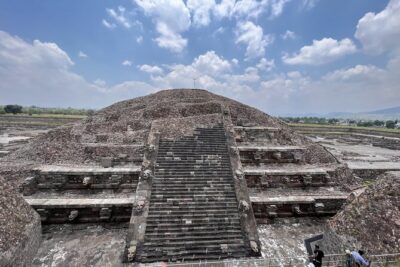 ★ 5.0100% Private Tour in Teotihuacán Pyramids from Mexico CityFrom $1205 hours 30 minutes (approx.)
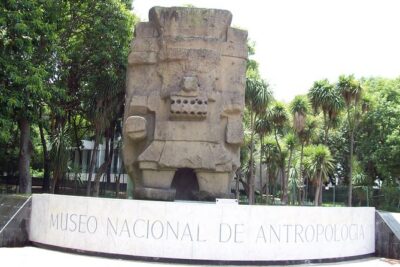 ★ 5.0Anthropology Museum Private Experience Walking TourFrom $783 hours (approx.)
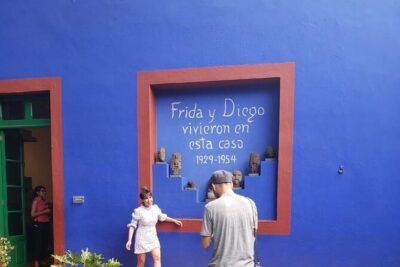 ★ 5.0Private Tour: Xochimilco, Coyoacan and Frida Kahlo MuseumFrom $2696 hours (approx.)