
Reviewed · TEOTIHUACAN TOURS
Private Tour with Archaeologist and VR Experience at Teotihuacan
Teotihuacan makes far more sense when someone helps you read it. This private tour with archaeologist David combines the main monuments with residential areas, painted murals, archaeological finds, and VR reconstructions that show how the city changed over time.
In This Article
- Key points
- Why this Teotihuacan tour feels different
- Starting at Gate 1 and finding the city
- La Ciudadela and the Feathered Serpent
- Residential areas and everyday life
- Reaching the Pyramids of the Sun and Moon
- How the VR and artifacts improve the visit
- The $120 price and what you receive
- Timing, walking, and practical planning
- Who will get the most from David’s tour
- Should you book it?
- FAQ
- How long does the Teotihuacan tour last?
- What language is the tour offered in?
- Where does the tour begin?
- Where does the tour end?
- Is admission included?
- Are meals included?
- Is this a private tour?
- How far in advance should I book?
I like the personal pace and the chance to ask questions without a group slowing you down. I also like the mix of physical ruins and visual aids, especially for children or anyone who struggles to picture a city from foundations and stone platforms alone.
The main consideration is the price, $120 per person, which does not include breakfast, lunch, or transportation. It is a strong value for a small private group seeking serious interpretation, but less so if you only want a quick look at the pyramids.
Key points
- Archaeologist David leads the tour, explaining the site through current theories, excavations, offerings, murals, and daily life.
- The route includes more than the famous pyramids, with time in La Ciudadela and residential areas that many independent visitors skip.
- VR goggles, artifacts, maps, and photo recreations help you picture Teotihuacan as a functioning city rather than a group of ruins.
- The tour starts at Gate 1 and ends by the Pyramid of the Moon, making the route easy to understand.
- The four-hour private format gives families and curious adults room for questions and a flexible pace.
- Transportation and meals are not included, so plan your arrival, departure, water, and food separately.
Why this Teotihuacan tour feels different
Many visits to Teotihuacan follow the same visual pattern: walk along the Avenue of the Dead, admire the pyramids, take photographs, and leave with a few unanswered questions. This experience aims at the part that photographs cannot provide. It explains how the city worked, how archaeologists interpret it, and what remains uncertain.
David uses supporting educational material and artifacts from the past during the walk. Maps and images can show what excavated areas looked like before restoration, while VR lets you picture places or earlier versions of the city that are not available for ordinary public viewing.
That combination matters here. Teotihuacan is huge, and its scale can be hard to grasp from ground level. A guide who connects the streets, temples, homes, murals, offerings, and surrounding environment gives you a way to read the site as a city, not just as a collection of impressive stonework.
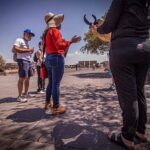
The tour is private, so only your group participates. That makes a practical difference. You can stop to ask why a building was arranged in a certain way, ask for a simpler explanation, or spend more time on a subject that catches your interest.
A few more Mexico City tours and experiences worth a look
Starting at Gate 1 and finding the city
You meet at Gate 1, at the access point to the Avenue of the Dead. Once inside, David begins with an introduction to Teotihuacan and its setting. This opening is useful because the site can feel confusing at first. You need a basic map in your head before the long ceremonial road and its platforms start to make sense.
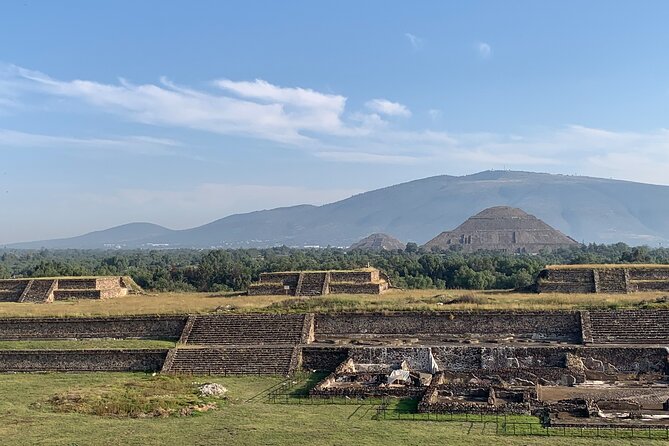
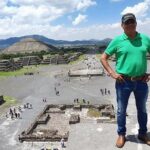
The first major section is the Calzada de los Muertos, or Avenue of the Dead. This was the main ancient access through the city, and it provides the route’s organizing line. Walking along it lets you see how Teotihuacan was planned around large public spaces and monumental buildings.
I would pay attention here to the relationship between open plazas and raised structures. The avenue is not simply a path between attractions. It helps show how movement, ceremony, and city planning worked together.
The route also gives David a chance to introduce modern theories about Teotihuacan. The city’s builders, political system, beliefs, and decline are subjects of ongoing archaeological study. A good guide should distinguish between what evidence shows and what scholars continue to debate, and this tour is designed around that kind of discussion.
La Ciudadela and the Feathered Serpent
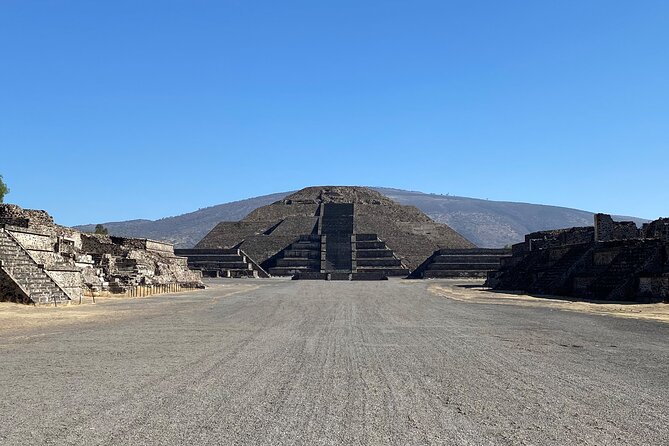
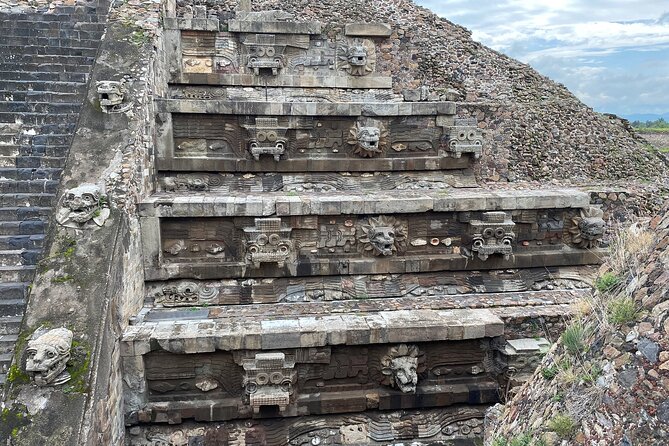
The next major stop is La Ciudadela, a large complex that includes the Temple of the Feathered Serpent, known in Spanish as the Templo de la Serpiente Emplumada. This is one of the tour’s most important stops because it shifts the focus from the giant pyramids to a more detailed look at architecture and carved decoration.
David explains the pyramid and its place within the city. He also discusses offerings and what they can reveal about religious practice, power, and the people who lived here. The subject is more useful when tied to the actual stones and excavated evidence in front of you.
The Feathered Serpent imagery is especially well suited to a guided visit. You can look closely at the surviving forms while learning how archaeologists interpret them. The site is not just a backdrop for a photograph. It is evidence, and the guide helps you ask better questions of it.
The tour’s artifacts and educational materials add another layer at this point. Seeing an object or a clear image alongside the building can make the ancient setting easier to understand. It also gives you something concrete to focus on when the scale of the monuments becomes overwhelming.
Residential areas and everyday life
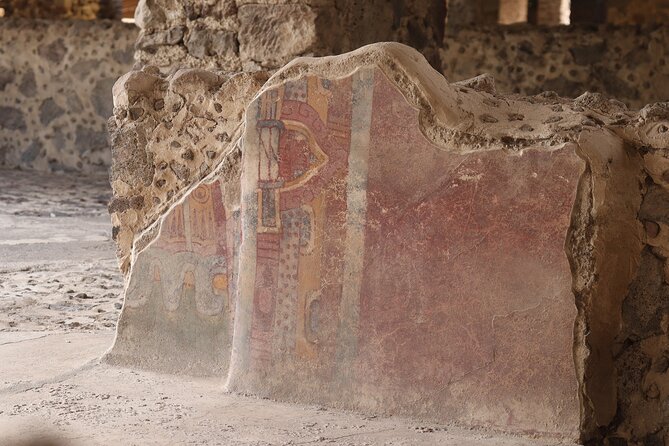
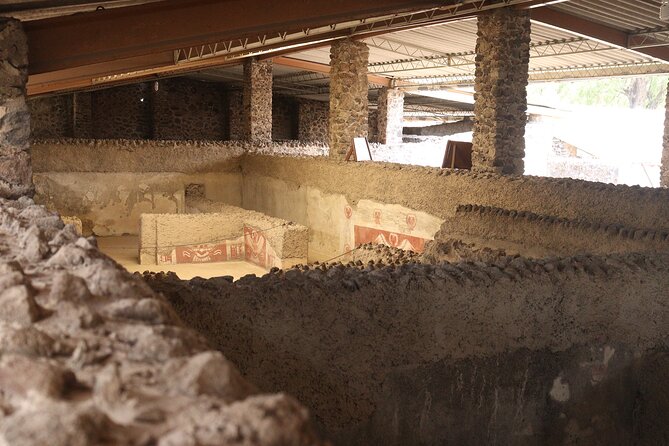
One of the strongest parts of the route is the visit to residential areas. Large ceremonial buildings get most of the attention at Teotihuacan, but homes and living quarters tell you how the city functioned day to day.
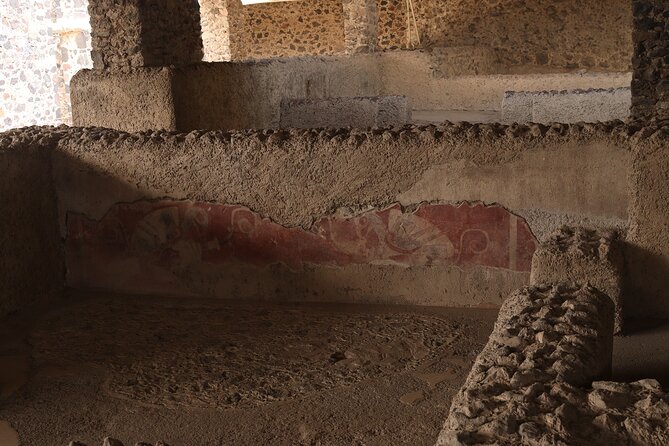
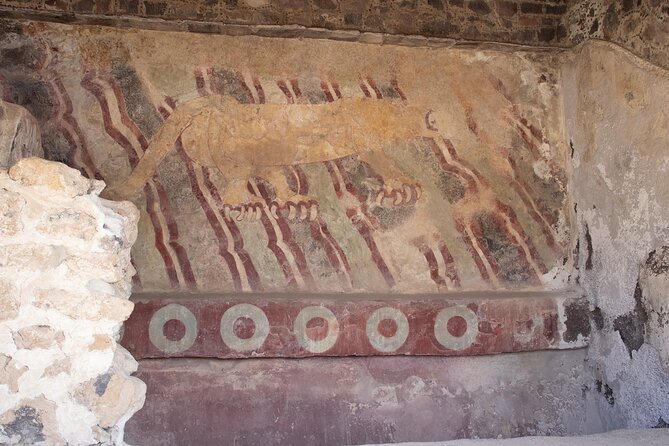
Here you examine the architectural system and mural paintings. The details of rooms, courtyards, construction, and decoration help move the experience away from the usual pyramid checklist. You begin to consider the people who cooked, worked, worshipped, raised families, and maintained the city.
This section is also a good reason to choose a private archaeologist-led visit rather than exploring alone. Without explanation, residential remains can look like low walls and empty spaces. With context, those same remains can reveal social organization, design choices, and the difference between public and private life.
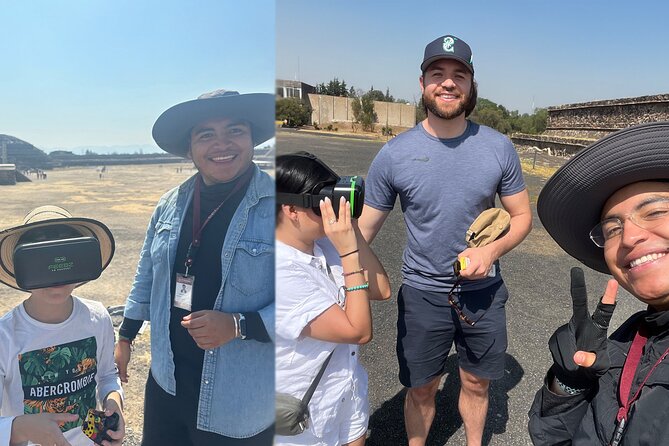
A family may find this part particularly useful. Children often understand a site more easily when they can connect it to homes and daily routines. One family described David as patient with an endless stream of questions from a nine-year-old, and the use of VR and photo recreations helped keep both children and adults involved for hours.
The residential area may not deliver the same instant visual impact as the Sun Pyramid. It does provide a more human view of Teotihuacan, and I consider that a major strength.
Reaching the Pyramids of the Sun and Moon
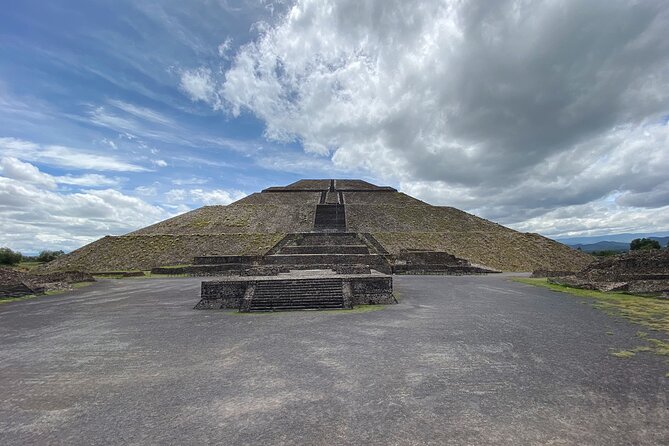
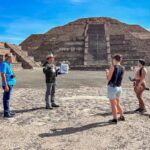
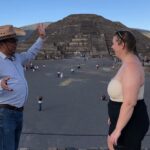
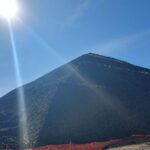
The final part of the route visits the area around the Pyramids of the Sun and Moon. These are the monuments most people associate with Teotihuacan, and their size can be striking even after you have spent hours studying the smaller details.
Because the tour reaches them after the Avenue of the Dead, La Ciudadela, and the residential areas, you see the pyramids within a larger plan. They are not isolated wonders. They are part of a city with streets, compounds, homes, painted surfaces, ceremonial spaces, and a relationship to the surrounding environment.
David discusses the connection between the natural setting and the ruins during the visit. That topic helps explain why the city was established where it was and how people understood the world around them, though the exact interpretation of ancient beliefs can remain a matter of archaeological theory.
The tour ends at the Pyramid of the Moon. Two different gates are available nearby for your exit. This is worth noting when planning the rest of your day, since you do not return to Gate 1 after the walk.
The supplied meeting information lists the experience at about four hours, while the general duration is described as four to five hours. Allow room for the longer estimate, especially if your group asks many questions or spends time with the visual materials.
Other private tours in Mexico City



How the VR and artifacts improve the visit
VR can be a gimmick when it is added without purpose. Here, its value is clear: it helps you visualize change over time and see areas that are not open to the public. That makes the technology useful rather than decorative.
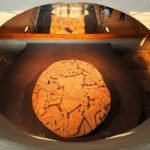
The experience also includes photo recreations and images of artifacts, excavations, and painted versions of the pyramids. These tools address one of the central problems at archaeological sites: much of what once gave the city color and life has disappeared, been removed, or survives only in fragments.
You should not expect the VR to replace the real ruins. It works best as a bridge between the stones in front of you and the earlier city they represent. The physical site provides scale and atmosphere. The digital material supplies missing context.
This is one reason the experience can work well for different ages. Adults get more archaeological explanation, while children can respond to the visual reconstruction. The private format lets David adjust his explanation to your group instead of delivering the same script to everyone.
The $120 price and what you receive
At $120 per person, this is not a budget visit. The value depends on what you want from Teotihuacan.
The fee includes a private archaeologist-led tour, entrance fees, educational materials, artifacts for explanation, and the VR experience. You are paying for interpretation and personal attention, not just admission to the site.
That can be worthwhile if Teotihuacan is a major reason for your Mexico City trip, if you have limited time, or if you want to understand the city beyond its most famous photographs. It is also easier to justify for a family or small group, since the guide can keep everyone involved and answer questions at the right level.
The price is less attractive if you plan to walk quickly between the main monuments or prefer to read on your own. You will also need to budget separately for food and transportation. Breakfast and lunch are not included, and the standard meeting information begins at Gate 1 rather than at a Mexico City hotel.
Private transportation can be arranged separately through the guide, according to the tour information. One detailed account described hotel pickup and transportation as worth considering to avoid handling the drive or bus yourself. Confirm that arrangement before booking, since it is not part of the stated $120 inclusion.
Timing, walking, and practical planning
You need a moderate level of physical fitness. The tour covers a large archaeological zone on foot, and the route includes long stretches between major areas. Even if you do not climb every structure, expect plenty of walking under the sun and across uneven archaeological ground.
Bring water, sun protection, and comfortable shoes. These are sensible preparations for any four-hour outdoor visit, though the supplied details do not specify that equipment is provided.
The tour is offered in English. Confirmation is sent within 48 hours of booking, subject to availability, and the experience is often reserved well ahead of time, with an average booking lead time of 59 days. If your Mexico City schedule is fixed, do not leave this until the final morning.
The meeting point is near public transportation. You should still check the exact route to Gate 1 and allow time to arrive there. The stated starting point is La Ciudadela, access to the Avenue of the Dead by Gate 1, while the end point is by the Pyramid of the Moon.
Free cancellation is available if you cancel at least 24 hours before the start time. Cancellations or changes made inside that period are not accepted for a refund.
Who will get the most from David’s tour
I would choose this for anyone who wants interpretation rather than a quick monument stop. It suits adults interested in archaeology, families with children, and repeat visitors who want to see parts of Teotihuacan they may have missed on an earlier visit.
It is especially useful if you enjoy asking questions. David’s approach, as described in the experience details, includes current theories, excavations, artifacts, murals, offerings, architecture, and the environment. You can make that broad subject more personal by focusing on the parts that interest your group.
Families should note the reported success with children aged nine and twelve. The VR goggles, photo recreations, and patient explanations give younger visitors several ways to stay engaged. Still, four hours is a long outdoor session, so families should consider the children’s walking stamina.
This may not be the right choice if you want hotel pickup, lunch, and admission bundled into one simple package. Transportation and meals require separate planning. It is also not ideal for anyone who wants a very short visit centered only on the two largest pyramids.
Should you book it?
Book this tour if you want Teotihuacan explained by an archaeologist, value a private pace, and like having maps, artifacts, and VR to fill in what the ruins cannot show. The residential areas and the attention to everyday life make it more substantial than a standard pyramid circuit.
I would be most inclined to book it for a first visit, a family trip, or a special day in Mexico City when you want the site to become a central part of your itinerary. The $120 price is reasonable for that level of private instruction, but only if you also plan your own transportation and food.
If your goal is simply to see the pyramids and leave, save the money and choose a simpler visit. If you want to understand how Teotihuacan was built, used, decorated, and interpreted, David’s four-hour route offers a strong way in.
FAQ
How long does the Teotihuacan tour last?
The experience lasts approximately four to five hours. The detailed tour description lists four hours.
What language is the tour offered in?
The tour is offered in English.
Where does the tour begin?
It begins at La Ciudadela, at Gate 1, by the access point to the Avenue of the Dead.
Where does the tour end?
The tour ends at the Pyramid of the Moon. Two different gates are available nearby for exiting the archaeological zone.
Is admission included?
Yes. Entrance fees are included in the price.
Are meals included?
No. Breakfast and lunch are not included.
Is this a private tour?
Yes. Only your group participates in the activity.
How far in advance should I book?
The experience is booked an average of 59 days in advance. Confirmation is sent within 48 hours of booking, subject to availability.
More Private Tours in Mexico City
More Teotihuacan Tours in Mexico City

More tours in Mexico City we've reviewed


Teotihuacan Tours, compared.
 ★ 5.0Teotihuacan, Guadalupe Shrine & Tlatelolco Day Tour with LunchFrom $399 hours (approx.)
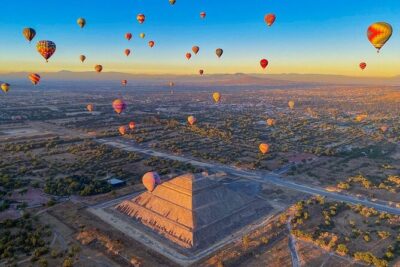 ★ 5.0Balloon flight + Breakfast in cave + Pyramids + Pick up CDMX.From $1722 to 8 hours (approx.)
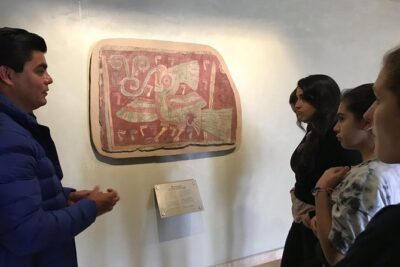 ★ 5.0Teotihuacan pyramids morning or afternoon without tourist trapsFrom $645 hours 30 minutes (approx.)
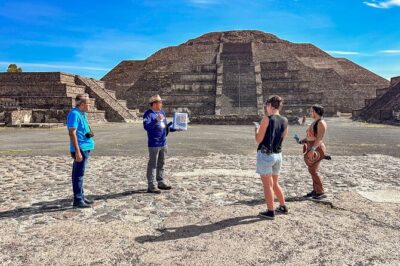 ★ 4.5Teotihuacan Early Access Guided Tour with optional LunchFrom $398 hours (approx.)
 ★ 5.0Balloon flight + pick up in CDMX + Breakfast in Cave + PyramidsFrom $1694 to 7 hours (approx.)
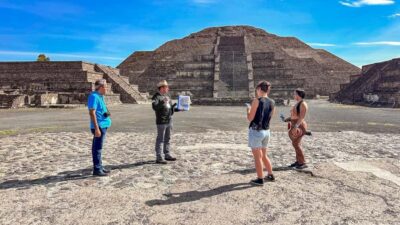 ★ 4.6Mexico City: Teotihuacan, Tlatelolco & Guadalupe Shrine TourFrom $49
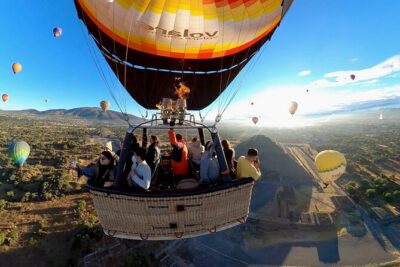 ★ 5.0Teotihuacan Hot Air Balloon Flight from Mexico City / VolareFrom $1553 to 9 hours (approx.)
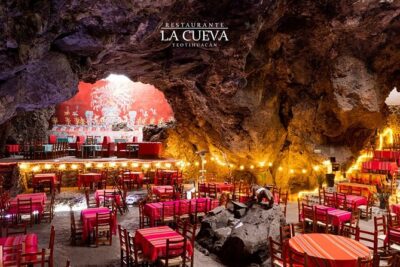 ★ 5.0Hot Air Balloon Flight with Breakfast Cave and Pyramids TourFrom $1408 hours (approx.)