
Reviewed · MEXICO CITY
The Best of Santa Maria de la Ribera
Santa María la Ribera gives you a side of Mexico City that many visitors miss: a turn-of-the-century neighborhood where food, family businesses, markets, and old gathering places still shape daily life. This 3.5-hour walk with culinary guide Nico Garcia turns that local character into a generous tasting menu on foot.
In This Article
- Key points to know before booking
- Why Santa María la Ribera makes a fine food-tour setting
- Starting at Alameda de Santa María
- Making herb-infused salt in a local garden
- Seeing how more than 20 kinds of tamales are made
- A quick walk through the neighborhood market
- Meeting a cooking school with a local purpose
- Entering a pulquería with no sign outside
- Seeing the geology museum and neighborhood landmarks
- Finishing with buñuelos and a drink
- What the $122.46 price really covers
- Group size, pace, and who will enjoy it most
- Practical details worth planning around
- Should you book The Best of Santa Maria de la Ribera?
- FAQ
- Where does the tour begin?
- Where does the tour end?
- What time does the tour start?
- How long does the experience last?
- What language is the tour offered in?
- How many people can join the tour?
- Is food included?
- Which drinks are included?
- Is transportation included?
- Can I cancel for a refund?
I like the small maximum group of eight, which leaves room for questions and a more personal pace. I also like the range of stops, from a working tamales factory and neighborhood market to a pulquería with no sign outside. The main consideration is timing: a 1:00 pm start, several food stops, and included alcoholic drinks may not suit you if you prefer an early breakfast or a lighter afternoon.
Key points to know before booking
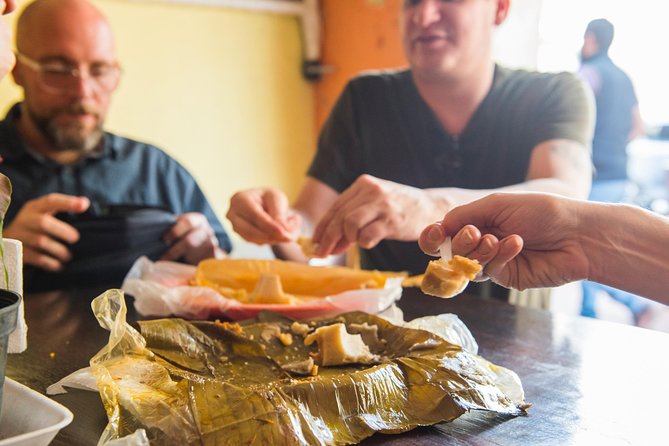
- More than 20 tamales daily: Visit a working factory that prepares a wide selection of tamales.
- A real neighborhood setting: Explore Santa María la Ribera, founded in the 1860s and known for its old city character.
- Hands-on food activity: Make your own herb-infused Mexican salt in a local garden.
- Traditional pulque included: Try a generous taste of the fermented drink in a long-running, unmarked pulquería.
- A full half-day meal: The food is intended to cover a large breakfast and lunch combined.
- Useful end point: Finish at Estanquillo El 32, where you can browse Mexican beer, mezcal, coffee, honey, salsas, and other products.
Why Santa María la Ribera makes a fine food-tour setting
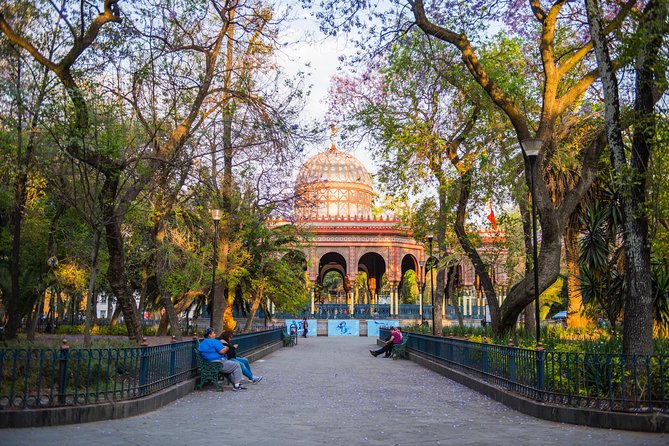
Mexico City has famous food districts, but Santa María la Ribera offers a different kind of introduction. Founded in the 1860s, the neighborhood still carries much of its turn-of-the-century character. That gives your walk a clear sense of place without turning it into a sightseeing march from one major monument to another.
You begin at Alameda de Santa María, a practical meeting spot near public transportation. From there, the experience links food with neighborhood life. You see where people shop, where local cooks work, and where residents gather for drinks that have been part of Mexican culture for centuries.
I like this approach because food is not treated as a series of unrelated samples. Nico Garcia’s route connects each bite to the people and places behind it. The result should feel more like spending an afternoon learning a neighborhood than checking off dishes.
The route also suits curious eaters who want context. You are not simply handed a tamale and told its name. You visit the place where tamales are made, stop at a market, and see a cooking school that helps local people who hope to start food businesses.
If you're still narrowing it down, here are other tours in Mexico City we've reviewed.

Starting at Alameda de Santa María
The tour starts at 1:00 pm at Alameda de Santa María on Calle Salvador Díaz Mirón. That start time matters. You should arrive ready for a substantial afternoon of eating rather than treat this as a quick snack walk between sightseeing stops.
The meeting point is in Santa María la Ribera, and the tour does not include transportation to or from the start. You will need to arrange your own way there and back. Since the area is near public transportation, getting to the meeting point should be part of your normal Mexico City planning, but the tour itself does not provide transfers.
A small group makes the opening easier. With a maximum of eight people, Nico can explain the neighborhood and answer questions without addressing a crowd. One of the strongest parts of this experience is the personal feel created by that limited size.
Making herb-infused salt in a local garden
One of the first unusual stops is a local garden where you make your own herb-infused Mexican salt. This is a modest activity, but it gives the tour a welcome hands-on start.
Many food walks are built around standing, tasting, and moving on. Here, you get to take part in a simple preparation step. It helps you pay attention to the herbs and seasoning that give Mexican cooking its character.
The garden also adds a pause between tastings. You are not rushing from one shop to another. Instead, you have a chance to see a neighborhood space and connect the food to ingredients before the larger meal continues.
Do not expect a full cooking class. The listed activity is focused on making the salt, not preparing a complete dish. Its value is in the small connection between the local setting and what you eat later.
Seeing how more than 20 kinds of tamales are made
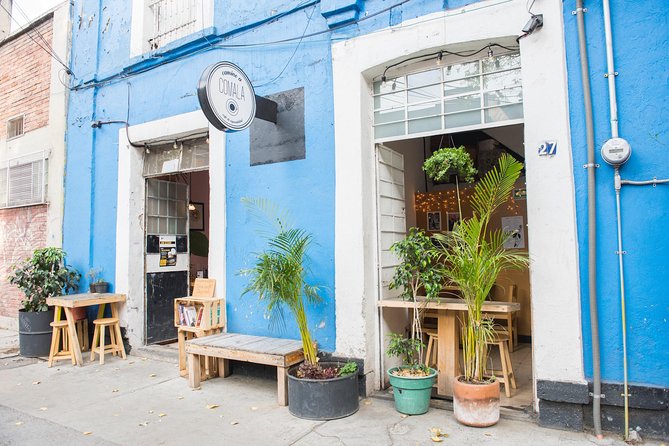
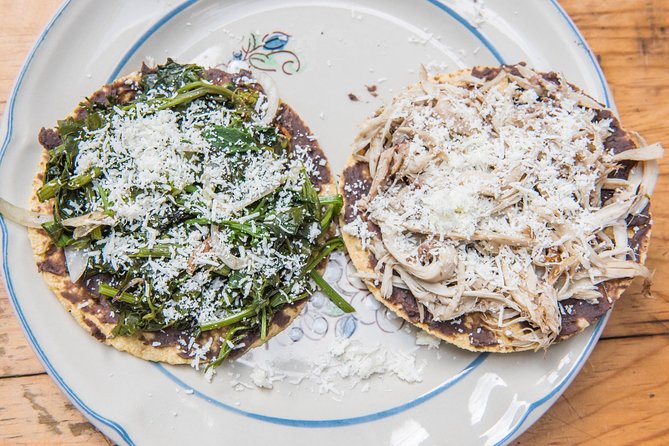
The tamales factory is likely the food stop that most clearly separates this tour from a standard market walk. It is a working local business producing more than 20 varieties each day, and the experience presents it as one of the best places in the city for tamales.
That variety matters because tamales are not a single, fixed food. A factory making more than 20 kinds gives you a better sense of the range available than one sample from a restaurant would. You can expect this stop to focus on production and tasting, with the chance to see a business serving the surrounding community.
The factory also offers a useful look at the scale behind a familiar Mexican dish. You are seeing a place that makes food for regular local demand, not a display created only for visitors. That makes the stop feel grounded in everyday life.
The practical point is to arrive hungry. The tour includes as much food as you can eat, and the tamales are only one part of the route. If you already had a large lunch, you may find the afternoon too filling.
A quick walk through the neighborhood market
The market stop is described as a quick stroll, so keep your expectations in check. This is not a long shopping session or a guided market class. It is a chance to see how a traditional Mexico City market looks and feels.
That short visit still has value. A market can show you the daily rhythm of a district more clearly than a polished restaurant can. You get a glimpse of the local food supply and the ordinary setting in which residents shop.
I would treat this as a scene-setting stop rather than the main event. The tour includes several food-focused places, so the market works best as a brief look at neighborhood life between tastings.
If you hope to buy souvenirs, remember that souvenirs are not included. The market is part of the tour route, but purchases are your responsibility and are separate from the price.



Meeting a cooking school with a local purpose
The neighborhood cooking school and restaurant adds a community angle to the walk. It helps local people who may want to start their own food businesses, so the stop is about more than eating a finished dish.
This is useful for you because it shows food as a source of work and independence. Nico’s tour is designed to explain Mexican culture and resilience through food, and this stop makes that theme clear without needing a grand museum presentation.
The available details do not specify how long you spend at the school or which dishes you prepare there. Expect a visit as part of the larger route, not a separate multi-hour cooking lesson.
Still, it is a smart inclusion. You see a place where cooking skills can lead to a new livelihood, giving the food tour a human focus that many tasting routes lack.
Entering a pulquería with no sign outside
The pulquería may be the most memorable stop for visitors who have never tried pulque. You enter a place with swinging saloon doors and no sign, a neighborhood business that has served local residents for more than 100 years.
Pulque is a fermented Mexican drink with roots reaching back to pre-Hispanic times. The tour includes a generous taste, so you get more than a token sip. That makes this a good chance to try a drink you might not order on your own.
The setting is part of the point. A pulquería without a visible sign does not feel like a conventional attraction, and the old neighborhood connection gives the stop a strong sense of continuity. You are tasting both the beverage and the kind of place where it has long been enjoyed.
The guide’s role matters here. Pulque may be unfamiliar, and the atmosphere may not be obvious to someone walking in for the first time. Nico can provide the cultural frame that turns an unusual drink into a more understandable part of Mexican life.
If you do not drink alcohol, take note. The tour includes pulque and one Mexican microbrew or mezcal. Additional personal drinks are not included, and the experience may not be the best fit if you want a completely alcohol-free food walk.
Seeing the geology museum and neighborhood landmarks
Food is the focus, but the route also passes landmarks that help explain Santa María la Ribera. One named highlight is a century-old geology museum.
The museum gives the neighborhood a cultural marker beyond its restaurants and markets. You may not have time for a full museum visit, since the tour is built around stops and tastings, but seeing the building helps place the food route in the wider story of the district.
This balance is one of the tour’s strengths. You get enough sightseeing to understand where you are, but the afternoon does not become a general city tour with a few snacks added. The food remains central.
The neighborhood’s old character also gives you something to notice between stops. Look at the streets, façades, and public spaces as you walk. The tour’s appeal depends partly on these in-between moments, not just the scheduled tastings.
Finishing with buñuelos and a drink
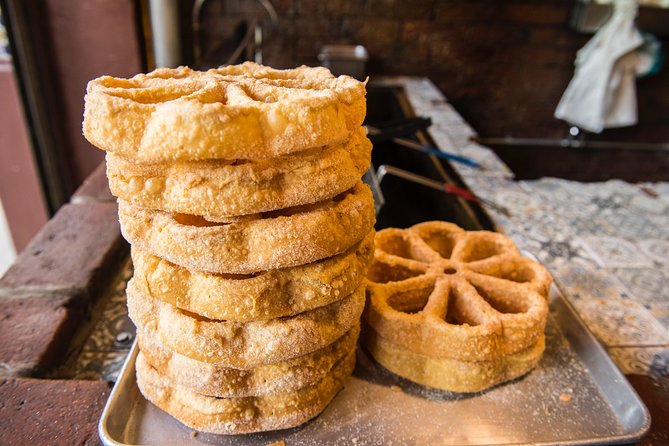
The sweet course is buñuelos, crunchy fried dough topped with sugar syrup. After tamales, pulque, and other savory tastes, this gives the afternoon a simple, traditional finish.
You also receive one agua fresca and one coffee or tea at the end of the tour. The drink choice makes the final stop more flexible, especially if you have already had the included beer or mezcal and want something nonalcoholic.
The tour ends at Estanquillo El 32 on Calle Dr. Enrique González Martínez. It is a family-run restaurant and store selling craft beer, artisanal mezcal, coffee, honey, salsas, and other products.
That end point is useful. You can finish the tour, settle in with your final drink, and browse Mexican food products in one place. You may find something worth taking home, but purchases are not part of the tour price.
What the $122.46 price really covers
At $122.46 per person, this is not a budget snack walk. The value depends on how much you want from a food tour beyond a few samples.
The price includes enough food for a large breakfast and lunch combined, one agua fresca, one coffee or tea, a generous taste of pulque, and one Mexican microbrew or mezcal. If you arrive hungry and enjoy trying many traditional foods, the amount included makes the price easier to justify.
You are also paying for access to several different kinds of local places. The route includes a garden, a working tamales factory, a market, a cooking school and restaurant, a pulquería, neighborhood landmarks, and a family-run final stop. That variety would be difficult to arrange on your own in one afternoon, especially if you do not know the district.
The price does not include transport, souvenirs, extra personal drinks, or a tip for Nico. Plan for those costs separately. You should also avoid booking this tour for the food value if you are a very light eater, since the generous portions are central to the experience.
Group size, pace, and who will enjoy it most
The tour has a maximum of eight participants. That is small enough for a more direct exchange with Nico, while still allowing the social feel of a shared outing.
A small group is especially useful on a route with several local businesses. You spend less time waiting for a large crowd to gather and more time listening, asking questions, and tasting. The experience has also been described in a particularly small setting of four people, but the stated maximum is eight, so do not assume the group will always be that tiny.
The tour should suit you if you:
- Want traditional Mexican food rather than a general restaurant crawl
- Like learning about food through local businesses and neighborhood culture
- Prefer a personal small-group experience
- Are comfortable trying unfamiliar drinks such as pulque
- Can manage a large amount of food over roughly three and a half hours
- Want practical ideas about where to eat elsewhere in Mexico City
It may be less suitable if you need a fully private tour, want a light tasting menu, dislike alcohol, or prefer major sights over local streets and working food businesses.
Practical details worth planning around
Confirmation is provided at booking, and a mobile ticket is available. The tour is offered in English, which makes it a useful choice if you want explanations of the food and neighborhood in that language.
Most people can participate, but the tour involves walking between stops and spending time on your feet. The supplied details do not specify a route length or special mobility arrangements, so you should contact the provider if you have particular access needs.
The tour requires good weather and a minimum number of participants. If poor weather cancels it, you receive the choice of another date or a full refund. The same choice applies if the minimum number is not reached.
You can cancel for a full refund up to 24 hours before the 1:00 pm start. Cancellations or changes made within 24 hours are not refunded or accepted. Since the tour is usually booked about 28 days ahead, reserve early if your Mexico City schedule is fixed, but keep the cancellation deadline in mind.
Should you book The Best of Santa Maria de la Ribera?
Book it if you want a food experience with a strong local focus and enough food to replace two meals. The tamales factory, unmarked pulquería, herb-salt activity, and community cooking school give the afternoon more substance than a simple list of tastings.
I would especially recommend it for a first or second visit to Mexico City, when you want insider food suggestions but do not want to spend the whole day in the city’s most visited districts. Nico Garcia’s route is built around history, culture, and local food businesses, and the small group keeps the experience personal.
Skip it if you want private transport, a short tasting, or a quiet afternoon with little alcohol. For everyone else, the combination of generous food, unusual stops, and a neighborhood most visitors miss makes the $122.46 price reasonable, provided you arrive hungry and ready to walk.
FAQ
Where does the tour begin?
The tour begins at Alameda de Santa María, Calle Salvador Díaz Mirón, Santa María la Ribera, Cuauhtémoc, Mexico City.
Where does the tour end?
It ends at Restaurante El Estanquillo El 32, located at Calle Dr. Enrique González Martínez 32 in Santa María la Ribera.
What time does the tour start?
The start time is 1:00 pm.
How long does the experience last?
The tour lasts approximately 3 hours and 30 minutes. The listed route itself is described as taking about 3 hours.
What language is the tour offered in?
The tour is offered in English.
How many people can join the tour?
The maximum group size is eight participants.
Is food included?
Yes. The tour includes as much food as you can eat, described as enough for a large breakfast and lunch combined.
Which drinks are included?
You receive one agua fresca, one coffee or tea at the end, a generous taste of traditional pulque, and one Mexican microbrew or mezcal.
Is transportation included?
No. Transportation to and from the meeting point and end point is not included.
Can I cancel for a refund?
Yes. You can cancel at least 24 hours before the start time for a full refund. Cancellations and changes within 24 hours are not refunded or accepted.
More tours in Mexico City we've reviewed





Mexico City, compared.
 ★ 5.0Teotihuacan, Guadalupe Shrine & Tlatelolco Day Tour with LunchFrom $399 hours (approx.)
 ★ 4.5Xochimilco, Coyoacan and Frida Kahlo with Optional LunchFrom $349 hours (approx.)
 ★ 5.0Balloon flight + Breakfast in cave + Pyramids + Pick up CDMX.From $1722 to 8 hours (approx.)
 ★ 5.0Teotihuacan pyramids morning or afternoon without tourist trapsFrom $645 hours 30 minutes (approx.)
 ★ 4.5Teotihuacan Early Access Guided Tour with optional LunchFrom $398 hours (approx.)
 ★ 5.0Balloon flight + pick up in CDMX + Breakfast in Cave + PyramidsFrom $1694 to 7 hours (approx.)
 ★ 5.0Balloon Flight + Cave Breakfast + Pick Up from CDMX or We FlyFrom $1663 to 9 hours (approx.)
 ★ 4.6Mexico City: Teotihuacan, Tlatelolco & Guadalupe Shrine TourFrom $49