
Reviewed · MEXICO CITY
The hidden archaeology in the CDMX
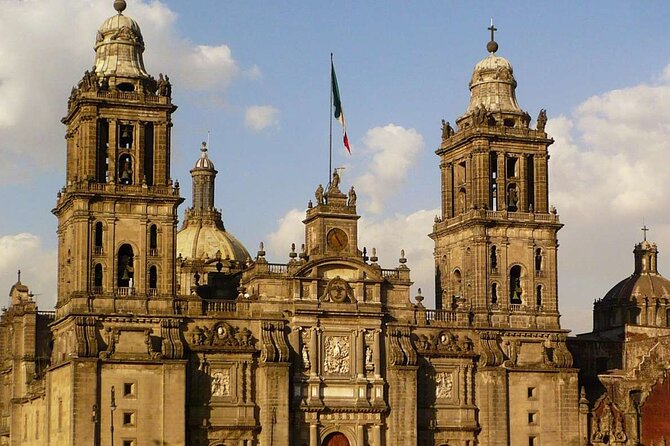
Mexico City is built over Mexico Tenochtitlán, and this four-hour private walking tour helps you spot the older city beneath the colonial streets. You move through the Centro Histórico, linking archaeological remains, Spanish-era buildings, and places where the two pasts meet.
In This Article
- Why Tenochtitlán Is the Real Subject
- Starting on José María Izazaga
- Hospital de Jesús and the Stories Around It
- Museo de la Ciudad de México in Ten Minutes
- Reading the Zócalo Beyond the Flagpole
- Archaeological Windows at the Antiguo Palacio del Arzobispado
- Templo Mayor and the Sacred Center of the Mexica
- The Old University of the Mexica Elite
- Ending at the House of Tiles
- What $30.49 Buys You
- Timing, Walking, and Who Should Book
- The One Reliability Issue to Consider
- Should You Book the Hidden Archaeology Walk?
- FAQ
- Where does the tour begin?
- Where does the tour end?
- How long does the experience last?
- Is the tour offered in English?
- Are museum admissions included?
- Is this a private tour?
I like the way the route gives you a clear story of Tenochtitlán and its fall, rather than treating each monument as an isolated photo stop. I also like the modest price of $30.49 per person, especially for a private tour in English. The main drawback is important: every site is visited from outside, so this is a history walk, not a ticketed museum tour.
- A four-hour route through central Mexico City: The walk covers eight major stops and finishes at the Plaza del Palacio de Bellas Artes.
- Archaeology hiding in plain sight: Look for archaeological windows and traces of the Mexica city among later buildings.
- Private English-language experience: Only your group participates, giving you a more personal format than a large group walk.
- No admission tickets included or needed: The listed stops are viewed from outside, so museum interiors are not part of the tour.
- A useful historic-center introduction: The route connects the Zócalo, Templo Mayor area, colonial institutions, and famous buildings.
- A small but real reliability concern: One booking ended with the guide absent and no cancellation message, so confirmation is worth checking.
Why Tenochtitlán Is the Real Subject
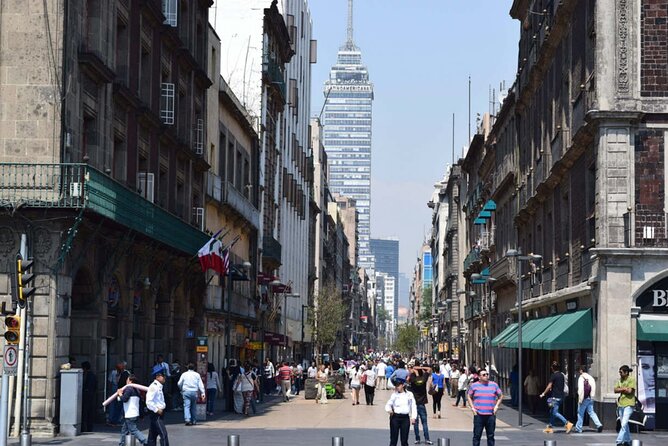
The best reason to book this walk is the central idea behind it: modern Mexico City does not erase its earlier cities. It covers them, builds over them, and occasionally exposes them through a window, a foundation, or a surviving building line.
Your guide explains how Mexico Tenochtitlán looked and how it fell to Spanish conquerors and their Indigenous allies. That framing matters. You are not simply being shown old stones. You are being asked to picture a Mexica capital, then follow the changes brought by conquest and colonial rule.
The tour is especially useful if you are new to Mexico City. The historic center can feel like a dense mix of churches, government buildings, plazas, museums, traffic, and street life. A guide who connects those pieces can help you see why a modest-looking wall or archaeological opening matters.
Still, keep your expectations in check. This is not a museum experience with long indoor visits. The archaeological and historic points are explained from public areas outside. If you want excavated objects, reconstructed spaces, or a long look at the Templo Mayor collection, you will need to visit the museums separately.
Starting on José María Izazaga
The tour begins at José María Izazaga 129 in Centro Histórico. The start is near public transportation, which is useful because Mexico City traffic can make a short taxi ride unpredictable.
The first stop is listed as the Historic Center and takes about 1 hour and 50 minutes. This is the core of the experience, not a quick introduction before the main attraction. You spend much of the walk moving among points of archaeological and historical interest that are easy to miss while crossing the center on your own.
I would pay close attention during this opening stretch. The value lies in the connections between locations. A colonial building may sit close to an earlier Mexica site. A modern street may follow an older route. An archaeological opening may offer only a partial view, yet it can change how you read the surrounding blocks.
Because the tour is private, your group is the only group participating. That can make the explanations easier to follow and may give you a chance to ask questions about the places that interest you most. The supplied information does not name the guide, so you should not book expecting a particular guide by name.
If you're still narrowing it down, here are other tours in Mexico City we've reviewed.


Hospital de Jesús and the Stories Around It
The Hospital de Jesús Nazareno receives about 10 minutes. The guide explains the hospital’s history, why it matters, and the magic associated with the site.
That short time suggests a focused exterior explanation rather than a full visit. It is a good example of the tour’s method: use a building in the modern city as a doorway into an older story, then keep moving before the route becomes too slow.
I like this stop because it broadens the subject beyond temples and ruins. Hospitals, churches, palaces, and public buildings also preserve the story of conquest and colonial Mexico. You get a reminder that archaeology is not always a dramatic excavation. Sometimes it is a question of what a building represents and what happened on the ground beneath it.
Museo de la Ciudad de México in Ten Minutes
The Museo de la Ciudad de México is scheduled for about 10 minutes. The building houses the history of Mexico City, and the guide explains its place in the city’s past.
Again, this is an exterior stop. You should treat it as a concise orientation point, not as a substitute for entering the museum. Ten minutes is enough for a short explanation and a look at the building, but not for exploring a collection.
This works well for a first day in the center. You receive a broad timeline without giving up the whole afternoon. If the building catches your interest, you can return later with more time, but admission is not part of this tour.
Reading the Zócalo Beyond the Flagpole
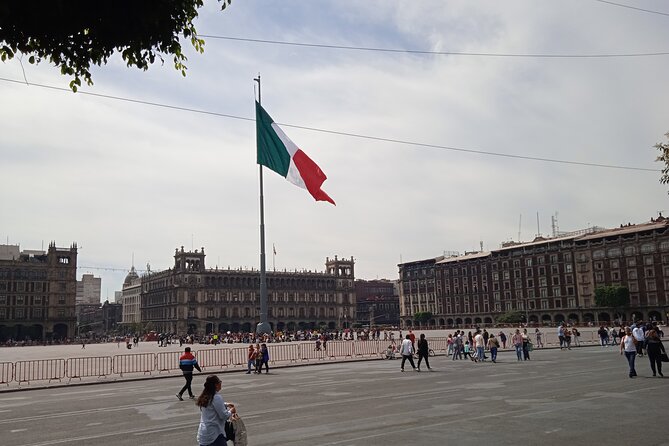
The Zócalo gets about 20 minutes. This is one of Mexico City’s most important public spaces, and the tour focuses on relevant details that can disappear when you are simply crossing the plaza.
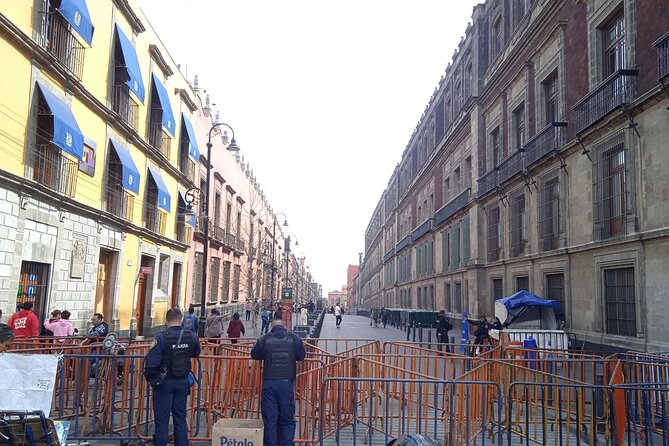
The square is a key place to imagine layers of power. The tour’s wider story links the Mexica sacred and political center with the Spanish city that followed. From here, the scale of the historic center becomes easier to understand.
Twenty minutes is a sensible amount of time for an outdoor explanation. You are unlikely to get every detail of the plaza, but you should come away with a better sense of why this space matters. I would not expect a leisurely photo session or an extended architectural survey. The route has several more stops ahead.
Archaeological Windows at the Antiguo Palacio del Arzobispado
At the Museo de Arte SHCP Antiguo Palacio del Arzobispado, the guide points out a series of archaeological windows. The visit lasts around 20 minutes.
These windows are among the most distinctive parts of the tour because they show how archaeology can appear inside an active urban setting. You are not being taken to a remote ruin. You are looking at evidence incorporated into the center’s buildings and streets.
The stop also reinforces the contrast running through the entire walk. A building connected to colonial religious authority can contain or reveal traces of an earlier city. That juxtaposition is more useful than a simple list of dates because you can see the physical overlap for yourself.
Since the route remains outside, the amount you see may depend on the exact viewing points available during the walk. The guide’s explanation is therefore central to this stop.



Templo Mayor and the Sacred Center of the Mexica
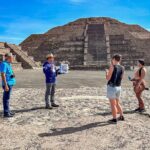
The Museo del Templo Mayor is allotted about 30 minutes. The guide explains how the sacred space of the Aztecs worked and what its structure was like.
This is likely the strongest stop for anyone booking the tour for archaeology. The Templo Mayor area gives the story a clear center. Instead of hearing only that ruins exist beneath Mexico City, you get an explanation of the sacred complex and its arrangement.
The important limitation is easy to miss when booking: the visit is from outside. You do not get a museum admission or a full indoor examination of the archaeological collection through this activity. The guide can help you understand the site, but the walk cannot replace a separate museum visit if you want artifacts and extended viewing time.
I see this stop as a strong preview. It gives you a framework for a later independent visit, or it helps you decide that the exterior interpretation is enough for your schedule. Either way, 30 minutes gives the subject more room than the shorter building stops.
The Old University of the Mexica Elite
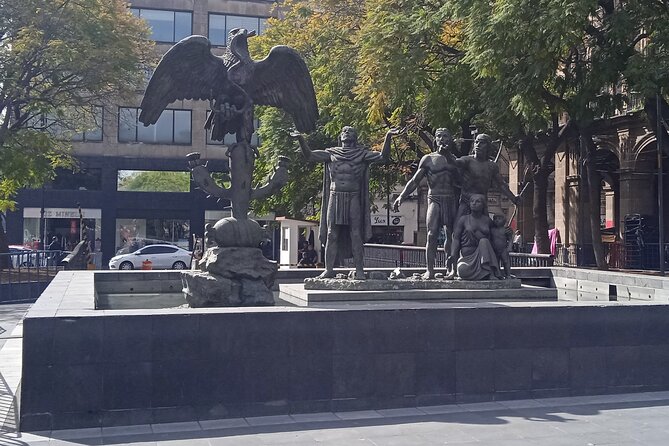
The Centro Cultural España en México receives about 20 minutes. Here, the guide discusses the old university of the Mexica elite.
This stop adds an educational side to the story. The route is not limited to warfare, temples, and conquest. It also points to institutions connected with learning and the Mexica elite.
The building’s present cultural role and its earlier associations make it another example of Mexico City’s layered character. You see how a later institution can occupy a place tied to an earlier society, and how the center keeps changing its purpose over time.
As with the other locations, the tour does not include an indoor visit. Think of this as a guided exterior context stop. The 20-minute timing should give you enough information to understand why the site was included without turning the walk into a long building tour.
Ending at the House of Tiles
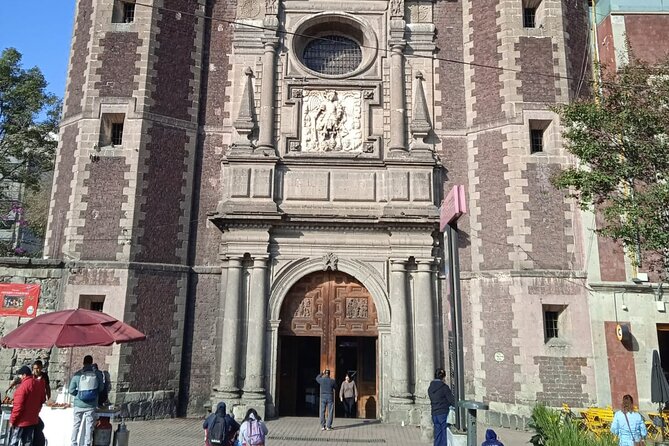
The House of Tiles is the final sightseeing stop, with about 15 minutes devoted to one of the historic center’s most attractive houses. The tour then ends at the Plaza del Palacio de Bellas Artes.
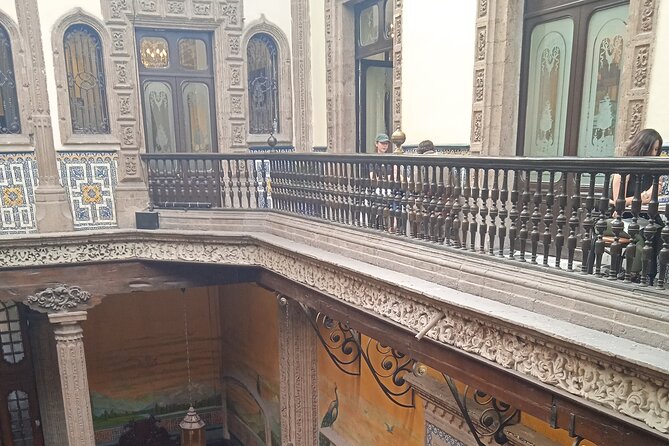
The House of Tiles provides a visual finish after the heavier archaeology and conquest themes. Its appearance reminds you that Mexico City’s historic center is also a place of striking domestic and civic architecture.
Ending near the Palace of Fine Arts is practical. You are left in a major central area rather than at an isolated street corner. From there, you can continue sightseeing, use public transportation, or make your own plans in the center. The tour information identifies the endpoint as the Plaza del Palacio de Bellas Artes.
What $30.49 Buys You
At $30.49 per person, the price is reasonable if you want a private English-language introduction to the historic center. The value comes from the route and the guide’s interpretation, not from included admissions, since the stops are viewed from outside and listed as free.
For a solo visitor or couple, a private format can cost more than joining a large group, but it also avoids being tied to strangers’ questions and pace. For a small group, the price may look better because the activity is private for your party.
I would compare the cost with your alternative. You can walk through the Zócalo and see many exterior sites on your own. What you cannot easily reproduce is the organized link between Tenochtitlán, the Spanish conquest, colonial buildings, archaeological windows, and the Templo Mayor area.
The tour is strongest for someone who wants a guided framework in a limited amount of time. It is less useful for someone who mainly wants museum admission, extensive ruins, or unhurried photography.
Timing, Walking, and Who Should Book
The advertised duration is approximately four hours. The listed stop times add up to just under four hours, which leaves room for walking between locations and brief explanations along the way.
You should wear comfortable shoes and expect a continuous city walk, though the supplied details do not specify the exact distance or terrain. The route stays in the historic center, near public transportation, and most participants can take part.
The activity is not recommended for people with babies, and going with babies is specifically discouraged. That is worth taking seriously because a four-hour outdoor history walk can be tiring and less flexible for families managing a stroller or infant schedule.
I would recommend this tour to:
- First-time visitors who want the historic center explained rather than simply photographed.
- Museum fans who want a clear introduction before making separate indoor visits.
- Couples, families with older children, or friends who prefer a private English-language walk.
- People interested in how Mexica and colonial history overlap in the same streets.
I would look elsewhere if you need wheelchair details, a baby-friendly format, or guaranteed indoor access. Those needs are not addressed in the available information, so you should confirm them before paying.
The One Reliability Issue to Consider
There is one serious warning in the booking record. A participant waited for an hour at the meeting point after the guide failed to arrive, with no message about a cancellation or delay. The guide later apologized and explained there had been a family medical emergency, along with an admission that the tour had been forgotten.
That explanation is understandable, but the result was still poor communication and a wasted hour. The overall score is 4.6 from 10 reviews, and 90 percent of people recommend the experience, so this appears to be an isolated problem rather than the main pattern. Still, I would confirm the tour shortly before the start time and keep the meeting address handy.
Free cancellation is available up to 24 hours before the start for a full refund. Cancellations or changes made less than 24 hours before the start are not refunded or accepted, and the cut-off uses Mexico City local time.
Should You Book the Hidden Archaeology Walk?
Book it if you want a compact, private history lesson in the streets of Centro Histórico. The route is strongest when you enjoy interpretation, layered urban history, and the idea that archaeological clues can sit beside colonial buildings and modern city life.
Do not book it expecting museum interiors or a full archaeological excavation visit. You will see the sites from outside, and the experience depends heavily on the guide’s explanation.
For $30.49, I think the tour offers good value for a first look at Mexico City’s deepest historical layers. Confirm the appointment before setting out, bring comfortable shoes, and treat the walk as an introduction. Then decide which places deserve a separate visit on your own.
FAQ
Where does the tour begin?
It begins at José María Izazaga 129 in Centro Histórico, Mexico City.
Where does the tour end?
The tour ends in the Plaza del Palacio de Bellas Artes, near the Palace of Fine Arts at Avenida Juárez.
How long does the experience last?
It lasts approximately four hours.
Is the tour offered in English?
Yes. The experience is offered in English.
Are museum admissions included?
No admission tickets are listed. All sites are visited from outside, and the stops are listed as free.
Is this a private tour?
Yes. Only your group participates in the activity.
More tours in Mexico City we've reviewed





Mexico City, compared.
 ★ 5.0Teotihuacan, Guadalupe Shrine & Tlatelolco Day Tour with LunchFrom $399 hours (approx.)
 ★ 4.5Xochimilco, Coyoacan and Frida Kahlo with Optional LunchFrom $349 hours (approx.)
 ★ 5.0Balloon flight + Breakfast in cave + Pyramids + Pick up CDMX.From $1722 to 8 hours (approx.)
 ★ 5.0Teotihuacan pyramids morning or afternoon without tourist trapsFrom $645 hours 30 minutes (approx.)
 ★ 4.5Teotihuacan Early Access Guided Tour with optional LunchFrom $398 hours (approx.)
 ★ 5.0Balloon flight + pick up in CDMX + Breakfast in Cave + PyramidsFrom $1694 to 7 hours (approx.)
 ★ 5.0Balloon Flight + Cave Breakfast + Pick Up from CDMX or We FlyFrom $1663 to 9 hours (approx.)
 ★ 4.6Mexico City: Teotihuacan, Tlatelolco & Guadalupe Shrine TourFrom $49