
Reviewed · MEXICO CITY
UNAM: Murals & Revolution
UNAM’s murals turn a university walk into a compact lesson in Mexican art, education, and political life. You begin at the Rectoría building and finish at the Olympic Stadium, with works by O’Gorman, Siqueiros, Chávez Morado, Eppens, and Diego Rivera along the way. The art is the main event, but the talk about student revolts gives the tour a useful present-day edge.
In This Article
- Key points to know before you book
- Why UNAM’s murals make a better art walk
- Starting at Rectoría and the UNESCO plaque
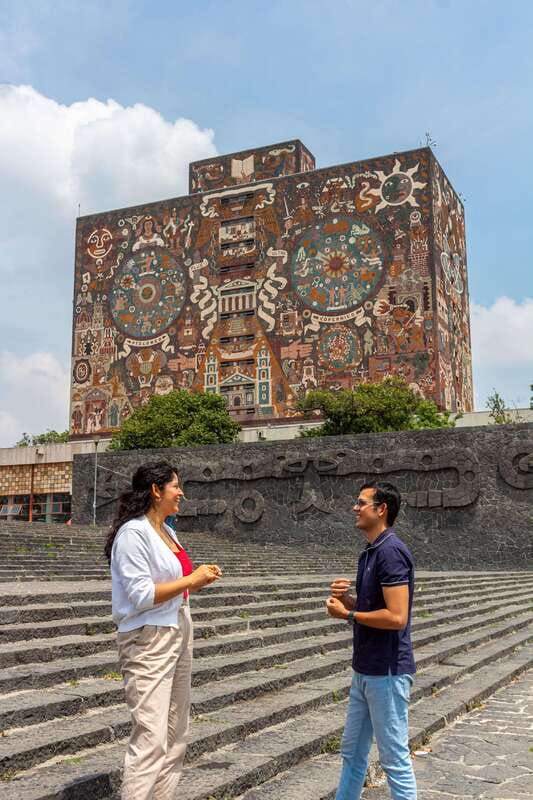
- The Central Library and O’Gorman’s visual language
- Siqueiros, Chávez Morado, and Eppens across campus
- The student revolts and UNAM today
- At Estadio Olímpico Universitario with Diego Rivera
- The guide makes the difference
- Is $52 a fair price for two hours?
- Who should book this UNAM tour?
- Should you book it?
- FAQ
- Where does the UNAM murals tour begin?
- How long does the experience last?
- Which languages are available?
- How will I recognize the guide?
- What is included in the price?
- Can I cancel the booking?
I like the clear two-hour shape and the chance to see the campus without treating it as just another photo stop. I also like that the guide connects the murals to the development of education in Mexico. The main drawback is the pace: two hours is enough for an introduction, not a slow study of every image or architectural detail.
Key points to know before you book
- Five major muralists in one campus walk: See work by Siqueiros, O’Gorman, Chávez Morado, Eppens, and Rivera.
- Starts at a meaningful landmark: Meet at UNAM Rectoría, beside the UNESCO commemorative plaque.
- Includes the Central Library: The guided visit here lasts about 30 minutes.
- Adds modern social context: The discussion covers education, student revolts, and the university’s role in Mexico today.
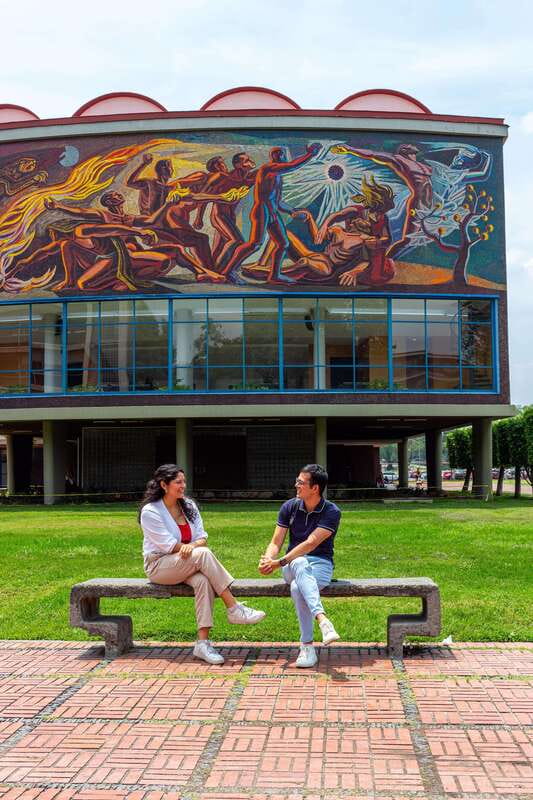
- Ends at a famous sports setting: Visit the outside of Estadio Olímpico Universitario and Rivera’s La universidad, la familia y el deporte en México.
- Strong guide feedback: José and Jesús are singled out for clear explanations, friendly interaction, and strong command of the subject.
Why UNAM’s murals make a better art walk
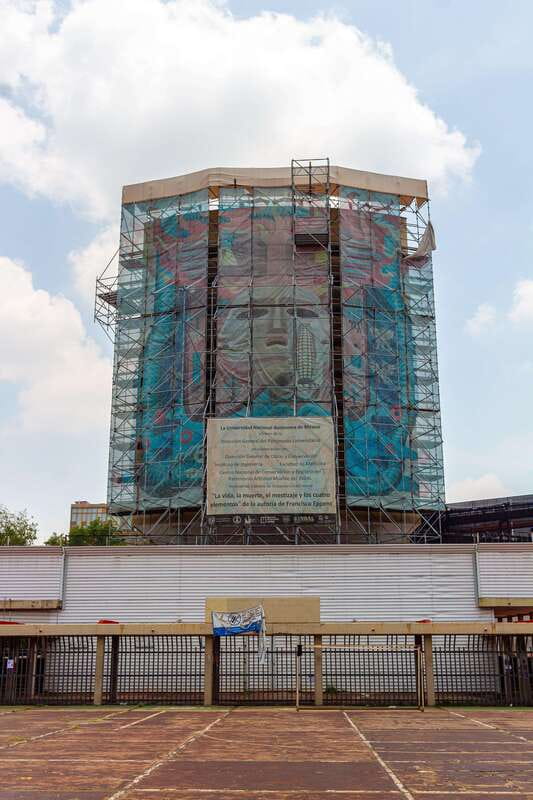
Many city art tours keep you inside museums. This one puts the art on the walls of a working university campus, where murals share space with lecture halls, public paths, and major buildings. That setting matters. The paintings were made to speak to a broad public, not just to museum visitors who already know Mexican art.
You are not simply moving from one picture to another. The guide explains how art, schooling, national identity, and political conflict meet at UNAM. That makes the tour useful even if you do not usually study murals. You get a way to read the images, rather than just a list of famous names.
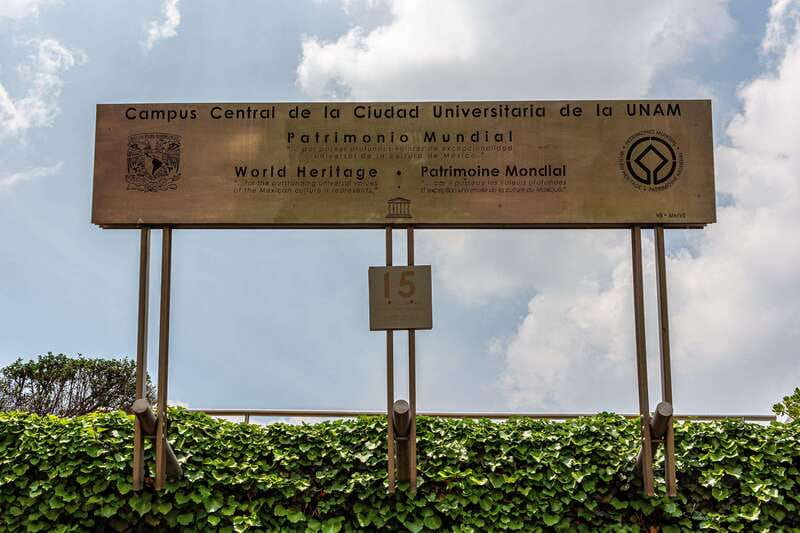
The campus is also part of Mexico City’s UNESCO heritage. The meeting point, in front of the commemorative plaque at Rectoría, gives the tour a clear beginning. You can identify the guide by the small Mexican flag, a simple detail that removes some uncertainty when you arrive.
The two-hour length is well judged for a first visit. You get a focused introduction without giving up an entire day. Still, the schedule leaves little room for lingering. If one mural catches your eye, you may need to keep moving so the group can reach the next stop.
If you're still narrowing it down, here are other tours in Mexico City we've reviewed.


Starting at Rectoría and the UNESCO plaque
The tour begins at the Rectoría building, one of the campus landmarks used to orient the walk. Meeting beside the UNESCO plaque is practical as well as symbolic. You have a precise place to wait, and the plaque introduces the broader importance of the university site before the art discussion begins.
This opening also helps frame the tour. UNAM is not presented only as a collection of impressive buildings. The guide uses the campus to discuss how education developed in Mexico and why the university still matters in the country.
Look for the guide carrying a small Mexican flag. The information names José Vicente Figueroa as the experience provider, while past participants specifically identify José and Jesús as excellent guides. Their strong points are clear explanations, an engaging manner, and willingness to answer questions.
That last part is worth noting. The tour is not designed as a silent walk with a script. You can ask about a mural, a political theme, or the role of students in Mexican public life. If you enjoy conversation, this format should suit you better than a large, formal lecture.
The Central Library and O’Gorman’s visual language
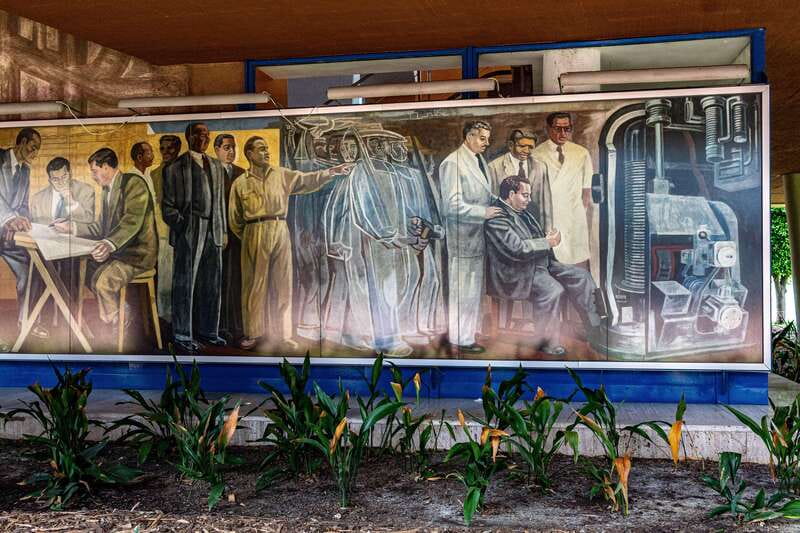
The Central Library receives about 30 minutes of guided attention. This is one of the most important stops because the building itself carries the mural program, rather than housing a separate collection of paintings.
The tour discusses Juan O’Gorman along with the other muralists. You can expect the guide to help you read the relationship between the building, its images, and the ideas presented on its exterior. The point is not only to admire a colorful facade. It is to consider how public art can tell a national story on a very large scale.
Thirty minutes is enough to understand the building’s role and hear the main explanation. It is not enough to inspect every section closely. If you like photographing details, take a few quick shots but keep your attention on the guide. The meaning of the work comes from the symbols and connections, not just from its size.
This stop is especially good for people who want art placed in context. You hear how muralists used public walls to reach people outside elite galleries. That idea continues through the rest of the walk.
Siqueiros, Chávez Morado, and Eppens across campus
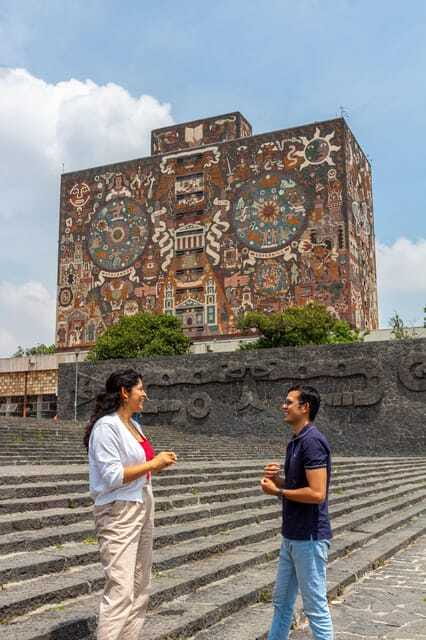
The central part of the experience covers murals by David Alfaro Siqueiros, José Chávez Morado, and Francisco Eppens, along with O’Gorman’s work. The supplied schedule does not assign a separate time to each artist, so you should expect a moving discussion rather than four long, stand-alone lectures.
That format can work well. You see different approaches within the same university setting, then compare them while the images are still fresh. Siqueiros is associated with forceful public art, while Chávez Morado and Eppens add other visual and political voices to the campus. The guide’s job is to show you what changes from one mural to the next and what ideas connect them.
I would pay attention to how the works address ordinary people, learning, collective life, and national identity. Those subjects help explain why murals were so important in Mexico. They were not simply decoration added after the architecture was finished. They formed part of the public message.
This is also where the tour’s historical talk broadens. You discuss the beginnings of education in Mexico, the student revolts, and the place of UNAM in the country today. That combination gives the walk more weight than a standard campus orientation.
The limitation is visual overload. Several muralists, a major library, a stadium, and a political history lesson make for a full two hours. I would not book this expecting a specialist seminar on each artist. Book it for a clear, connected introduction.
The student revolts and UNAM today
The discussion of student revolts adds a human side to the art. Universities are often described through buildings and famous alumni, but this tour also considers students as an active force in Mexican public life.
You hear about conflict, participation, and the value of the university in modern Mexico. The information provided does not promise a detailed account of every movement or date, so expect broad context rather than a complete political chronology. That is a sensible choice for a short walk.
I like this part because it keeps the murals from becoming frozen history. The paintings are tied to questions about who receives an education, how a country tells its story, and how students respond when institutions are under pressure.
If your interest is strictly architectural, this section may feel less central. If you want to understand why the campus matters beyond its appearance, it is one of the most useful parts of the experience.



At Estadio Olímpico Universitario with Diego Rivera
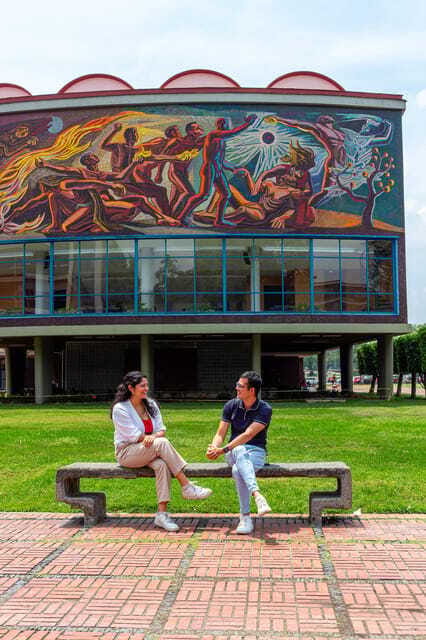
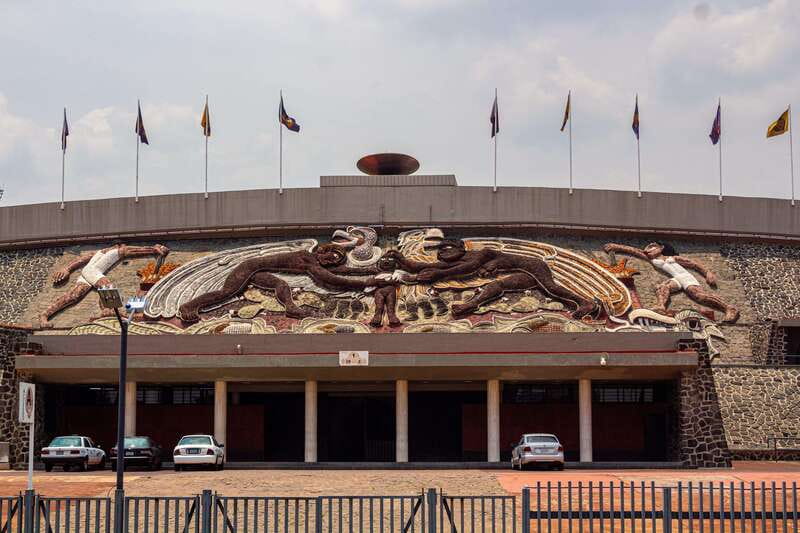
The final stop is Estadio Olímpico Universitario. The highlight is Diego Rivera’s mural La universidad, la familia y el deporte en México, seen as part of an exterior visit to the stadium.
Ending here gives the tour a different mood. The earlier stops focus on library walls and campus art, while the stadium brings in athletics, family, and the university as a public institution. Rivera’s title alone points to the themes the guide will discuss.
The stadium visit lasts about 30 minutes. You should expect to see the building from outside rather than attend a sporting event or enter a stadium program. That distinction matters if you are hoping for an indoor sports tour. The attraction here is the mural and its setting.
This is a strong finish because it widens the tour’s subject one last time. Education is not presented as an isolated academic concern. It connects with family life, sport, public space, and national culture.
After the stadium, you return to Rectoría. The circular route keeps the meeting and finishing points simple, though you should allow a little extra time around the tour if you have a strict appointment immediately afterward.
The guide makes the difference
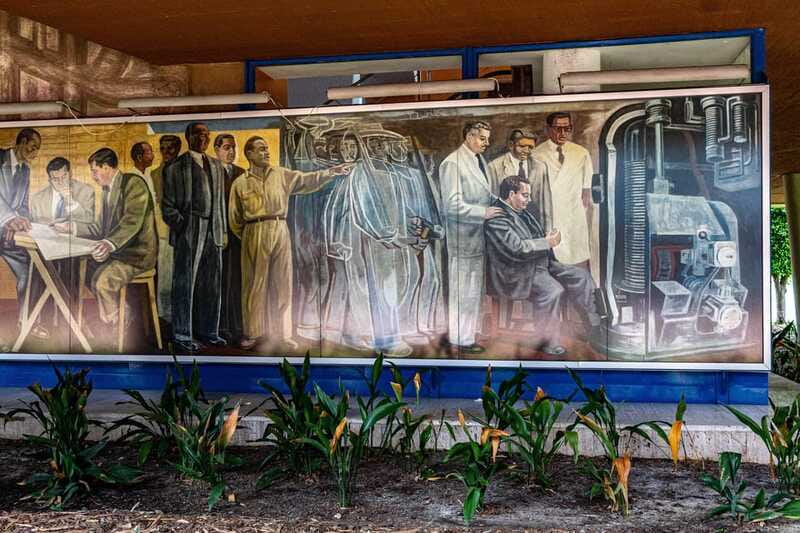
A campus with this much art can be confusing without direction. The guide supplies the thread connecting the buildings, muralists, education, and student life.
José is praised for being personable and well informed, while Jesús is described as engaging and strong on the material. Another participant specifically valued the chance to ask questions and receive clear answers. Those details suggest that the experience works best when you take part rather than stand back quietly.
The available languages are Spanish, English, German, Italian, and Portuguese. Some content may be shown in its original language, so you may hear names, phrases, or artistic material without every element being translated in the same way.
Because the provider is José Vicente Figueroa, you may want to confirm the language and guide details when selecting your time. The small Mexican flag is the practical marker at the meeting point.
Is $52 a fair price for two hours?
At $52 per person, this is not the cheapest way to stroll across a university campus. The value depends on how much structure you want.
If you already know UNAM well, can identify the major muralists, and are happy reading about the campus on your own, the price may feel high for a two-hour walk. You are paying mainly for interpretation and organization, not for a long list of ticketed attractions. The guide is included, but no separate meals, transport, or added admission benefits are listed.
For a first visit, I think the price is easier to justify. You get a planned route, five major mural names in the discussion, a Central Library visit, the stadium exterior, and a history lesson linking art to education and student action. A strong guide can save you the trouble of working out what you are looking at and why it matters.
The high rating of 4.9 from eight verified bookings supports the idea that guide quality is a major part of the value. The comments repeatedly focus on clear teaching, friendly interaction, and useful historical and artistic information. That does not guarantee that every guide or group will feel identical, but it tells you what this experience is trying to do well.
Who should book this UNAM tour?
I would recommend it to you if you like public art, modern Mexican history, universities, or guided walks with a clear subject. It is also a good choice if you want something more thoughtful than a quick campus photo stop.
The experience suits first-time visitors to UNAM particularly well because it gives you an organized introduction to several important works. It should also appeal to students, teachers, art fans, and anyone curious about how education shapes national life.
You may want a different plan if you need a slow, highly detailed study of each mural. Two hours moves at a steady pace. It also may not suit you if your main goal is to enter the stadium, attend a sporting event, or explore the campus without a guide.
Wear comfortable shoes and arrive at Rectoría with enough time to find the plaque and the guide with the small flag. The tour starts and ends there, so the arrangement is easy to fit into a day of sightseeing around Greater Mexico City.
Should you book it?
Book this tour if you want UNAM explained through its art, not just photographed. The best reason to go is the connection between the murals and the country’s education story, student revolts, and public life.
At $52, it is a focused, guide-led introduction rather than an all-day bargain outing. I would choose it for the clear route, the range of muralists, and the chance to finish with Rivera at the Olympic Stadium. Skip it only if you prefer to explore at your own pace or need extensive time at each artwork.
FAQ
Where does the UNAM murals tour begin?
It begins at the Rectoría de la UNAM, in front of the UNESCO commemorative plaque.
How long does the experience last?
The tour lasts two hours. The Central Library portion takes about 30 minutes, and the Estadio Olímpico Universitario visit takes about 30 minutes.
Which languages are available?
The live tour guide is available in Spanish, English, German, Italian, and Portuguese. Some content may be shown in its original language.
How will I recognize the guide?
The guide will carry a small Mexican flag at the meeting point.
What is included in the price?
A guide is included. The price is $52 per person.
Can I cancel the booking?
You can cancel up to 24 hours in advance for a full refund. You can also reserve now and pay later.
More tours in Mexico City we've reviewed


Mexico City, compared.
 ★ 5.0Teotihuacan, Guadalupe Shrine & Tlatelolco Day Tour with LunchFrom $399 hours (approx.)
 ★ 4.5Xochimilco, Coyoacan and Frida Kahlo with Optional LunchFrom $349 hours (approx.)
 ★ 5.0Balloon flight + Breakfast in cave + Pyramids + Pick up CDMX.From $1722 to 8 hours (approx.)
 ★ 5.0Teotihuacan pyramids morning or afternoon without tourist trapsFrom $645 hours 30 minutes (approx.)
 ★ 4.5Teotihuacan Early Access Guided Tour with optional LunchFrom $398 hours (approx.)
 ★ 5.0Balloon flight + pick up in CDMX + Breakfast in Cave + PyramidsFrom $1694 to 7 hours (approx.)
 ★ 5.0Balloon Flight + Cave Breakfast + Pick Up from CDMX or We FlyFrom $1663 to 9 hours (approx.)
 ★ 4.6Mexico City: Teotihuacan, Tlatelolco & Guadalupe Shrine TourFrom $49